Health insurance through an employer — the way most Americans get it — costs an annual average of almost $23,000 to cover a family. That's enough to buy a new Volkswagen every year.
The big picture: While those costs keep rising, Americans' life expectancy is falling.
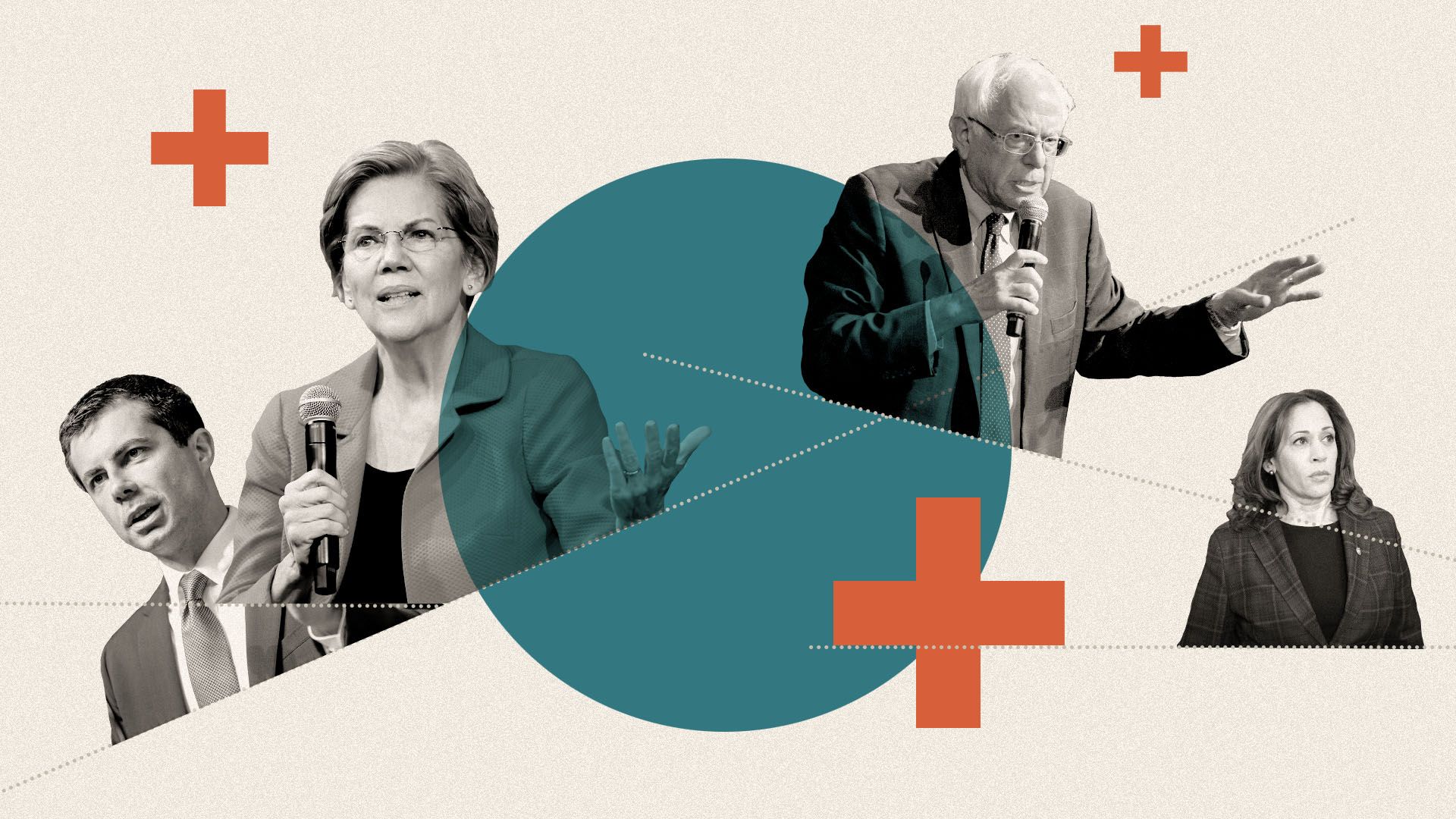
The way the Democratic candidates talk about "Medicare for All" has shifted and sharpened over the course of the campaign — and Medicare for All has gotten less popular in the process.
The state of play: When Sen. Bernie Sanders introduced his "Medicare for All" bill in 2017, all of his likely 2020 rivals in the Senate signed on as cosponsors, and many Democrats treated Medicare for All as a catch-all or a loosely defined goal.
Neither Congress nor the Trump administration is likely to get much done this year on drug prices, despite the clear political upside to doing so.
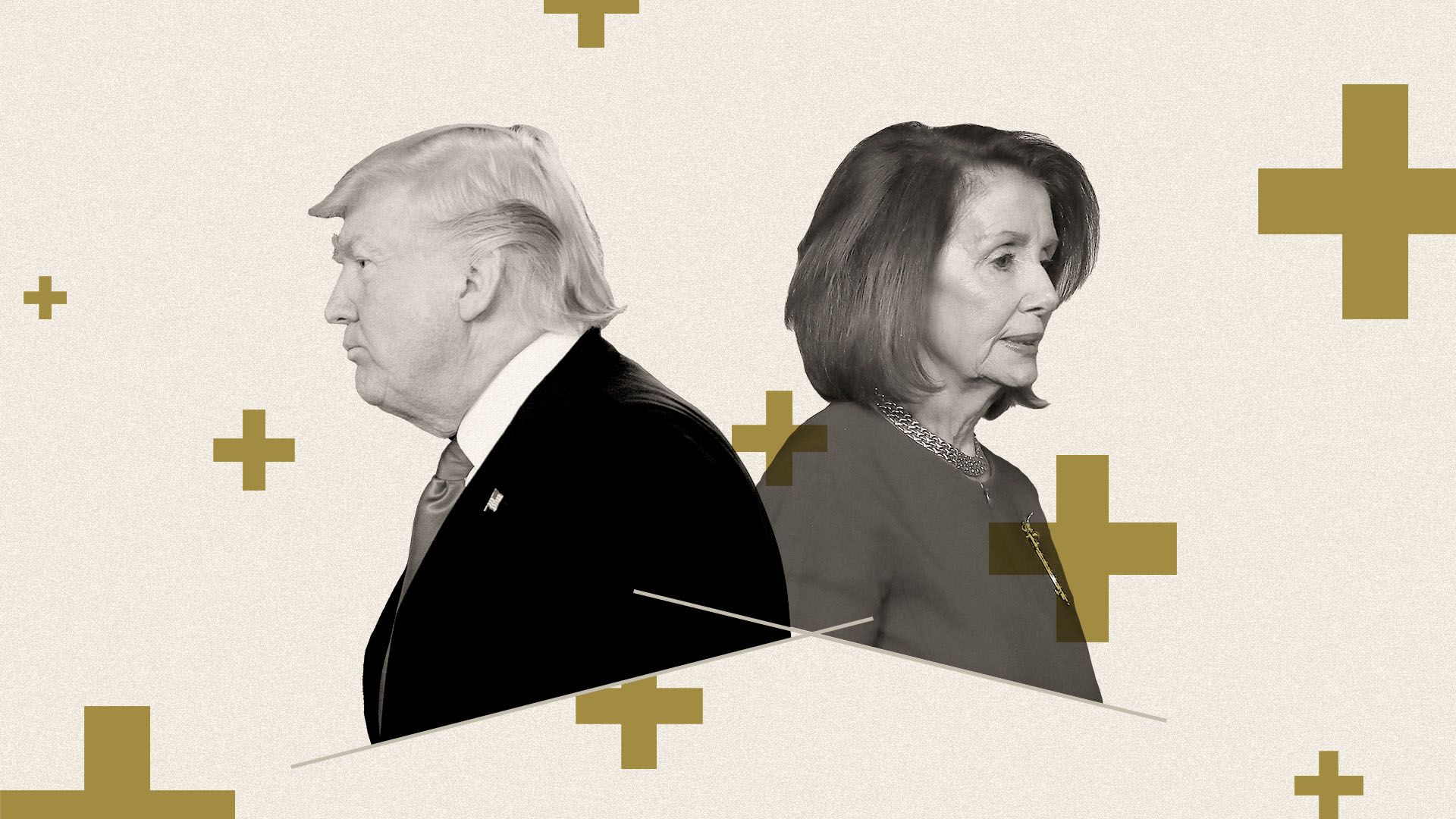
Between the lines: Polls consistently show that drug prices are a top concern for voters. President Trump and House Speaker Nancy Pelosi also seem to agree a lot on the policy. But a deal keeps getting further away.
The Affordable Care Act is no longer the center of the national political debate, for the first time in nearly a decade. But it could quickly come roaring back to the fore.
What we're watching: A federal appeals court is set to rule any day now on whether the ACA's individual mandate is unconstitutional (yes, that again) — and, if so, how much of the rest of the law would have to fall along with it.
Americans spent $3.65 trillion on health care in 2018 — 4.6% more than the year before. That growth also was higher than the 4.2% rate from 2017, according to revised figures from independent federal actuaries.
Between the lines: U.S. health care spending climbed again not because people went to the doctor or hospital more frequently, but because the industry charged higher prices. And private health insurers didn't do a particularly good job negotiating lower rates.
New data from the National Youth Tobacco Survey show that 6.2 million middle school and high school students use tobacco, the highest level since 2000.
Why it matters: Tobacco use among middle schoolers and high schoolers remains high thanks to the popularity of e-cigarettes.