Hospitals are reaping big windfalls from commonly used drugs, marking them up 3-7 times above their average sales prices, according to an analysis by Wall Street firm AllianceBernstein.
Why it matters: The way hospitals charge for drugs — and the consolidation that's helping to fuel this trend — leads to higher insurance premiums across the board.
Congressional Republicans are increasingly open to cracking down on the tactics pharmaceutical companies use to keep competition at bay — changes that were once a non-starter for the GOP.
Why it matters: Critics say drug companies manipulate the patent system to extend their monopolies and keep prices high. The industry has billions of dollars on the line as lawmakers take a closer look at changing those patent rules.
The federal government may try to take action if states don't tighten their vaccine exemption laws and measles continues to spread in sections of the U.S., FDA Commissioner Scott Gottlieb tells Axios.
Driving the news: Overall case numbers of measles remain low in the U.S. but the disease is growing in areas of high non-vaccination rates. Some states like Washington are considering tightening their exemptions even as they continue to face a more organized anti-vaccination movement.
Egalet, a small pharmaceutical company, has raised the list price of its pain reliever and anti-inflammatory drug, Zorvolex, by 70%. A 90-pill bottle of Zorvolex now has a price tag of $650, compared with $383 a year ago, according to Elsevier's Gold Standard Drug Database.
The big picture: The drug does not generate a lot of relative sales, but the move is indicative of the pricing power drug companies still have, especially when drugs change ownership. The 70% price hike went into effect Feb. 1 — the day after Egalet completed its acquisition of Iroko Pharmaceuticals, the company that had owned Zorvolex.
Congress could easily get rid of the GOP lawsuit that threatens the entire Affordable Care Act — if Democrats want to force the issue. But two of the smartest pro-ACA legal experts are divided over whether that’s a good strategy.
Refresher: The lawsuit, filed by Republican attorneys general, argues that the ACA’s individual mandate is invalid because Congress has zeroed out the penalty for not having insurance — and the penalty, not the mandate it was enforcing, is what the Supreme Court upheld in 2012. A great many legal experts consider the GOP's argument a long shot, but it won the first round of legal proceedings.
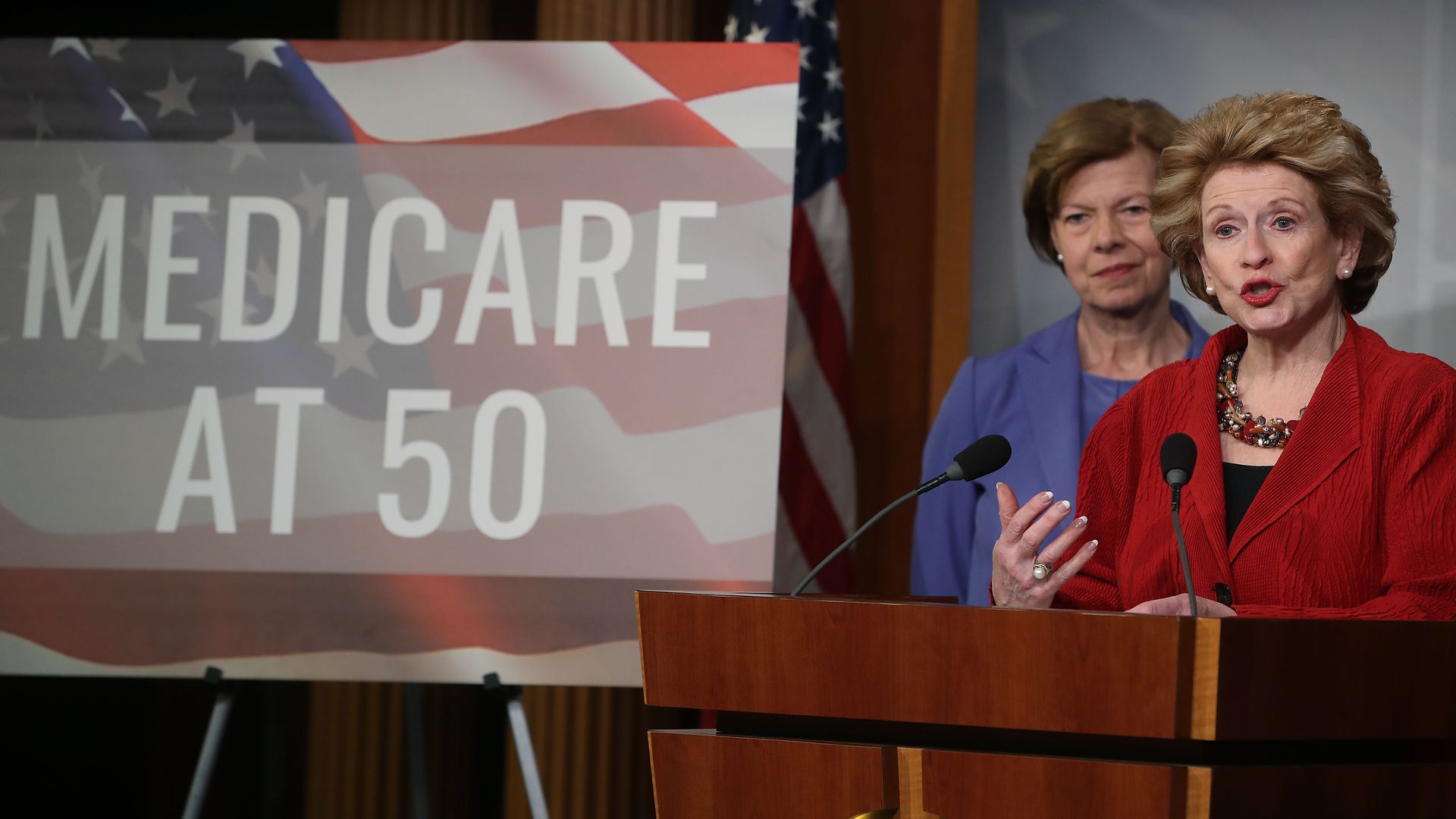
Insurers and hospitals came out swinging yesterday against Democrats' proposal to let people older than 50 buy into Medicare — a reminder that almost any expansion of public health coverage will provoke a battle with the health care industry.
Between the lines: Politically, an age-restricted Medicare buy-in is about as moderate as it gets for Democrats in the age of "Medicare for All."
Medical device and equipment makers are nearly 5 times more likely to have lowered profit expectations for this year than the rest of the S&P 500.
By the numbers: Of the 26 health care device and equipment makers in the S&P 500, 11 missed Wall Street's expectations for 2019 guidance, according to FactSet.
The sector only accounts for 5% of the S&P 500, yet they represent 20% of all companies that gave downbeat forecasts — second only to tech.