The stock prices of health care companies soared Wednesday morning, as Wall Street analysts predict a Democratic House and Republican Senate will keep the profitable status quo humming for at least two more years.
The big picture: Health care companies have thrived in the Affordable Care Act era, and they don't want large-scale changes to the law or the industry at large.
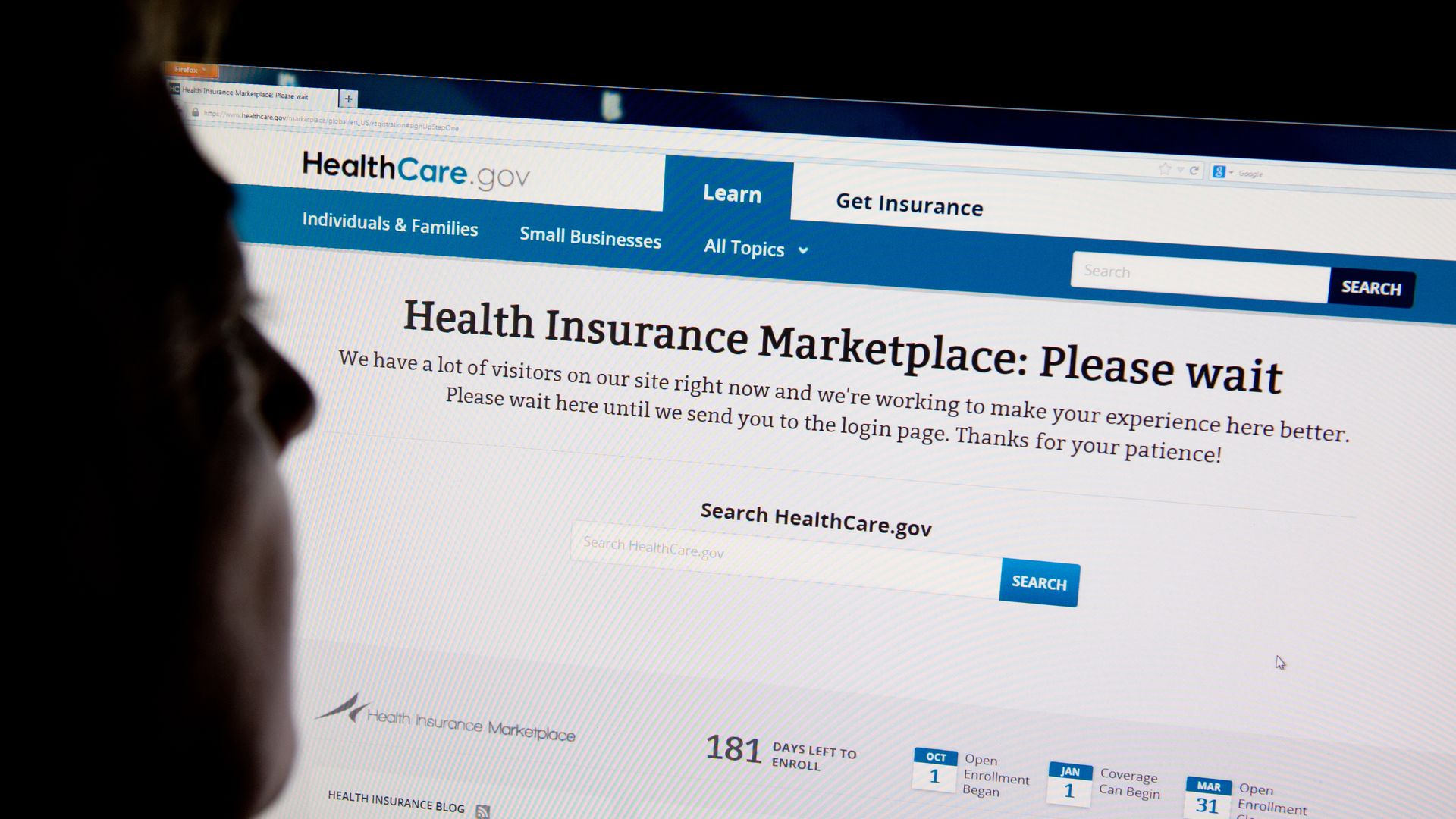
Affordable Care Act enrollment is off to a slow start this year. Roughly 370,000 people chose insurance plans through HealthCare.gov in the first three days of enrollment — a big drop from more than 600,000 in the first four days of the last enrollment period.
Why it matters: Things can change before the enrollment window ends on Dec. 15, and sign-ups usually spike closer to that deadline. But this is not a strong early indicator. If total enrollment falls, the mix of healthy versus sick enrollees will likely get worse.
Honestly, although Democrats' takeover of the House is the biggest overall headline of the night, its health care implications are pretty modest.
The big picture: The next two years will test the strength of Republicans' alliance with the health care industry, and pharmaceutical companies in particular. "The real test will be, do Republicans vote ‘no’ on this ... when it’s on the floor?" a pharmaceutical lobbyist told Axios after Republicans were largely silent on Trump's latest drug-pricing plan. We're about to find out.
Medicaid expansion was a bright spot for Democrats on an otherwise mixed election night as three states passed ballot initiatives to adopt the Affordable Care Act's expansion of the program.
By the numbers: Idaho voters approved Medicaid expansion with more than 61% of the vote. Nebraska passed it with 53%. Utah approved it with 54%.
Novartis bought biotech company AveXis for $8.7 billion earlier this year, and executives are thinking about charging at least $4 million for AveXis' highly touted gene therapy to treat spinal muscular atrophy, according to Endpoints News.
Why it matters: This would be the most expensive drug in the world, by far, if it gets FDA approval, and it would raise drug pricing concerns to a new level. As Walid Gellad, a medical professor at the University of Pittsburgh who studies pharmaceuticals, mused today: "The fact that we can spread a price across thousands or millions of people does not justify a given price."
Medicaid, Medicaid, Medicaid. It hasn’t been the dominant national theme, even in an election season dominated by health care, but Medicaid has more on the line tonight than any other area of health policy.
By the numbers: 17 states haven’t adopted the Affordable Care Act’s Medicaid expansion. Three of those states — Idaho, Nebraska and Utah — have initiatives on the ballot today to expand Medicaid. And six more have gubernatorial races rated as toss-ups by the Cook Political Report. If all nine of those states ended up expanding Medicaid, more than 1.6 million people would be newly eligible for coverage, according to the Kaiser Family Foundation’s estimates.