The politics and substantive rules of the road for the Affordable Care Act are more stable now than they have been in years. But chaos is never far away.
What to watch: The upcoming ACA enrollment season, which starts Nov. 1, will be the first one with the Trump administration’s agenda fully in place, and it will test just how effective that agenda is.
The Ebola outbreak in the Democratic Republic of the Congo showed a recent spike, despite concerted efforts by public health workers and international organizations, mainly due active pockets of community resistance to vaccination and the dangers posed to health care workers in active conflict zones that halt or delay key treatment measures.
What's new: DRC's Ministry of Health reports that, as of October 10, the cases of confirmed and probable infections spiked to 200, with 90 confirmed deaths and 26 suspected cases under investigation. However, the World Health Organization warns these numbers are "likely underestimated."
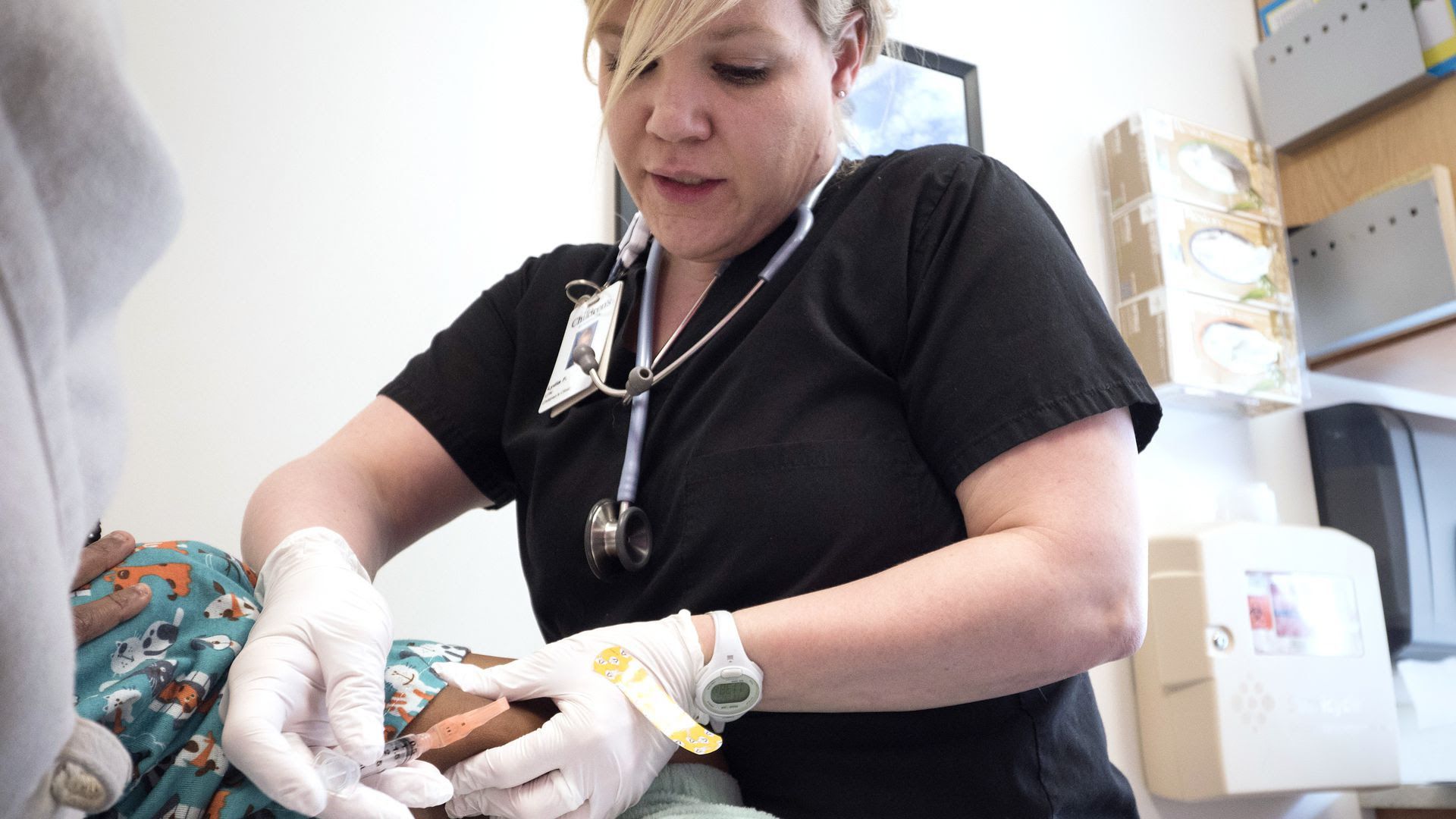
By the numbers: The number of unvaccinated children is still small, but public health experts are still concerned by the fact that it's growing. The percentage of unvaccinated children has quadrupled over the past 17 years, according to the Post. There are now an estimated 100,000 children younger than 2 who have never received any vaccinations.
“Affordable Care Act premiums are going down” is a headline no one's ever seen before, so it’s no surprise the Trump administration is trying to take credit for the change.
Driving the news: The administration announced yesterday that premiums for a "benchmark" plan will drop by an average of 1.5% next year in the federally run ACA marketplaces — the first time that’s happened since it launched.
There's been a lot of discussion of narrow provider networks and how they reduce costs by limiting access to the highest priced providers. They're commonplace in the Affordable Care Act marketplaces where about 10 million people are enrolled, and in the individual market generally — but they are actually quite rare in the group market, where about 152 million Americans get coverage through their employers.
Why it matters: Don't confuse the ACA with the health insurance market most people use. Narrow networks are the exception, not the rule, in the private insurance system overall, and there is little reason to believe that will change any time soon.
Most Democrats running in competitive House races are supporting or at least leaving the door open to some form of "Medicare for All" — although there is no clear agreement within the party about what that means.
Why it matters: The party is indisputably shifting leftward, and health care is a critical part of that change. Regardless of which specific policies these candidates support, it's clear that they see a greater federal role in health care as a winning campaign message.