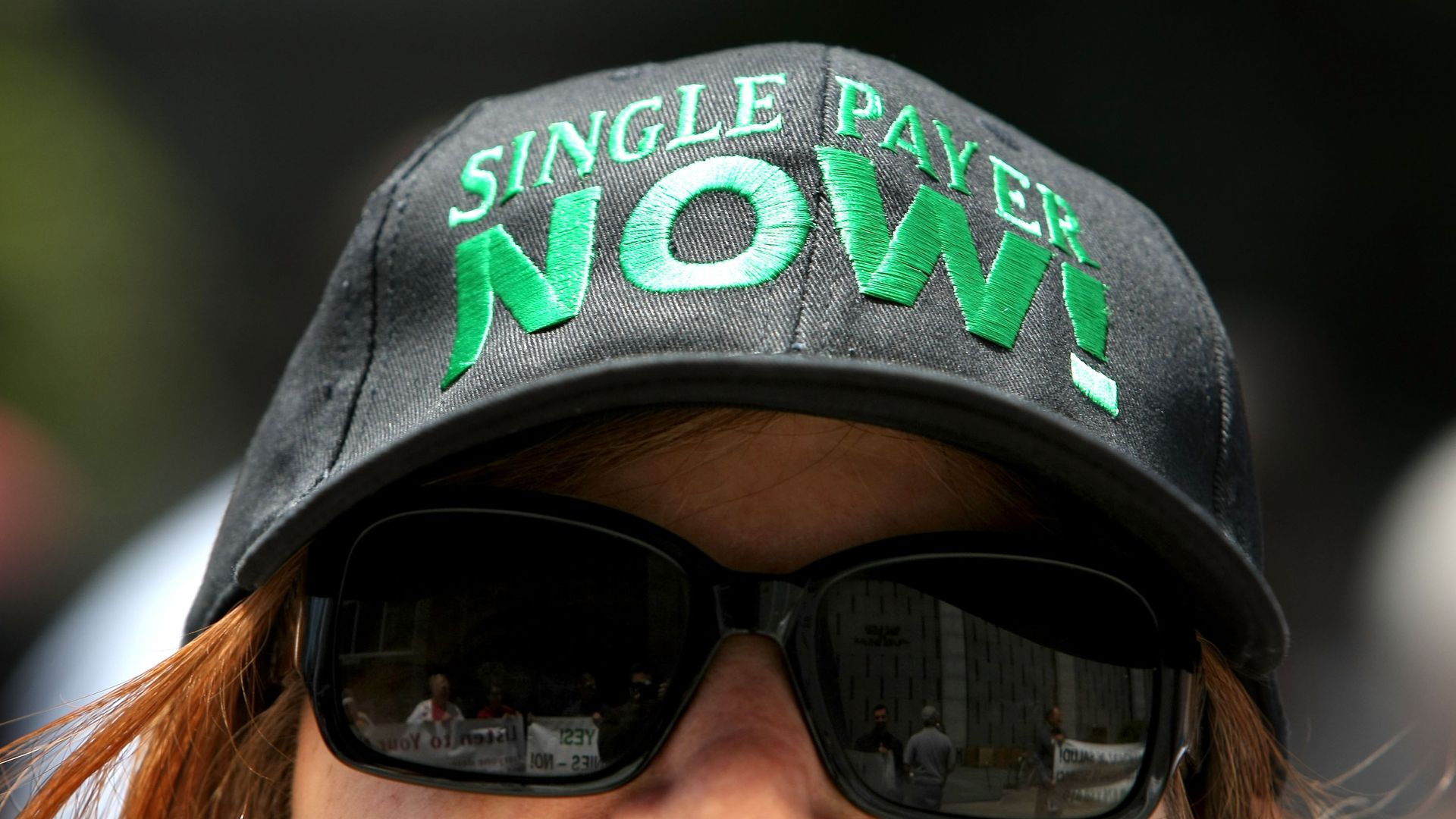
In a survey of 600 executives from hospitals and doctors’ practices, 60% said single-payer would have a “positive” effect on the industry’s efforts to lower costs and provide better care, according to NEJM Catalyst, an offshoot of the New England Journal of Medicine.
The big picture: Price regulation would lower health care costs. But providers historically haven't considered that a good thing. And, in the same survey, 3 out of 4 respondents said the entities paying for care (health insurers and employers) and the entities providing that care (hospitals, doctors and others) are not on the same page when it comes to improving the system overall.
Public health experts agree that if the U.S. is going to get the mounting opioid crisis under control, it will need to do a much better job providing addiction treatment. And they have three over-arching ideas for how to do that — some of which Congress and the Trump administration are working on, but some of which still need more attention.
Why it matters: Overdose deaths continue to climb, yet the number of people suffering from opioid use disorder who receive treatment is still low — it was less than 30% in 2016, according to the Kaiser Family Foundation.
A source who has seen recent polling, conducted by the Republican National Committee, told me the data show that a majority of Trump voters don't believe the mountain of evidence that Democrats will win back the House in November.
By the numbers: 57% of strong Trump supporters believe it's unlikely Democrats win the House, according to the source, who wasn't authorized to share findings from the RNC poll with the media. (The survey of 800 registered voters — 480 via landline calls and 320 via cellphone calls — was conducted from Aug. 29 to Sept. 2 and has a margin of error of 3.5%.)
New York Democratic House candidate Alexandria Ocasio-Cortez said on CNN's "State of the Union" that Medicare for All would act not as "a short-term bandaid," but as a "generational investment" that would ultimately save the American people money.
The big picture: Ocasio-Cortez and many of the progressive Democratic candidates running in 2018 have made single-payer health care, which would cost about $32.6 trillion over its first 10 years, a central tenet of their campaigns. Polling suggests that a majority of both Democrats and Republicans support Medicare for All.