Tri-Source Pharma has hired its first lobbying firm, Mercury Strategies, to influence federal "drug pricing law and regulation," according to a lobbying disclosure from this month. Tri-Source is the parent of NextSource Biotechnology, a firm that was heavily criticized after the Wall Street Journal reported it has hiked the price of its off-patent cancer pill by 1,400% since 2013.
The bottom line: President Trump's drug plan won't really change how drug companies set their list prices, but those firms still want a seat at the table. Tri-Source, which filed lawsuits against critics earlier this year, and Mercury Strategies did not answer multiple phone calls.
Trump said Wednesday, while signing the Right to Try Act, that major drug companies are going to announce drug price decreases in two weeks.
Yes, but: Health and Human Services secretary Alex Azar has also been calling on the industry to self-regulate, but it’s not clear what Trump was referring to, or where any new savings would come, adds Axios' Sam Baker.
"Attractive" profit margins and an aging population are the main reasons for the rush of health care mergers and acquisitions, according to a survey of health care and private equity dealmakers conducted by consulting firm West Monroe Partners.
Reality check: Even though health care players say "value-based care" drives their decision-making, the survey is a candid reminder a lot of the industry is driven by making money rather than improving care.
Politico health care reporter Dan Diamond tweeted Sunday: "I went by the Newseum’s wall of 50 state newspapers, with front pages from around the nation," and five major papers had opioid related stories as headliners. He shared examples from Chicago, Raleigh, Richmond and Huntington, W.Va.
Why it matters: "Sunday is usually each paper’s showcase for biggest stories. Looking at 50 front pages is a useful, if imperfect sampling. But best of all, it’s a reminder — especially to this DC reporter — that the nation often has bigger concerns than the stories gripping Washington."
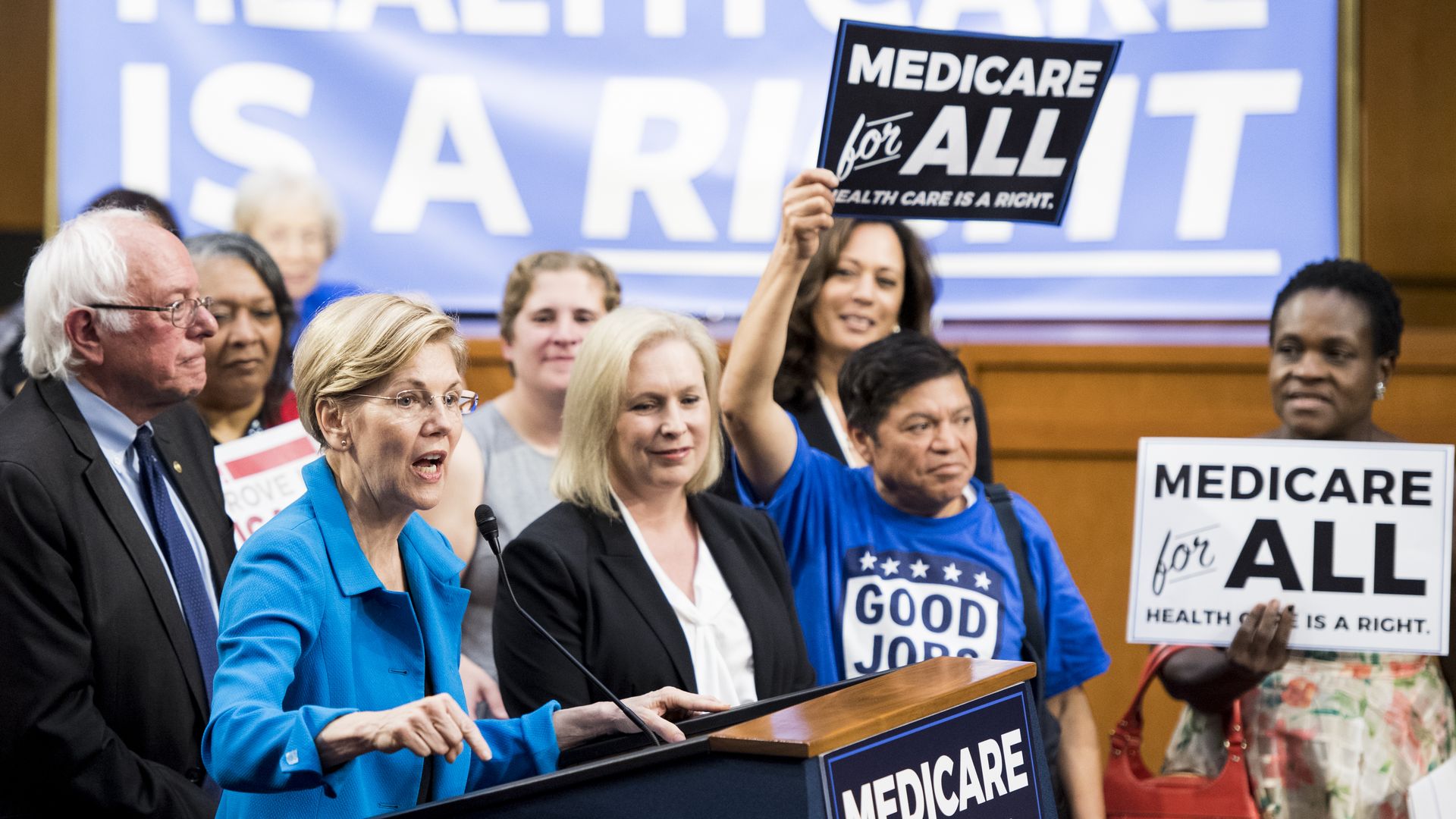
Candidates who support a single-payer health care system — or at least some expansion of government health coverage — are winning important Democratic primaries. And there are plenty more still competing in California and New York districts that are key to Democrats' push to win the House.