Thursday's health stories


Envision faces lawsuit for allegedly hiding billing practices
Investors have filed a class-action lawsuit against Envision Healthcare, alleging the company and its emergency room outsourcing business EmCare did not disclose that EmCare overcharged patients and sent out surprise medical bills. The company's "revenues were likely to be unsustainable after the foregoing conduct came to light," according to the complaint.
Surprise billing occurs when patients go to a hospital in their insurance network but are treated by doctors who are out-of-network. The lawsuit cites a July New York Times story that featured a study showing out-of-network emergency room bills and use of high-paying medical codes increased after hospitals hired Envision and EmCare. An Envision spokeswoman said the company does not comment on pending litigation.
Why it matters: The lawsuit is a direct response to research and newspaper coverage about billing practices that have plagued the health care system for years — practices that lawmakers and policy experts agree should be fixed.

Trump admin stalls Latino ACA outreach
The White House has so far failed to coordinate with a coalition of national and local Latino organizations to develop community outreach campaigns ahead of the ACA's open enrollment deadline, according to a report from Talking Points Memo.
- By the numbers: Latinos have benefitted the most of any ethnic group from the ACA with the greatest drop in their uninsured rate and expanded coverage for 4 million adults.
- What's missing: The Obama administration leveraged Latino community resources to educate and prep local groups ahead of the open enrollment deadline. Now, these Latino groups are doing it themselves, which they acknowledge is much more difficult without the federal government's help.
- Why it matters: It's only August, so it's possible that the Trump administration will just begin the outreach efforts later. But it also could be an early sign that the administration just isn't interested in promoting a law it tried to repeal.

The ACA stability "crisis" in perspective
The big questions about the stability of the Affordable Care Act marketplaces have focused on how fast premiums will rise, and how many plans will participate. But an equally important question, and the heart of the matter politically, is: How many people will be affected by the sharp premium increases?
Data: Kaiser Family Foundation analysis of data from Mark Farrah Associates, Healthcare.gov, and KFF Survey of Nongroup Health Insurance Enrollees; Chart: Andrew Witherspoon / Axios
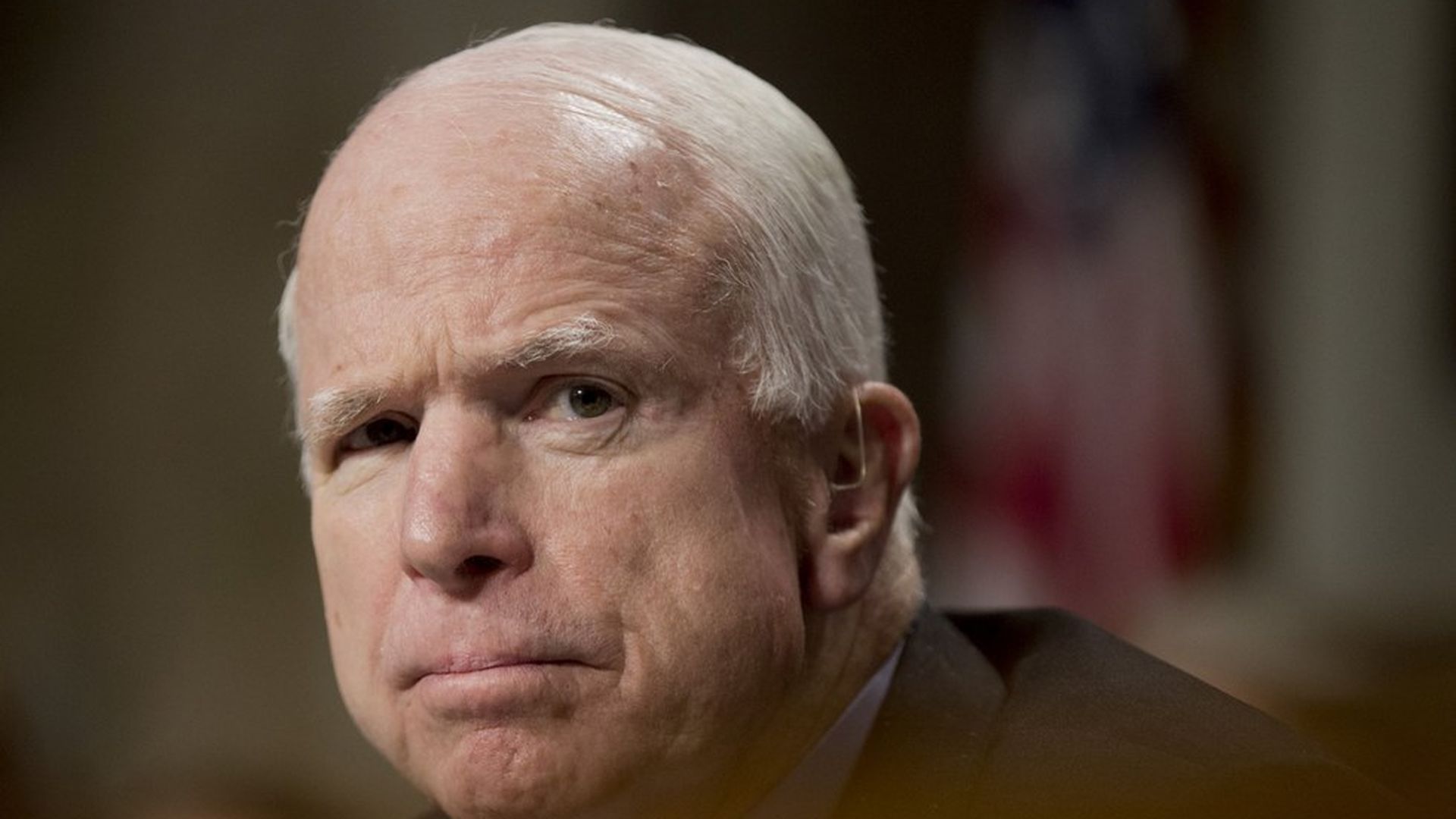

Sen. Johnson: brain tumor may have been factor in McCain's "no" vote
Republican Sen. Ron Johnson suggested Sen. John McCain's recently diagnosed brain tumor may have played a role in his deciding "no" vote against skinny repeal of the Affordable Care Act.
Johnson, speaking last week to AM560 "Chicago's Morning Answer," per CNN's KFILE:
"We did get a call from Paul [Ryan] and he assured us that skinny repeal…would have to go to conference. Again, I'm not gonna speak for John McCain — he has a brain tumor right now — that vote occurred at 1:30 in the morning, some of that might have factored in."

Intermountain CEO: We're not leaving the ACA exchange
Marc Harrison — a doctor, bladder cancer survivor and CEO of Intermountain Healthcare in Salt Lake City — is less concerned about health care politics and more about what he and his colleagues can control: safety, quality and costs.
Intermountain is a not-for-profit system of hospitals and clinics throughout Utah, and it also owns a health insurance company, SelectHealth. It's like the Kaiser Permanente of Utah. Harrison chatted with me about a range of issues, from the "principles of insurance" to hospitals' reliance on having patients fill their beds. Read on for an edited and condensed version of our conversation.
What was your take on the Republican health care ideas that would have blown holes in the Affordable Care Act?
"We are concerned if some of the subsidies go away, we will see large numbers of people who will be functionally uninsured, and we believe that's a bad thing because they end up having to access much more expensive sources of care."
"We really believe in the principles of insurance. The idea that well people can hop in and out of insurance without significant penalties doesn't make sense. That's not how other kinds of insurance work. We need the herd effect so we can take care of each other while we're well so we get taken care of while we're sick."
Will Intermountain and SelectHealth stay in the ACA exchange?
"These are our patients. We're not going anywhere. We're going to keep trying to figure this out. We're making the best possible financial and clinical decisions we can, and we are not going to cut and run because we actually believe in population health and we believe in value. The exchanges, although imperfect, are a mechanism to help us exercise our muscles and get better at this."
Few, if any, reforms tackle the underlying cost structures in health care. What is the most effective way to lower health care spending growth?
"The process of measuring and being accountable has been good for patients. We've seen downward trends in number of hospital-acquired conditions and infections. I'm not sure that would've happened unless folks were held accountable...I'm biased, but there also is magic to a good health system that's married to a good not-for-profit health plan. But it isn't necessarily a closed model. There's room for other payers to play."
But not every hospital system can be an insurance carrier, right?
"It's about getting to real partnerships where risk is shared, and that's upside and downside risk. That's the only way organizations are going to get away from just turning the crank around volume."