Friday's health stories

Medicare rules would overhaul outpatient payments
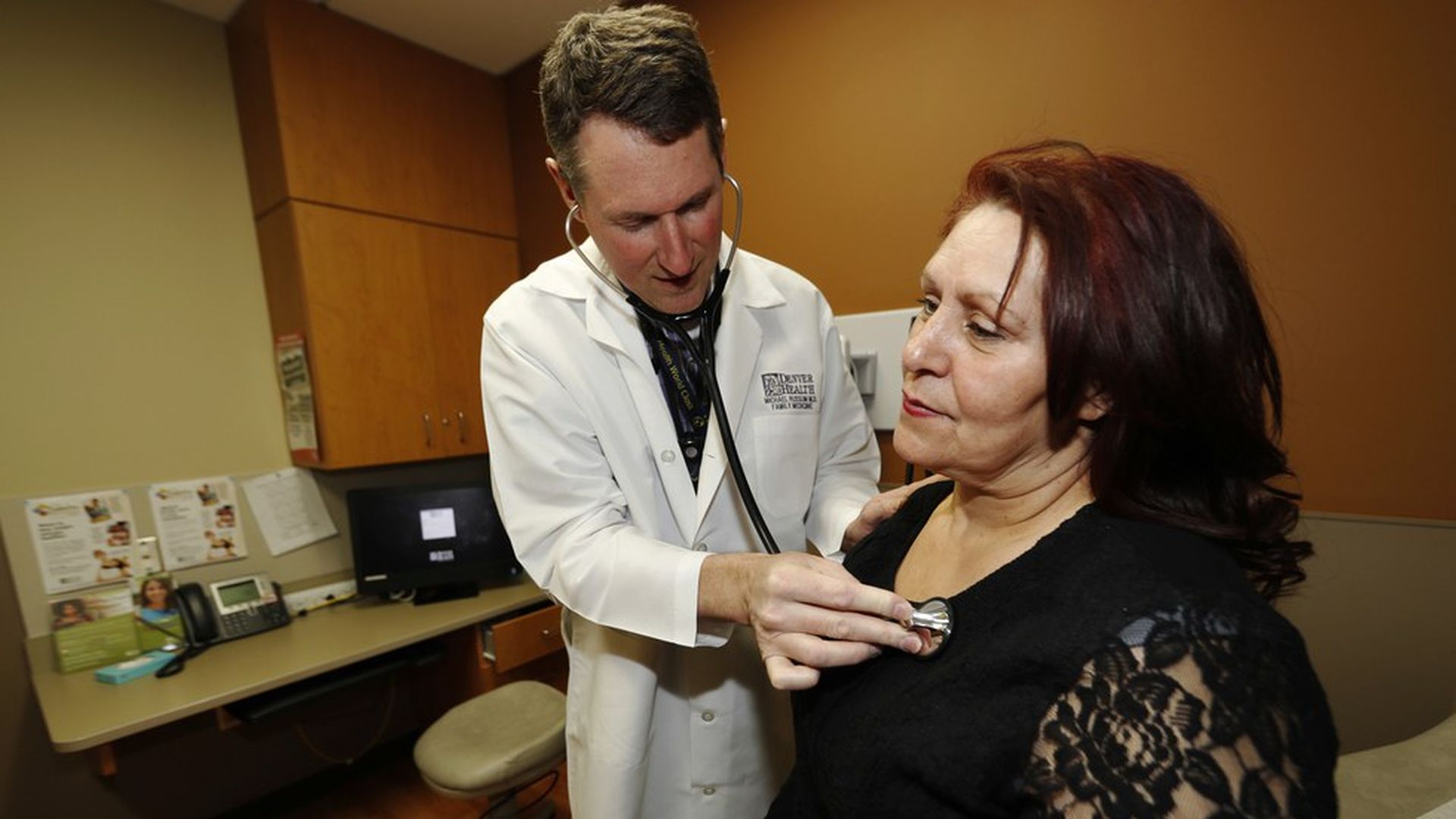
That thud you just heard Thursday was the Centers for Medicare and Medicaid Services dropping two proposed rules, nearly 1,500 pages between them, that would adjust Medicare payments for outpatient facilities, clinics and physicians.
Big takeaways: One of the primary changes would scale back what's known as the 340B drug program, which allows hospitals to buy outpatient drugs at cheaper rates. The policy would hurt hospitals by requiring them to pay more for outpatient drugs. Another proposed policy would allow lucrative knee replacement surgeries to take place in outpatient departments and surgery centers instead of exclusively in a hospital.
Read the full outpatient rule and physician fee rule (public comments are due Sept. 11), and read on for other highlights.

Medicare trust fund will be insolvent by 2029
The Medicare trust fund will be insolvent by 2029, according to the program's trustees, who also report Social Security's combined trust funds will be depleted by 2034, per MarketWatch. The Medicare trust fund is set to be insolvent one year later than was estimated last year, per Modern Healthcare.
What it means: The Independent Payment Advisory Board, proposed by the ACA and known as the "rationing board" by ACA opponents, won't be activated after all, since it was set up to run cuts if there was overspending in Medicare costs. Note: retirees' benefits won't disappear in 2034, since by then there will be enough tax revenue to pay about 75% of the benefits.
Why it matters: Republicans would have had to implement the cuts if the board had been activated. Today's report buys the GOP another year to avoid dealing with it.
Susan Collins, Rand Paul to vote no on revised health bill
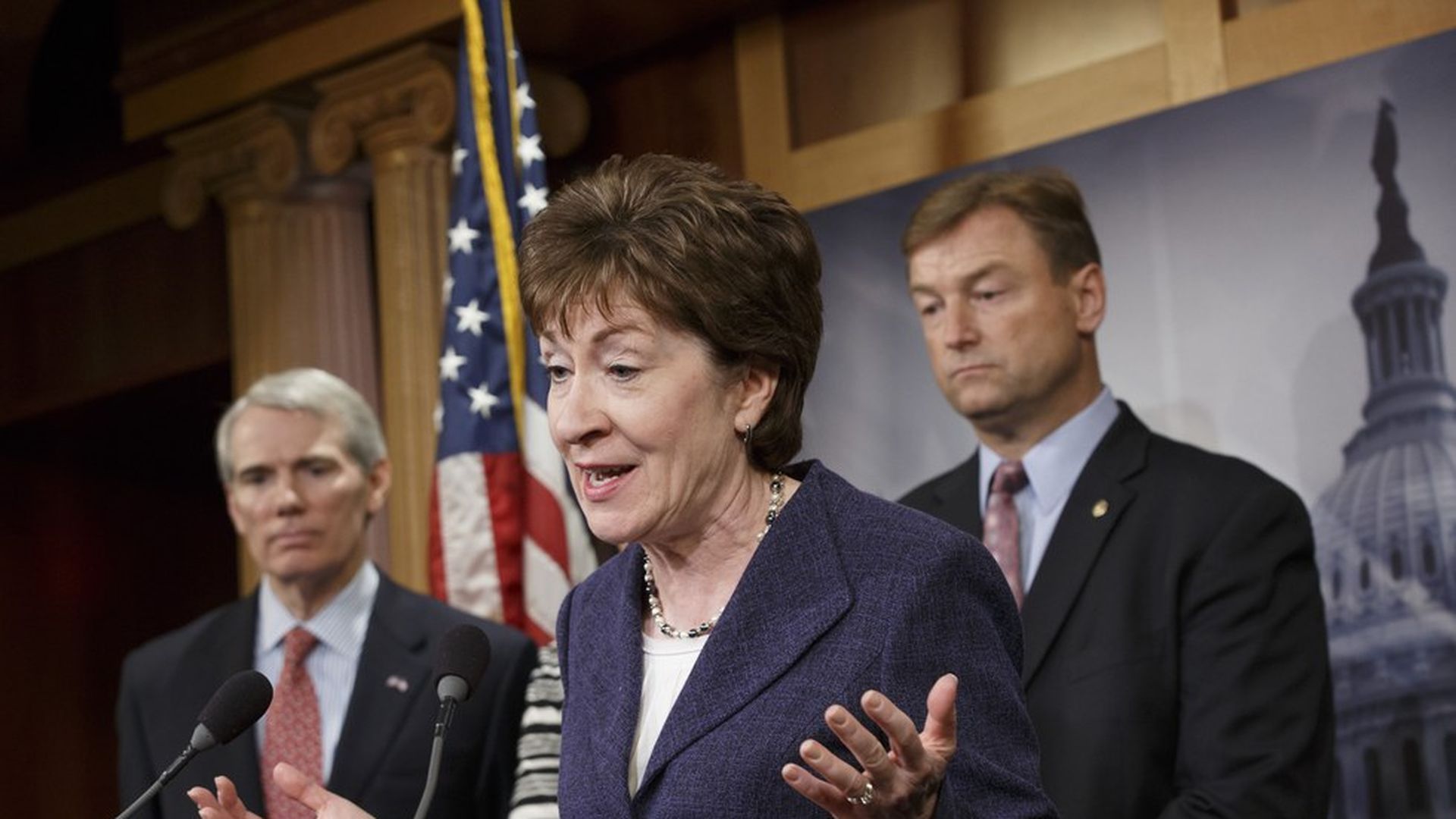
Republican Senators Susan Collins and Rand Paul will both be voting no on the revised Senate health bill. This comes after Mitch McConnell unveiled his new health care bill Thursday, which would let insurers sell skimpy policies that are low-cost but which adds money for combating the opioid epidemic.
Why it matters: McConnell needs 50 of 52 GOP Senators to vote yes.
Why resist? Collins said the deep cuts to Medicaid were standing in the way.
Up next: Collins said she's "ready to work w/ GOP & Dem colleagues to fix flaws in ACA."
Opioids at the center of largest-ever health care fraud bust

The Justice Department said Thursday it has charged 412 people, including 112 doctors and other medical professionals, for submitting fraudulent claims to the Medicare, Medicaid and Tricare programs — the largest federal health care fraud takedown.
What happened: Those people submitted $1.3 billion worth of fraudulent medical claims. More than a quarter of the defendants are charged with opioid-related crimes, including physicians who prescribed unnecessary painkillers and drug center officials who illegally lured people. The opioid epidemic continues to ravage the country, and drug overdoses are the leading cause of death among Americans younger than 50.

The next Ebola will come from _____.
/2017/12/15/1513304146535.gif?w=3840)
Influenza, Ebola, HIV — these viruses all made the jump from chickens, bats and chimpanzees to us. Most viruses that infect humans start this way. Some don't become contagious, but others —take the 1918 flu that killed at least 20 million people — rapidly spread across continents.
We asked four researchers where the next disease to threaten us might emerge from:
- Thumbi Mwangi, veterinarian, Washington State University: Control small diseases to be ready for big ones
- Anne Rimoin, epidemiologist, UCLA: Watch where people and animals interact
- Justin Lessler, epidemiologist, Johns Hopkins University: It's not where a virus comes from but how it becomes contagious
- Kevin Olival, ecologist, EcoHealth Alliance: There are 5,000 places to look

There are 5,000 places to look
Our Expert Voices conversation on emerging diseases.
The vast majority of infectious diseases that plague us come from animals, in particular from wild mammals. Think SARS, Ebola, Zika, and HIV – the deadliest zoonoses of them all.
It's urgent that we better understand where, from what species, and how these diseases are jumping into people. This almost always involves people meddling with the environment – in which viruses are part of the delicate balance. Rampant deforestation, wildlife trade, urbanization, and globalization are increasing our chances, year-by-year, of the next 'big one' making the jump.
Mathematical models represent a powerful tool to tease out the underlying causes of disease emergence, and prioritize wildlife species likely to harbor the next zoonoses. In recent work, we found that bats carry more zoonotic viruses than other mammals and that a large number of the "missing zoonoses" carried by these mammals may be in South America. In East Africa, hoofed animals may be harboring more zoonotic viruses and along the equator there are clusters of primate-borne viruses.
Bottom line: There are over 5,000 mammal species on the planet and likely many thousands of undiscovered viruses that could infect us. It's urgent we develop new analytical tools to sort through the noise and prioritize disease surveillance efforts on the ground to find and characterize as-yet-undiscovered zoonoses before they cause the next pandemic.
Other voices in the conversation:Thumbi Mwangi, veterinarian, Washington State University: Control small diseases to be ready for big onesAnne Rimoin, epidemiologist, UCLA: Watch where people and animals interactJustin Lessler, epidemiologist, Johns Hopkins University: It's not where a virus comes from but how it becomes contagious

It's not where a virus comes from but how it becomes contagious
Our Expert Voices conversation on emerging diseases.
New technologies allow us to observe cross-species transmission in ways we could not before, but we lack the fundamental understanding of the relationship between virus genetics and transmission in humans to distinguish the next Ebola or HIV from viruses that pose no threat.
Influenza viruses are a microcosm of this process. There are thousands of confirmed instances of humans being infected, sometimes fatally, with non-human flu strains; but only a handful of strains have adapted to cause human epidemics. However, those that do adapt can be devastating, as was the 'Great Influenza' of 1918, which killed 20-100 million people in only a few years. The 1918 flu pandemic and others were likely preceded by multiple instances of animal-to-human transmission of related viruses.
Bottom line: We are the first generation with the tools to observe this pre-pandemic 'viral chatter' between species, but we will be unable to develop any sort of pandemic early warning system until we better understand how the genetics of viruses relate to their ability to transmit in humans. Doing this for influenza could establish the fundamental biological theory needed to identify, and perhaps stop the next HIV or Ebola before it happens.
Other voices in the conversation:
- Thumbi Mwangi, veterinarian, Washington State University: Control small diseases to be ready for big ones
- Anne Rimoin, epidemiologist, UCLA: Watch where people and animals interact
- Kevin Olival, ecologist, EcoHealth Alliance: There are 5,000 places to look

Control small diseases to be ready for big ones
Our Expert Voices conversation on emerging diseases.
The source of the next big zoonotic disease will hardly be a surprise. It will likely be from already known hotspots where people and animals live in close contact – many of which are in Asia and Africa.
Like preparing for a big soccer game, a team must practice with whichever home teams are available before the big-game team arrives. In many emerging disease hotspot areas, rabies — an exemplar viral zoonotic disease transmitted directly from infected dogs to humans — is endemic. To control rabies, health care workers must collaborate with their veterinary colleagues, share disease intelligence and execute coordinated responses against the arguably most lethal infectious disease. Health care systems that can detect and report rabies human cases, can detect and are better prepared for the next Ebola epidemic.
Bottom line: I work as an epidemiologist in East Africa at the forefront of rabies elimination. Investments in surveillance, response and prevention of rabies, and other endemic zoonotic diseases are our best bet preparing for the next big zoonotic disease. It is the practice that makes us better and effective during the big match.
Other voices in the conversation:
- Anne Rimoin, epidemiologist, UCLA: Watch where people and animals interact
- Justin Lessler, epidemiologist, Johns Hopkins University: It's not where a virus comes from but how it becomes contagious
- Kevin Olival, ecologist, EcoHealth Alliance: There are 5,000 places to look

Watch where people and animals interact
Our Expert Voices conversation on emerging diseases.
I always like to say, when predicting future disease outbreaks, what's past is prologue. More than 300 new diseases have emerged since 1940, and many of these have been the result of spillover from wild animal to human populations.
Zoonotic outbreaks are expected to increase as the buffer between humans and animals decreases and a disease can travel with humans from even the most remote region of the world to the other side of the globe within 24 hours.
We need better disease surveillance in human populations – especially those who are frequently in contact with wildlife. We should also be monitoring wildlife populations for changes such as die offs or major shifts in density or behavior that often precede zoonotic outbreaks in human populations.
Bottom line: We can't stop diseases from spilling over from animals to humans, but we can limit the extent of their spread and impact with good disease surveillance systems in place and the ability to rapidly respond. We must be ready to expect the unexpected.
Other voices in the conversation:
- Thumbi Mwangi, veterinarian, Washington State University: Control small diseases to be ready for big ones
- Justin Lessler, epidemiologist, Johns Hopkins University: It's not where a virus comes from but how it becomes contagious
- Kevin Olival, ecologist, EcoHealth Alliance: There are 5,000 places to look