

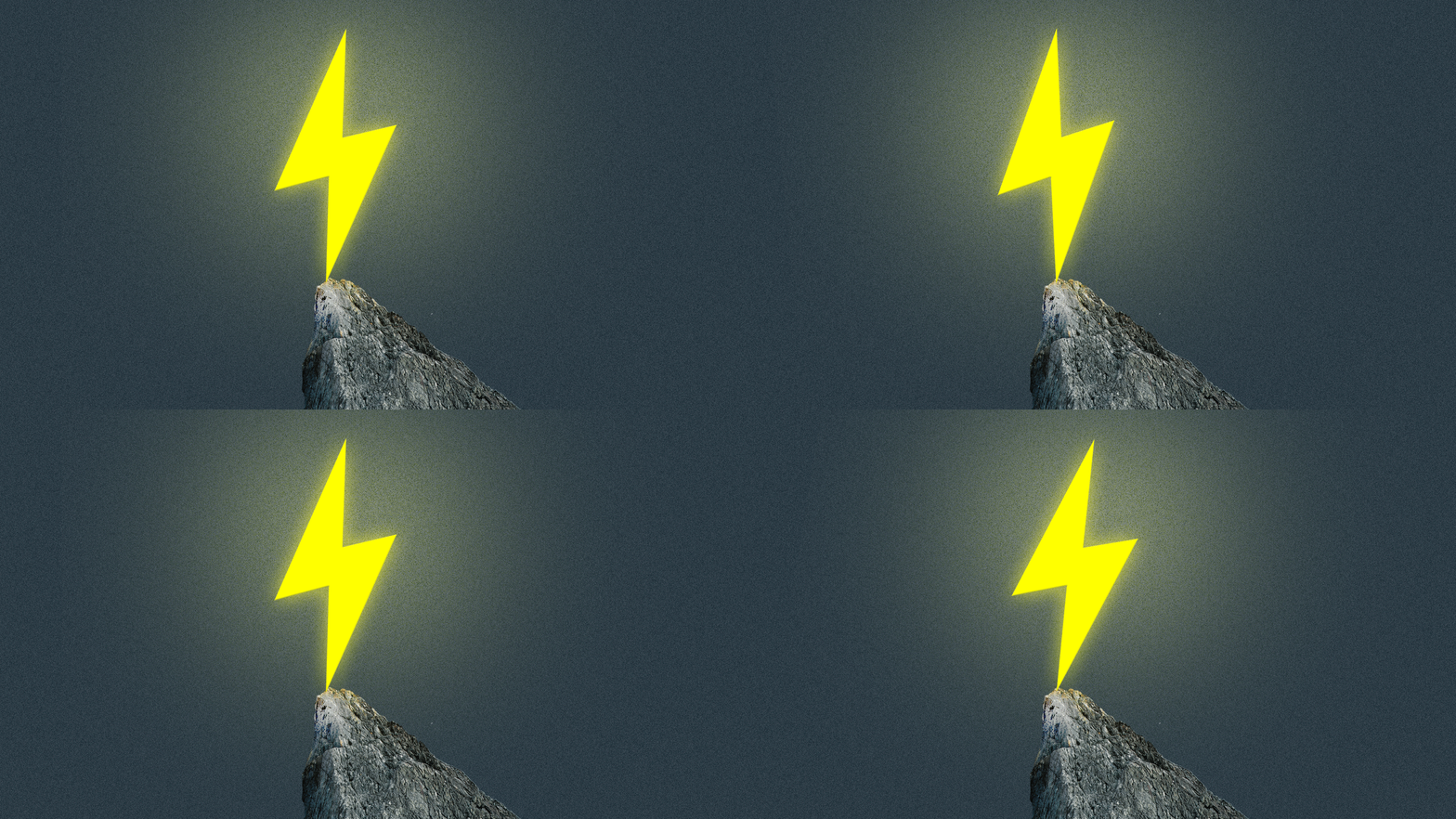



Illustration: Natalie Peeples/Axios
Several futuristic space experiments involving orbital data centers and high-tech energy transfers launched into orbit aboard a SpaceX Falcon 9 rocket Thursday afternoon.
Driving the news: Among the 130 payloads aboard the Transporter-18 "rideshare" mission:
- Google's MVP satellite, designed to test the concept of solar-powered data centers in space.
- Protostar, a satellite from startup Star Catcher meant to transmit energy to another satellite — to bear out the idea of an orbital power grid.
- Reason-1, a satellite from startup Cowboy Space designed to collect solar energy in space and beam it to Earth.
What they're saying: Cowboy Space founder and CEO Baiju Bhatt tells Axios that the idea is to provide power in places without an existing power grid — a kind of Starlink for energy — while also working toward orbital data centers.
- There are also potential military applications, Bhatt adds — powering high-endurance surveillance drones, for example.
Reality check: It's early days for all of these concepts, which have long existed on drawing boards and in sci-fi novels but have yet to be borne out.
The bottom line: It's a boom time for intriguing commercial efforts in Earth orbit, though SpaceX's plan to wind down its workhorse Falcon 9 rocket has left the space industry scrambling for launch alternatives.