Tesla reported an uptick in quarterly revenue and profit, but the costs of pivoting to an AI future are starting to add up.
Why it matters: CEO Elon Musk has directed the company to invest heavily in the development and production of humanoid robots, self-driving cars and AI chips.
Global electricity generation from renewables edged past coal in 2025, per a new analysis by Ember, a clean energy think tank.
Why it matters: The inflection point with renewables — mostly hydro, solar, wind and bioenergy — helped to keep CO2 emissions from power essentially flat even as consumption rose, it found.
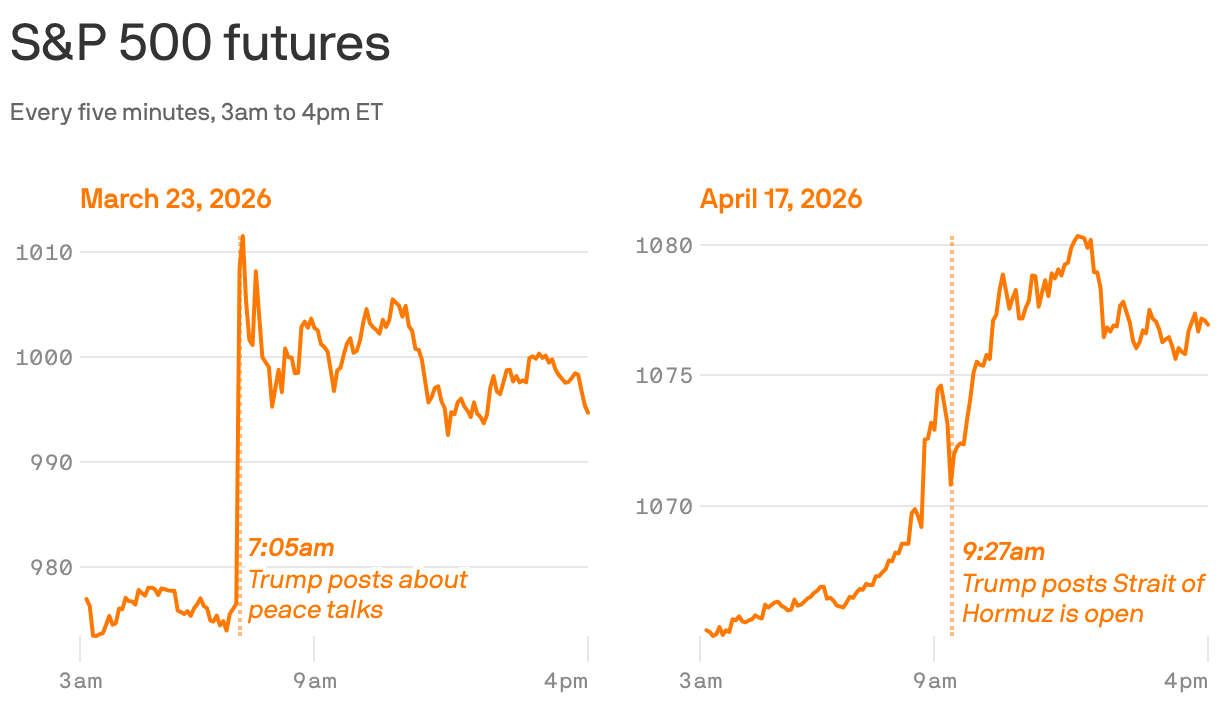
A well-timed, optimistic post on Truth Social from President Trump about the war in Iran can send stocks higher.
Why it matters: Social media posts from the White House have become key drivers of the oil and stock markets during the conflict, particularly as its resolution seems to keep moving further and further out of reach.
President Trump's decision to suspend a controversial maritime law during the Iran war has made it easier to ship oil across the U.S. — and now he wants to keep it that way, according to U.S. officials.
Why it matters: Known as the Jones Act, the 1920 law raises the cost of shipping between U.S. ports because it requires goods to be carried on American-flagged vessels, which are in relatively short supply compared to the global supply.
Even if the Iran conflict ended now and the Strait of Hormuz fully opened, don't look for a quick return to pre-war gas prices.
Why it matters: Costlier fill-ups are the most direct and visible economic effect of the war for many Americans, and could sway midterm election races.