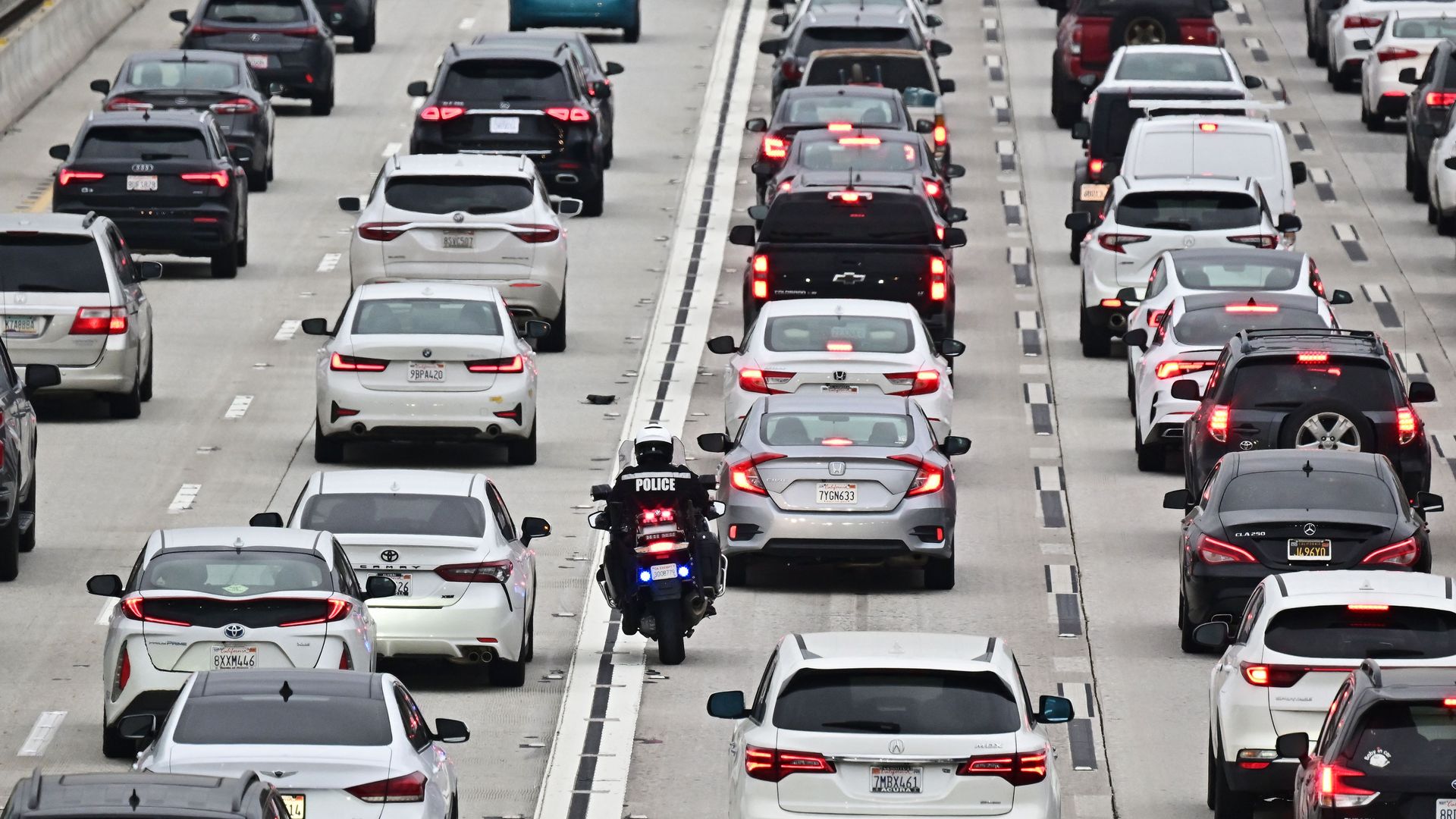
President Trump's newlyproposed fuel economy standards would roll back tough Biden-era targets that were intended to cut emissions and promote electric cars.
The big picture: Trump has been tearing up Biden administration policies he believes were intended to force EVs on Americans, and framed his latest plan as a common-sense strategy to make cars more affordable.
Waymo boasts that deploying robotaxis to new cities has become "routine." But in at least a half dozen of the markets it's targeting for expansion, it may have underestimated the policy roadblocks and political headwinds it faces.
Why it matters: Misreading local politics could foil Waymo's ambitious growth plans, erasing the giant lead the Alphabet-owned company has over competitors.
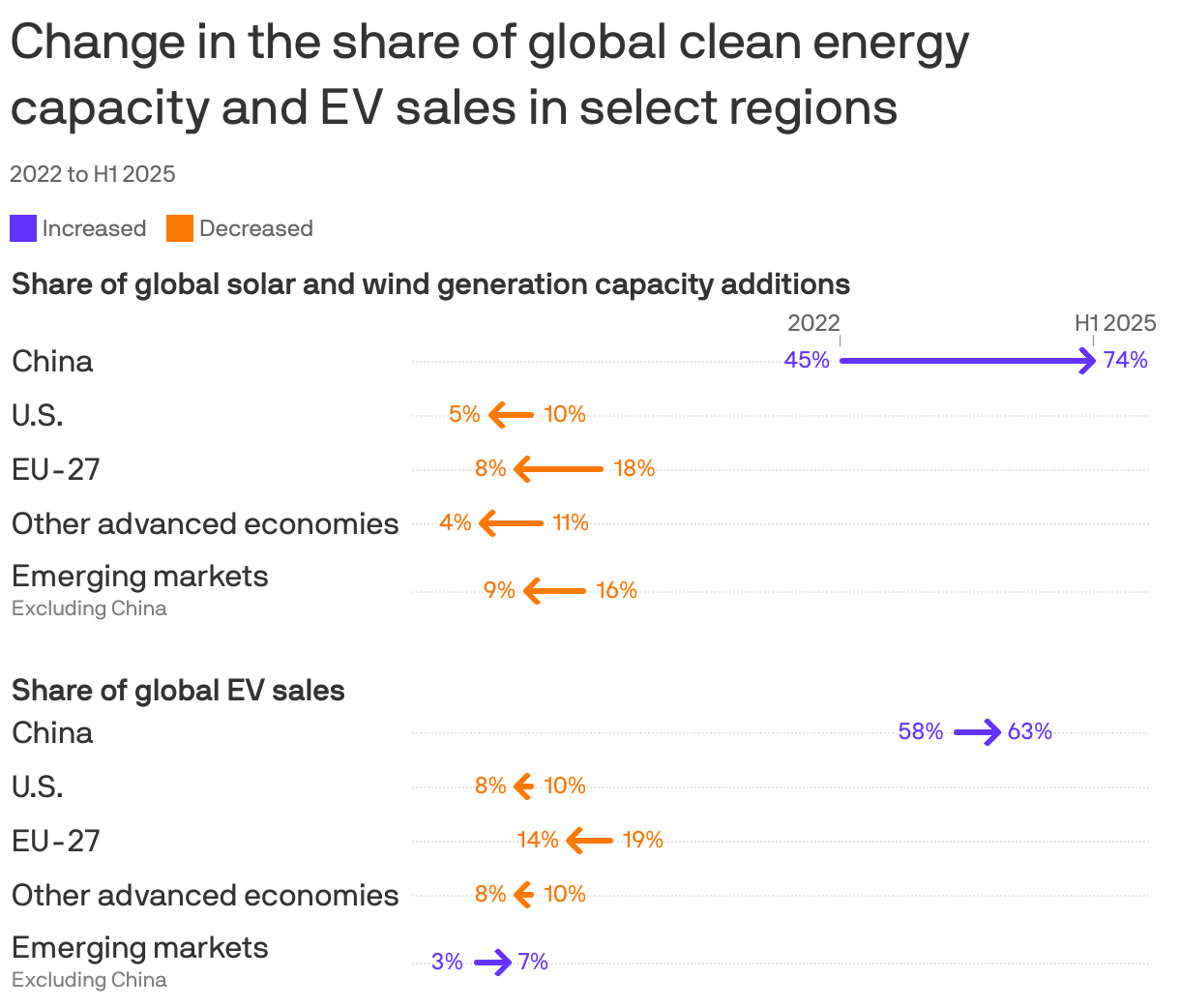
Data: McKinsey Global Institute; Chart: Axios Visuals; Note: EU-27 stands for the 27 countries that comprise the European Union
Not only is China winning the clean energy race, but it's picking up the pace when most other economies — including the U.S. — are slowing down, according to new McKinsey data.
Why it matters: The energy transition is shifting geopolitical alliances and power centers, and China is solidifying its lead while the U.S. falls back.
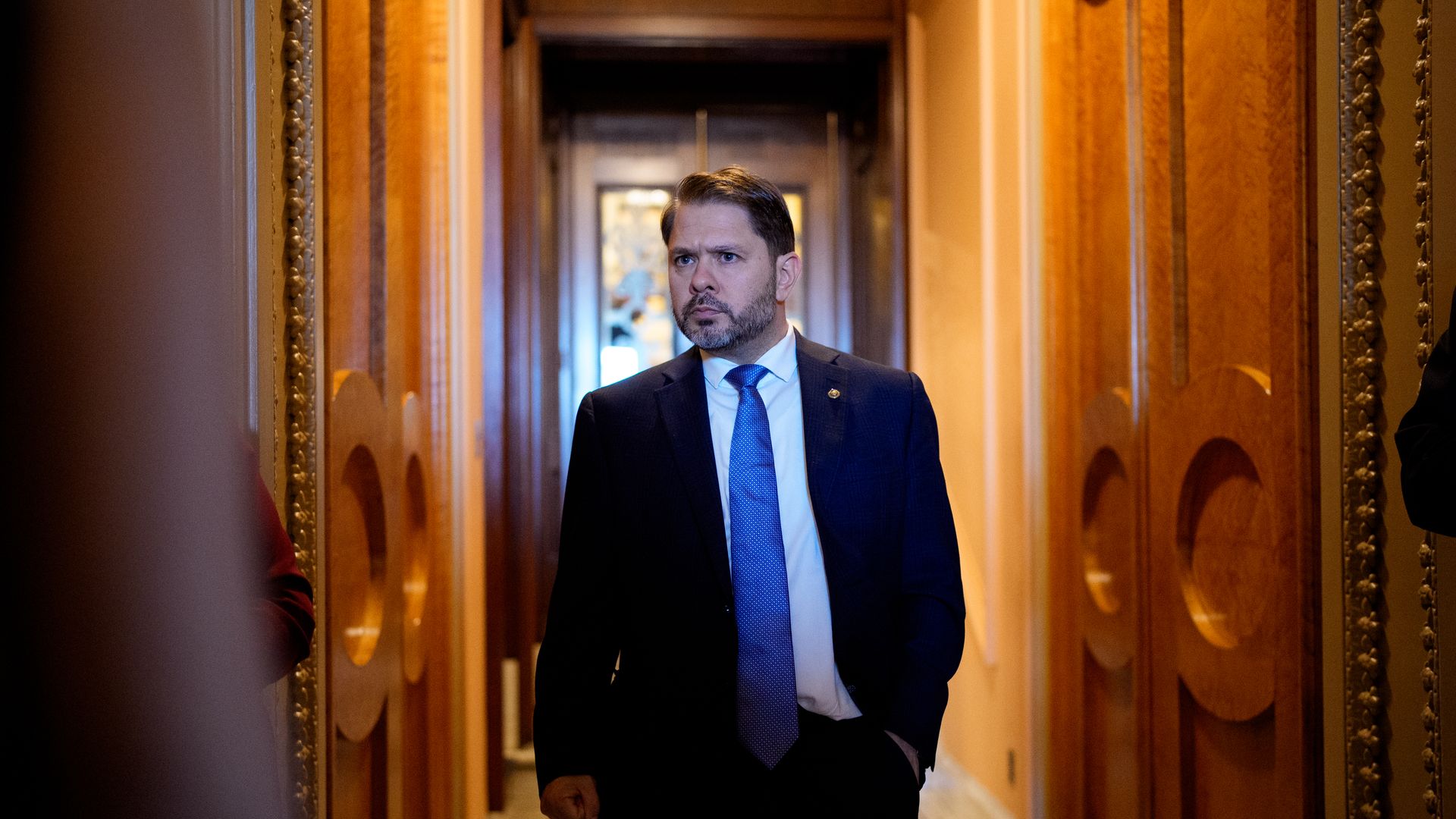
Sen. Ruben Gallego on Wednesday dropped an energy plan that's very much of this political moment: It leads with affordability, with climate present but not front and center.
Why it matters: The Arizona Democrat is a potential 2028 White House candidate, and his plan arrives as energy costs are atop the political radar.
Archer Aviation plans to create an electric air taxi network in south Florida by linking regional airports with properties owned by Miami Dolphins owner and real estate developer Stephen Ross.
Why it matters: Traffic in Miami, one of the fastest-growing metropolitan regions in the U.S., can be a nightmare.
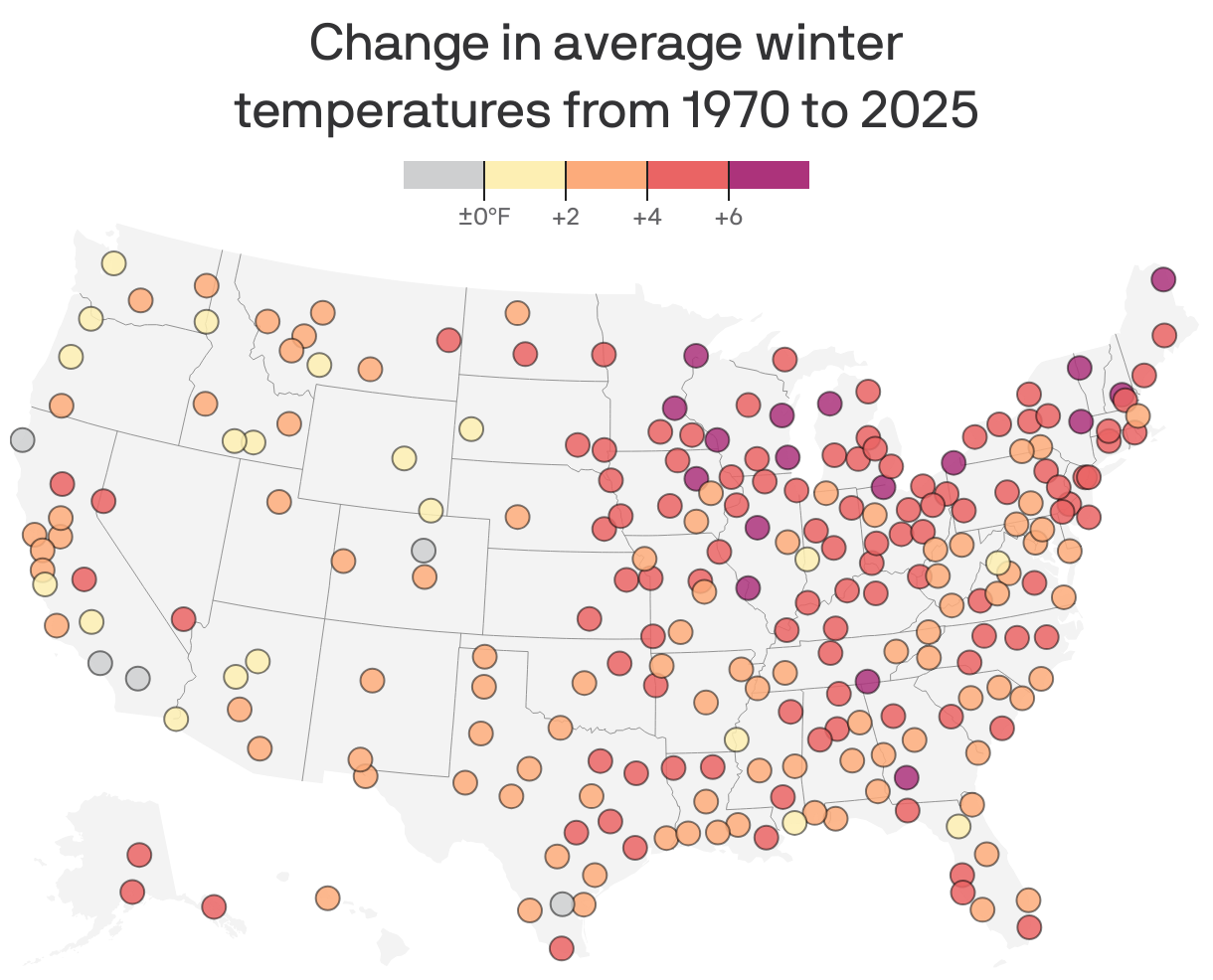
Driving the news: From 1970 to 2025, average winter temperatures rose in 98% of the 244 U.S. cities analyzed in a new report from Climate Central, a climate research group.
Among the cities with an increase, winter temperatures rose nearly 4°F on average.
"Since 1970, the average number of warmer-than-normal winter days has increased in 97% of the 244 cities analyzed," the report adds.
Zoom in: Many of the cities with the most warming over the covered period are in places with traditionally cold winters, including Burlington, Vermont (+8.1°F); Milwaukee, Wisconsin (+7.3°F) and Green Bay, Wisconsin (+7°F).
Between the lines: 'The most rapid warming in the U.S. has generally occurred when and where it's coldest — including at night, in northern parts of the country, and during winter," the group adds.
How it works: Climate Central's analysis is based on NOAA data covering December, January and February of each year included.
What's next: NOAA's latest winter outlook is calling for an elevated chance of below-normal temperatures for parts of the Pacific Northwest, northern Rockies and Midwest.
There's an elevated chance of above-normal temperatures across parts of the South, Southwest, Southeast and mid-Atlantic.