How winter has warmed over time in your city

Add Axios as your preferred source to
see more of our stories on Google.
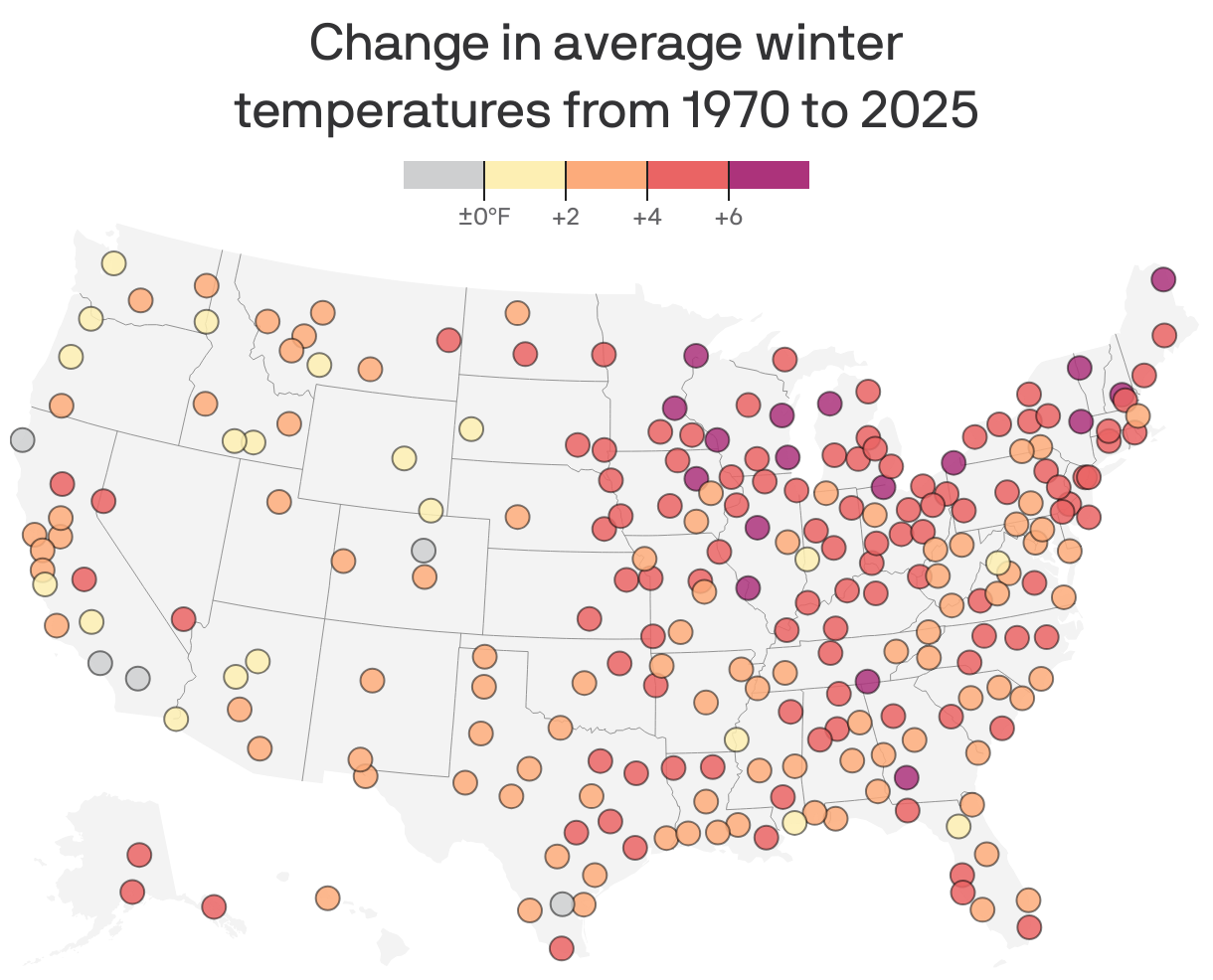
Winter is getting warmer nearly nationwide amid climate change, an updated analysis finds.
Why it matters: Warmer winters can be a bummer for skiers and snowboarders, affect water supplies tied to annual snowmelt, and more.
Driving the news: From 1970 to 2025, average winter temperatures rose in 98% of the 244 U.S. cities analyzed in a new report from Climate Central, a climate research group.
- Among the cities with an increase, winter temperatures rose nearly 4°F on average.
- "Since 1970, the average number of warmer-than-normal winter days has increased in 97% of the 244 cities analyzed," the report adds.
Zoom in: Many of the cities with the most warming over the covered period are in places with traditionally cold winters, including Burlington, Vermont (+8.1°F); Milwaukee, Wisconsin (+7.3°F) and Green Bay, Wisconsin (+7°F).
Between the lines: 'The most rapid warming in the U.S. has generally occurred when and where it's coldest — including at night, in northern parts of the country, and during winter," the group adds.
How it works: Climate Central's analysis is based on NOAA data covering December, January and February of each year included.
What's next: NOAA's latest winter outlook is calling for an elevated chance of below-normal temperatures for parts of the Pacific Northwest, northern Rockies and Midwest.
- There's an elevated chance of above-normal temperatures across parts of the South, Southwest, Southeast and mid-Atlantic.
