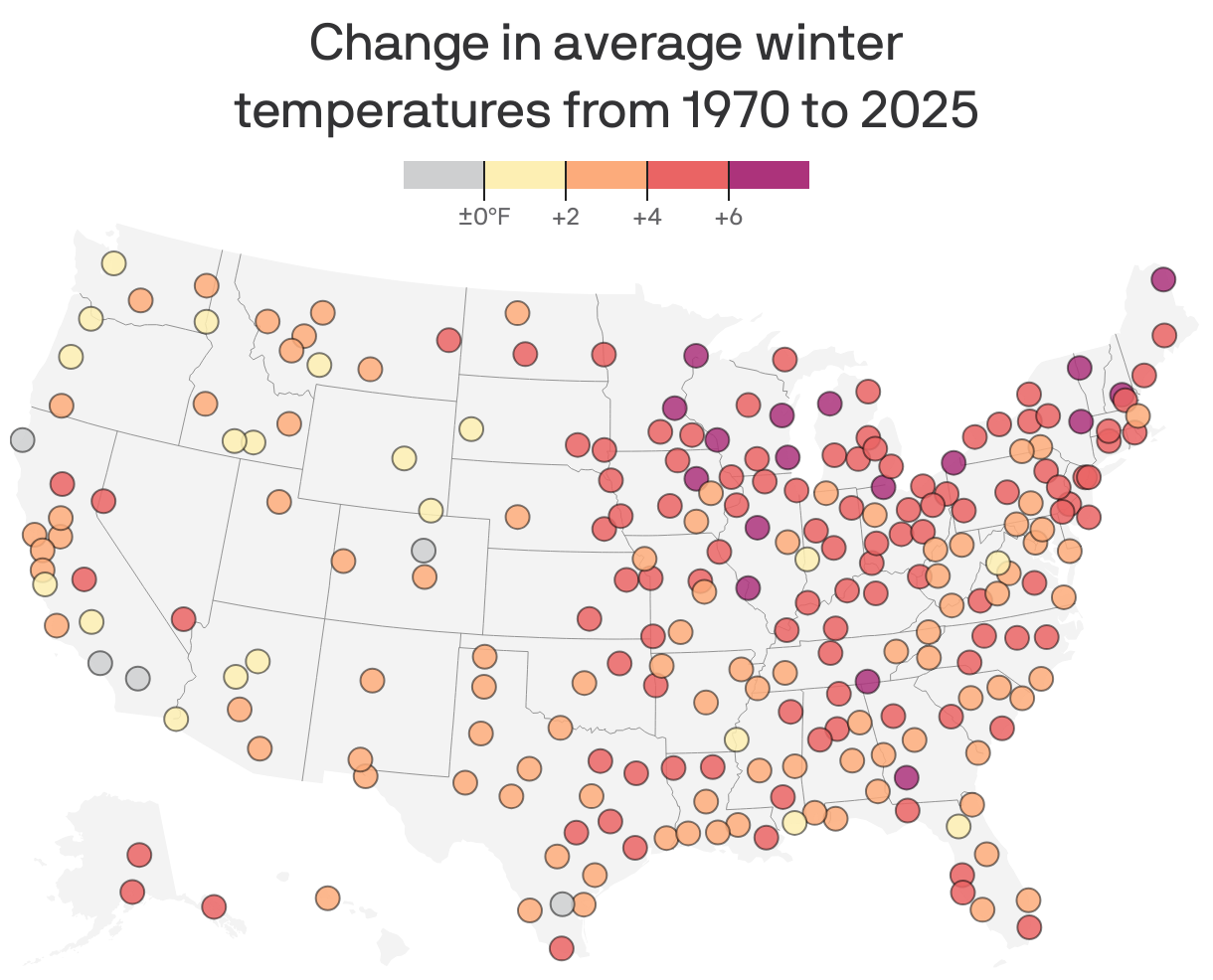
Driving the news: From 1970 to 2025, average winter temperatures rose in 98% of the 244 U.S. cities analyzed in a new report from Climate Central, a climate research group.
Among the cities with an increase, winter temperatures rose nearly 4°F on average.
"Since 1970, the average number of warmer-than-normal winter days has increased in 97% of the 244 cities analyzed," the report adds.
Zoom in: Many of the cities with the most warming over the covered period are in places with traditionally cold winters, including Burlington, Vermont (+8.1°F); Milwaukee, Wisconsin (+7.3°F) and Green Bay, Wisconsin (+7°F).
Between the lines: 'The most rapid warming in the U.S. has generally occurred when and where it's coldest — including at night, in northern parts of the country, and during winter," the group adds.
How it works: Climate Central's analysis is based on NOAA data covering December, January and February of each year included.
What's next: NOAA's latest winter outlook is calling for an elevated chance of below-normal temperatures for parts of the Pacific Northwest, northern Rockies and Midwest.
There's an elevated chance of above-normal temperatures across parts of the South, Southwest, Southeast and mid-Atlantic.
Bill Gates says he would support deploying artificial cooling technologies to lower global temperatures — but only if the planet hits so-called climate tipping points.
Why it matters: The Microsoft co-founder and philanthropist is a major funder of research into this controversial technology, and his comments in a recent interview with Axios are among his most expansive yet.