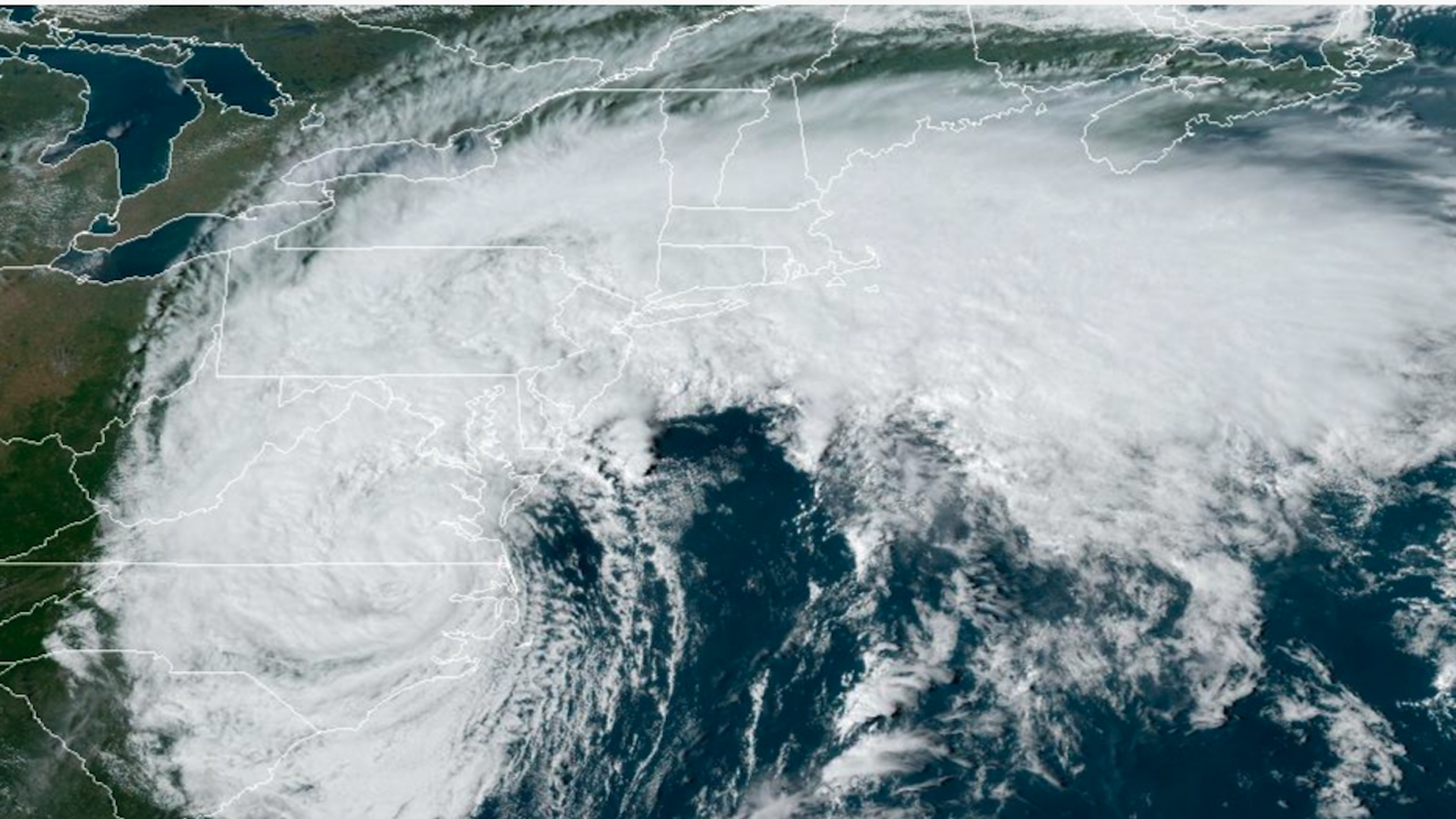
Tropical Storm Ophelia is bringing heavy rains, strong winds and coastal flooding Saturday from the Carolinas to the Jersey Shore.
The big picture: The storm made landfall early Saturday morning near Emerald Isle, N.C., with top sustained winds of 70 mph. It was steadily weakening Saturday afternoon, and forecast to become a tropical depression Saturday evening.
Large swaths of the Sun Belt were hit by their hottest meteorological summer — June through August — on record.
Why it matters: The odds and severity of extreme heat events are rapidly increasing as the climate warms in response to human emissions of greenhouse gases.
New York City's super-sized Climate Week featured a stark split-screen between the official business of the week, as showcased at the UN Climate Ambition Summit, and a trade show-like glimpse into our lower carbon future.
Why it matters: The core message from both sides is that progress is being made to decarbonize economies, but the pace and scale are nowhere as fast or sweeping as they need to be.
There are thousands of facilities that house large quantities of hazardous chemicals in communities across the U.S. Most Americans may not know they're there.
Why it matters: Accidents at these facilities have seriously injured — or even killed — people who work there.
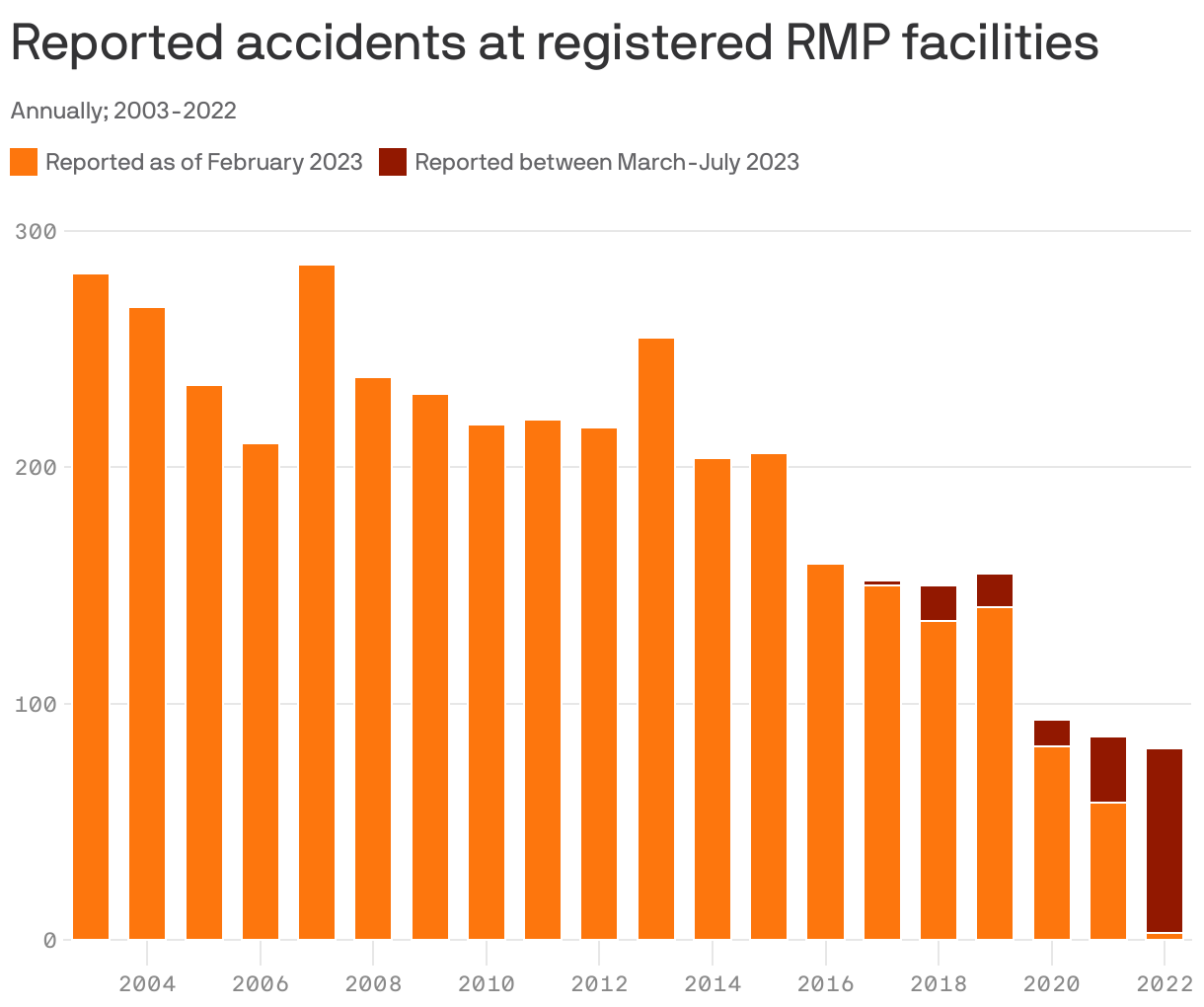
Data: EPA, The Data Liberation Project; Chart: Thomas Oide/Axios
Chemical accidents at facilities with a risk management plan are supposed to be reported to the Environmental Protection Agency within six months, But public records indicate that's not always happening.
Why it matters: The number of accidents per year is steadily declining. But delayed reporting can produce an inaccurate picture of how safe the U.S.' chemical-storage infrastructure truly is.
Most of the chemical accidents reported to the EPA over the past 20 years involved one of 3 chemicals, according to Axios' analysis of records obtained by the Data Liberation Project.
The big picture: Workers have suffered serious injuries from these mishaps.