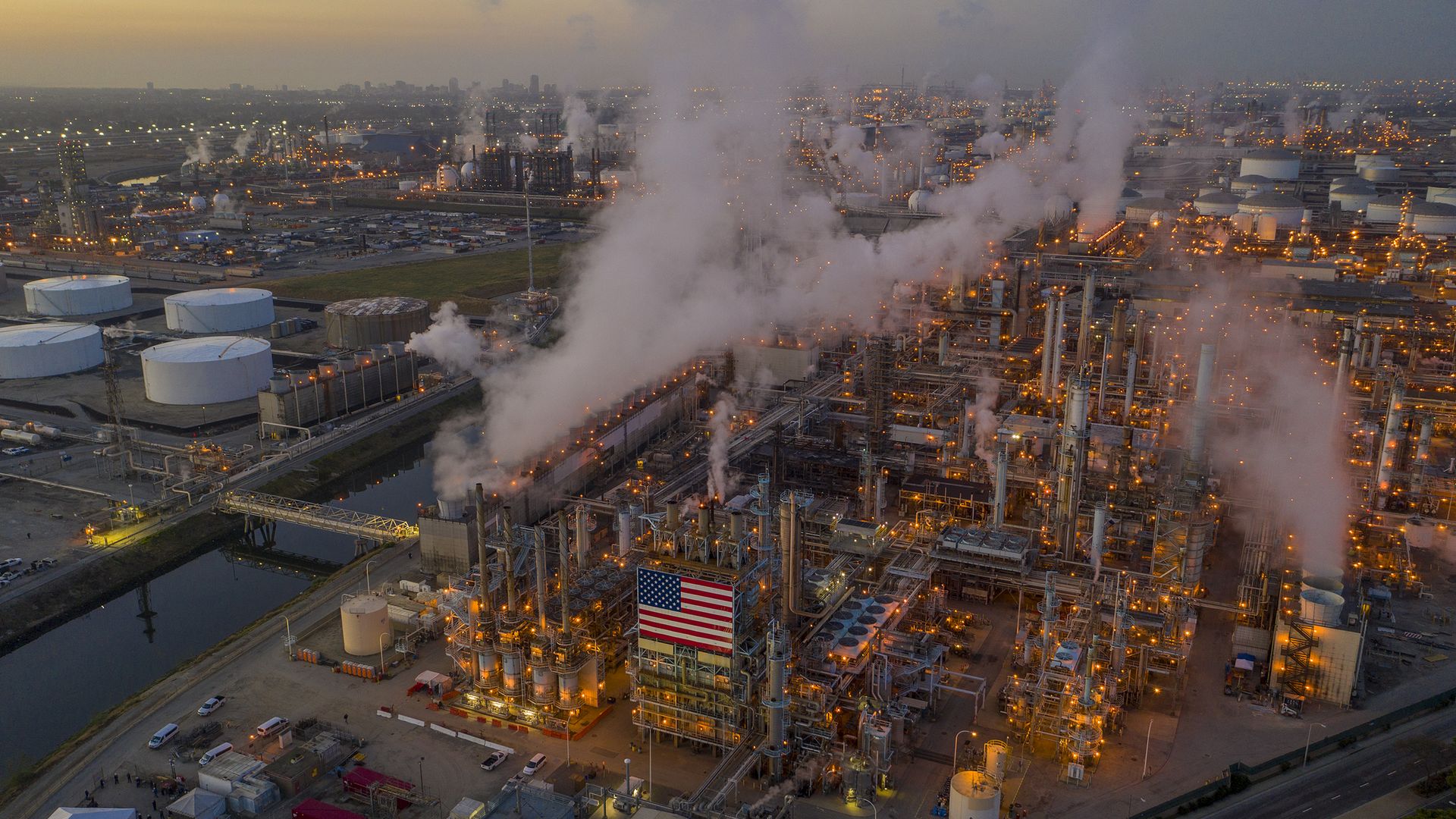
Why it matters: Flood and storm surge events amplified by sea level rise against such facilities could increase the chances of hazardous chemicals escaping from the sites and contaminating nearby communities.
The Supreme Court may indirectly impose fresh limits on how federal regulators can address climate change without explicit congressional blessing.
Driving the news: The court said Monday it will hear litigation about "Chevron deference" — the longstanding doctrine that agencies deserve leeway in writing regulations when statutes are either vague or silent on a topic.
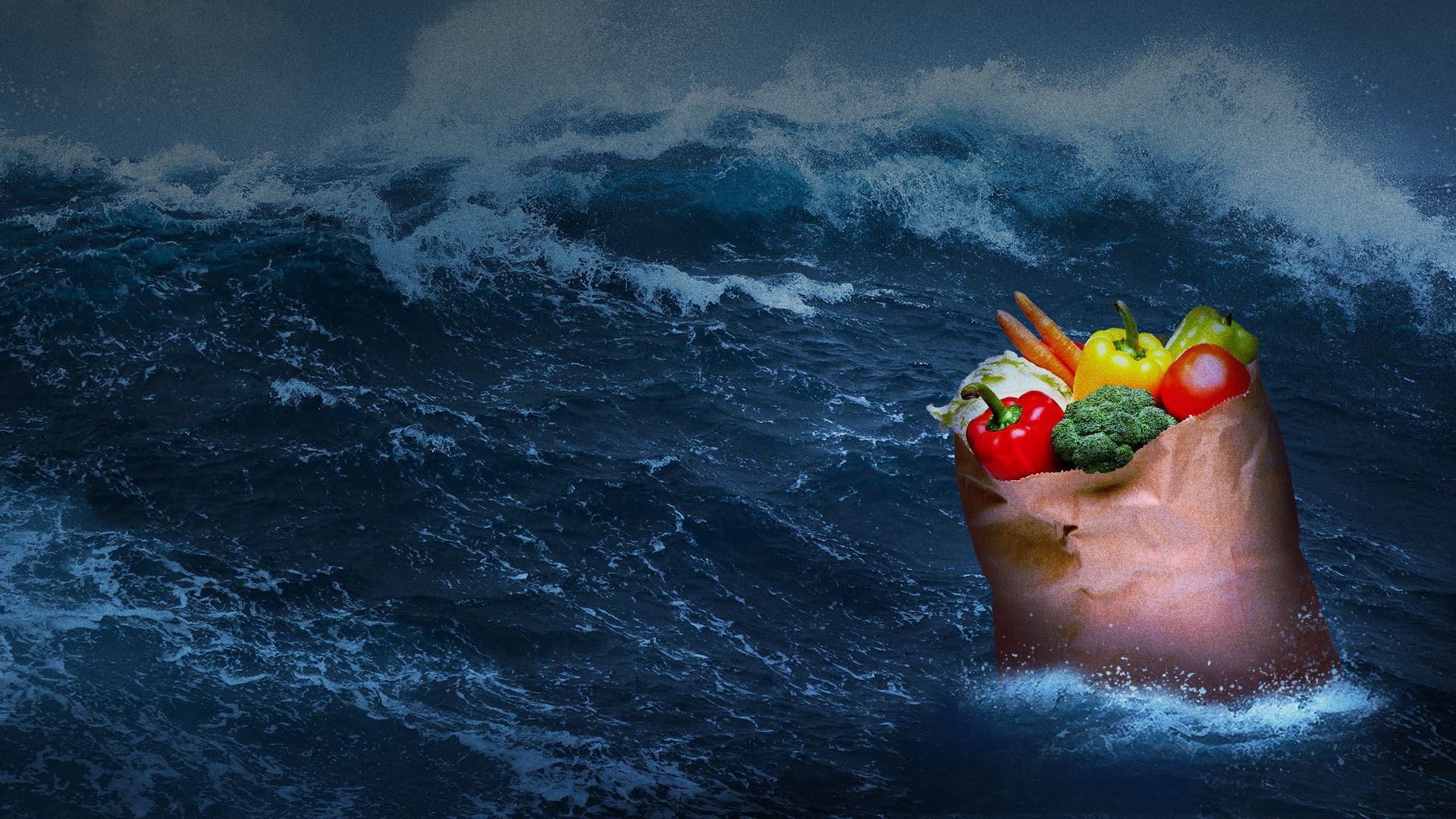
A looming El Niño — an ocean-atmosphere phenomenon that shifts temperatures and changes rainfall patterns — could lead to declines in U.S. agricultural production.
Why it matters: Any decrease in agricultural production could further spike food costs and exacerbate the state of food insecurity across the country.
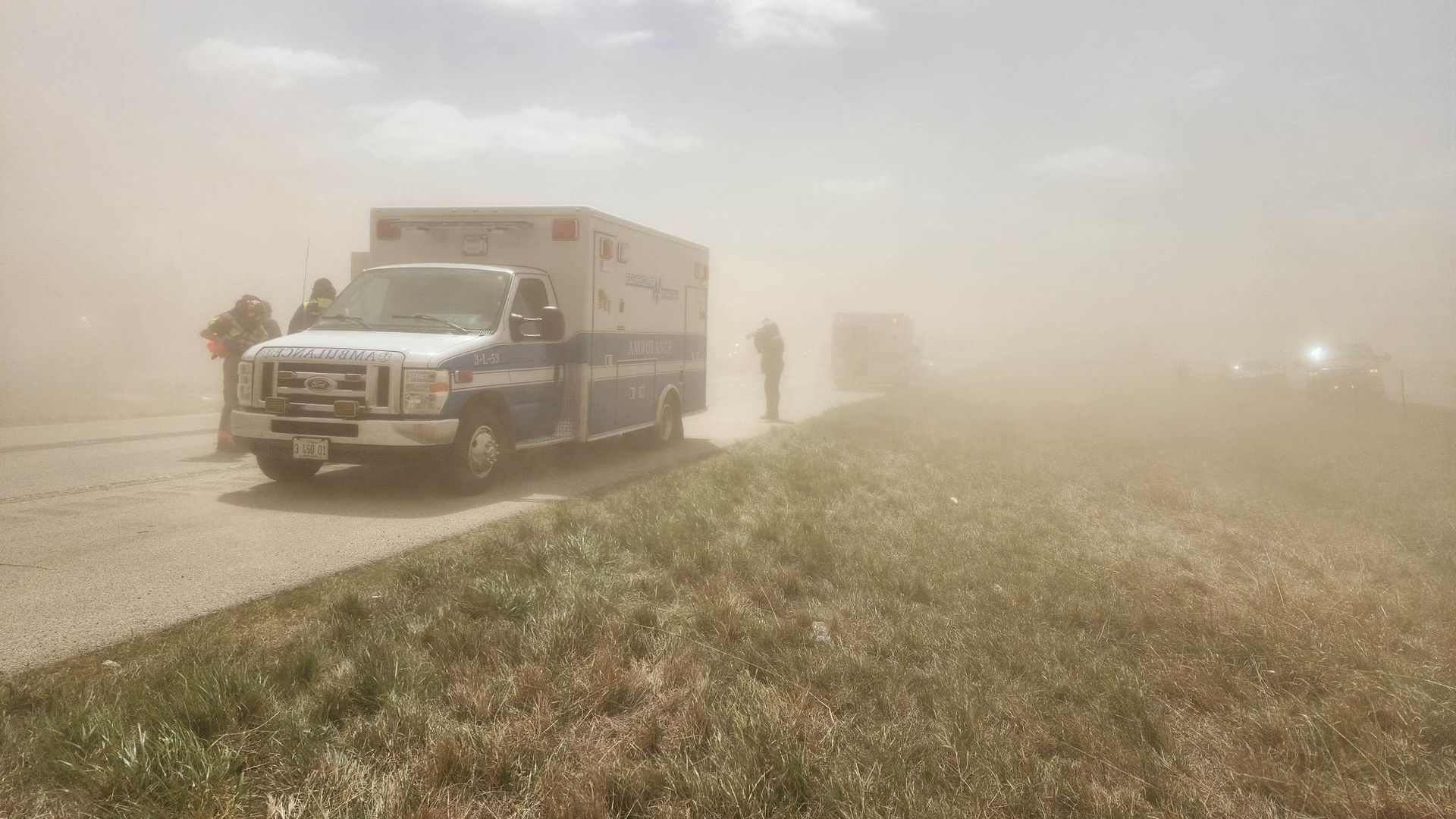
At least six people were killed and over 30 more were injured after a dust storm along a major highway in central Illinois on Monday caused dozens of vehicle crashes, state police said.
The big picture: The crashes occurred just before 11am local time and involved 40 to 60 cars and about 30 commercial vehicles — including at least two truck tractor semi-trailers that caught on fire, according to Illinois State Police.
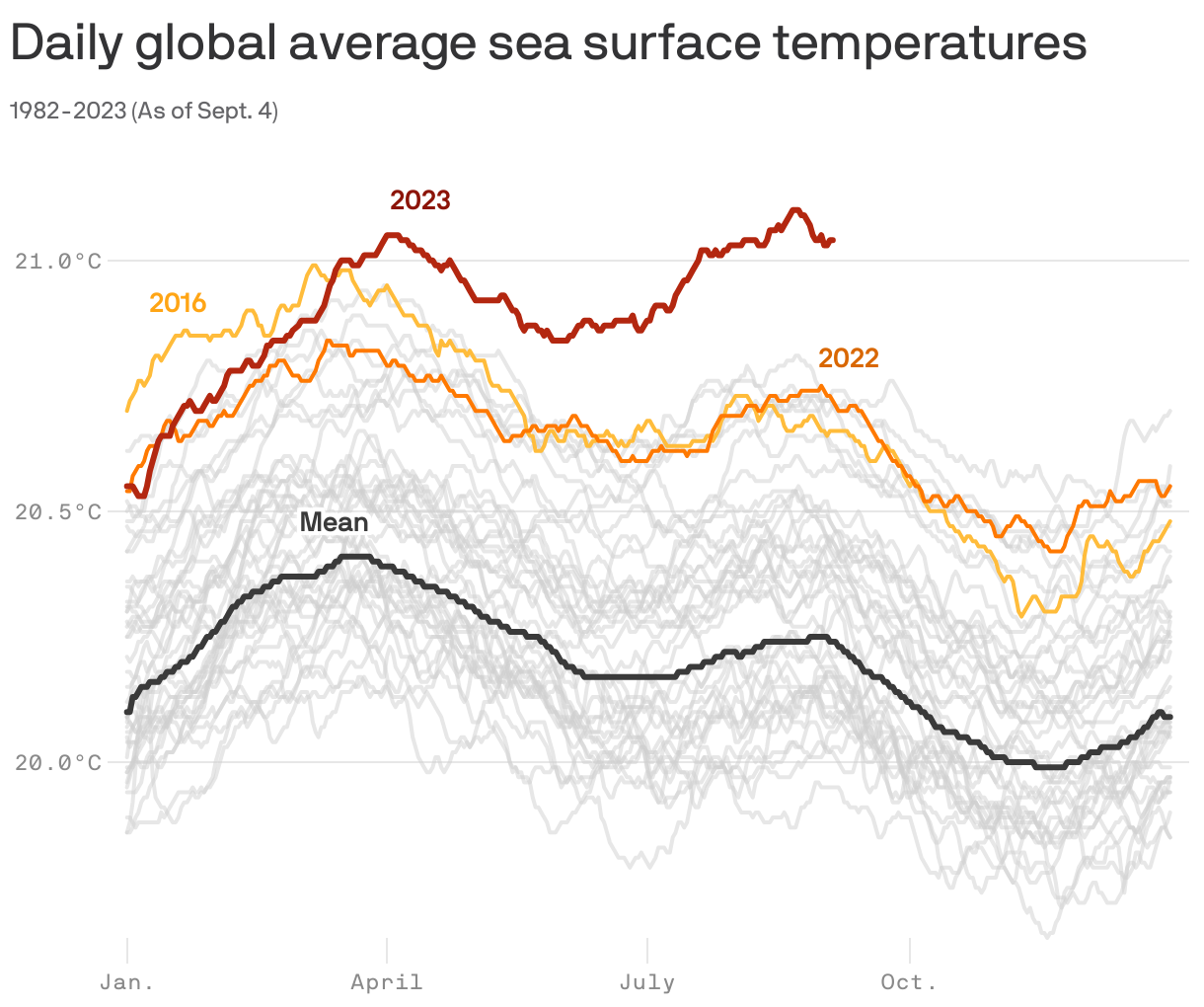
Data: ClimateReanalyzer.org; Note: Average reflects 1982-2011 mean; Chart: Rahul Mukherjee and Simran Parwani/Axios
Since mid-March, the world’s oceans have been hotter than at anytime since at least 1982, raising concerns among some climate experts about accelerated warming.
Why it matters: Hotter oceans are hugely consequential for land areas, since they can contribute to more frequent and severe extreme weather and climate events, from deluges to heat waves.