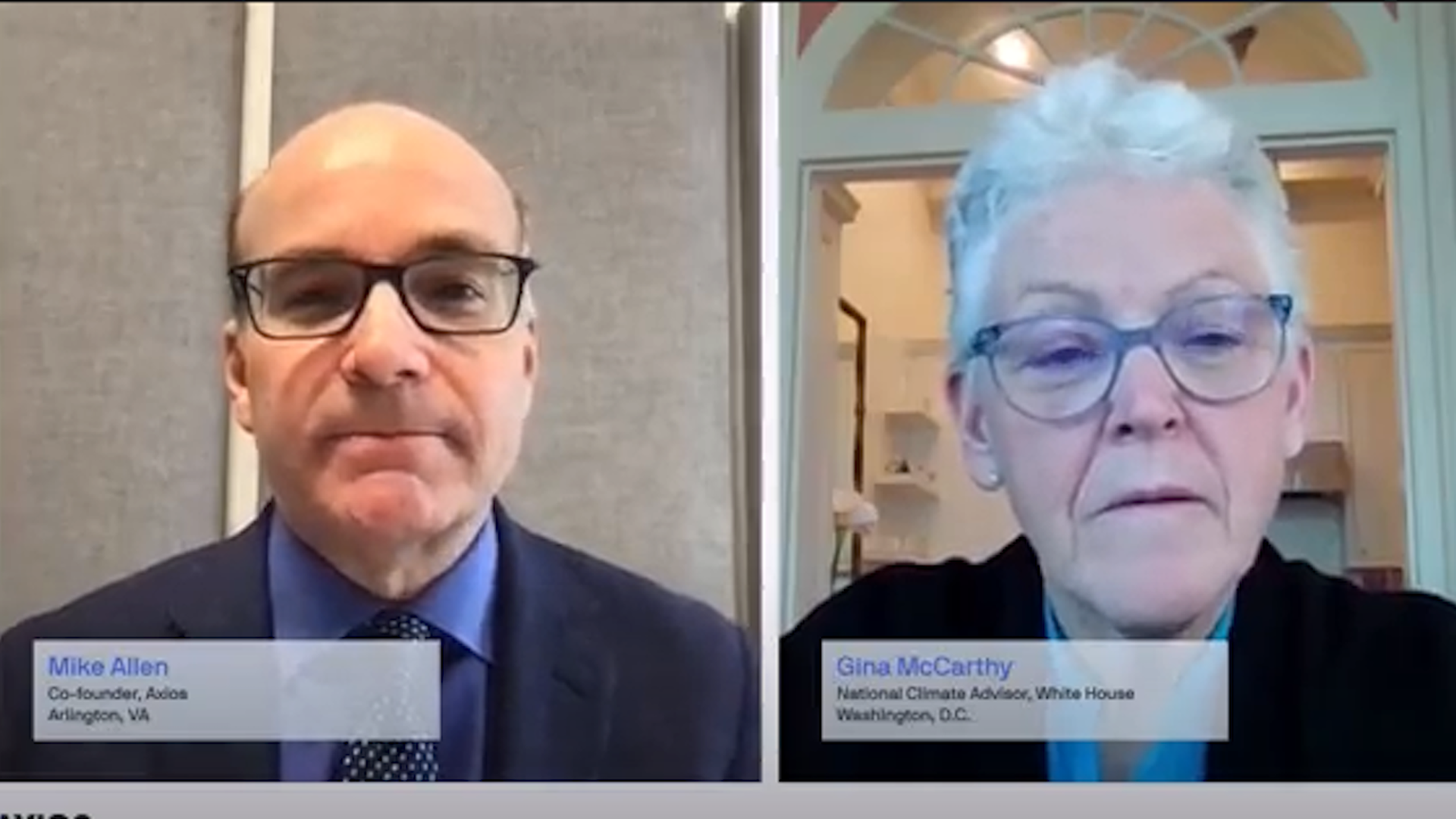
White House national climate adviser Gina McCarthy is optimistic about enlisting Sen. Joe Manchin's help on a potential climate bill, she told Axios during an Earth Day event Friday.
Why it matters: Manchin has recently signaled that he'd support some climate provisions as part of a pared-down version of the Build Back Better Act, which failed in Congress after Manchin turned against it and Republicans solidly opposed it.
Crusoe Energy Systems, a Denver-based flared gas bitcoin miner, raised $350 million in Series C venture capital funding led by G2VP. It also secured $155 million in new credit facilities.
Why it matters: Crusoe's tech, which uses waste natural gas to power mining activities, could cut conflicts between crypto and climate. The company soon plans to expand its commercial efforts into cloud computing, which also has giant energy requirements.
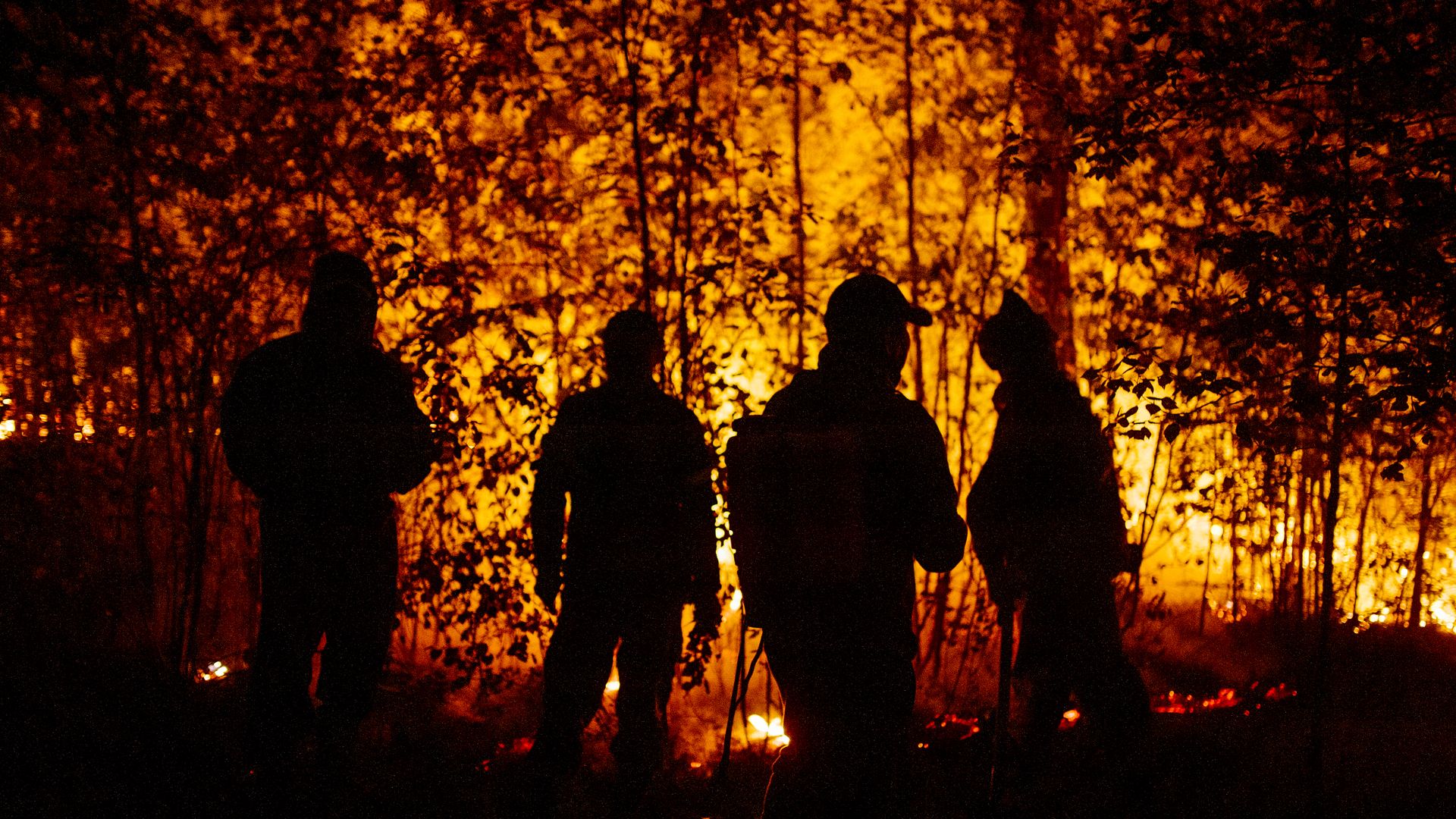
A tragic link between war and global warming could unfold imminently in Siberia: Wildfires that spew emissions may burn out of control because Russian military units that normally locate and fight them are in Ukraine.
Why it matters: Russian wildfires are a major source of carbon dioxide emissions, and some types of fires there also send black carbon, or soot, into the Arctic, which fuels sea ice melt.
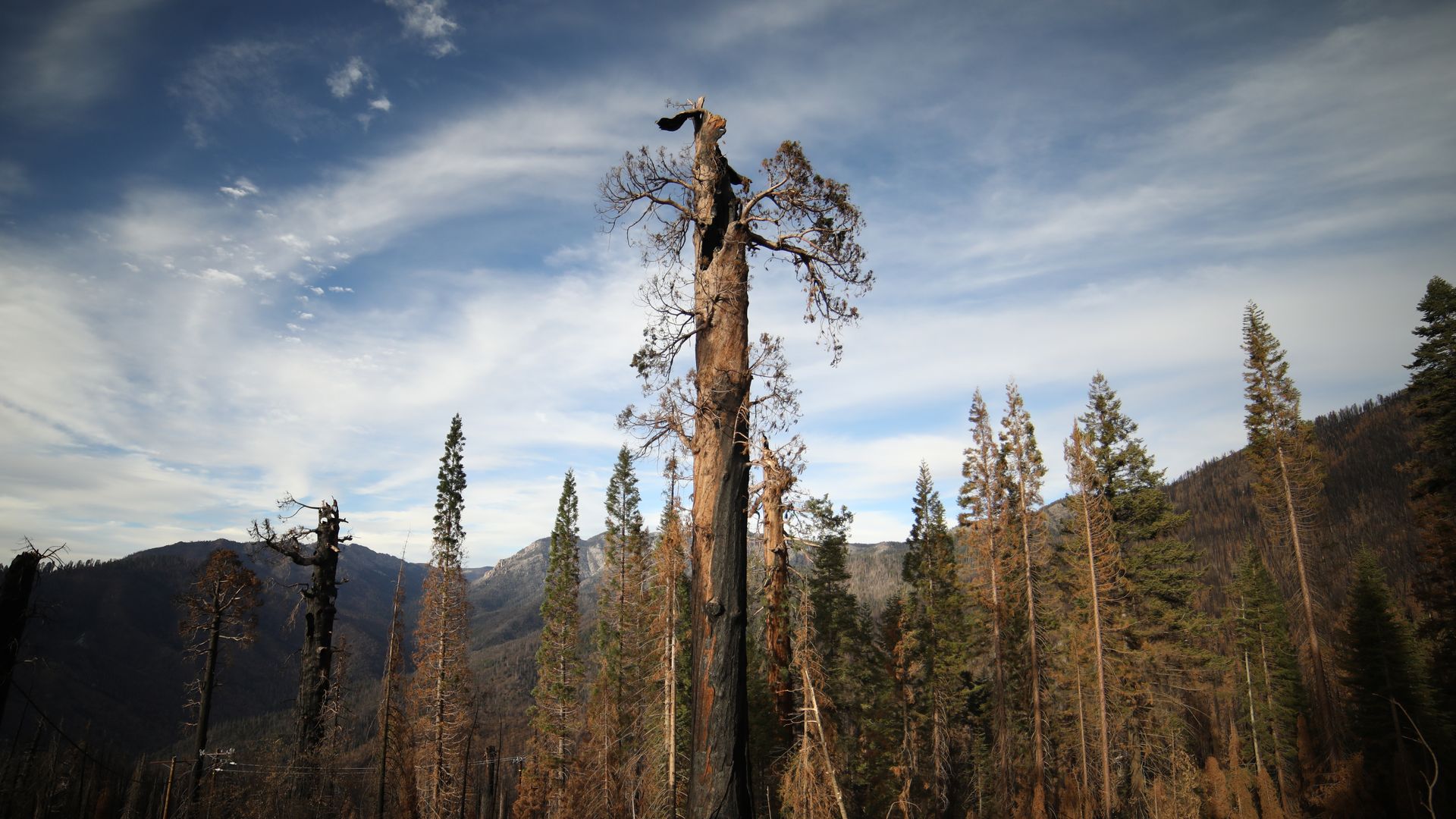
President Biden will issue an executive order Friday aimed at protecting forests domestically and overseas, and more broadly boosting natural carbon absorption to fight climate change, administration officials said.
Why it matters: The Earth Day order comes as global warming is increasing wildfire risks and harms, and amid growing interest in "nature-based" climate solutions.
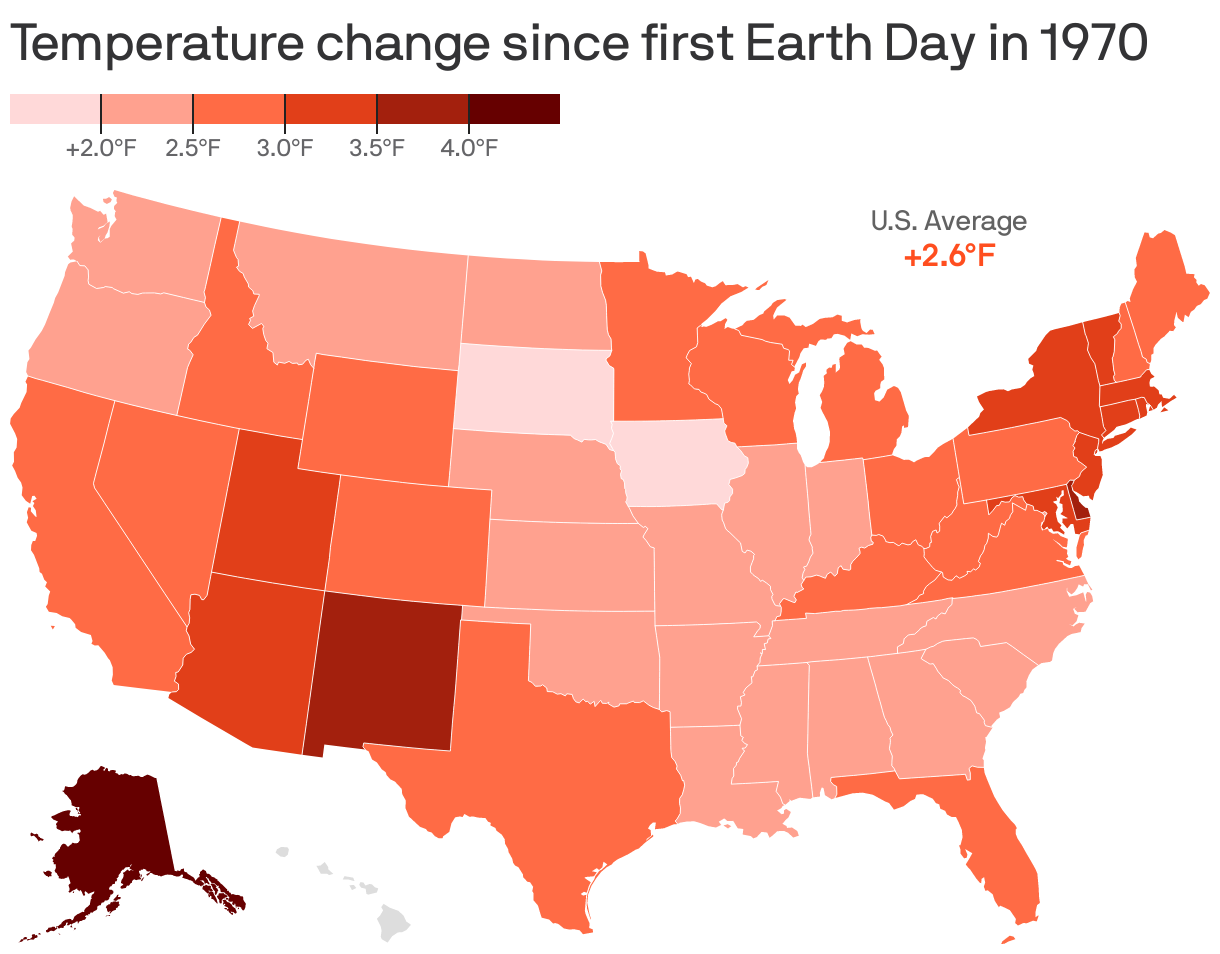
Data: Climate Central/RCC-Acis.org/ NCEI; Note: Average temperatures rounded up to nearest tenth. No data available for Hawaii; Map: Jacque Schrag/Axios
Since the first Earth Day on April 22, 1970, the U.S. national average temperature has climbed by 2.6°F, and the states have warmed — many significantly.
As the sheer number and types of insects living on Earth's land decreases, scientists are beginning to determine the impacts of habitat loss, climate change and other threats on insect populations worldwide.
What's new: The combined consequences of climate change and high-intensity agriculture may be driving declines in insects — on average by 49% in some of the most impacted places, according to a study published this week in Nature.
Russia's war is laying bare a tricky problem — new oil-and-gas infrastructure may be needed now, but will help cook the planet if it operates for decades.
Why it matters: European plans to ditch Kremlin-backed suppliers are spurring calls for more LNG and related pipelines and equipment.
Policymakers are starting to lag behind the private sector when it comes to the urgency of reducing emissions, according to Mark Carney, United Nations special envoy for climate action and finance.
Why it matters: Private sector financing is crucial to helping countries slash emissions at the pace required to meet the temperature targets set out in the Paris Agreement.
The General Services Administration (GSA), which helps federal agencies build, purchase and retrofit office space, has cut its building portfolio's annual operational greenhouse gas emissions by 51% compared to fiscal 2008 levels, the agency first told Axios.
Why it matters: The Biden administration has set a government-wide goal of cutting emissions by 50% by 2032, which means the GSA is about a decade ahead of that target.
Batteries are the new oil — and the U.S. is lagging behind Europe and China in the race to make them.
Why it matters: The historic shift to electric vehicles will give the U.S. a fresh chance to achieve energy independence, but it will require complex strategic moves that won't pay off for years.
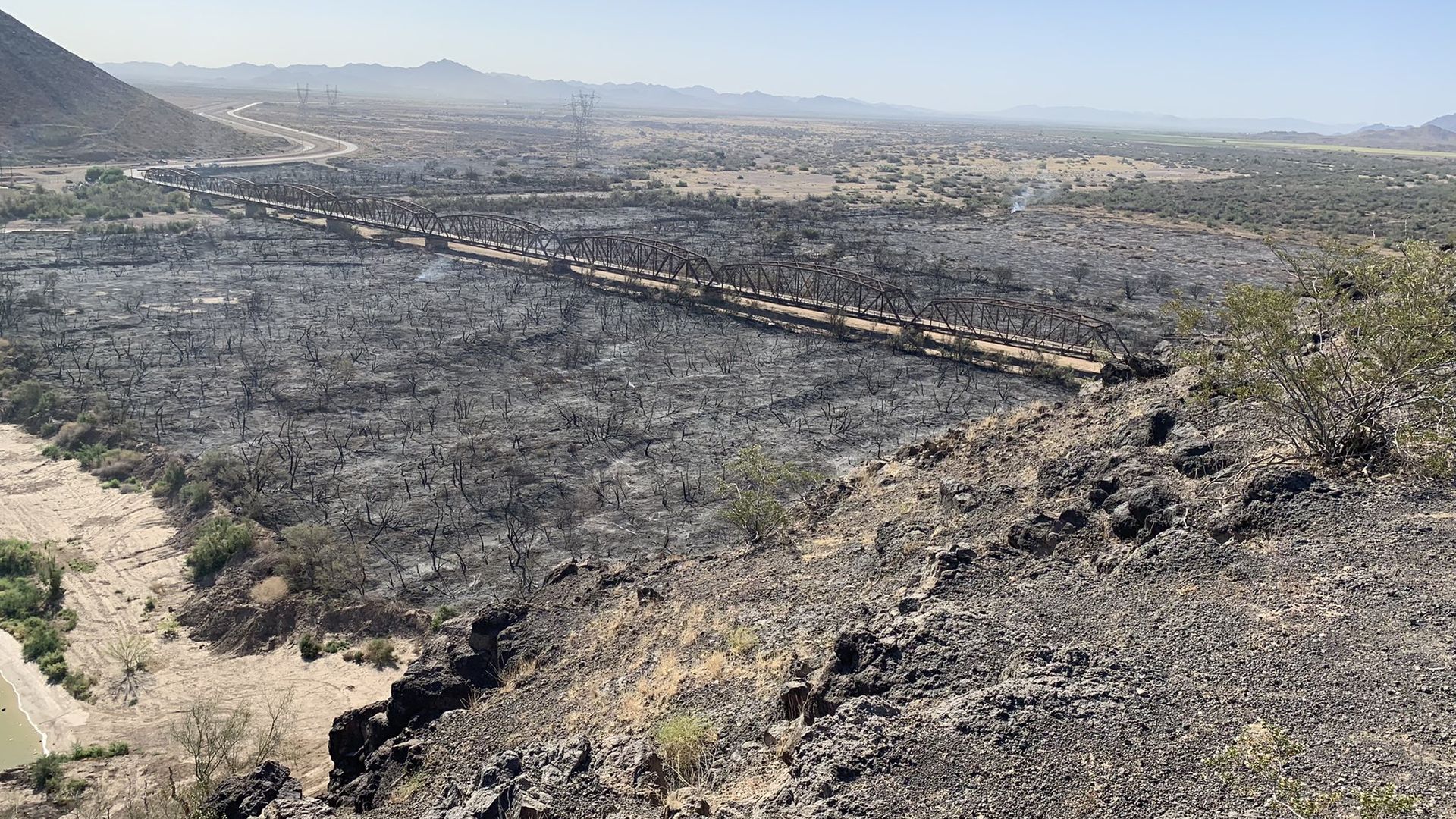
Wildfires raging across the U.S. Southwest have razed structures and forced hundreds of people to evacuate — heralding an early start to the fire season, per AP.
Driving the news: The region is facing windy conditions as 90% of the West is in moderate to "exceptional" drought, according to the U.S. Drought Monitor. Arizona is in this category, as is 78% of the High Plains — including Colorado.