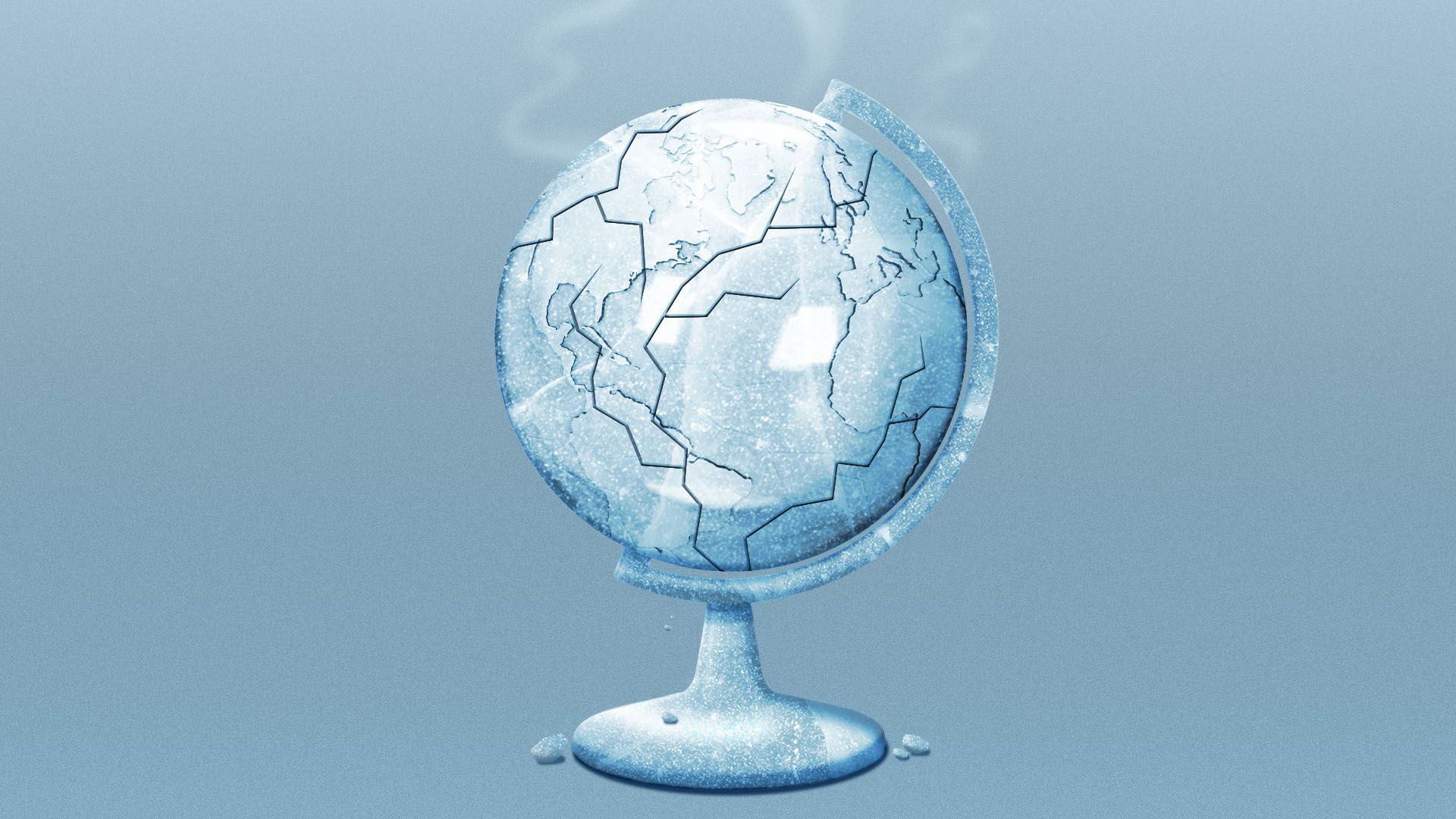
Crucial scientific projects in the Arctic are in limbo — and their progress is under threat — as Russia becomes more isolated from the world for its invasion of Ukraine.
Why it matters: These research collaborations provide key insights about the effects of climate change, the health of the oceans and geology — and they underpin cooperation among the U.S., Russia and others in the geopolitical hotspots of the Arctic and Antarctica.
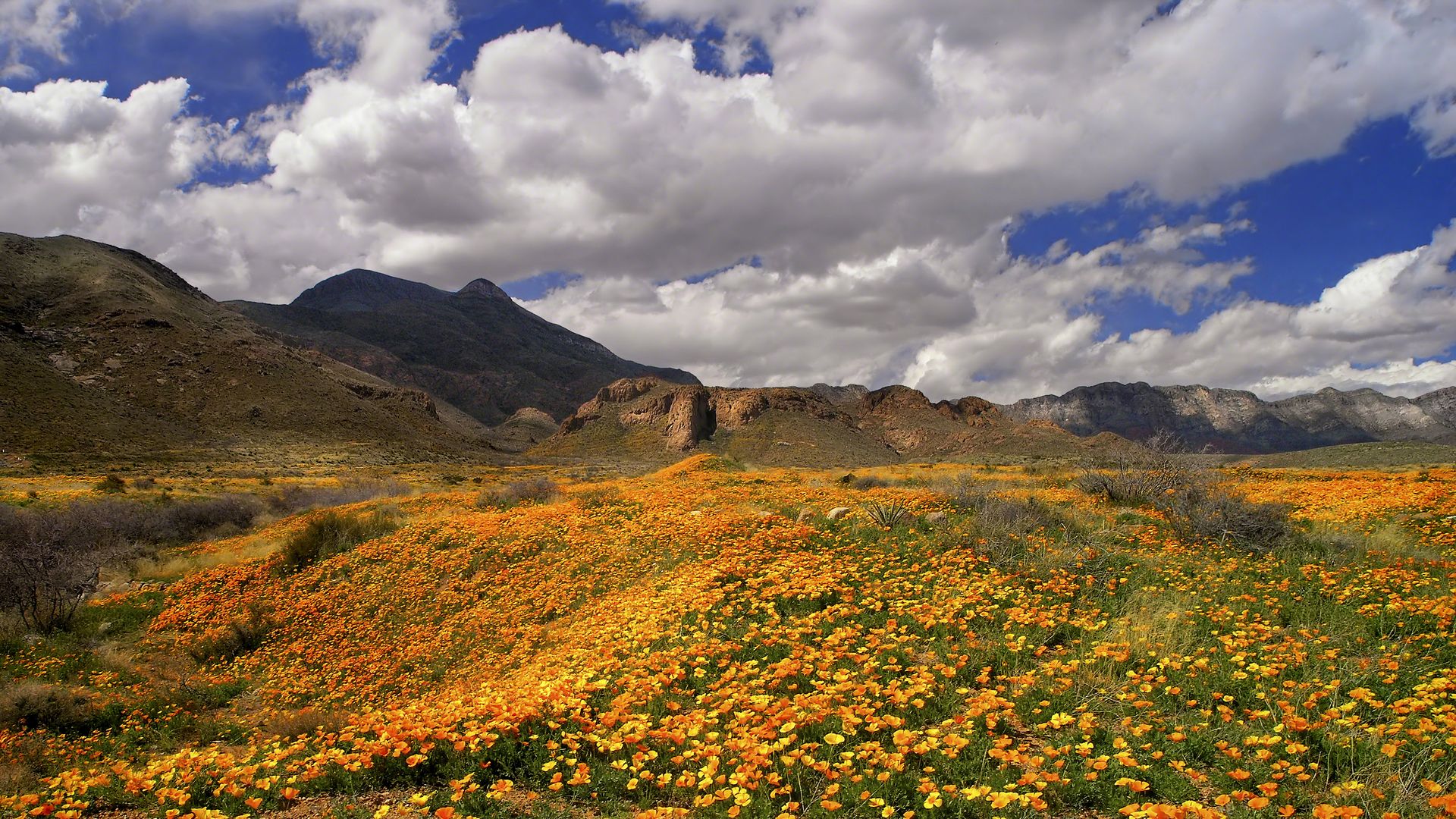
Advocates want the Biden administration to declare 7,000 acres outside El Paso, Texas, a national monument to give Mexican Americans and others in the area needed public space for hiking and other outdoor activities.
The big picture: Castner Range, a former U.S. Army artillery training facility, sits in desert terrain, and conservation advocates for decades have been trying to preserve it for public use.
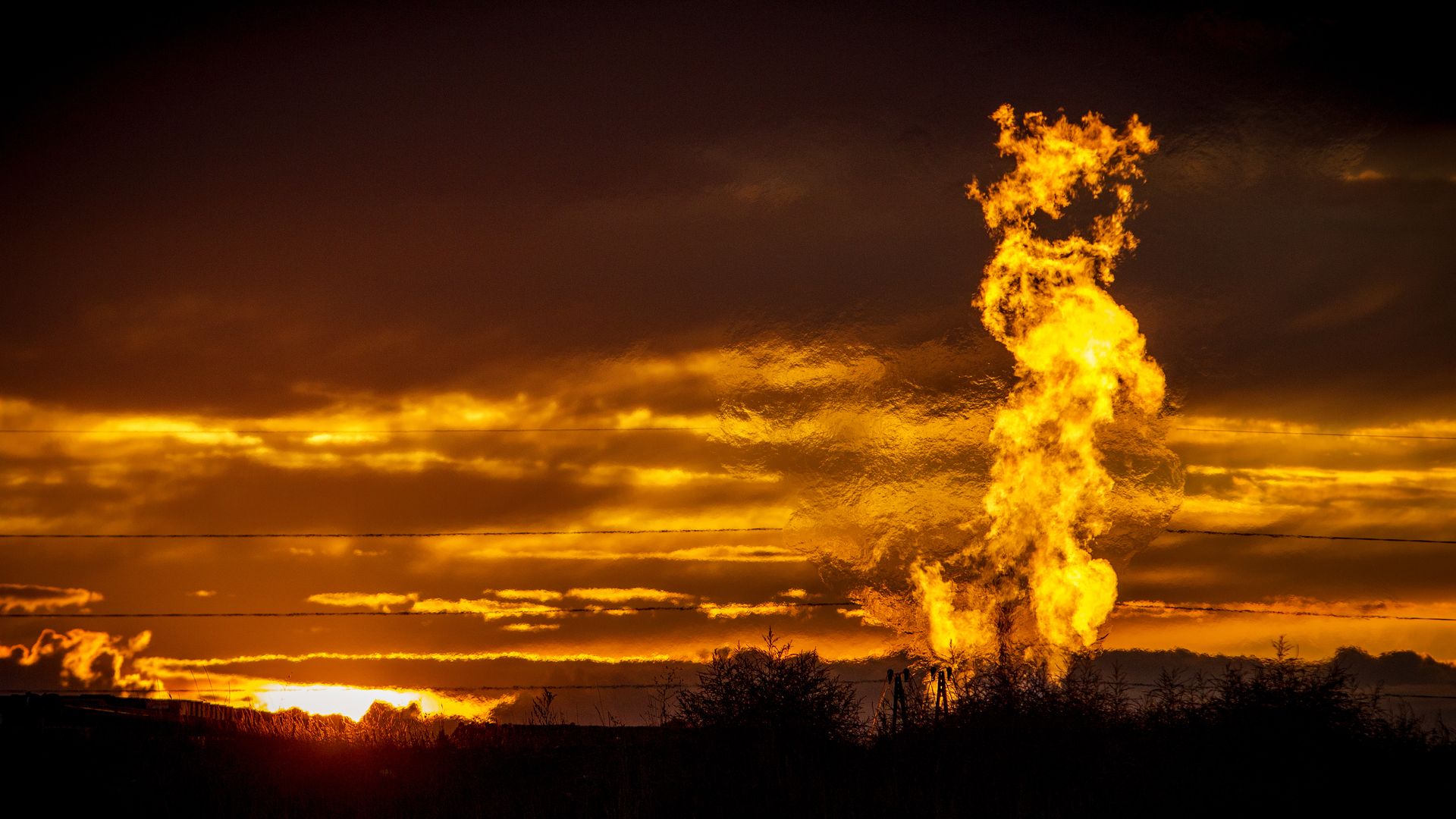
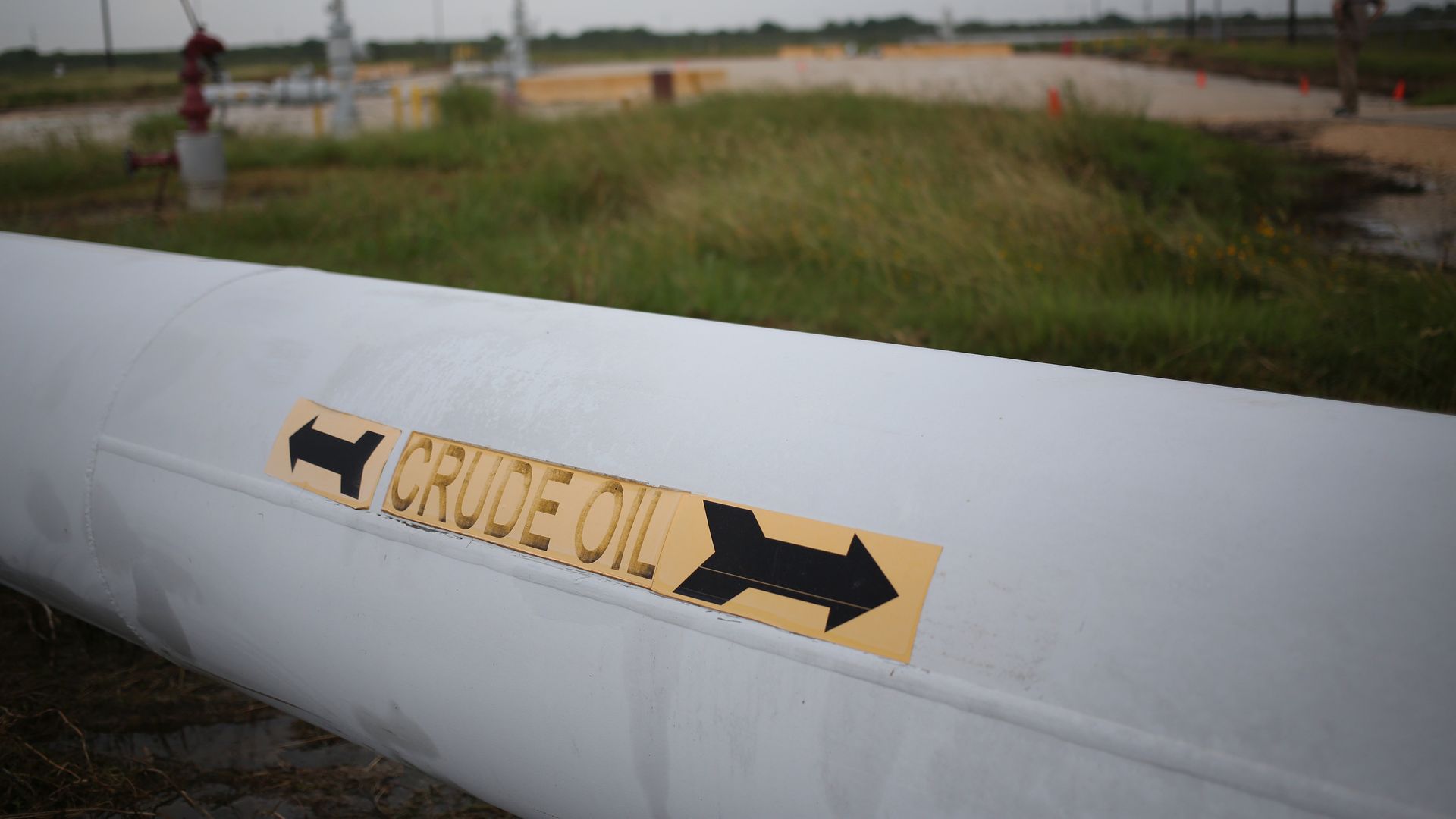
Shell's decision to pull out of Russia has cost the company roughly $5 billion so far, the energy giant said in an update released Thursday.
Why it matters: Major international oil companies, including BP and Exxon, divested from Russian energy companies or projects following the invasion, potentially significantly reshaping the West’s energy relationship with Russia.
For the second straight year, scientists at the National Oceanic and Atmospheric Administration (NOAA) are reporting a record increase in the level of methane in the atmosphere, along with a significant jump in carbon dioxide (CO2) levels.
Why it matters: These are the two most important greenhouse gases, with CO2 lasting in the air for centuries to millennia, and methane, which is a stronger warming agent, exerting its warming influence on the timescale of about a decade.
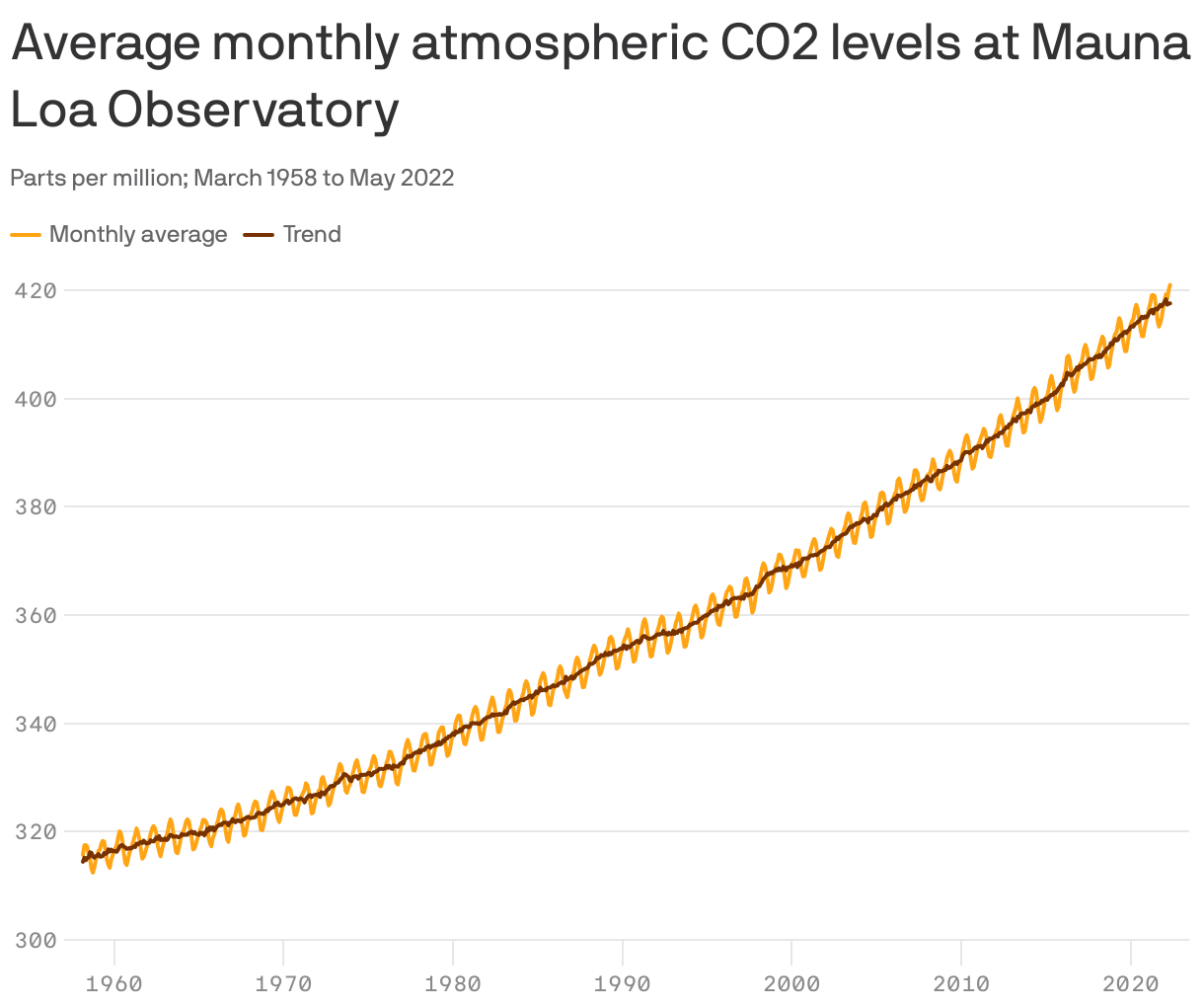
Data: NOAA and the Scripps Institution of Oceanography; Chart: Thomas Oide/Axios
Monthly average carbon dioxide (CO2) levels are very likely to hit or even exceed 420 parts per million during the month of April, according to readings at the Mauna Loa Observatory in Hawaii.
Member nations of the International Energy Agency (IEA) have agreed to a new release of 60 million barrels of oil from their emergency reserves, making for a total release of 120 million barrels from the IEA, Fatih Birol, executive director of the IEA, confirmed in a tweet Wednesday.
Why it matters: The release of oil reserves is a response to the "market turmoil" caused by Russia's unprovoked invasion of Ukraine.
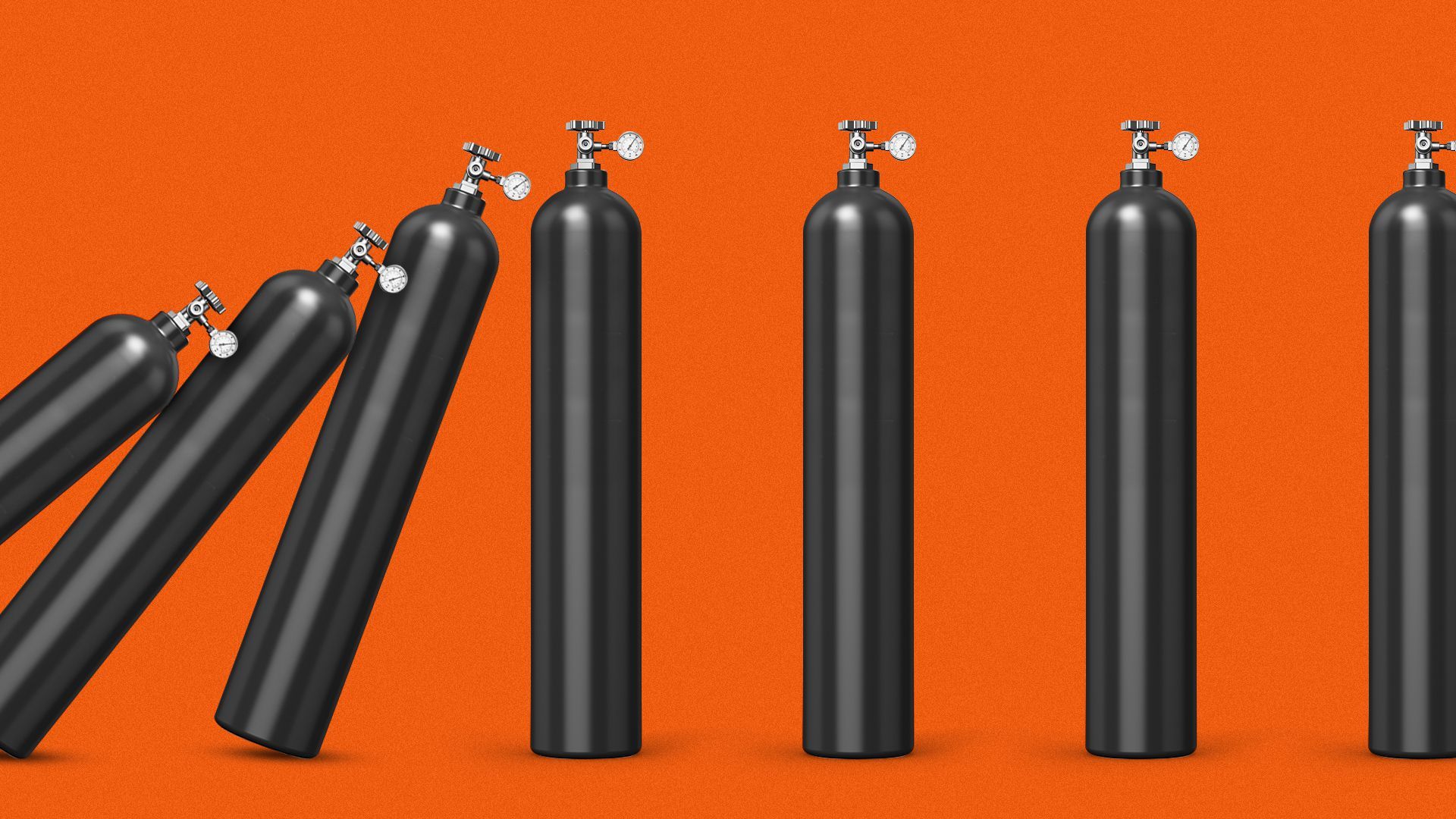
Just as the spring tornado season kicks into high gear, the National Weather Service is facing shortages in key gases it uses to fill weather balloons.
Why it matters: Weather balloons are usually launched twice daily at about 100 locations nationwide and provide vital information for weather forecasting, from the temperature profile of the atmosphere to the winds aloft. They can help anticipate severe thunderstorms, for example.