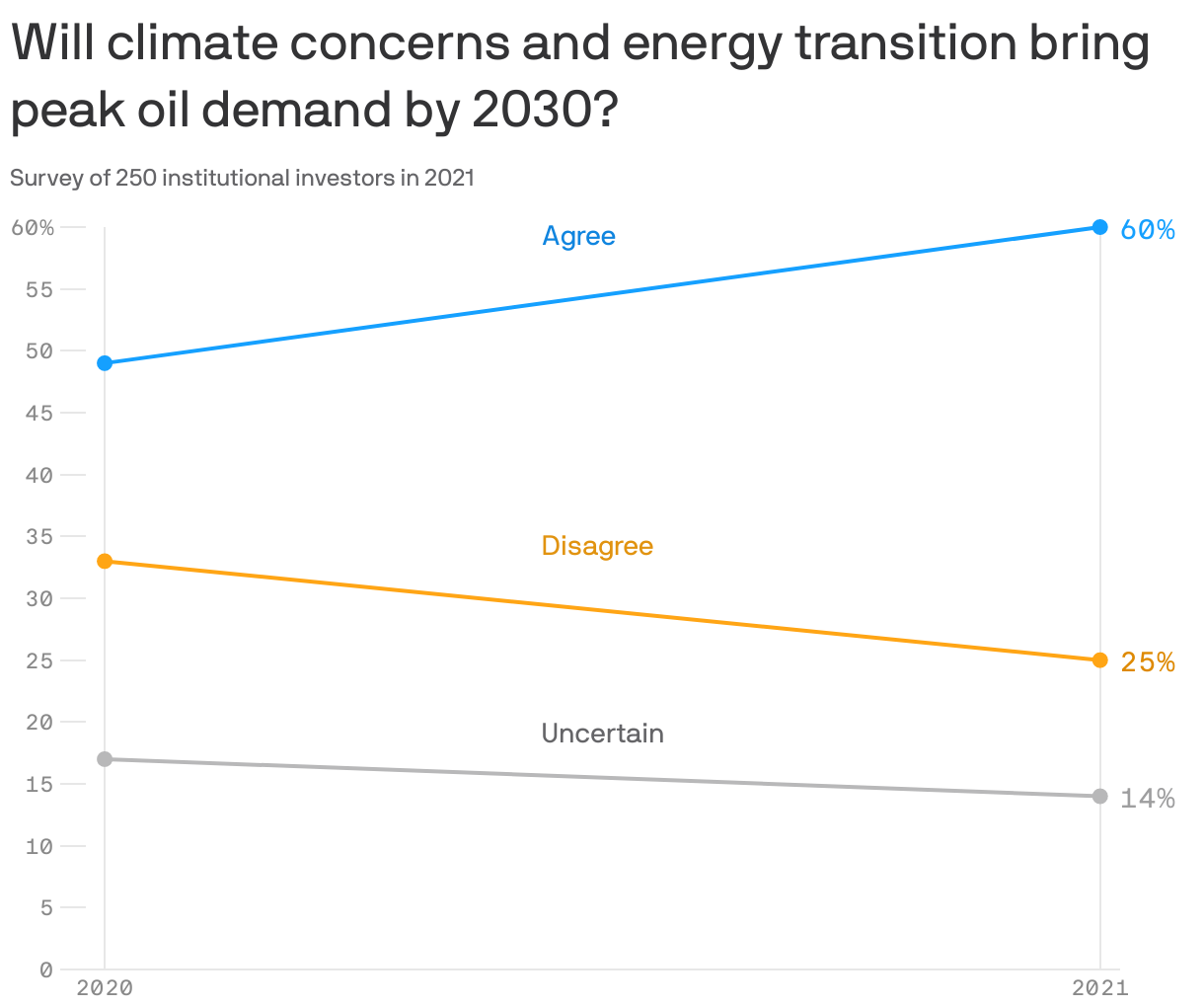
Data: BCG oil and gas investor survey, 2021; Chart: Thomas Oide/Axios
A new survey of institutional investors shows they feel increasing pressure to move away from fossil fuels and a growing belief that global oil demand will peak this decade.
Driving the news: The Boston Consulting Group polled 250 investors on the future of oil and gas, and how it fits into their strategies.
Big ratings agencies such as Moody's and S&P Global, along with other financial firms, are vacuuming up companies specializing in modeling physical climate risks.
Driving the news: The latest consolidation in the "climate intelligence" space arrived this week with S&P's purchase of The Climate Service, a climate risk consulting firm. The Climate Service analyzes physical climate risks, including extreme temperatures, coastal flooding and water stress, along with so-called transition risks, including changing regulatory and market conditions.
Multiple analysts are reaching the same conclusion: The U.S. has already become the world's largest liquefied natural gas exporter.
Driving the news: "LNG exports from the United States topped 7 million tonnes (7.7 million tons) in December, according to ship-tracking data from ICIS LNG Edge, narrowly edging out rival producers Qatar and Australia for the first time," CNN reports.
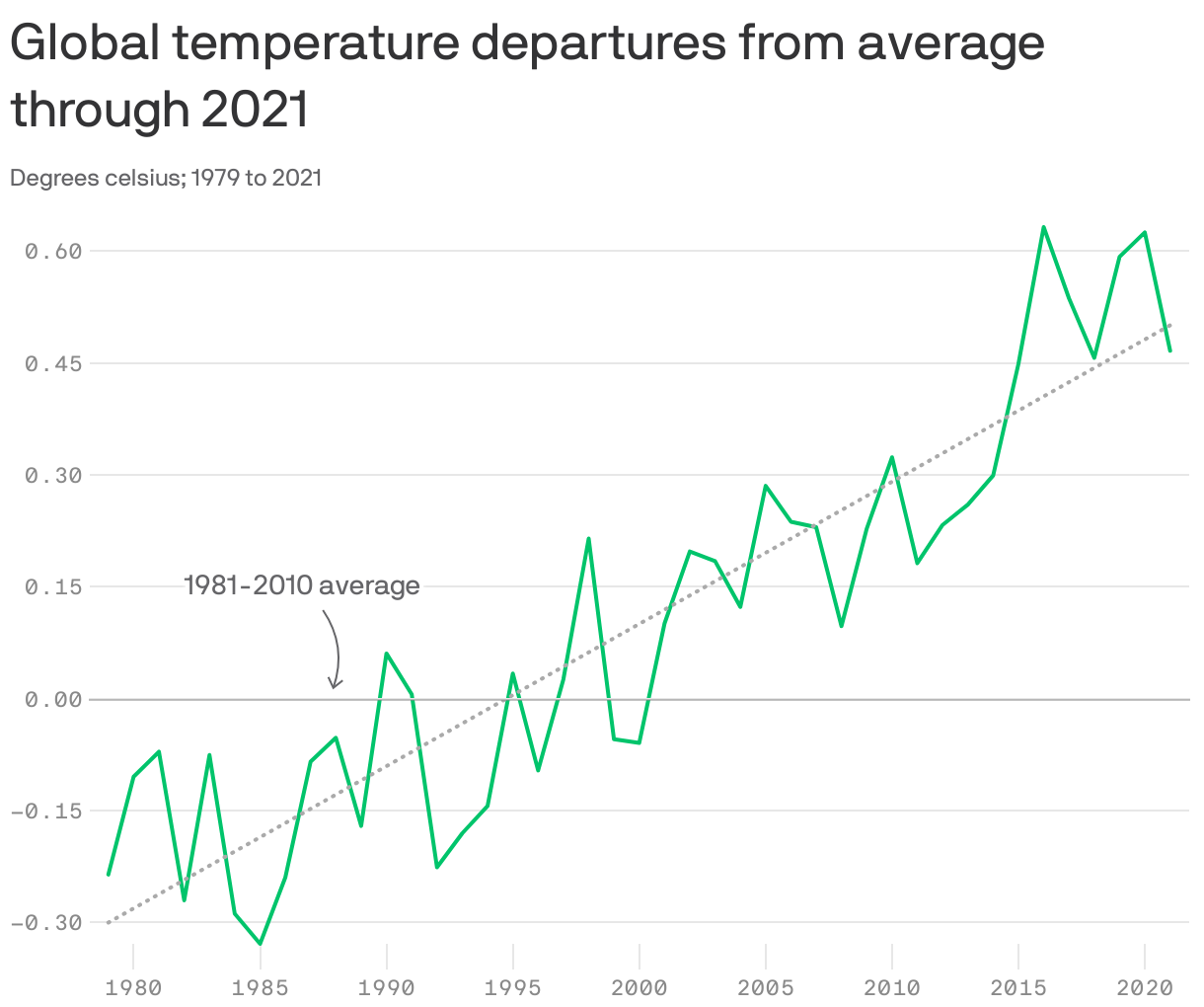
The early numbers are in, and 2021 ranks as the fifth warmest year on record, according to the European Union's Copernicus Climate Change Service.
Why it matters: The ranking signals that the temporary cooling influence of a moderate La Niña event in the tropical Pacific Ocean cannot do much to dampen the influence of human-caused global warming.
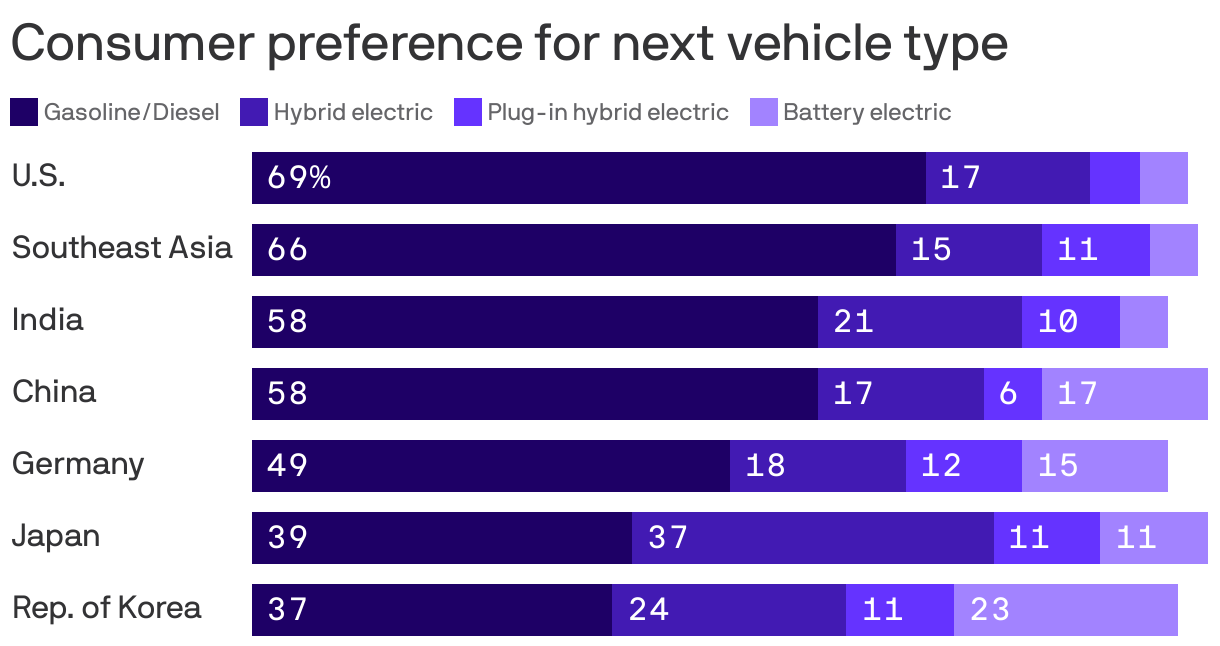
Data: 2022 Deloitte Global Automotive Consumer Study; Chart: Thomas Oide/Axios
Most consumers, especially in the U.S., plan to stick with internal combustion tech for their next vehicles, a wide-ranging new survey shows.
Driving the news: Deloitte's annual survey of consumer auto views breaks down preferences by country, showing regional differences but overall that traditional vehicles and to a lesser extent hybrids are the strong favorites.
Nearly nine in 10 people living in cities around the world — or about 2.5 billion people — are exposed to unsafe levels of air pollution annually, according to a new study published in The Lancet Planetary Health.
Why it matters: The study, led by George Washington University researchers, shows the tangible health impacts of a high concentration of air pollution.