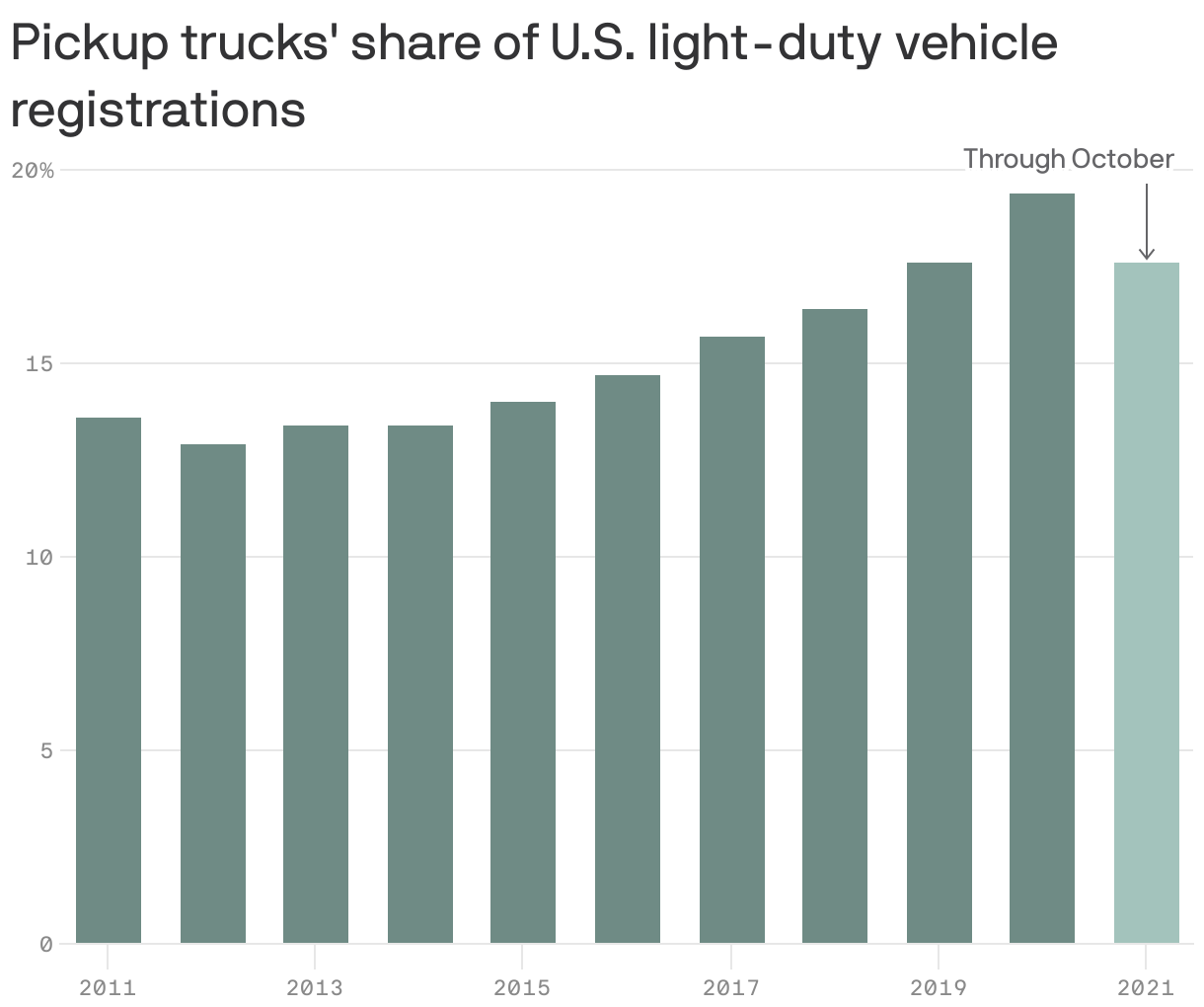
The most popular American pickups are poised to test whether the nation's obsession with trucks can go electric.
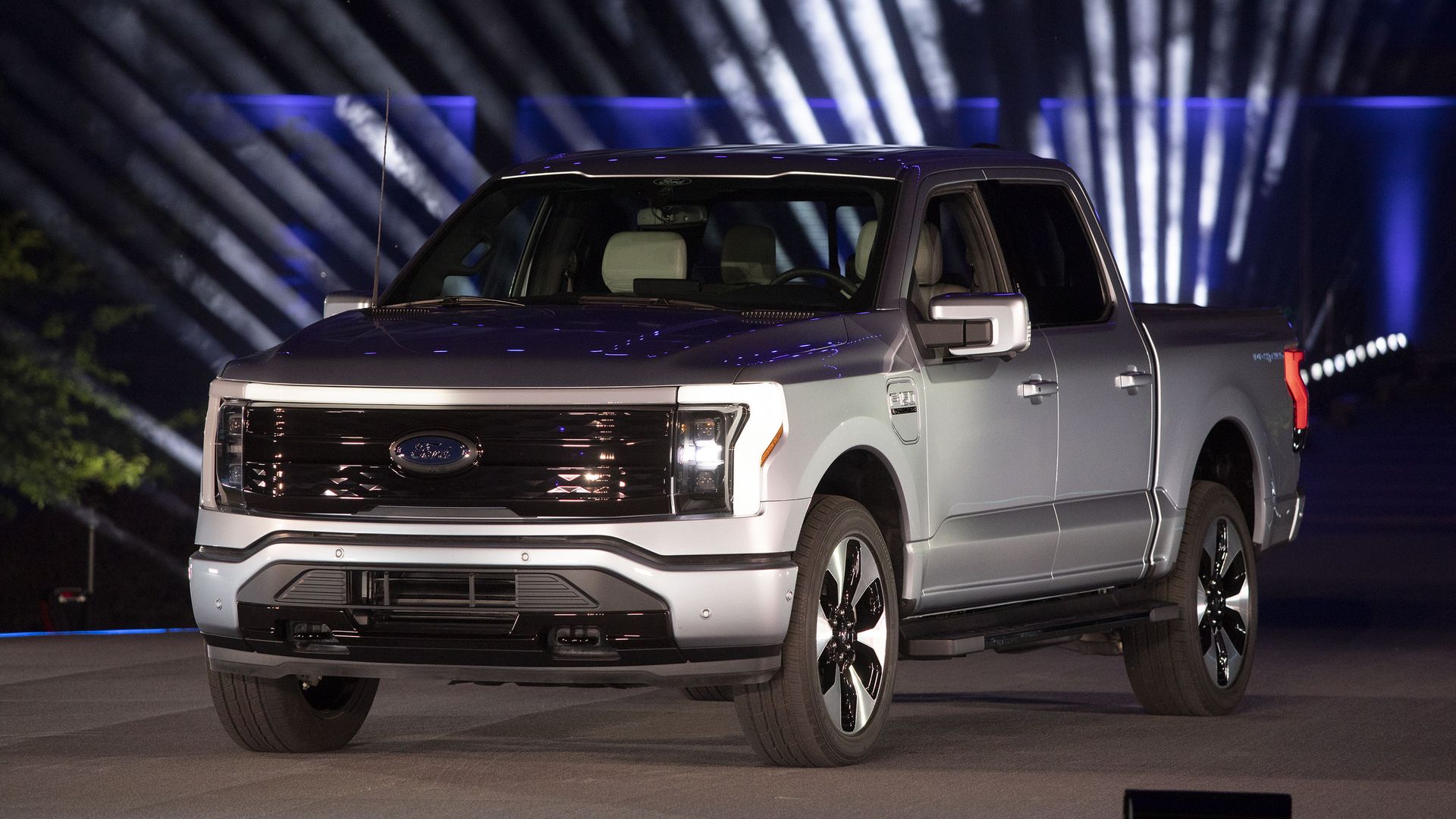
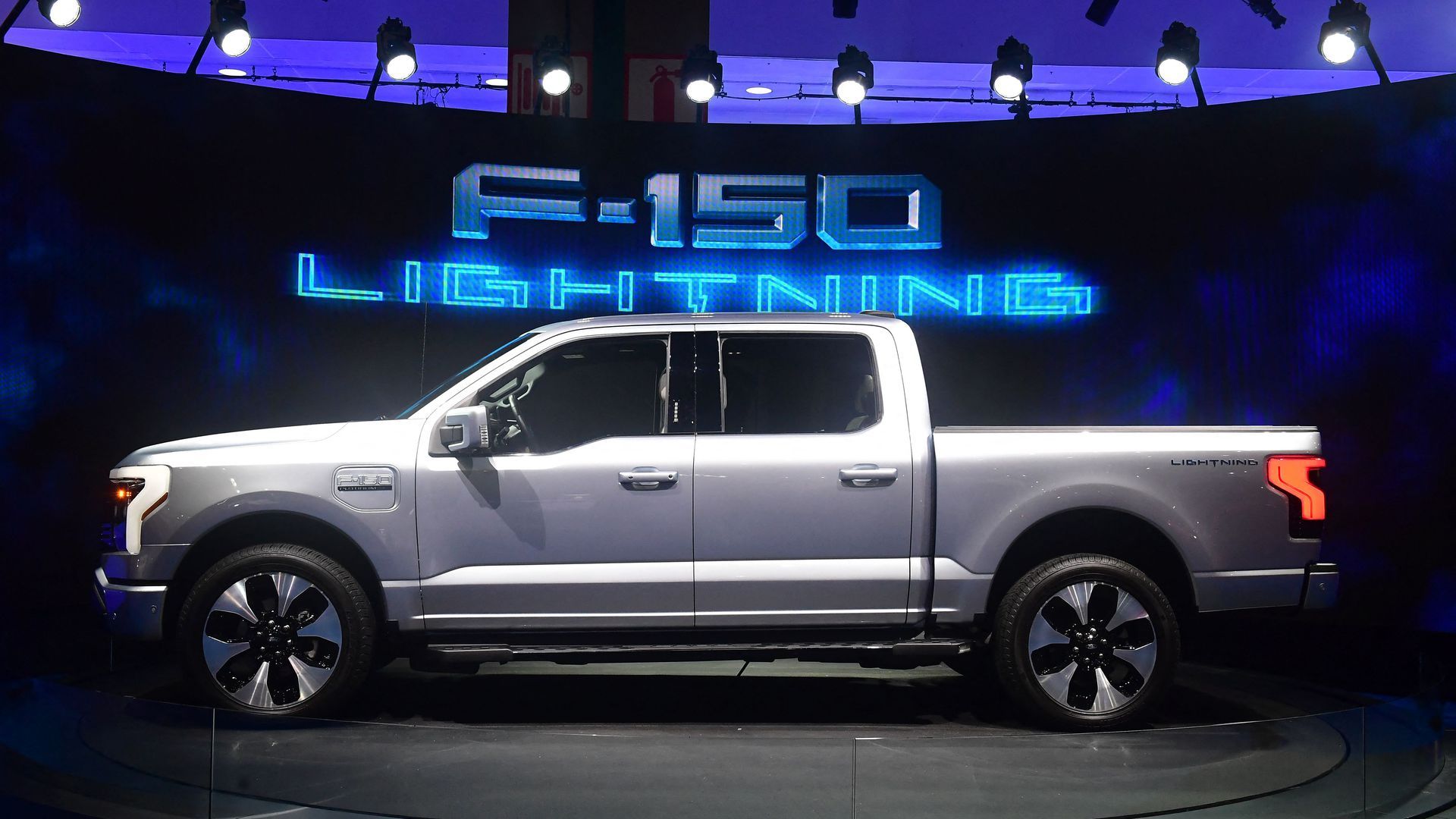
Driving the news: Ford on Tuesday announced plans to nearly double production capacity of its forthcoming F-150 Lightning amid what it called “soaring customer demand.”
Virginia Gov.-elect Glenn Youngkin on Wednesday named Andrew Wheeler, former head of the Environmental Protection Agency (EPA), as the state's secretary of natural resources.
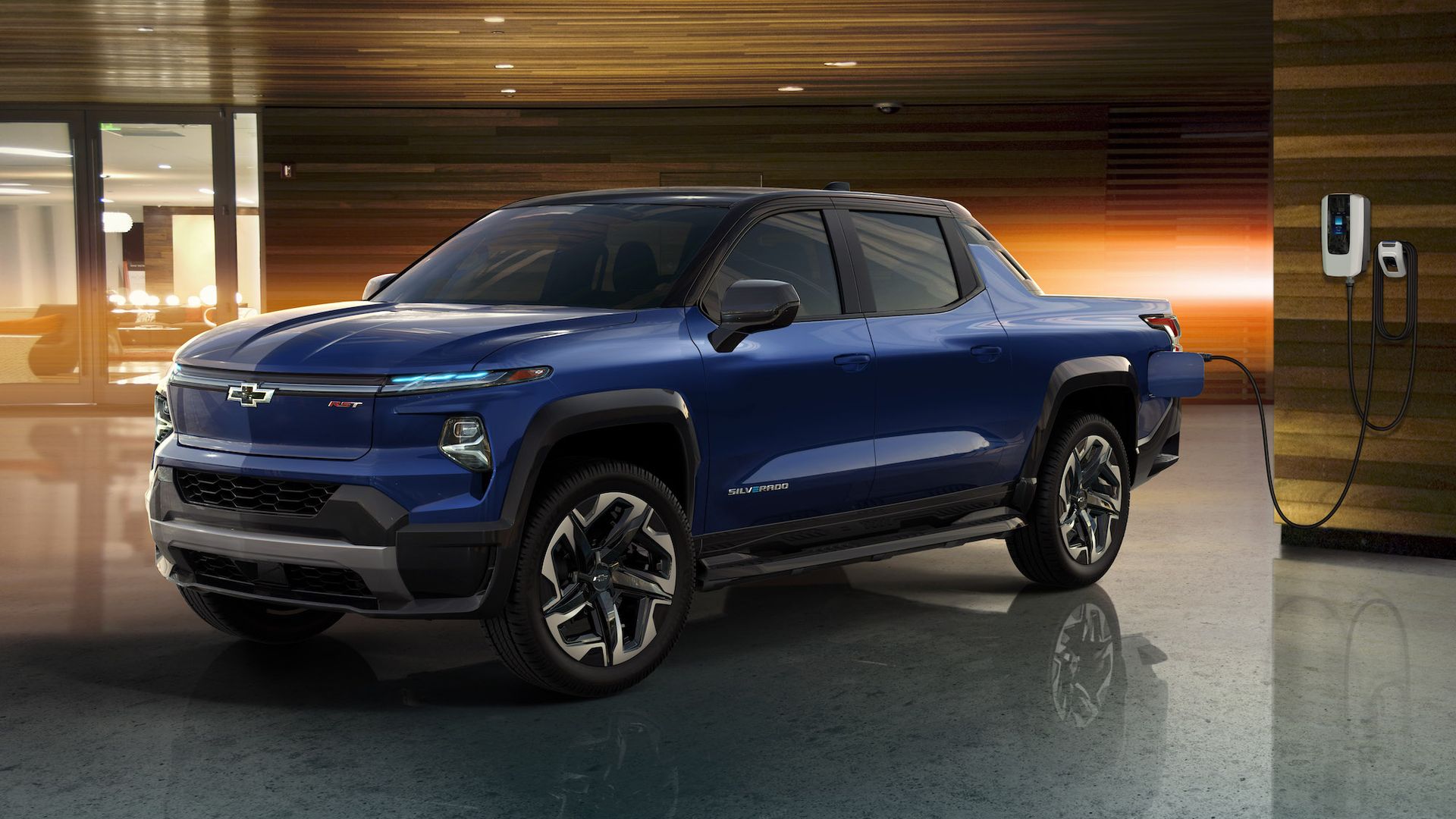
General Motors CEO Mary Barra on Wednesday outlined the next steps in the company's aggressive electric vehicle rollout, including a plug-in Chevrolet Silverado EV pickup truck and two SUVs, while demand for its electric delivery vans grows.
Why it matters: Pickups and SUVs are the heart of the U.S. vehicle market. Sales of electrified versions — if they take off — would help GM toward its goal of ending sales of gasoline-powered vehicles by 2035.
Ford's stock jumped 12% Tuesday after it revealed plans to boost production of the electric F-150 pickup, and today rival General Motors will unveil the electric version of the Chevy Silverado pickup.
Why it matters: Pickups' early prominence in the wider EV plans of U.S. auto giants (GM also has an electric Hummer and plans an electric Sierra) signals how the industry sees an opening in the truck market.
The OPEC+ decision Tuesday to press ahead with another production boost next month signals confidence that spreading COVID-19 cases won't become a huge drag on demand.
Catch up fast: The coalition of OPEC, Russia and allied producers, as expected, stuck with plans to continue the monthly increases of 400,000 barrels per day.
Xage, a company that aims to secure operational components of the electrical grid, announced Wednesday it has raised $30 million in a Series B round of financing.
Why it matters: There is increased interest in improving the security of the grid's operational assets following a year that featured escalating cyberattacks, including the shutdown of a major oil pipeline.
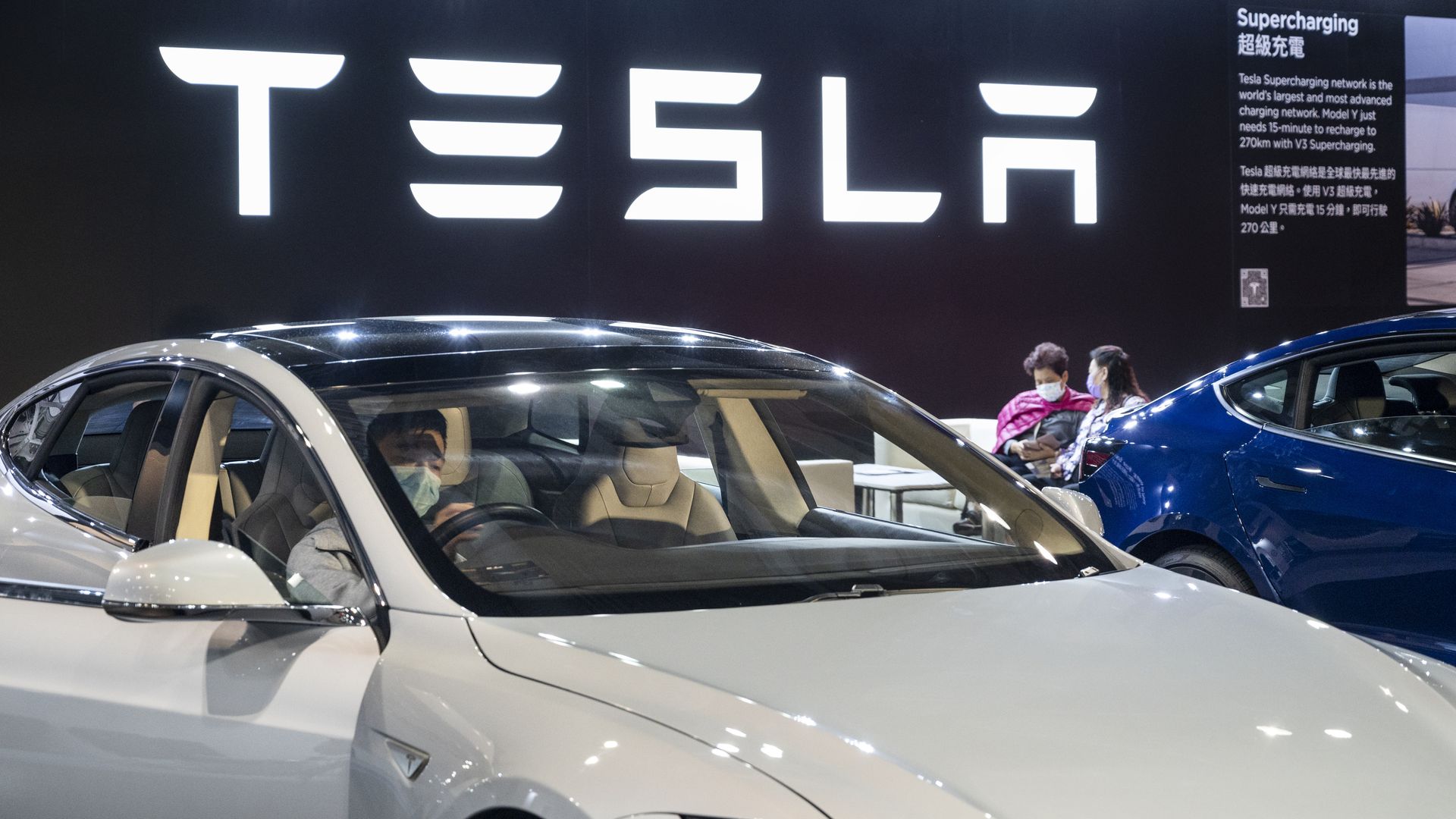
Tesla has opened a showroom in China's Xinjiang region, the province where the Chinese government has been accused of carrying out genocide against Uyghur Muslims and other ethnic minorities.
Why it matters: Human rights advocates panned Tesla's decision, which comes weeks after President Biden signed into law a bill banning imports from Xinjiang unless there's "clear and convincing evidence" that they weren't made with forced labor, and imposing sanctions on those responsible for the forced labor.
Two new essays explore the limits of the COP26 agreement, and why current finance and policy trends won't keep global temperature goals within reach — even if today's industrial giants crack down.
The big picture: Tufts University's Kelly Sims Gallagher, writing in Foreign Affairs, warns of a "coming carbon tsunami."
Ford Motor Co. said on Tuesday that it's doubling production capacity for the forthcoming electric F-150 pickup to 150,000 annually to help meet demand for the vehicle.
Why it matters: Ford's F-series pickups have been the best-selling vehicles in the U.S. for decades, making the electric version a key indicator of whether pickups with a plug will find a mass market.
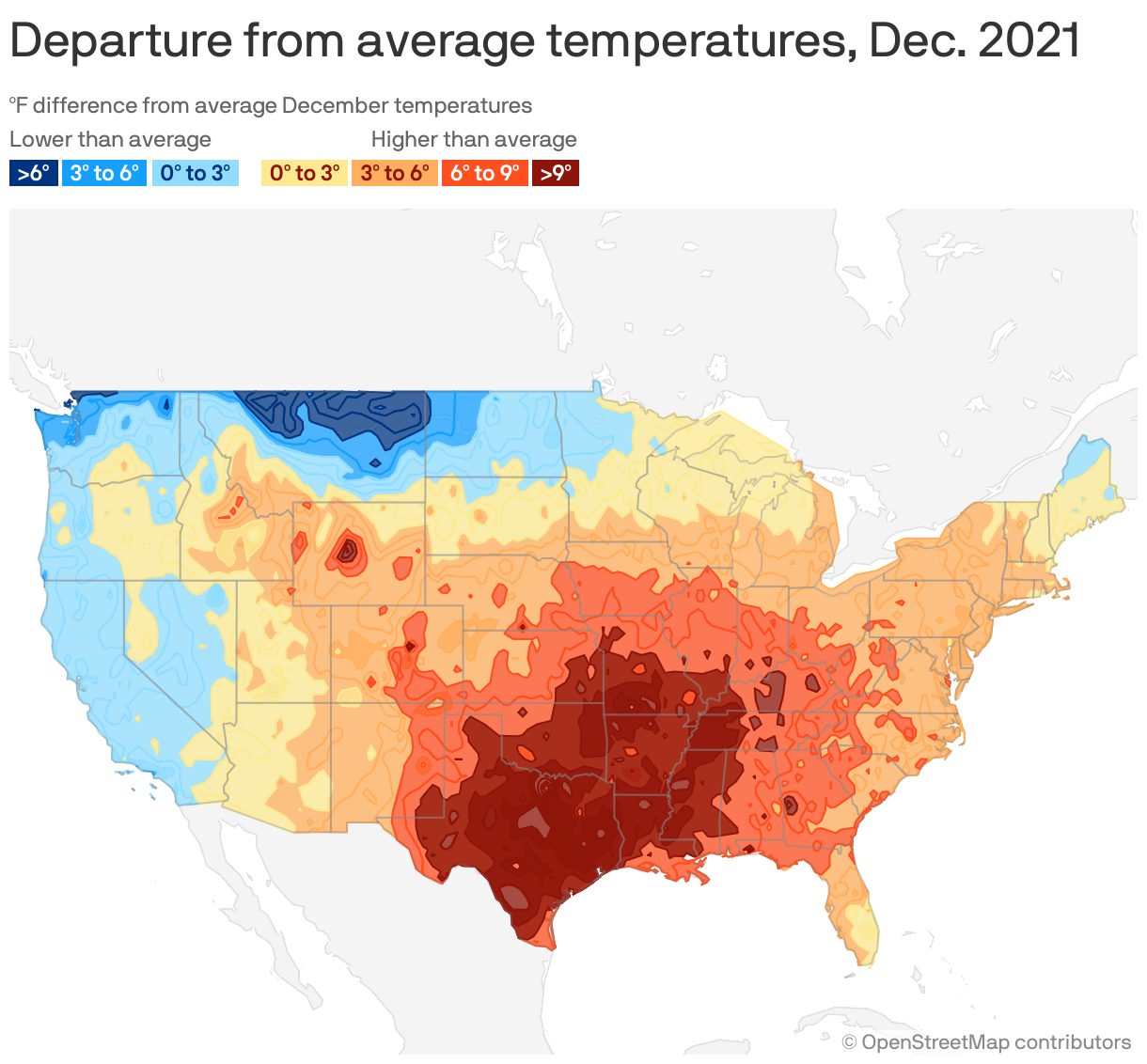
The Lower 48 states likely had their hottest December on record, new data shows, with numerous locations in the Central States, South and East breaking previous benchmarks by large margins.
Why it matters: Winter is the fastest-warming season in much of the U.S., with widespread impacts for snow sports, drought and fire weather risks.
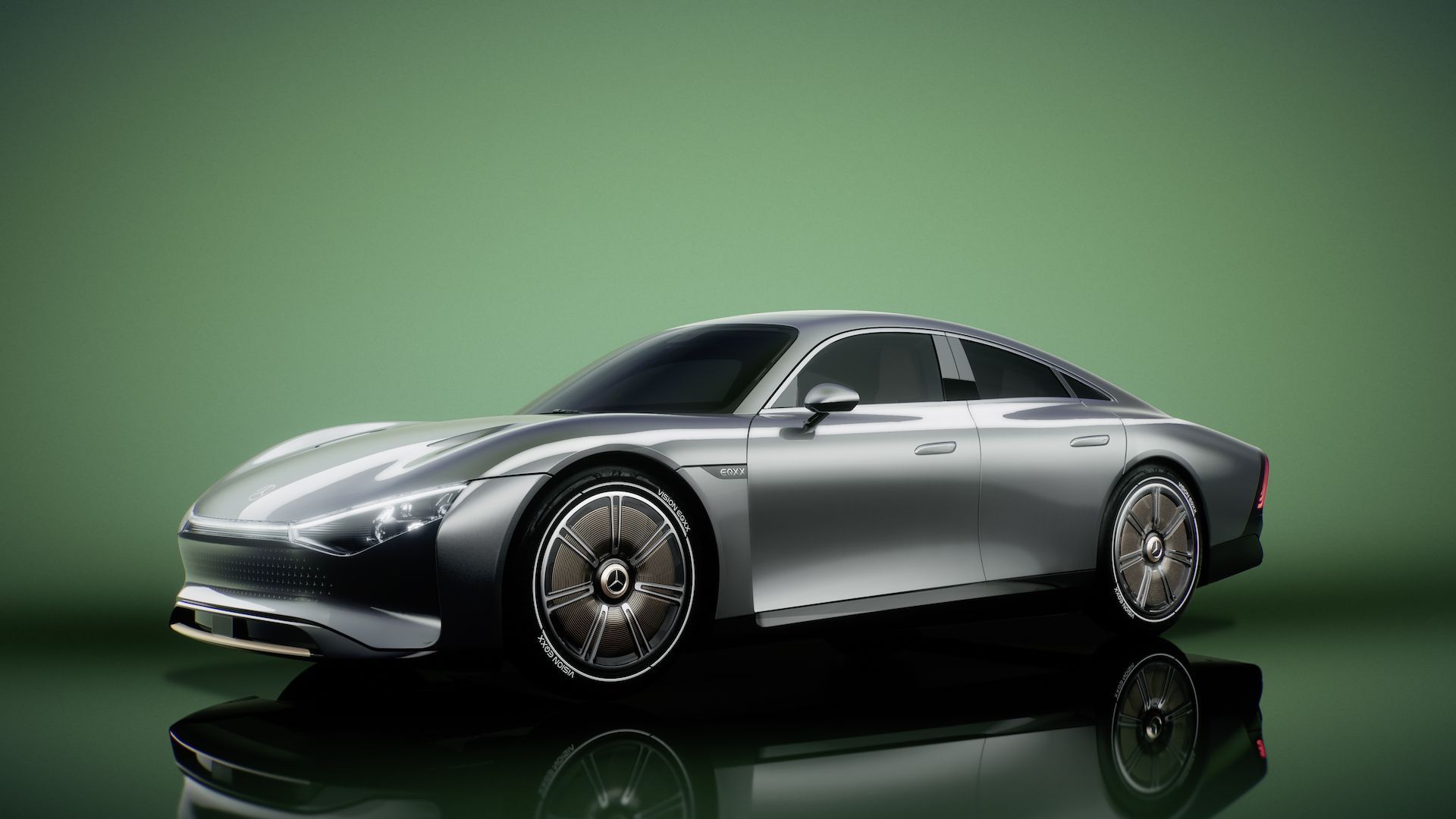
Mercedes-Benz has taken the wraps off an efficient electric sedan that the auto giant calls capable of traveling 620 miles per charge.
Why it matters: That's beyond anything on the road today, even Lucid Motor's 520-mile range luxury Air sedan that began reaching customers a few months ago.





/2022/01/05/1641389472565.gif?w=3840)