One of the hardest facts to grasp about climate change is this: No matter what we do now, it's almost certain to get worse in the future.
Why it matters: The time lag effect of climate change means that actions taken to reduce carbon emissions will only begin to noticeably bend the curve decades from now.
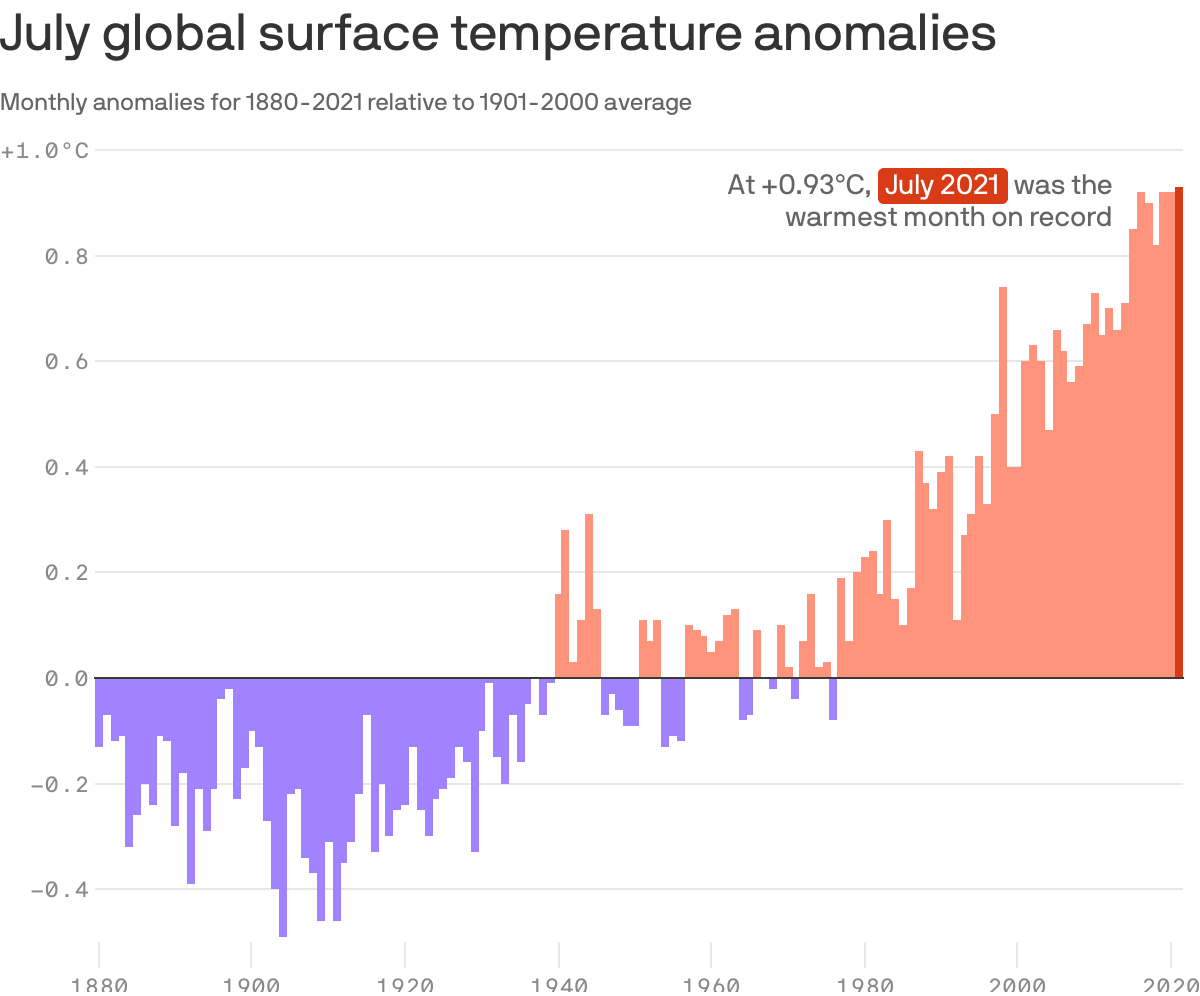
Reproduced from NOAA; Chart: Connor Rothschild/Axios
July was the hottest month on record worldwide, according to the National Oceanic and Atmospheric Administration (NOAA).
Why it matters: When it comes to establishing new climate milestones, the Earth is on a roll, thanks in large part to the burning of fossil fuels for energy, as well as deforestation.
Exposure to high levels of fine particle pollution produced by wildfires may have led to thousands more COVID cases and deaths, according to a new study published in the journal Science Advances.
Why it matters: Research has shown that smoke can have dangerous health impacts, a correlation that is putting more and more at risk as the pandemic collides with the climate crisis.
The National Oceanic and Atmospheric Administration (NOAA) said Friday that July was the world's hottest month ever recorded, calling it an "unenviable distinction."
What they're saying: "In this case, first place is the worst place to be," NOAA administrator Rick Spinrad said in a statement. "This new record adds to the disturbing and disruptive path that climate change has set for the globe."
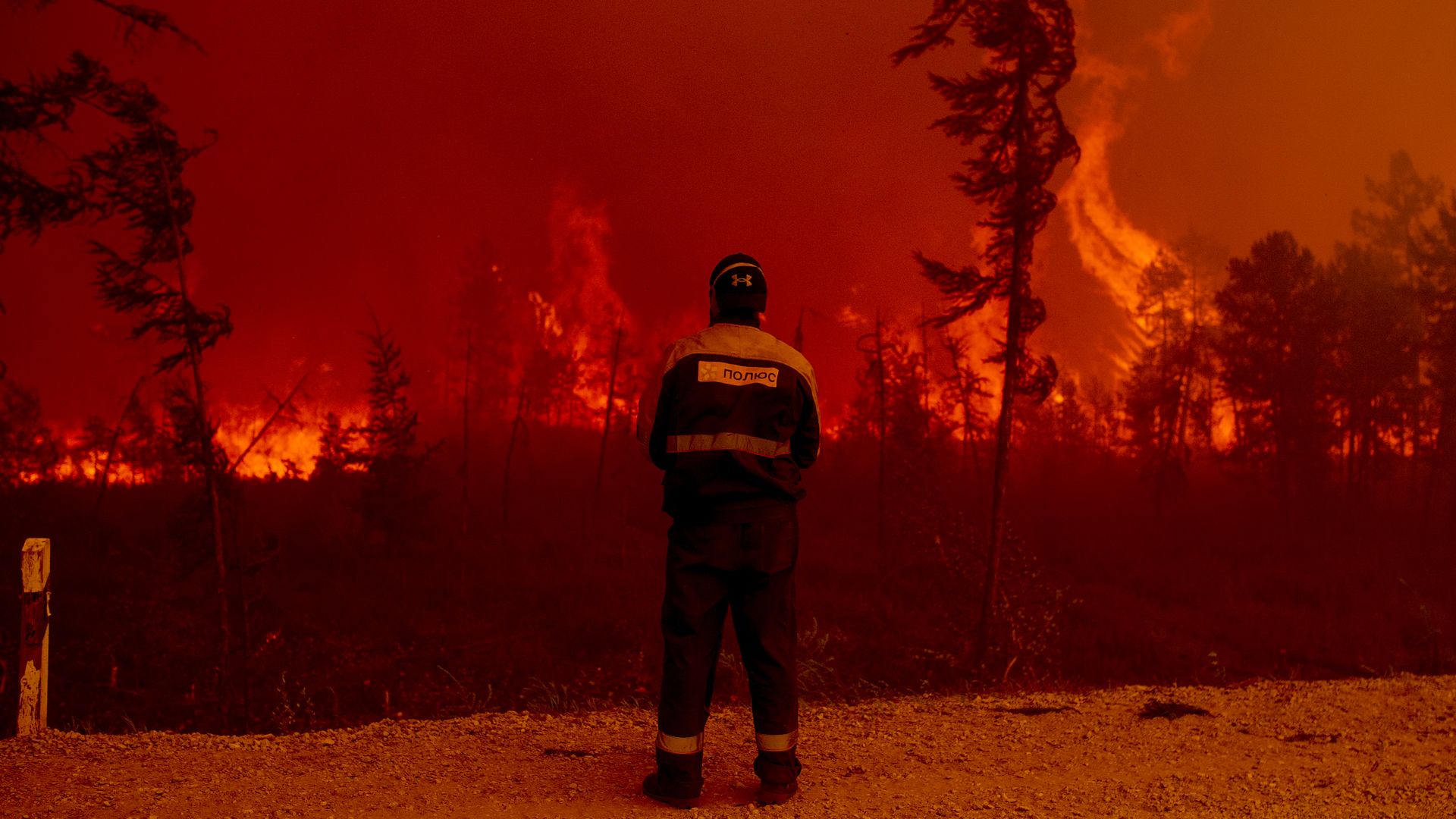
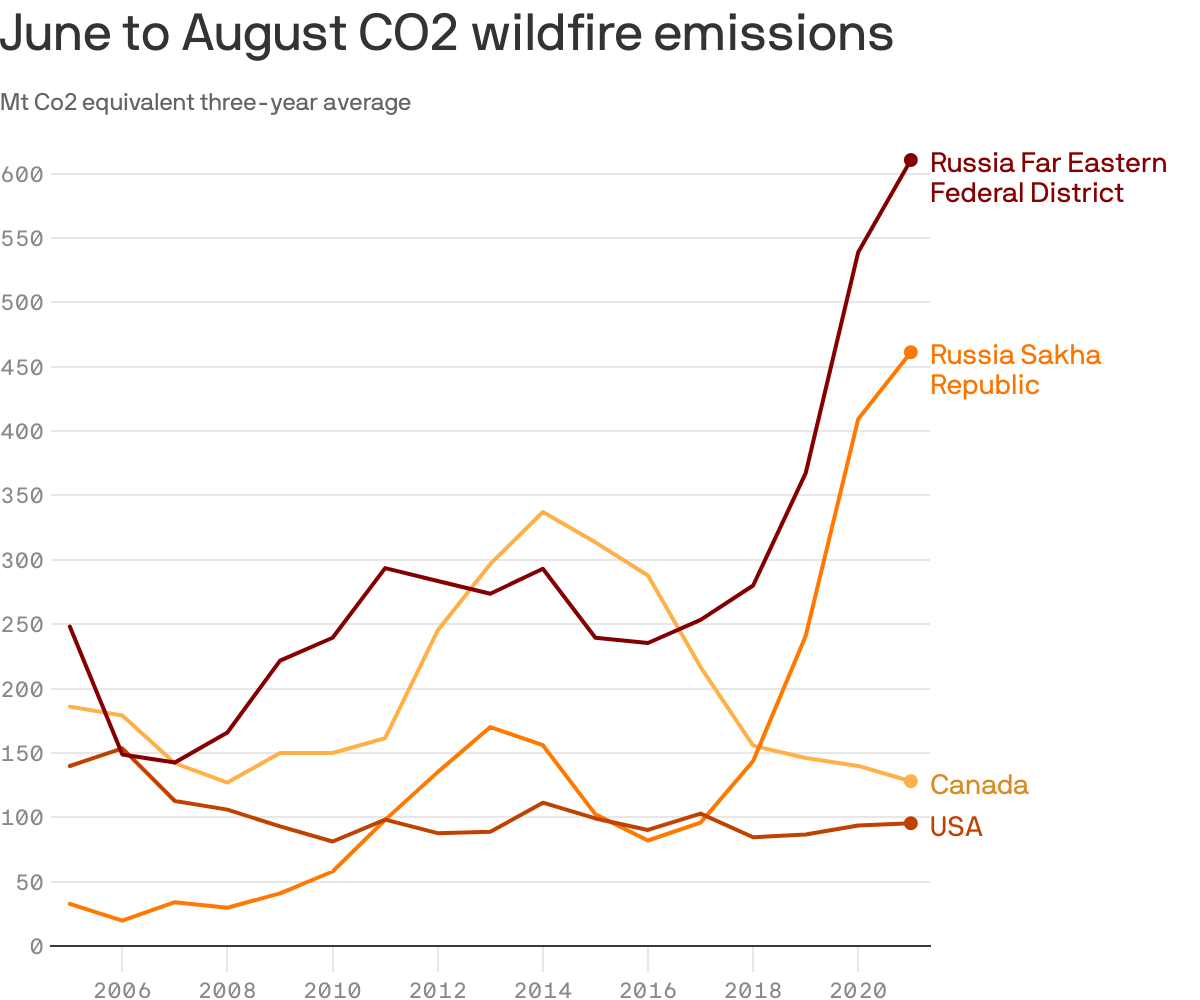
Wildfires are raging in Canada, the U.S. and Siberia, emitting carbon dioxide, soot, and other planet-warming pollutants, while also destroying homes and fouling air quality. Now new data shows just how large the fires' carbon footprint may be.
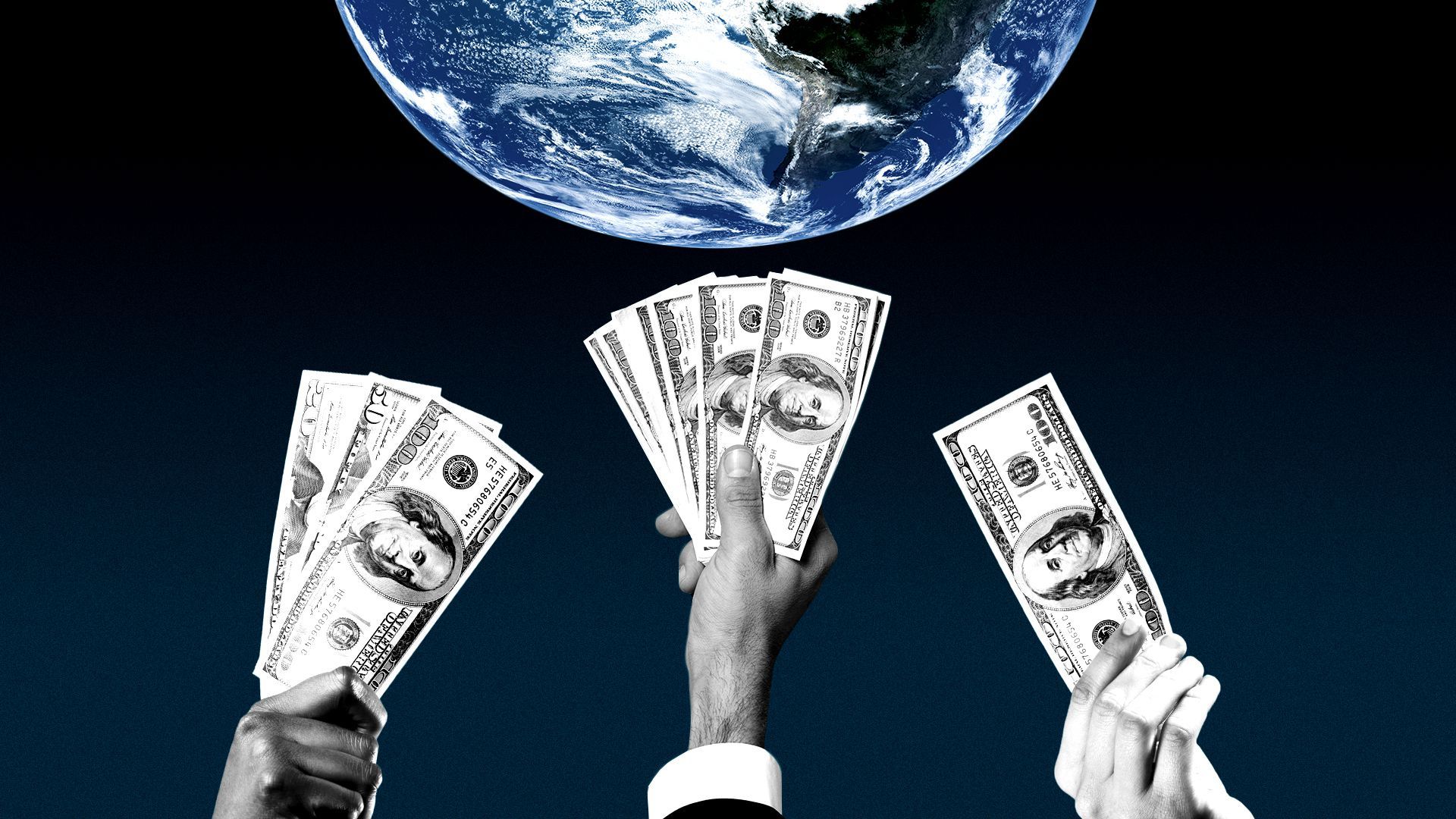
Private equity is pouring billions into renewable energy assets — it’s what LPs want, it’s what society demands and it’s what the world needs. But the classic private equity dilemma has surfaced: too much money chasing too few deals.
Why it matters: With heated competition for deals, prices for prime wind and solar power assets are getting bid up — and return expectations, in many cases, are coming down.
Hydrogen is increasingly being viewed as a potential energy storage solution for difficult-to-decarbonize sectors of the economy, including heavy-duty transportation and industrial uses.
Driving the news: A new analysis by the ICF Climate Center, shared exclusively with Axios, shows that the cost of zero-carbon, green hydrogen could reach parity with more greenhouse-gas intensive ways of making the gas in as little as the next decade.
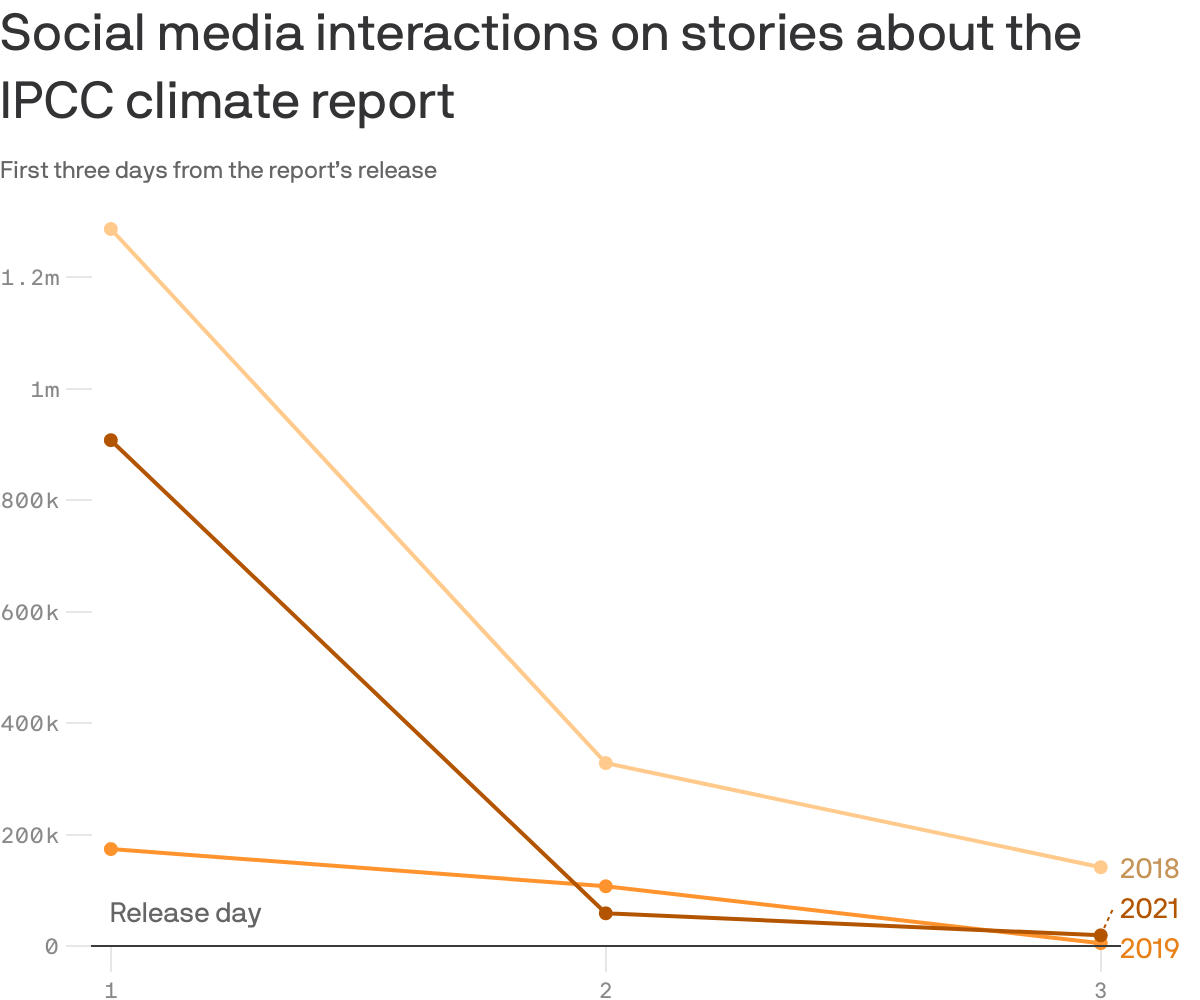
This week's UN IPCC report made a bigger splash online than a special report the panel issued in 2019, but one that was well below 2018's examination of the feasibility of holding global warming to 1.5°C (2.7°F), according to exclusive data provided by NewsWhip.
Why it matters: The data shows that the shock factor needed to jolt the public into demanding — and taking — action to curb the effects of climate change may be wearing off. It may also show that the report, or the media coverage of the findings, was too alarming and turned people off from engaging with it, given the headlines it generated.
Yes, but: The report — the panel's most comprehensive look at how humans are altering the planet's climate in sweeping ways — failed to register, let alone resonate, with swing voters, according to an unscientific sampling from two Engagious/Schlesinger focus groups conducted Tuesday evening.








/2021/08/13/1628846240281.gif?w=3840)