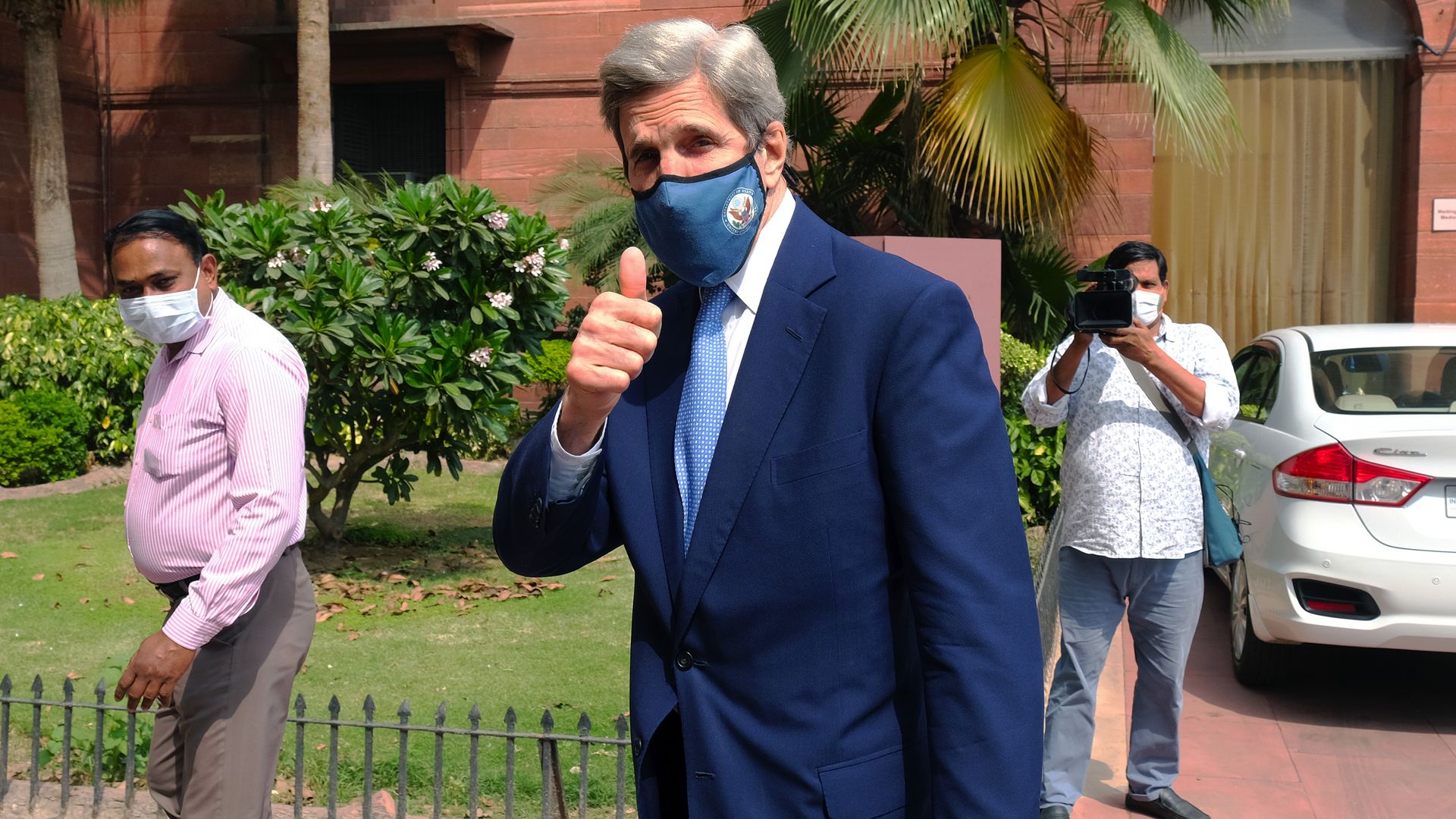
John Kerry, President Biden's special envoy on climate change, is traveling to Shanghai, China and then on to South Korea for meetings on reducing emissions of planet-warming greenhouse gases, the State Department said.
Why it matters: Kerry is the highest-ranking U.S. official to visit China since Biden took office, and these talks come less than two weeks in advance of a virtual White House climate summit on April 22-23.
Energy Secretary Jennifer Granholm said the use of the filibuster-proof budget reconciliation process is an option for trying to pass a mandate that would greatly escalate zero-carbon power generation.
Why it matters: One of President Biden's most aggressive targets is achieving 100% carbon-free electricity generation by 2035, and a "clean electricity standard" could be a key tool to get there.
Asset management giants BlackRock and Temasek have created a new investment entity to stake companies capable of scaling up the deployment of climate-friendly technologies.
Why it matters: Decarbonization Partners is the latest sign of how finance giants — under pressure from activists but also seeing a big market — are steering more capital into clean energy tech and companies.
Private equity investments in U.S. renewables hit a record $23.7 billion last year, per a new report on deals from American Investment Council, which is the industry's lobbying and advocacy arm.
Where it stands: "PE invests in renewable energy in two major ways: buying and expanding established power generators and increasing their production over the long term, and financing development costs for new renewable power companies," it states.
In the run-up to the White House's virtual climate summit on April 22-23, environmental groups and now major corporations are presenting a united front in calling for at least a 50% cut in U.S. greenhouse gas emissions by 2030, when compared to 2005 levels.
Why it matters: The 2030 targets are needed since the world is on course to sail above the warming targets set in place by the Paris Climate Agreement, resulting in potentially catastrophic climate impacts. These include the loss of much of the world's coral reefs and melting of some of the planet's largest ice sheets.
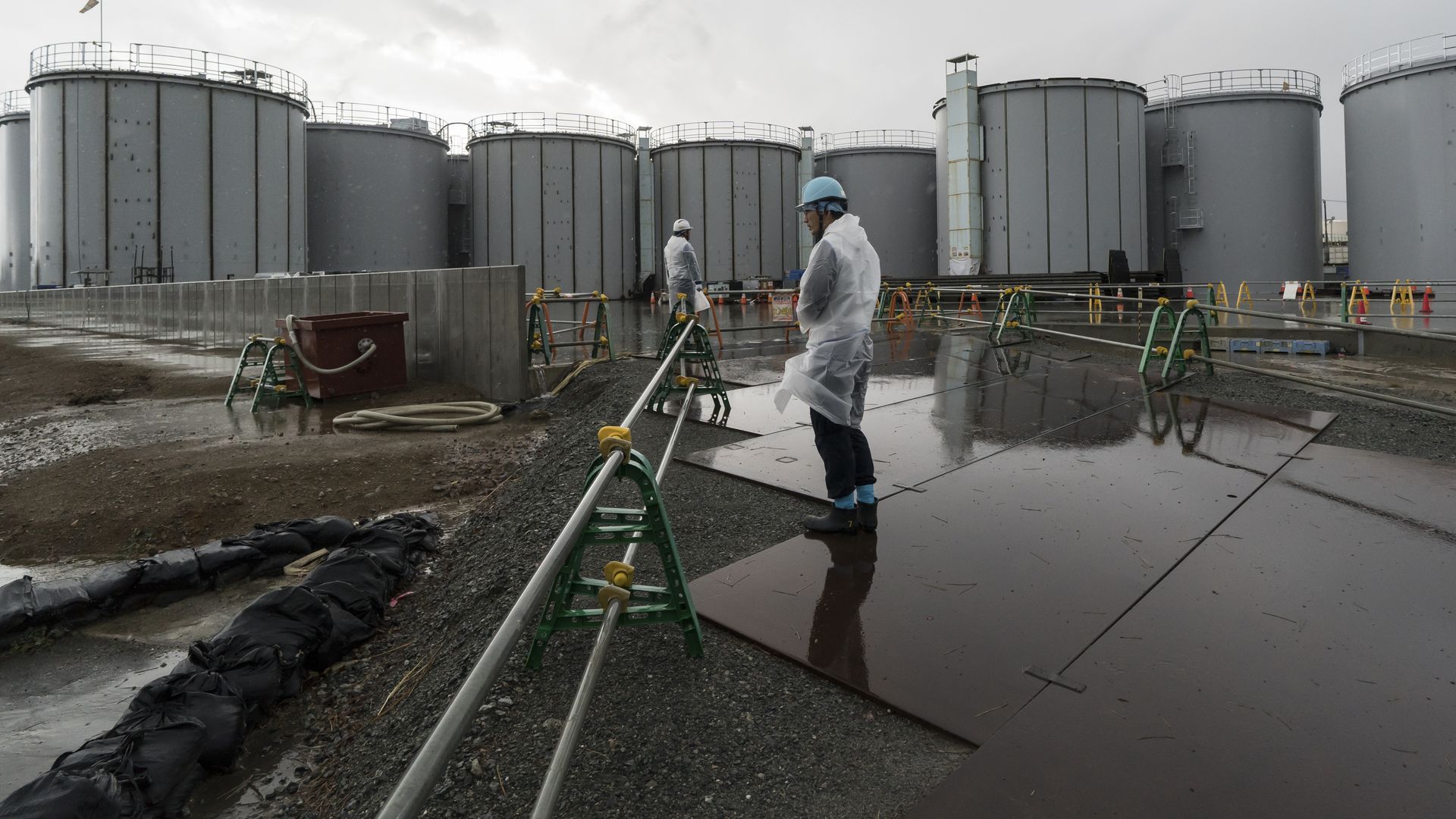
Japan's government on Tuesday announced plans to release more than 1 million metric tons of contaminated water from the destroyed Fukushima nuclear plant into the Pacific Ocean following a treatment process.
Why it matters: While the Biden administration has said Japan appears to have met globally accepted nuclear safety standards, officials in South Korea, China and Taiwan, local residents, those in the fishing industry and green groups oppose the plans, due to begin in about two years, per the Guardian.
The problem for backers of U.S. carbon pricing isn't that there's no Beltway interest — some of Washington's most powerful officials and K Street interests like the idea. It's that the timing never seems to work out.
Driving the news: "President Biden believes that at some point in time we need to find out a way to have a price on carbon that’s effective," John Kerry, President Biden's special climate envoy, said at a briefing in India last week.