The population density of the Texas-Louisiana coastal region where Hurricane Laura is set to make landfall as a Category 4 storm has increased significantly over the past 40 years.
Why it matters: The damage a storm can do is a function not just of its sheer strength, but the number of people in its path. As more people live in coastal regions, we will get an increasingly "expanded bull's-eye" of hurricane risks.
The Republican Party "needs to stop ceding ground on issues that are important issues to my generation" in order to evolve and attract more young people, Miami Mayor Francis Suarez (R) said Wednesday during an Axios virtual event, "News Shapers: America's Road Ahead."
What he's saying: "I think the environment is one of them...Sea level rise, which is something we are seeing in our city and the environmental impacts we are seeing in our city, have a huge economic impact. And so you know I think the Republican Party shouldn't abandon an issue like...."
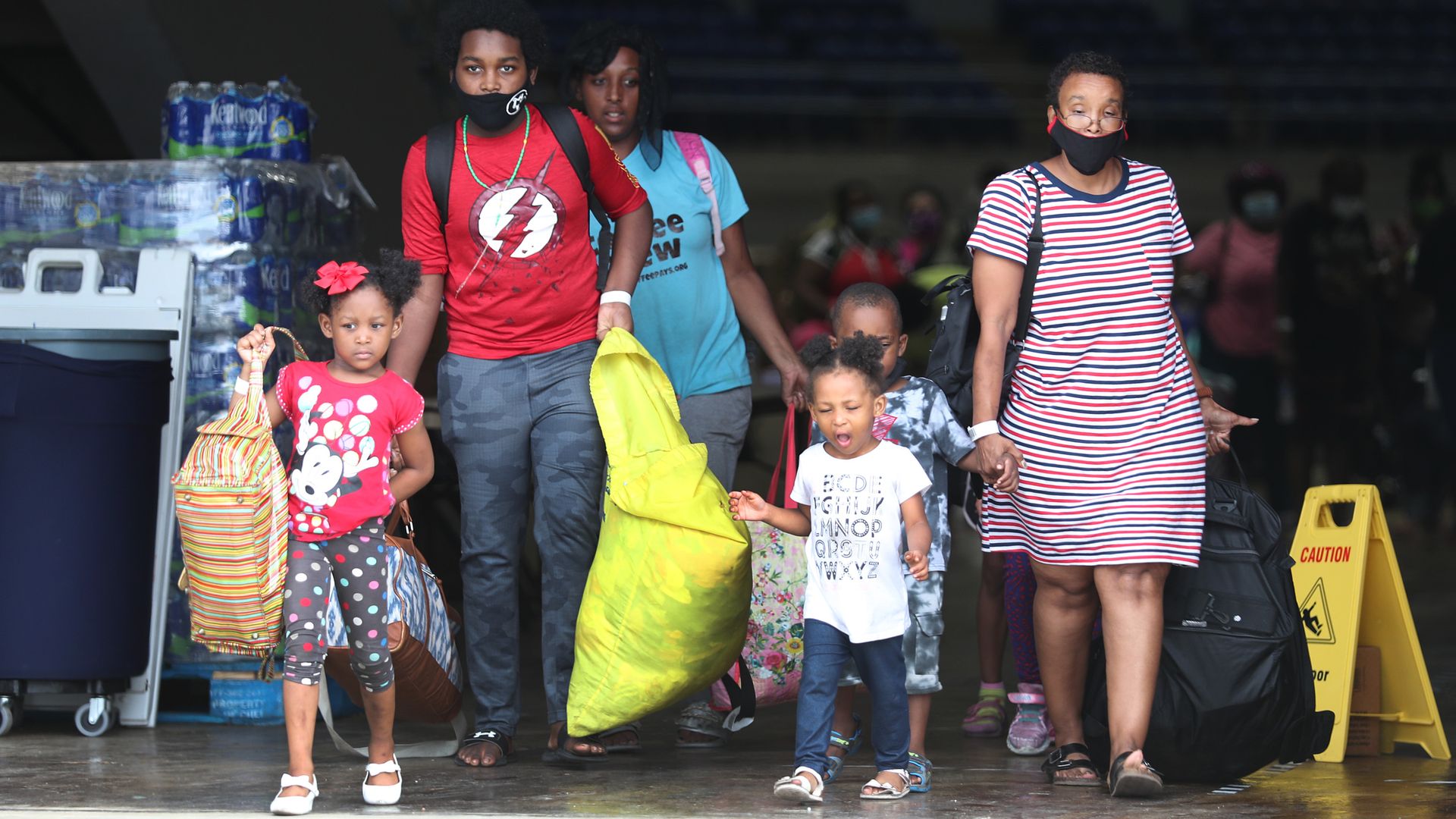
Evacuation orders were issued Tuesday for over 385,000 people in the Texas cities of Port Arthur, Galveston and Beaumont and for 200,000 others in another 200,000 in Calcasieu Parish, southwest Louisiana, ahead of Hurricane Laura's expected arrival this week, per AP.
Why it matters: It's the largest evacuation to take place in the U.S. during the pandemic and comes as the U.S. marks the 15th anniversary of Hurricane Katrina. Laura was strengthening over the central Gulf of Mexico on Tuesday night and was expected to make landfall in the U.S. as a Category 3 storm.

/2020/08/26/1598479556260.gif?w=3840)