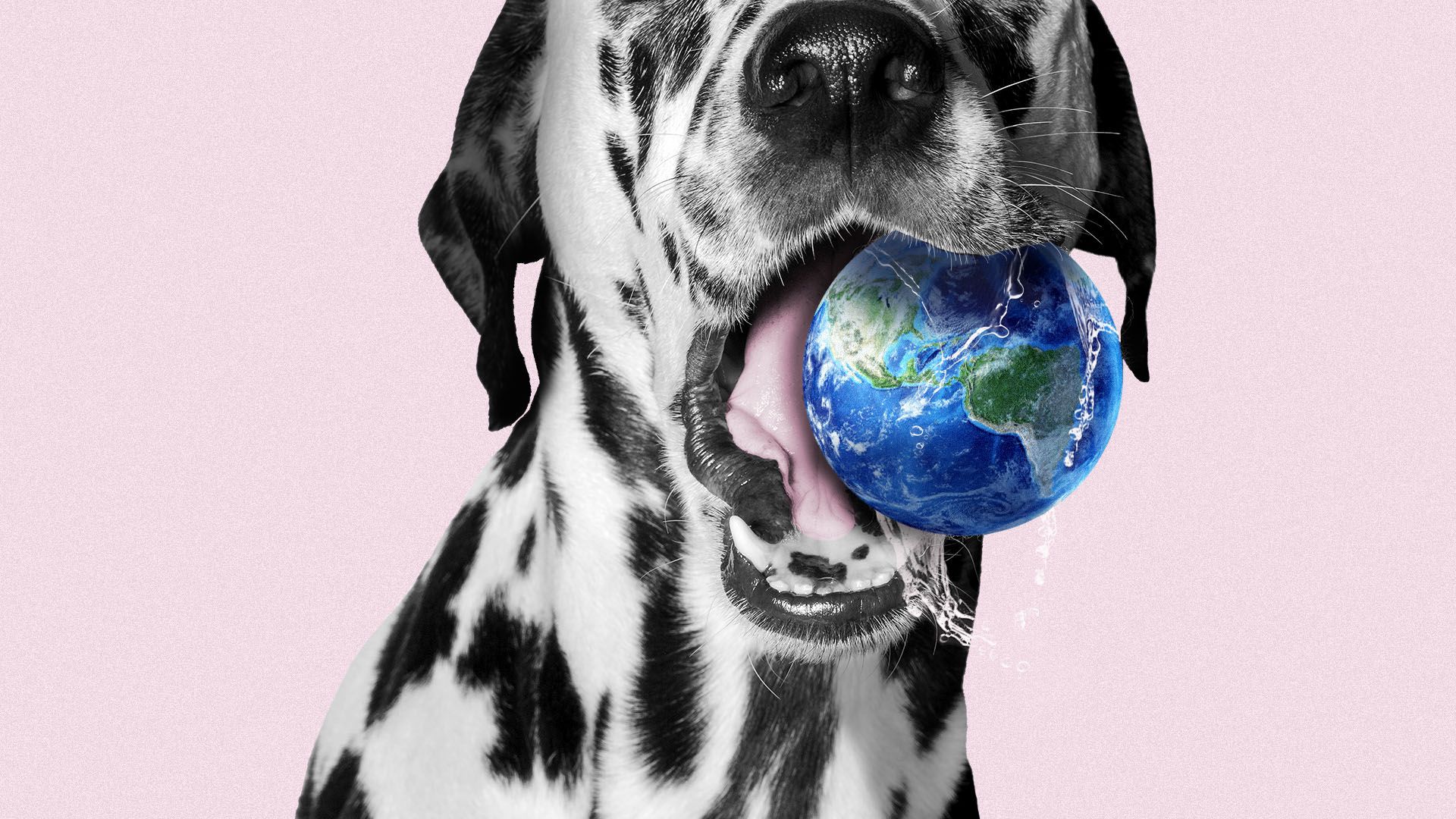
The 163 million dogs and cats in the U.S. ate one-quarter of the 94.3 billion pounds of meat the country produced in 2015, or as much as 62 million Americans did, according to estimates by UCLA professor Gregory Okin.
Why it matters: Raising that meat generated greenhouse gas emissions equivalent to 64 million tons of carbon dioxide, or as much as the yearly emissions of 12.3 million passenger vehicles. U.S. pet ownership has increased since 2015 when the pet census was taken and Okin made his calculations. As the number of pets has increased, so have emissions.
Saudi Arabia plans to boost oil output and sharply cut prices, signaling the first response to Friday's collapse of OPEC's production-cutting pact with Russia and allied producers, according to multiple reports.
Why it matters: The unraveling of the OPEC+ agreement, at least for now, and declining oil demand due to the novel coronavirus' economic toll are upending global oil markets and geopolitics.
Designer looks captured the catwalks at Fashion Weeks around the world. But beyond the runways, recycled clothing, thrifting and renting apparel are growing in popularity and reshaping the market.
Why it matters: Fashion is a massive polluter. According to the United Nations, fashion produces 20% of the world's wastewater and 10% of the world's carbon emissions — calling the habit of quick closet-turnover into question.