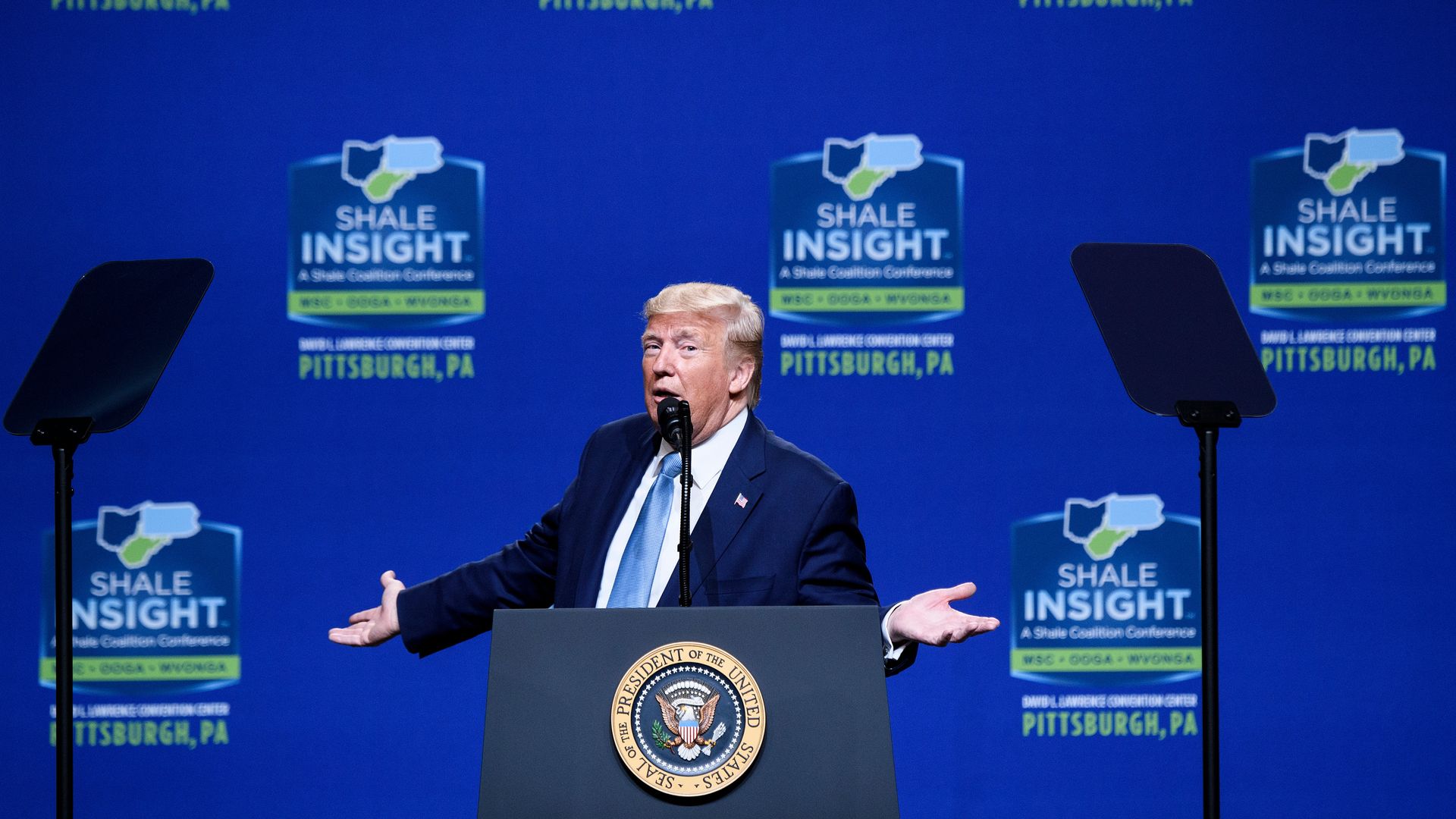
The Trump administration is "strongly considering" federal assistance for U.S. oil producers facing distress due to the steep decline in prices, the Washington Post first reported and Axios has confirmed.
Why it matters: The twin forces of the novel coronavirus sapping demand and collapse of the OPEC-Russia production-limiting deal has created new jeopardy for companies, some of whom are already struggling financially.
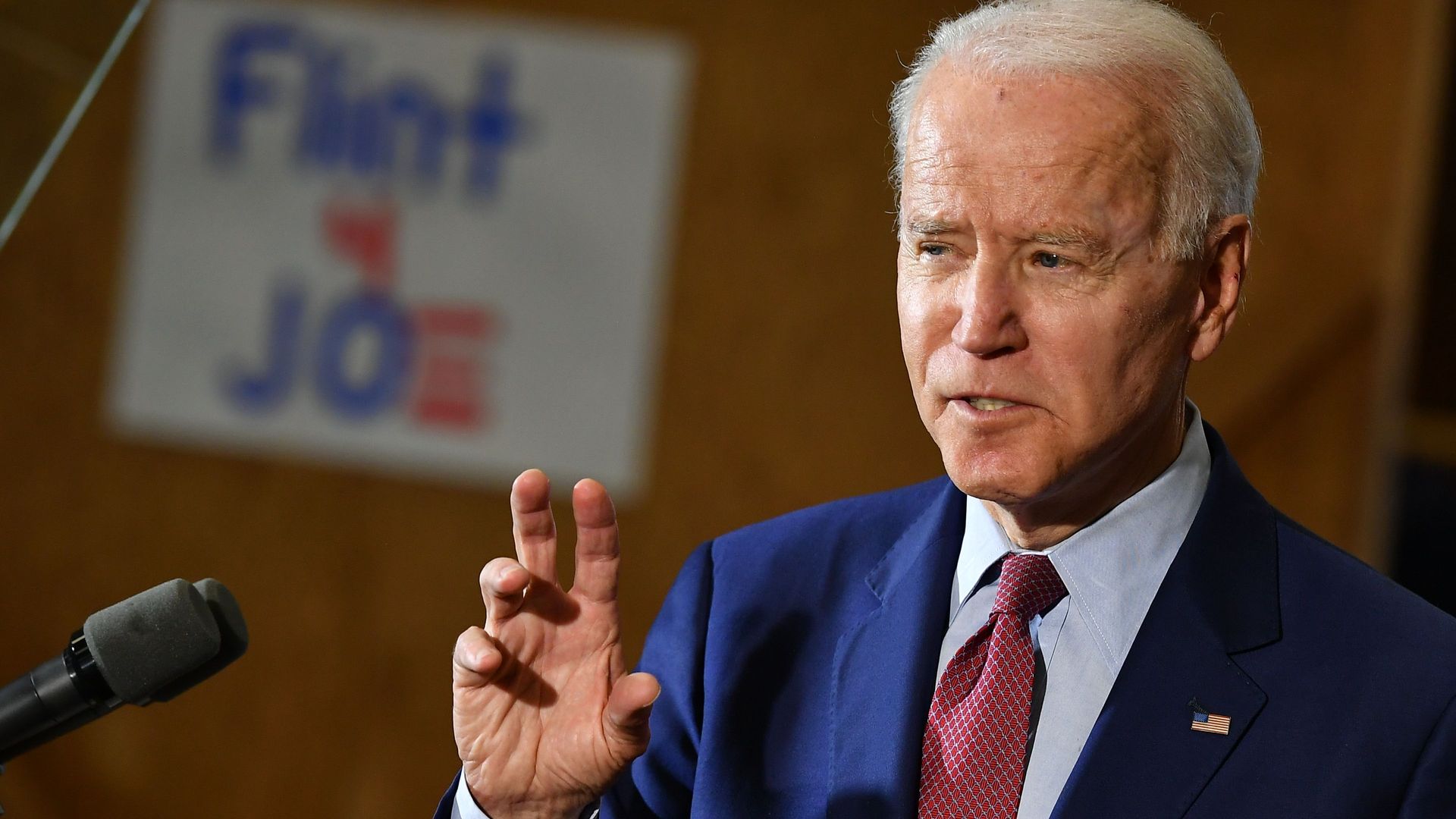
Yesterday brought a reminder that if Joe Biden wins the presidency, a lot of his staffing decisions could become battlegrounds over climate policy, not just his picks to run agencies like the EPA and the DOE.
Driving the news: When Axios' Jim VandeHei and Mike Allen reported that Joe Biden confidantes were discussing JPMorgan Chase's Jamie Dimon among several potential Treasury picks, the reaction from some climate activists was severe.
A Utah power plant could run at least partially on hydrogen within the next five years, according to a contract awarded today between an energy-technology manufacturer and a Utah power agency.
Why it matters: Governments, companies and experts around the world are increasingly looking to renewable hydrogen as a long-term pathway away from oil, natural gas and coal while still using infrastructure initially made for them.
The new oil price war escalated Tuesday as Saudi state oil giant Aramco announced, per reports in Reuters and elsewhere, that it plans to supply the market with 12.3 million barrels per day starting next month.
Why it matters: The increase underscores how the lunge for market share with the collapse of the OPEC+ agreement is going to create financial pain and problems for producers and governments worldwide.
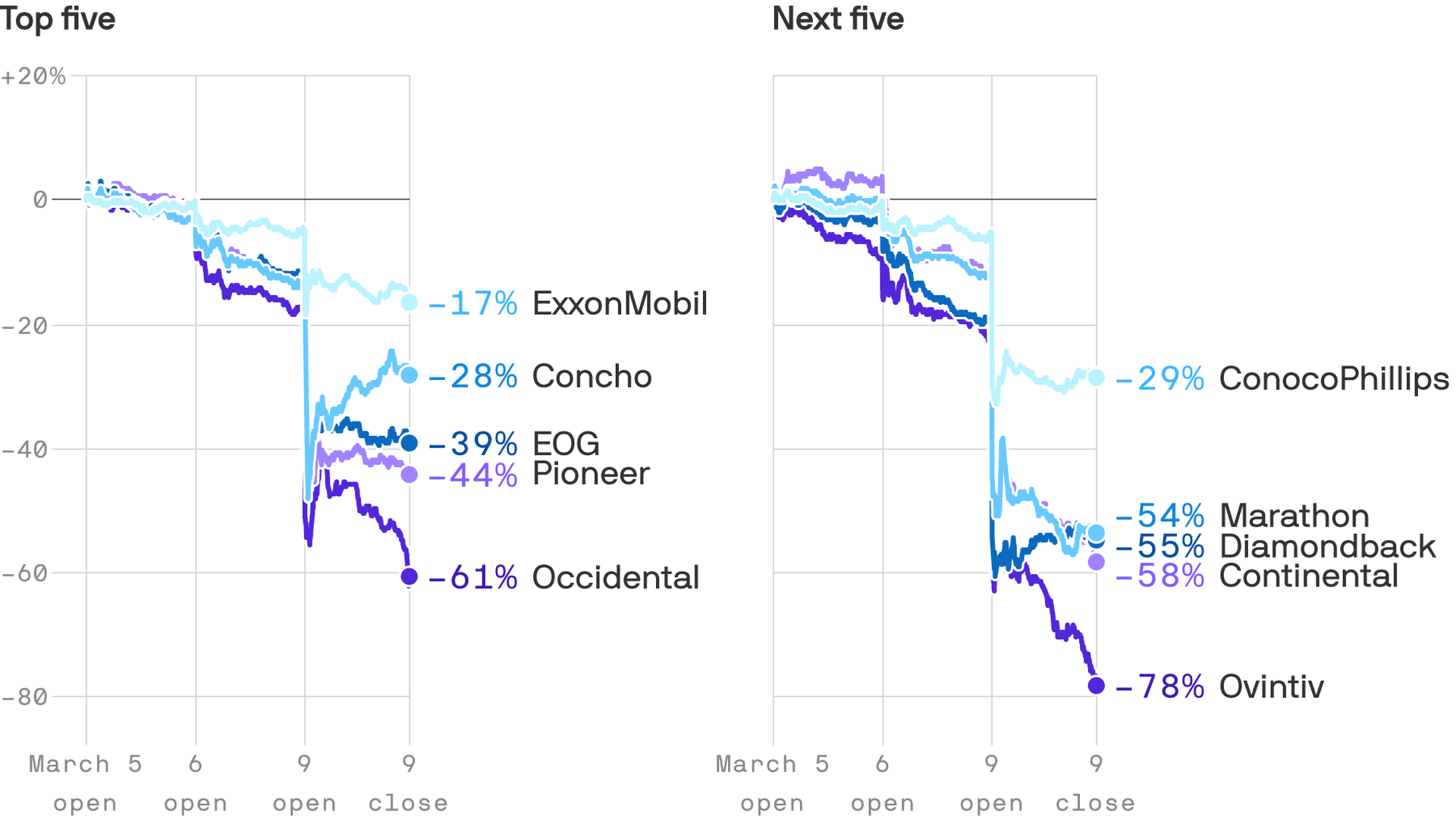
Oil prices nosedived to four-year lows Sunday as trading resumed after Friday's collapse of the OPEC-Russia production-limiting pact, a rupture slated to increase supplies at a time when the novel coronavirus is sapping demand.
The state of play: The immediate 31% collapse when trading resumed last night was the second-largest on record behind the 1991 Gulf war, Bloomberg reports.
Already struggling with mounting debt and falling market valuations, energy companies are at serious risk for mass bond defaults, especially those rated below investment grade, as oil prices now have fallen by more than 50% from their early January peak.
What's happening: Oil explorers and producers have around $86 billion of debt maturing over the next four years and companies with junk-rated debt were expected to have a hard time getting new financing this year, even before the COVID-19 and the weekend's OPEC fallout.
Forget black swans. We’re getting run over by two gray rhinos: coronavirus and climate change.
The intrigue: A gray rhino is a metaphor coined by risk expert Michele Wucker to describe “highly obvious, highly probable, but still neglected” dangers, as opposed to unforeseeable or highly improbable risks — the kind in the black swan metaphor.