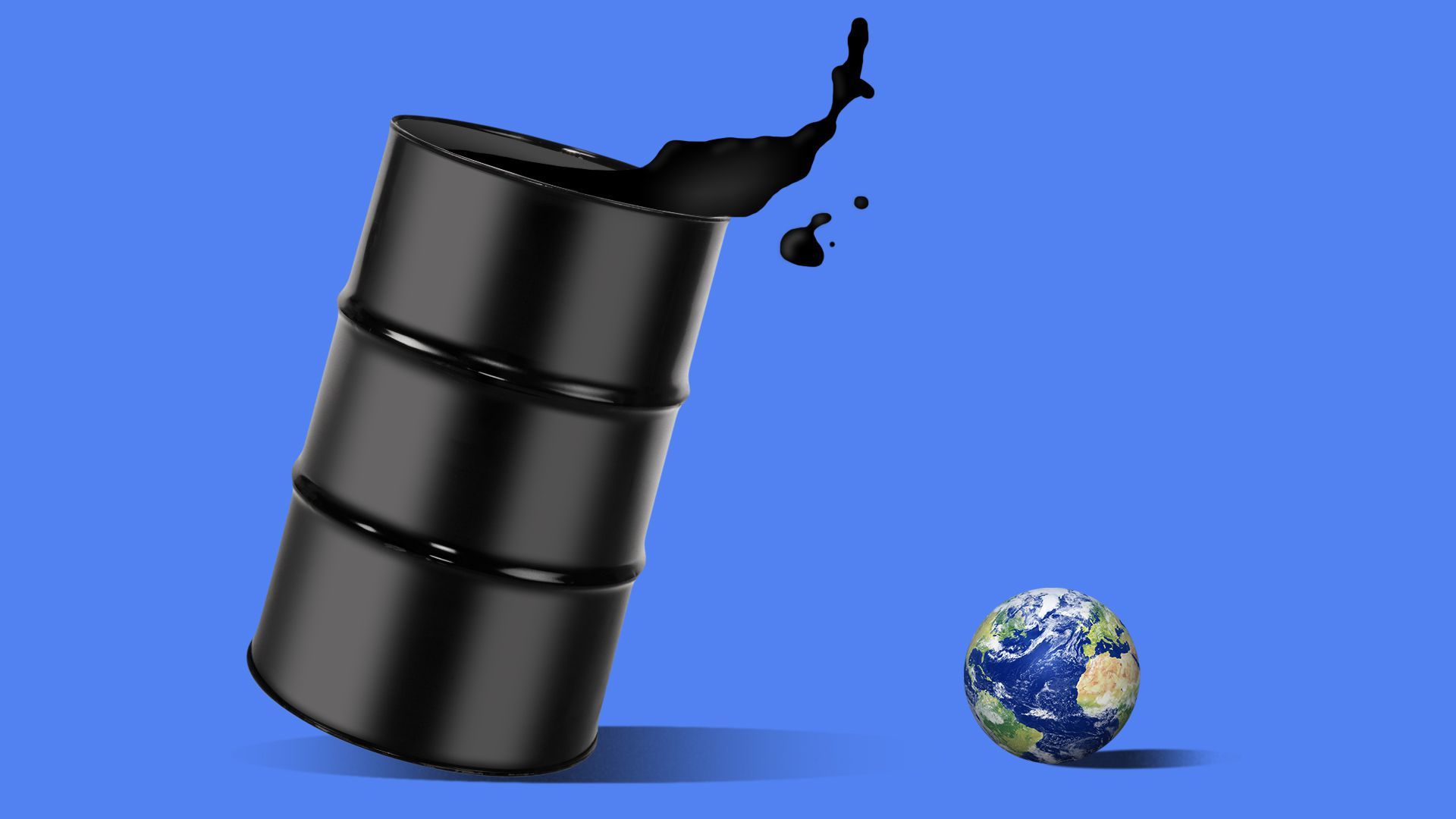
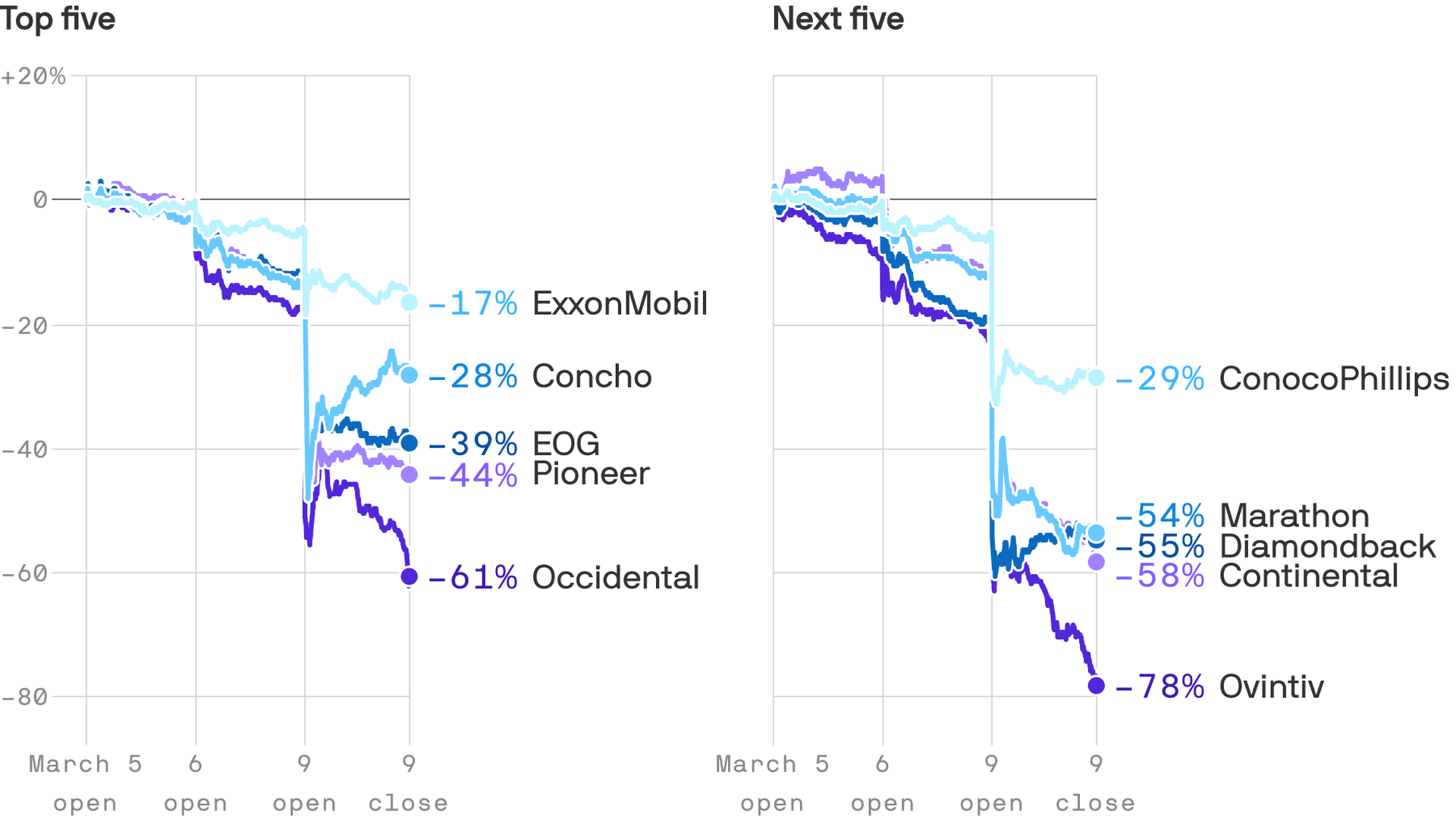
Convulsions in global oil markets are creating new wildcards for efforts to rein in carbon dioxide emissions and boost climate-friendly energy.
The state of play: In the abstract, cheaper energy makes cutting consumption more difficult, something to watch if low prices outlast the coronavirus outbreak. Lower revenues could also potentially hinder oil giants' investments in low-carbon tech and startups.
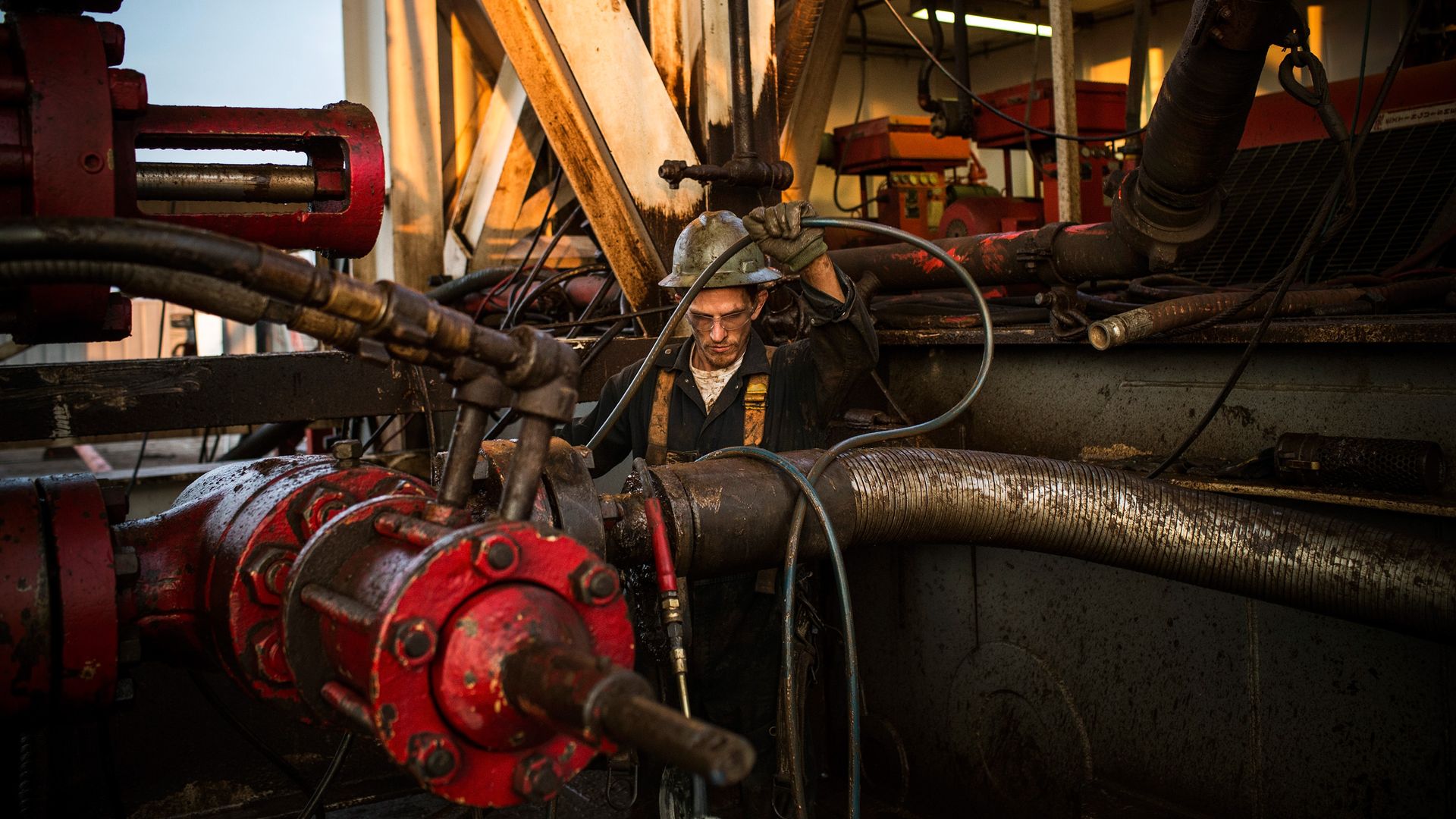
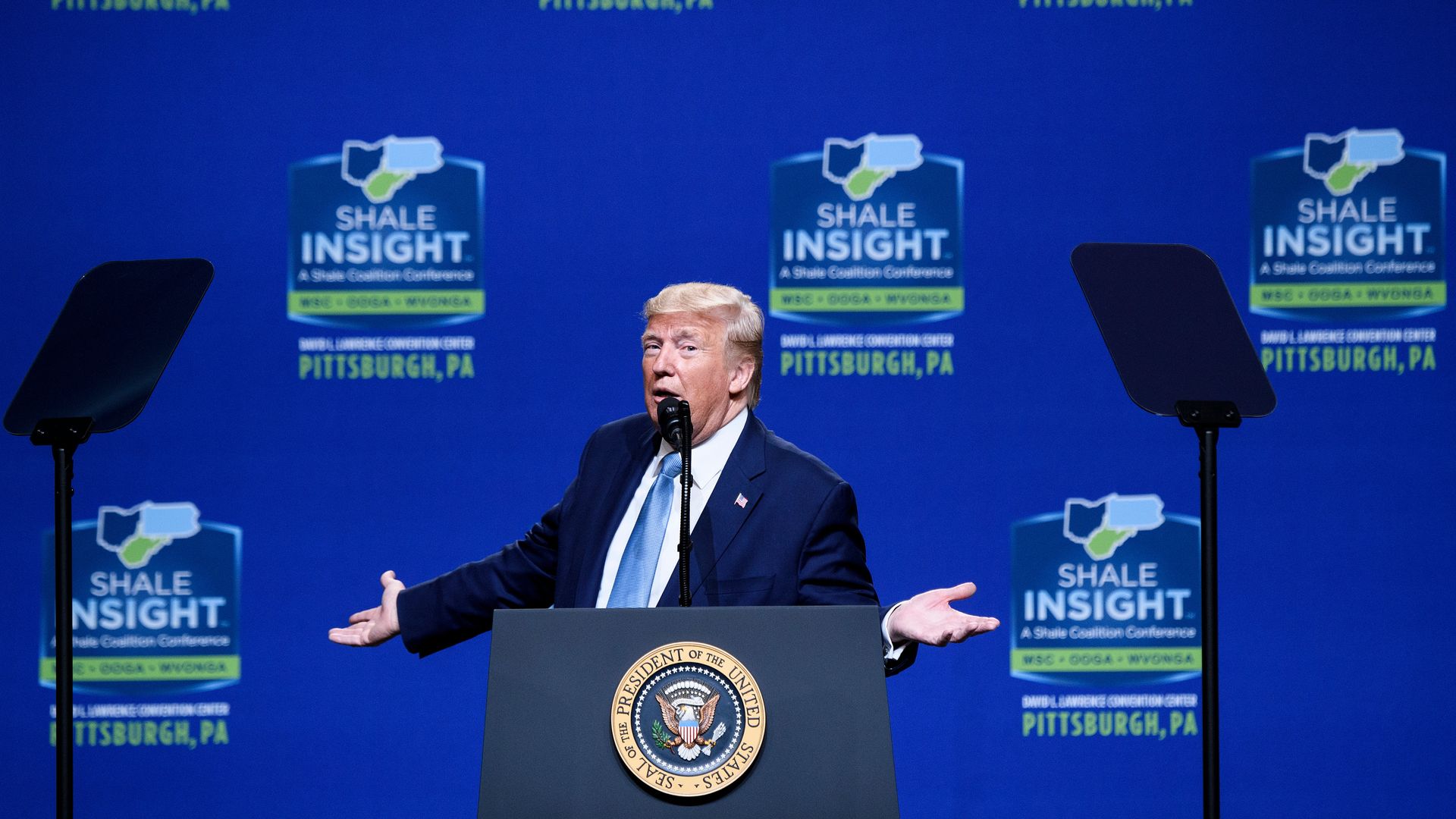
The White House is weighing options to provide financial assistance to U.S. oil producers getting hammered by the price collapse, but the picture is murky right now.
Why it matters: It's a sign of the rapidly worsening conditions for the sector and the Trump administration's scramble to respond to the effects of the coronavirus and falling prices.
Tesla CEO Elon Musk said he's "scouting" central U.S. locations for a factory that would build the upcoming Cybertruck, as well as the Model Y crossover for deliveries on the East Coast.
Why it matters: The announcements via Twitter Tuesday night add some clarity to expansion plans for the Silicon Valley electric automaker, which has recently found itself on better financial ground ahead of key product launches.
The Trump administration is "strongly considering" federal assistance for U.S. oil producers facing distress due to the steep decline in prices, the Washington Post first reported and Axios has confirmed.
Why it matters: The twin forces of the novel coronavirus sapping demand and collapse of the OPEC-Russia production-limiting deal has created new jeopardy for companies, some of whom are already struggling financially.
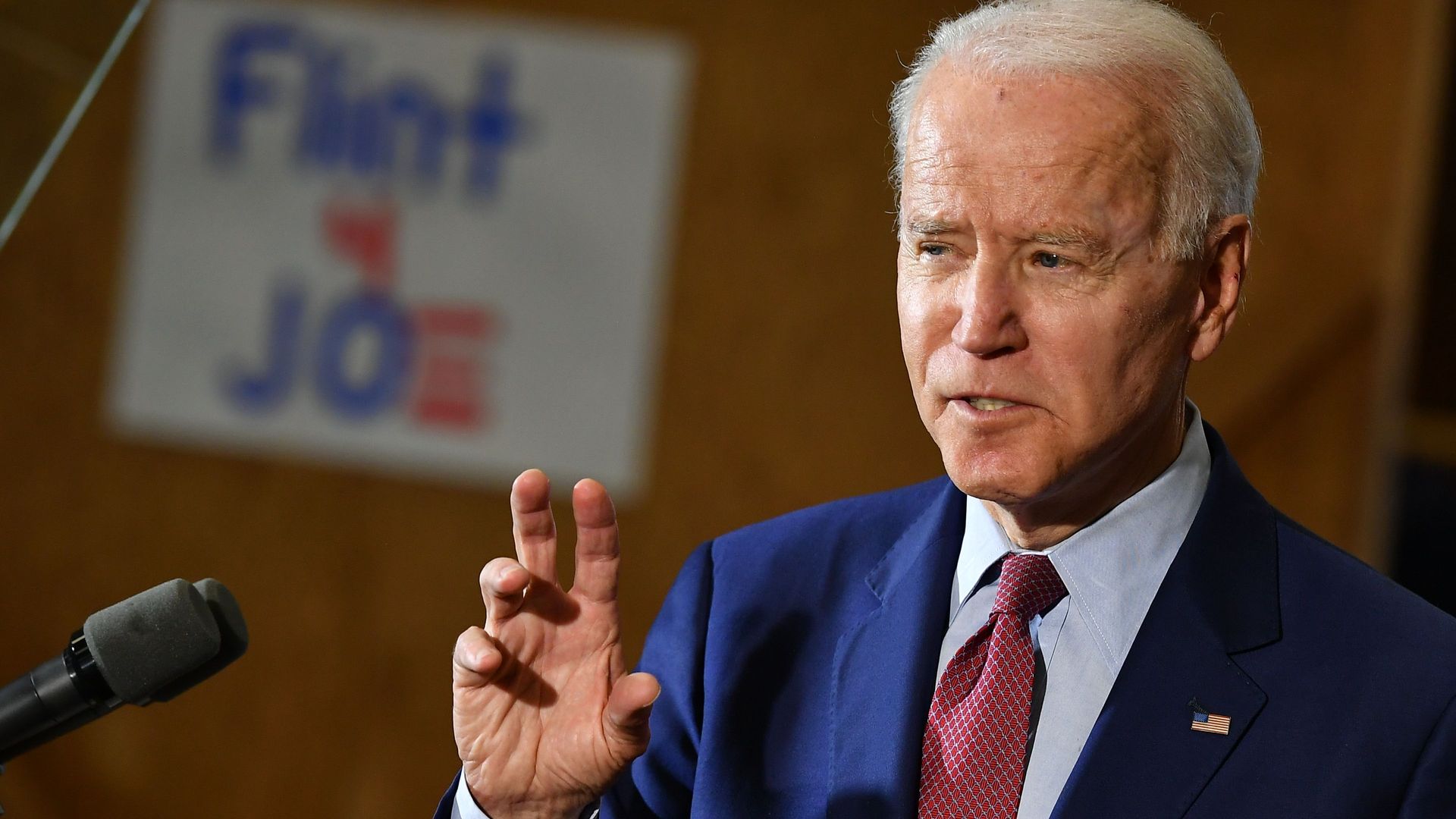
Yesterday brought a reminder that if Joe Biden wins the presidency, a lot of his staffing decisions could become battlegrounds over climate policy, not just his picks to run agencies like the EPA and the DOE.
Driving the news: When Axios' Jim VandeHei and Mike Allen reported that Joe Biden confidantes were discussing JPMorgan Chase's Jamie Dimon among several potential Treasury picks, the reaction from some climate activists was severe.
A Utah power plant could run at least partially on hydrogen within the next five years, according to a contract awarded today between an energy-technology manufacturer and a Utah power agency.
Why it matters: Governments, companies and experts around the world are increasingly looking to renewable hydrogen as a long-term pathway away from oil, natural gas and coal while still using infrastructure initially made for them.
The new oil price war escalated Tuesday as Saudi state oil giant Aramco announced, per reports in Reuters and elsewhere, that it plans to supply the market with 12.3 million barrels per day starting next month.
Why it matters: The increase underscores how the lunge for market share with the collapse of the OPEC+ agreement is going to create financial pain and problems for producers and governments worldwide.