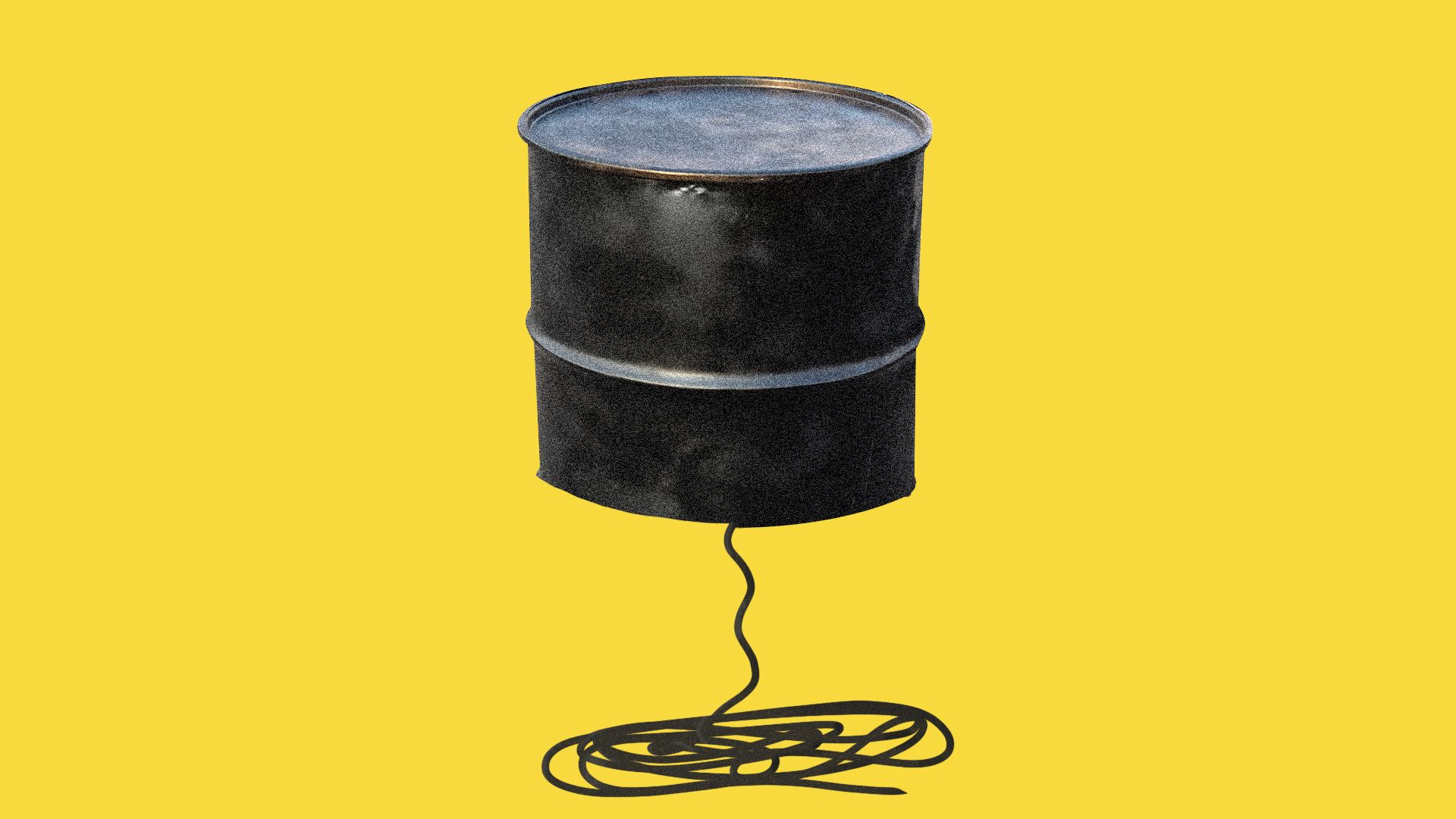
President Trump will direct the Energy Department to buy oil for the nation’s strategic stockpile to boost prices and help the oil industry reeling after the market’s historic collapse this week.
This week the Energy Information Administrationissued a forecast that shows U.S. crude oil production dropping next year on an annual basis for the first time since 2016 to average 12.7 million barrels per day in 2021.
Why it matters: It comes alongside a wave of announcements that U.S. producers are scaling back operations and cutting spending thanks to the collapse in oil prices. Together, the findings help show how the price declines and coronavirus-induced demand loss are affecting the industry.
Why it matters: Reassuring drivers that electric cars can meet all their needs just as well, or better, than their internal-combustion counterparts is important for pushing them into the mainstream.
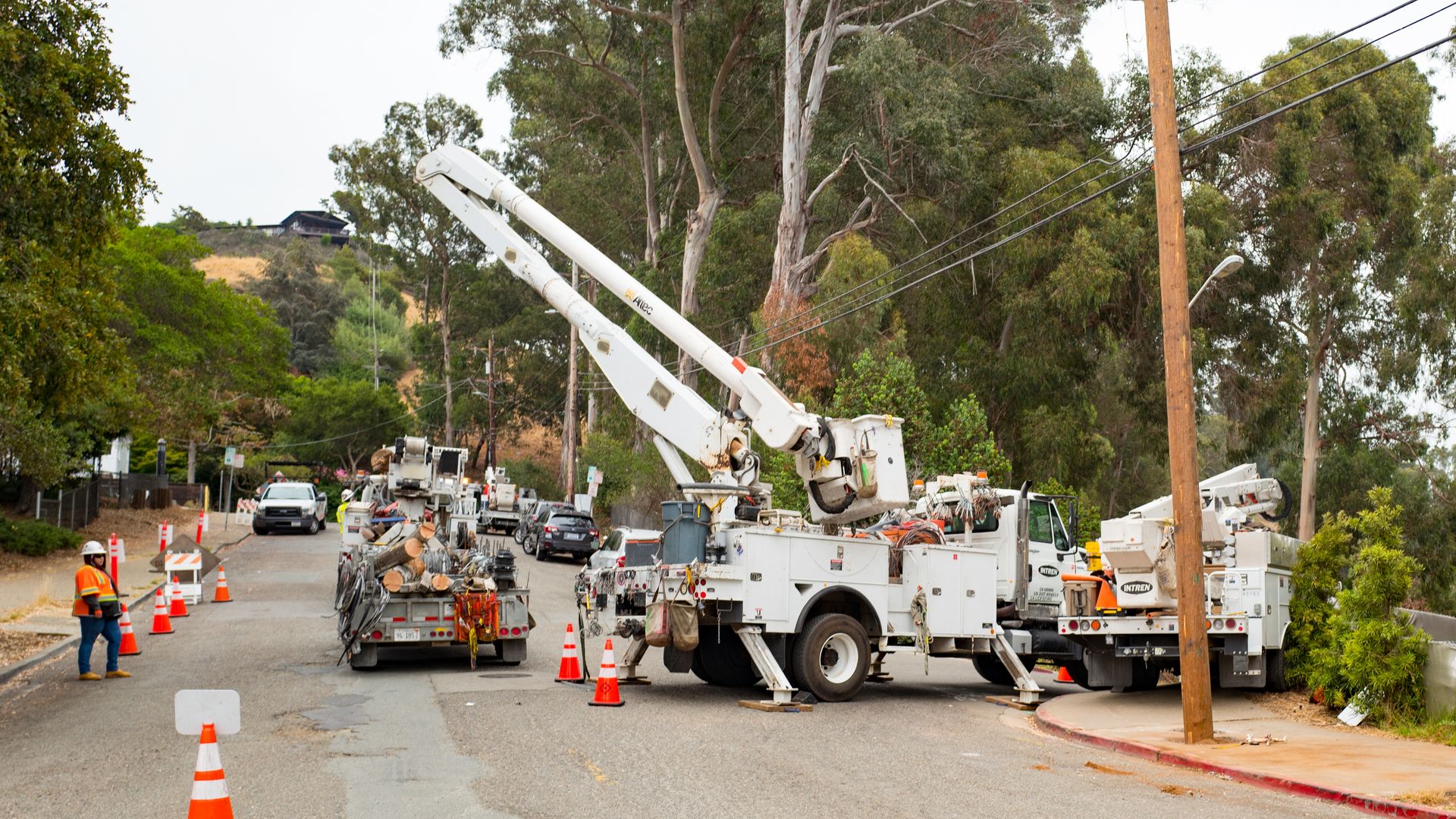
California regulators are requiring power companies to ensure their outreach around wildfires is offered in the languages spoken in their service areas.
Why it matters: The new California Public Utilities Commission rule is the convergence of two big dynamics: wildfire threats that are worsened in part from climate change, and the growing diversity of the nation's most populous state.
A number of forecasts show global oil consumption dropping this year for the first time since the financial crisis over a decade ago as the coronavirus outbreak prevents travel and stymies other economic activity.
What they're saying: The firm Rystad Energy, in a note yesterday, says it now projects global oil demand to fall by 600,000 barrels per day year-over-year — the world uses roughly 99 million barrels of oil per day — compared to 2019 levels.
The effects of the coronavirus on renewable energy, electric vehicles and oil are all coming into sharper focus in recent days.
Why it matters: A report from research firm BloombergNEF provides a window onto the breadth of the virus' effects on a suite of energy technologies, not just use of oil.
The Environmental Protection Agency's rule controlling power plants’ carbon emissions cuts C02 but preserve more coal electricity, according to a recent analysis by the U.S. Energy Information Administration.
Why it matters: It’s believed to be the first such EIA analysis of the regulation, putting meat on the bones of one of President Trump’s biggest regulatory moves to scale back rules from his predecessor.
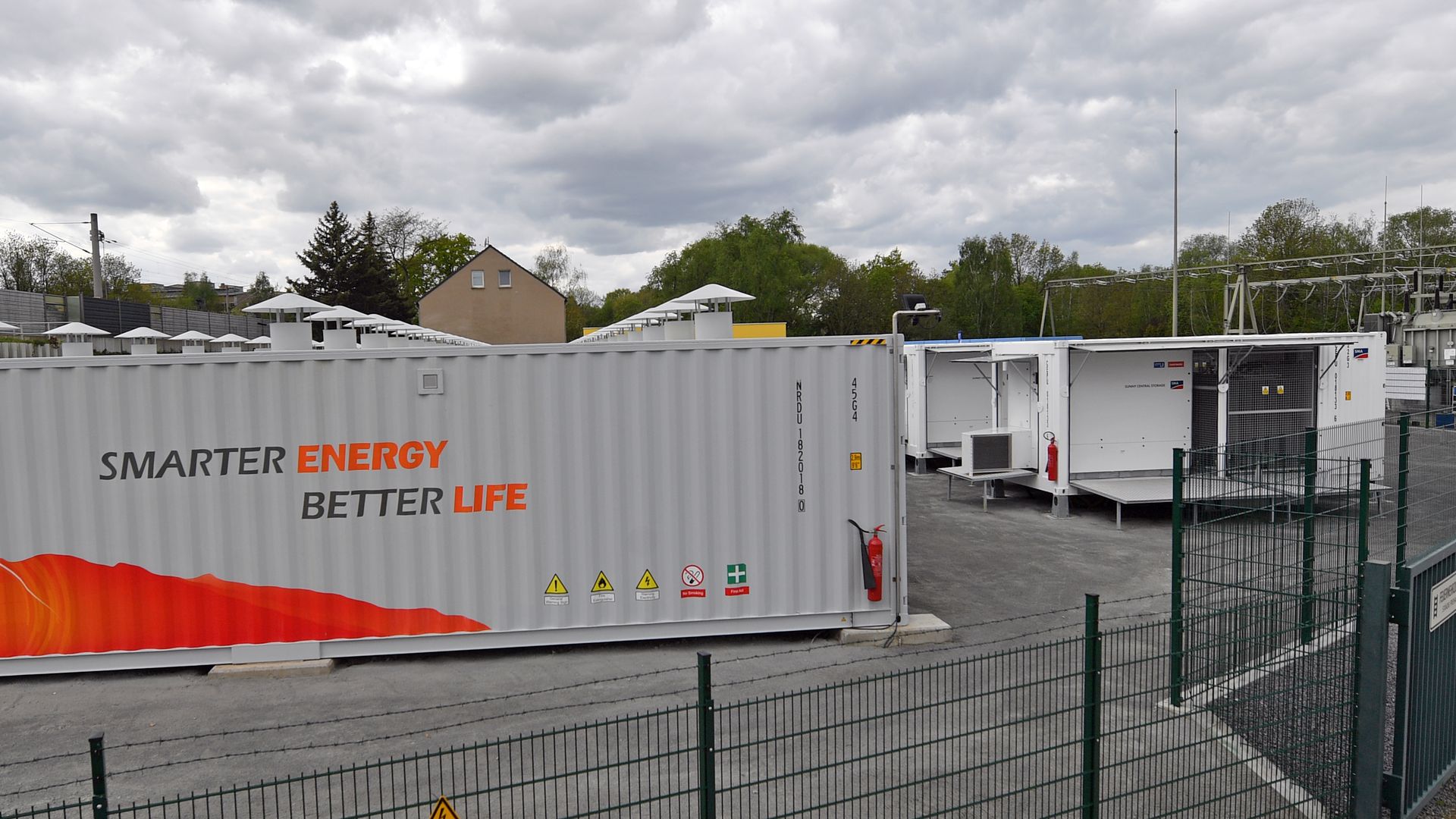
U.S. energy storage installations grew by a record amount last quarter, per new data from Wood Mackenzie and the U.S. Energy Storage Association.
Why it matters: Battery storage helps integrate more renewables onto power grids and, in some applications, provide backup power for buildings during outages.
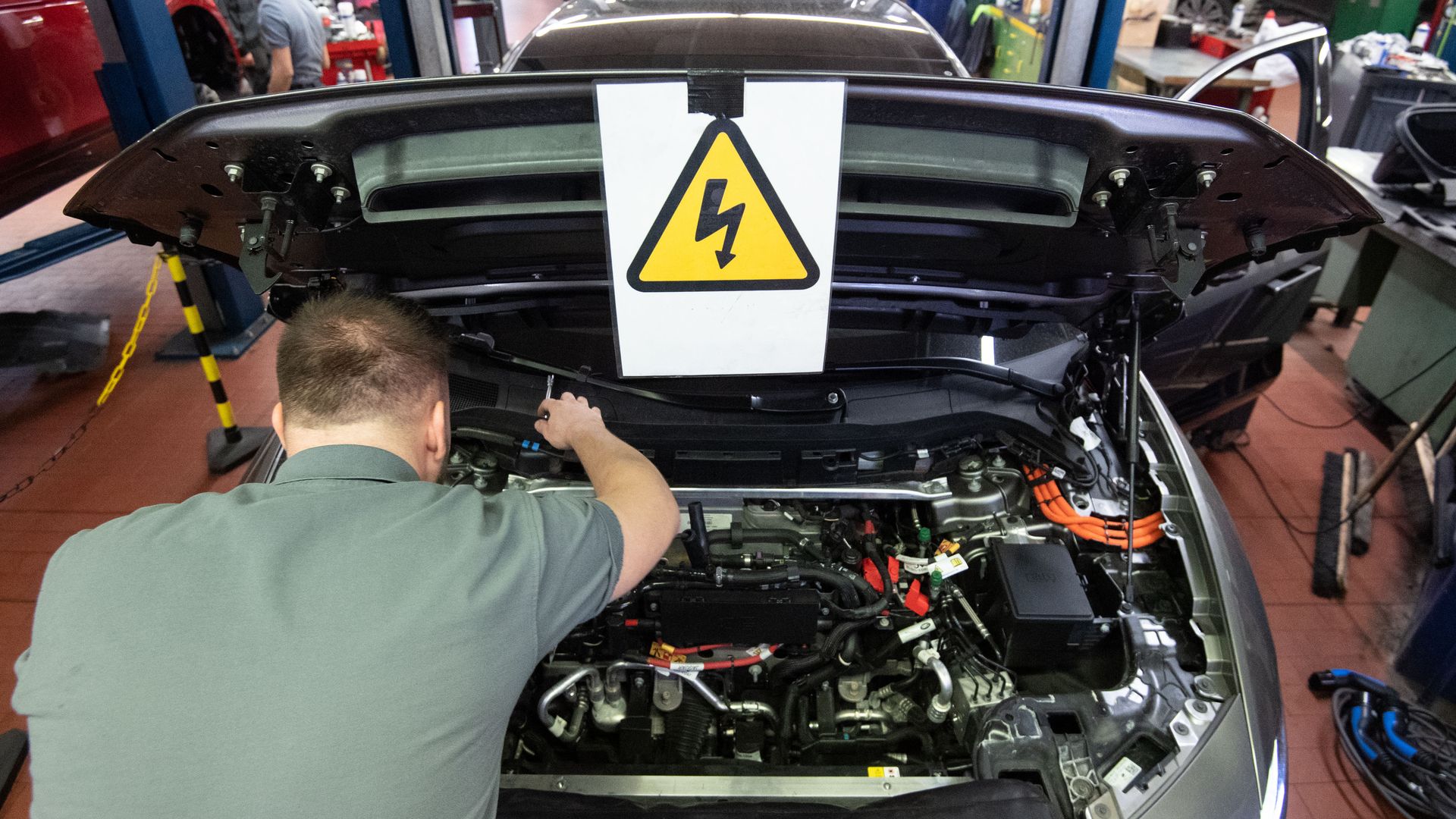
Cheaper gasoline thanks to the oil price collapse isn't expected to badly undercut electric vehicles, but the overall economic dislocation from coronavirus is a hurdle, analysts say.
Why it matters: EV sales have grown in recent years, but they're still basically a niche market and tiny percentage of overall vehicle purchases, so any new headwinds are worth watching.