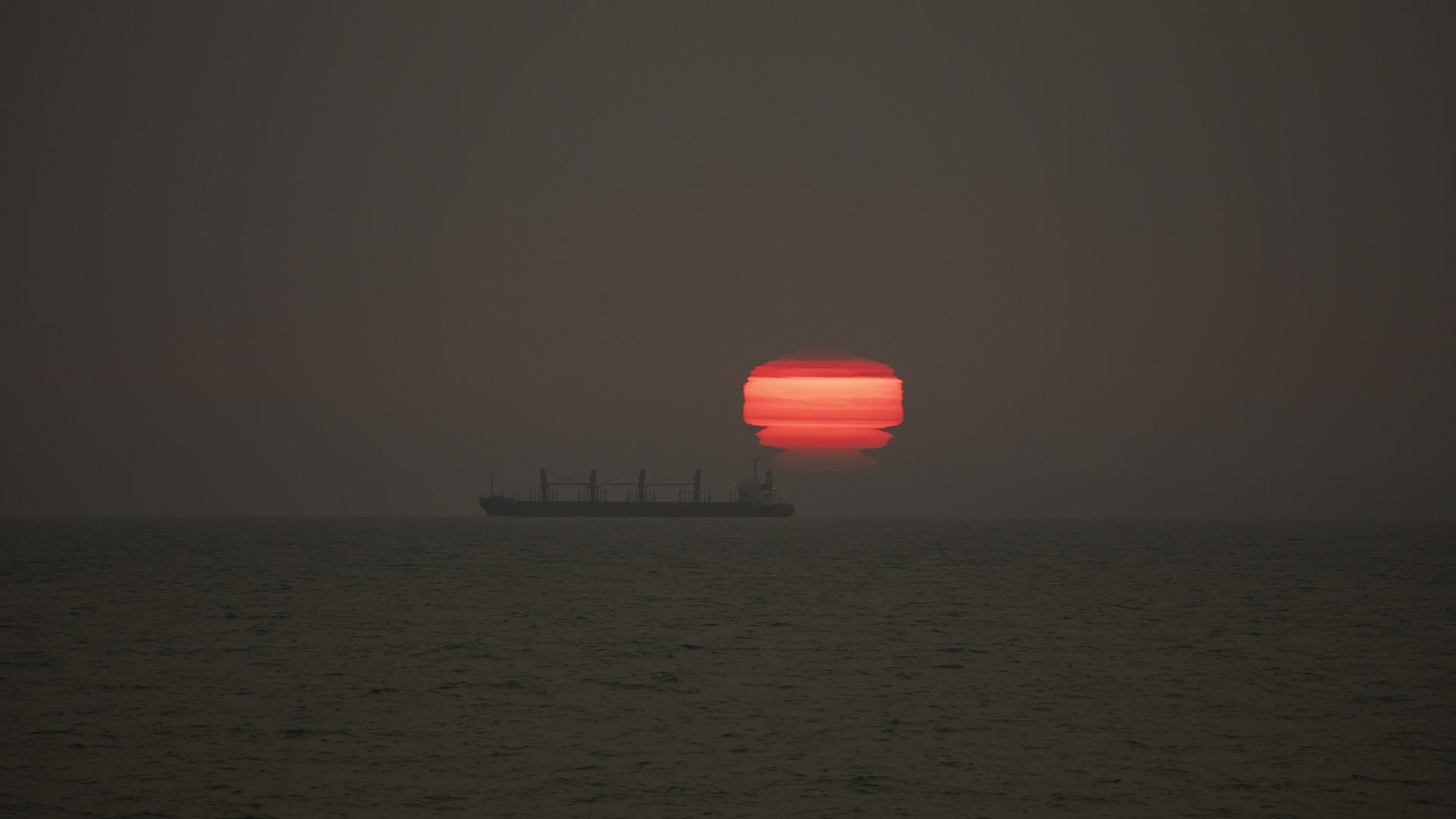
The imprint of climate change is now apparent in global weather data at a daily level, according to a new paper in the peer-reviewed journal Nature Climate Change.
Why it matters: "If verified by subsequent work, the findings ... would upend the long-established narrative that daily weather is distinct from long-term climate change," the Washington Post reports.
Tesla announced Friday that it produced almost 105,000 cars in 2019's fourth quarter and delivered roughly 112,000 — both records for the Silicon Valley electric automaker.
Why it matters: The deliveries substantially beat Wall Street estimates and enabled the company to meet its "ambitious" year-end sales goals, per CNBC.
Iran's response to the U.S. killing of Qasem Soleimani, a top Iranian military official, could target oil infrastructure and transit in the Middle East, analysts say.
Driving the news: The airstrike in Iraq that killed Soleimani pushed prices sharply upward last night and into this morning.
Shale dominated the 2010s, even more than the iPhone or cloud computing. That's the claim made by blogger and investment adviser Josh Brown, who sees the U.S. shale boom causing a collapse in energy prices that had enormous economic and geopolitical consequences.
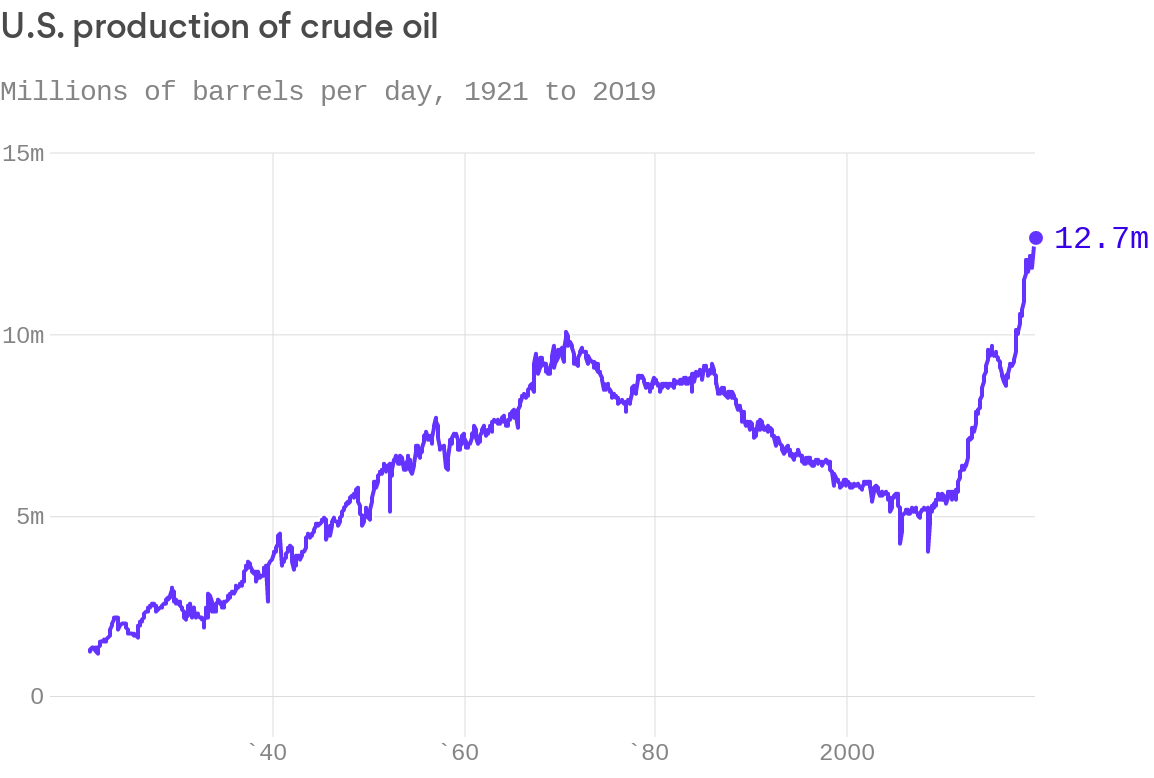
By the numbers: The U.S. currently produces roughly 12.7 million barrels of oil per day. That's an all-time high, and is more than double the 6.1 million expected 1o years ago.
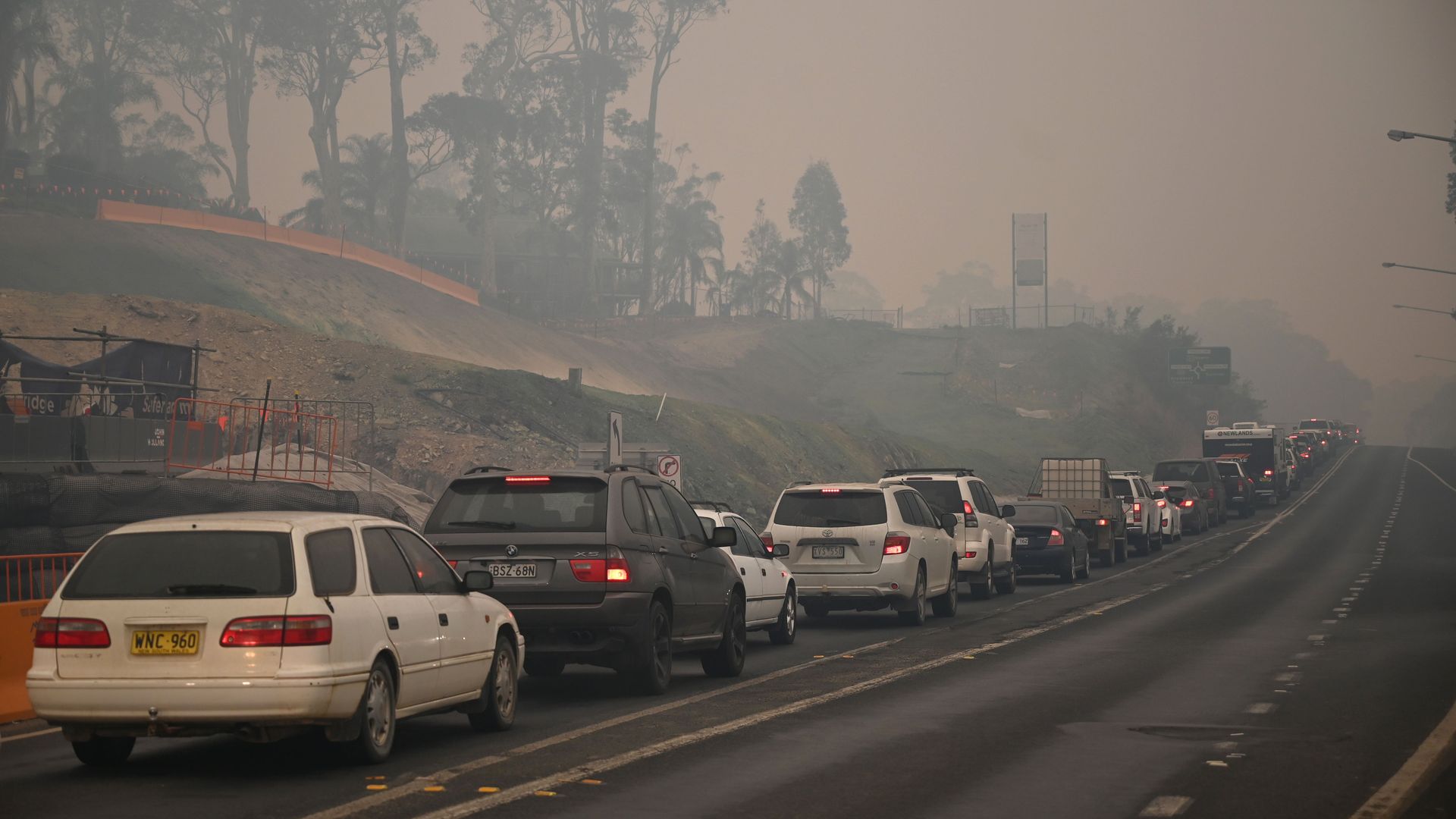
Australian authorities are racing to evacuate thousands of people stranded in the states of New South Wales and Victoria before high temperatures and strong winds return — with the military helping people escape the deadly wildfires by air and sea.
The latest: Victoria's Premier Dan Andrews declared a state of disaster for six local government areas and the Alpine Resorts overnight — the first time ever in the state. NSW is declaring a seven-day state of emergency, effective Friday morning (local time), state Premier Gladys Berejiklian said. It's NSW's third state of emergency during this bushfire season.
It's almost time to officially conclude that 2019 was the second-hottest year in temperature records that date back to the 1800s.
Driving the news: "It appears nearly certain (>99% likelihood) that 2019 will conclude as the second-warmest year since measurements began in 1850, behind only the exceptional warmth of 2016," the research group Berkeley Earth confirmed a few days ago.
Australia's wildfires are so intense that smoke from the blazes has traveled over 1,200 miles to blanket parts of New Zealand's South Island, and images show it's turned the country's white glaciers in the Southern Alps brown.
Why it matters: Monash University professor Andrew Mackintosh, the former director of the Antarctic Research Centre, said in almost 20 years of studying the glaciers, he'd "never seen such a quantity of dust transported across the Tasman," and he estimated the bushfires could potentially "increase this season's glacier melt by 20–30%," per the Guardian.






/2020/01/02/1577975229554.gif?w=3840)