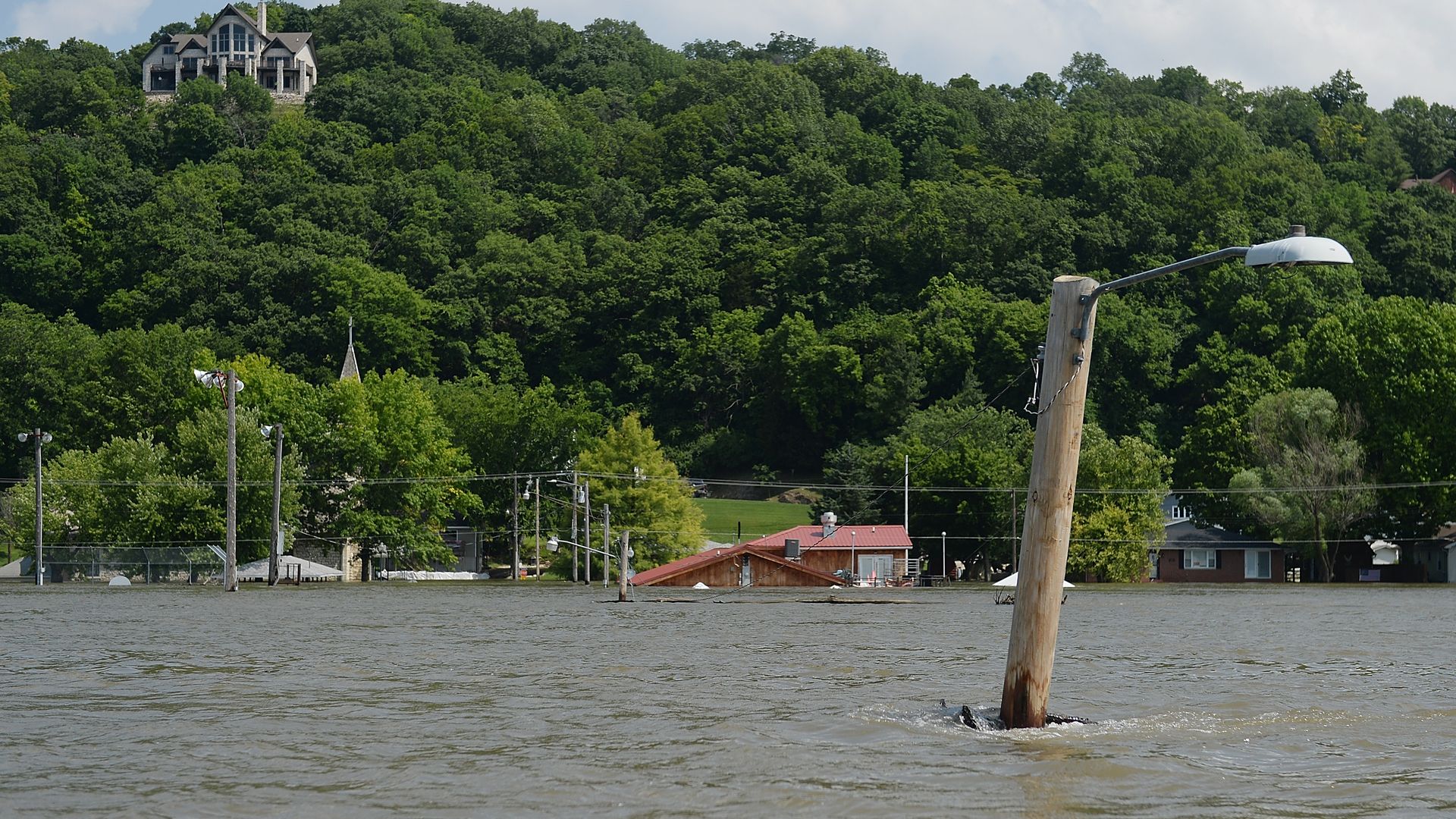
AccuWeather is predicting as much as $12.5 billion in damages throughout the Midwest after months of flooding has ravaged the region, according the the Wall Street Journal.
Catch up quick: The first half of 2019 is on its way to becoming the wettest on record due to snowmelt and flooding, largely in the Midwest, according to the National Oceanic and Atmospheric Administration. The ensuing damage has been extremely costly to Midwestern infrastructure and industries, particularly with agriculture.
Tesla surged 4.6% on Wednesday — more than $10 a share — on a burst of new confidence after it announced record production of its electric vehicles in the second quarter. But this was insufficient to satisfy the new doyens of death who hover over and analyze every hiccup from Tesla and CEO Elon Musk. As a group, they responded, "Eh."
What's happening: After hours yesterday, Tesla announced that it delivered 95,200 cars last quarter. When you add the cars that were on their way but not yet with the customer, the total surpassed 100,000, an impressive number given the company's age. It puts Tesla on track to reach Musk's 2019 production forecast of 360,000 cars.
June was by far the warmest on record in Europe and, by a smaller amount, beat the global record for the month, per a new analysis from Europe's Copernicus Climate Change Service.
By the numbers: Copernicus said the late June European heat wave, caused by an air mass that originated over the Sahara Desert, "led to the month as a whole being around 1°C above the previous record for June, set in 1999."
Oil giants face tricky strategic decisions as they move into renewables, vehicle electrification and other tech beyond their very dominant fossil fuel lines, argues a new analysis released via the Oxford Institute for Energy Studies.
Why it matters: The OIES analysts argue that giants like ExxonMobil, BP and Shell must navigate two large and contradictory global forces: growing political, societal and market pressure to cut global emissions and the strong likelihood that "significant volumes of oil and gas will be required well after 2050."
Japanese authorities ordered more than 1 million people to evacuate 3 cities in Kagoshima Prefecture on the island of Kyushu on Wednesday, as heavy rains threatened to trigger flooding and landslides, the Japan Times reports.
The big picture: Nearly 40 inches of rain have fallen in parts of southern Kyushu since Friday, per Reuters. Forecasters warn as much as 14 inches could still fall there through Thursday. Japanese Prime Minister Shinzo Abe put the military on standby for rescues. His government was criticized last year for a slow response to heavy rains that caused landslides and floods that killed more than 200 people, Reuters notes.