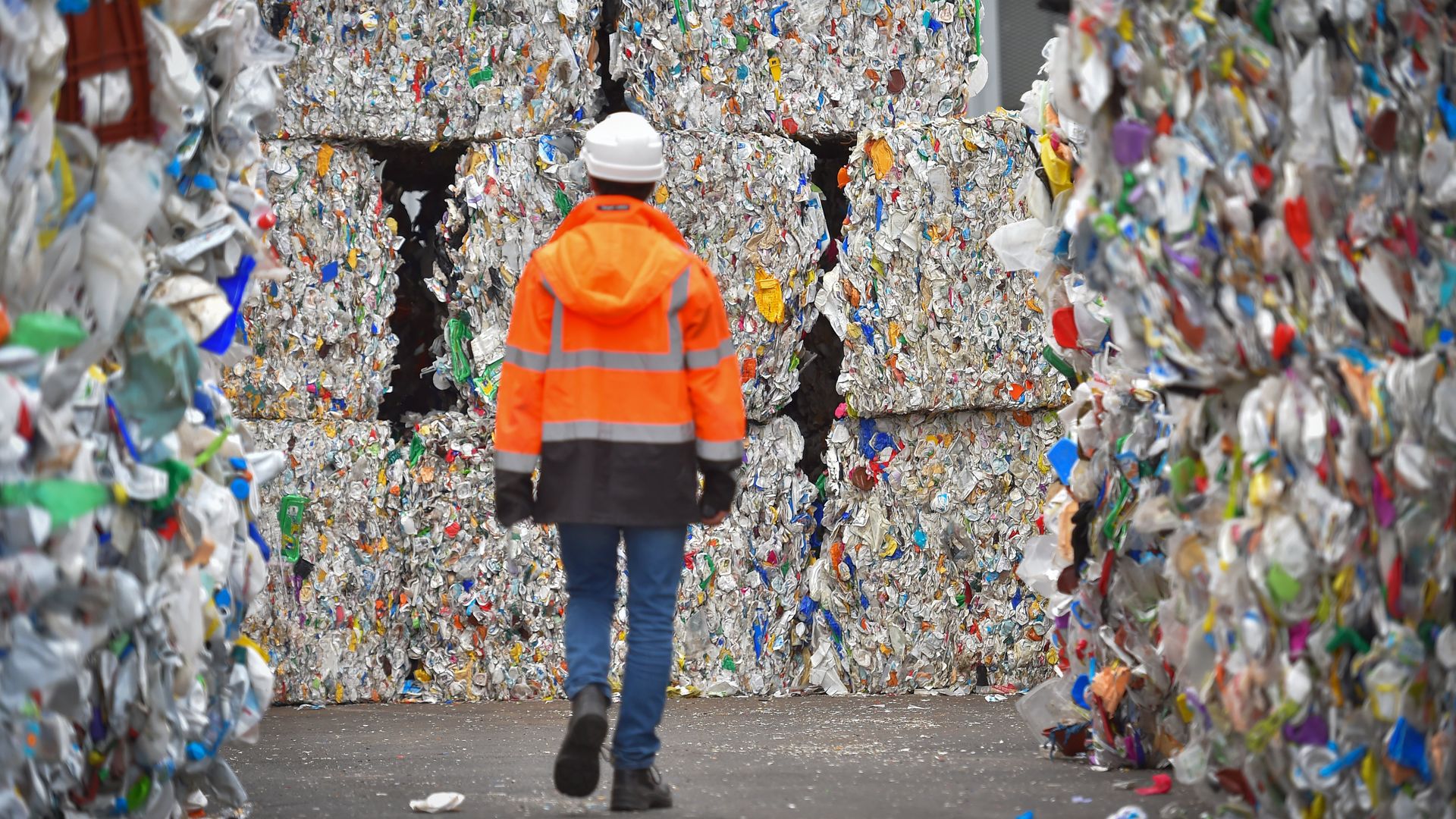
Companies across the plastic supply chain are unifying around lofty plans to fix the world’s abysmal recycling record as a way to simultaneously protect their profits and respond to growing pressure.
Driving the news: More than two dozen companies, including ExxonMobil and Procter & Gamble, formed a coalition earlier this year seeking to pour more than $1 billion into increasing recycling.
Plastics are intertwined with our lives today — driving researchers to create plant-based versions and more efficient ways to recycle.
The big picture: From a science perspective, the biggest challenge is consumers and companies want materials that won’t degrade quickly while being used but will degrade quickly once disposed, says Andrew Dove, a professor of chemistry at the University of Birmingham in the U.K. “The world wants it both ways.”
The ubiquity of plastics has led some researchers to dub this era the Plastic Age. From macro to micro, plastics are slowly permeating our bodies, our oceans and even our air.
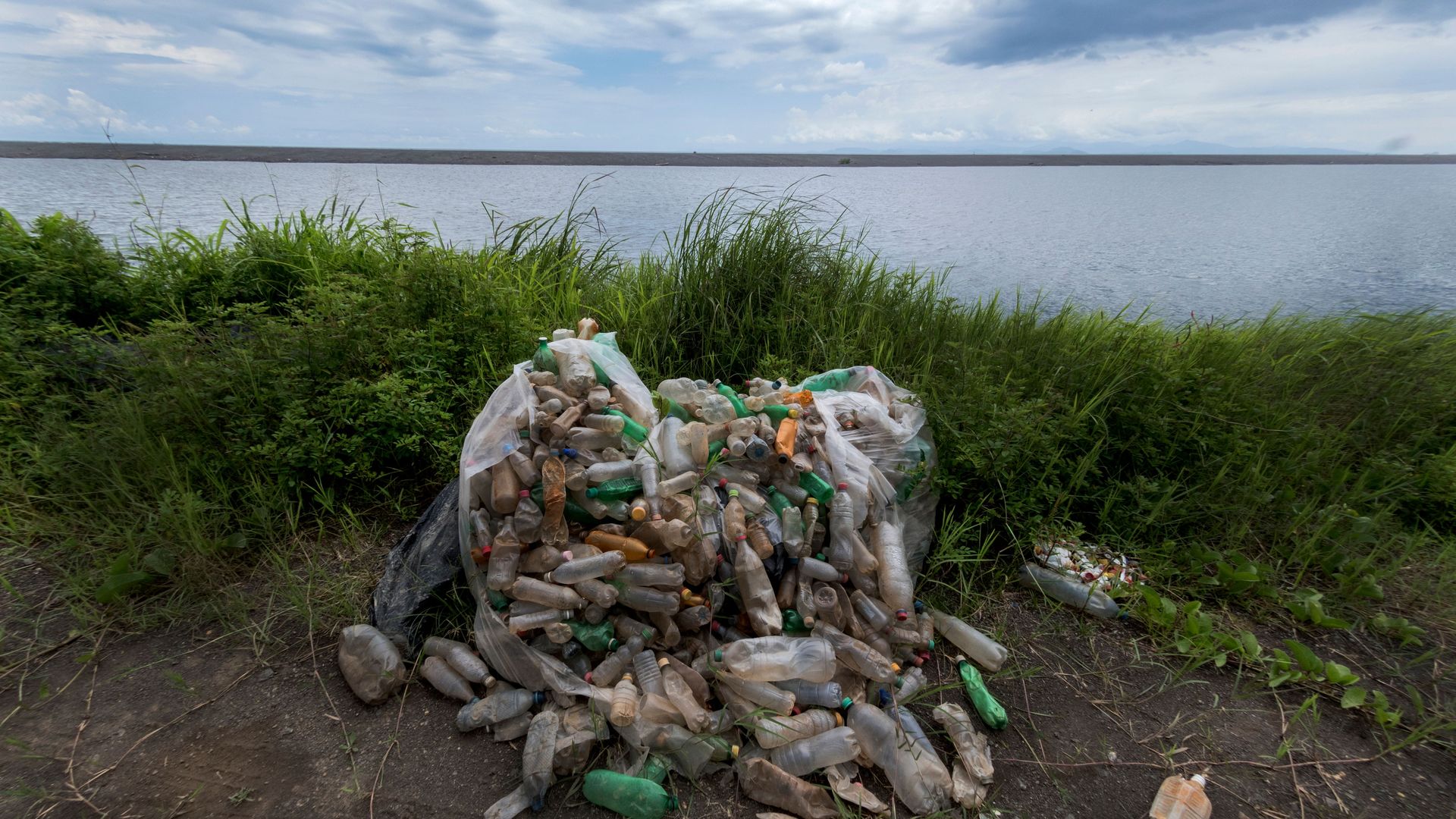
Why it matters: By one estimate, nearly 80% of plastic waste has accumulated in landfills or in the natural environment, and it’s uncertain how long it takes to degrade.
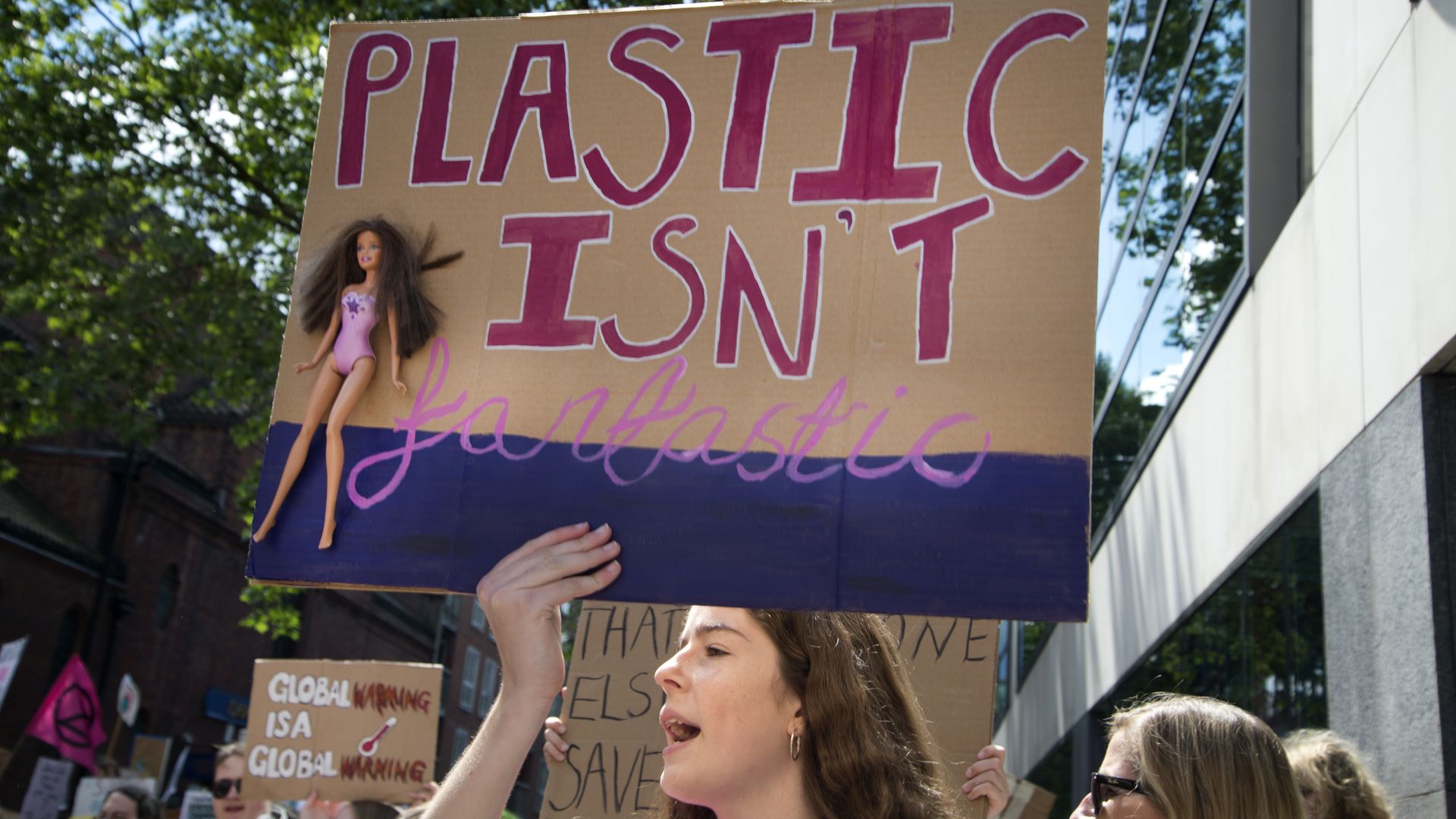
From Legos to Barbies, toys are an indispensable part of childhood — and plastics are an indispensable part of the toy industry. Some parents who are part of a growing zero-waste movement are refusing to buy plastic toys.
Why it matters: The global toy industry is worth $89 billion, and many toys today are made of plastic. It makes them inexpensive but also easily disposable once children grow out of them, and they're seldom recycled.
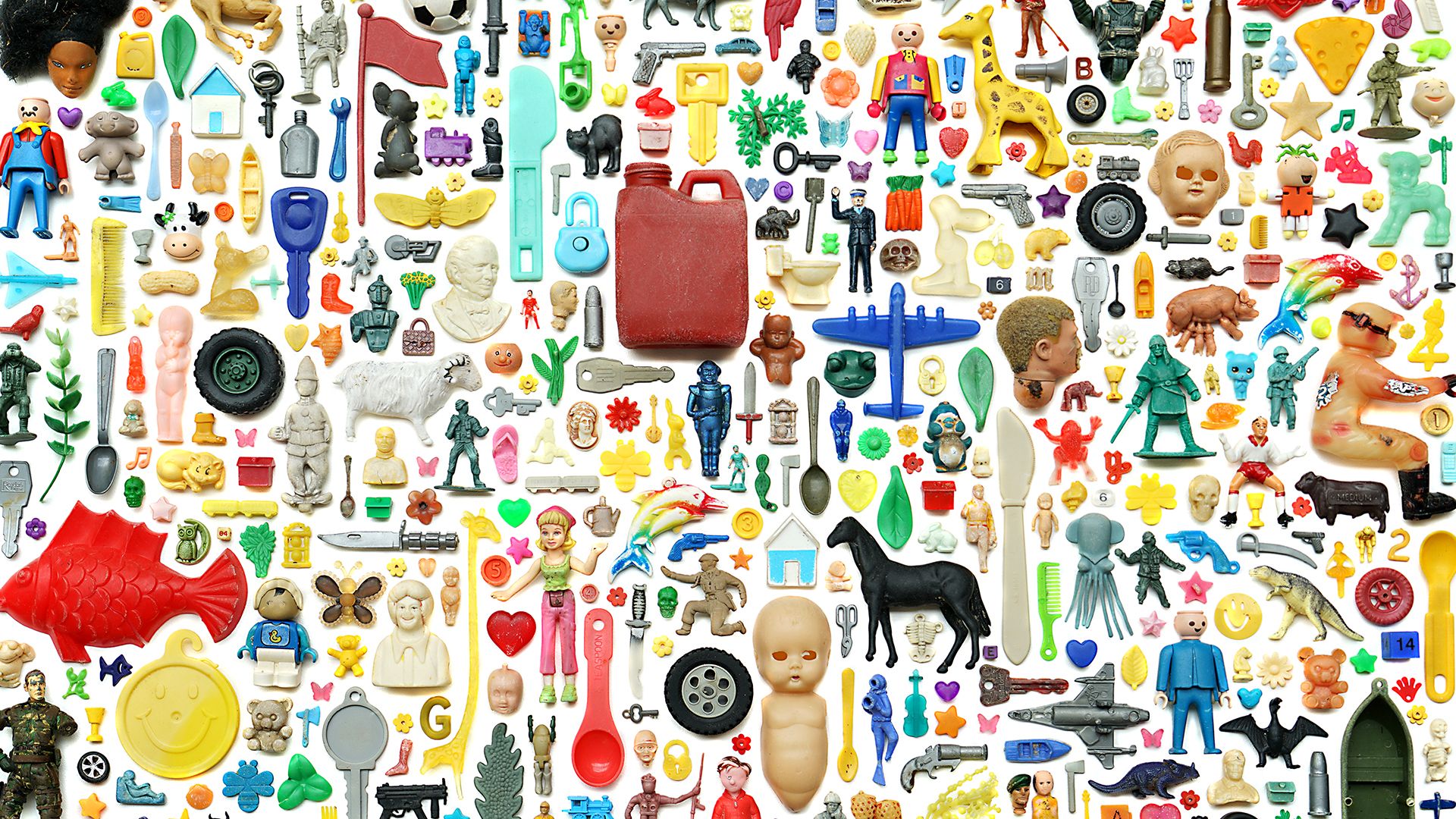
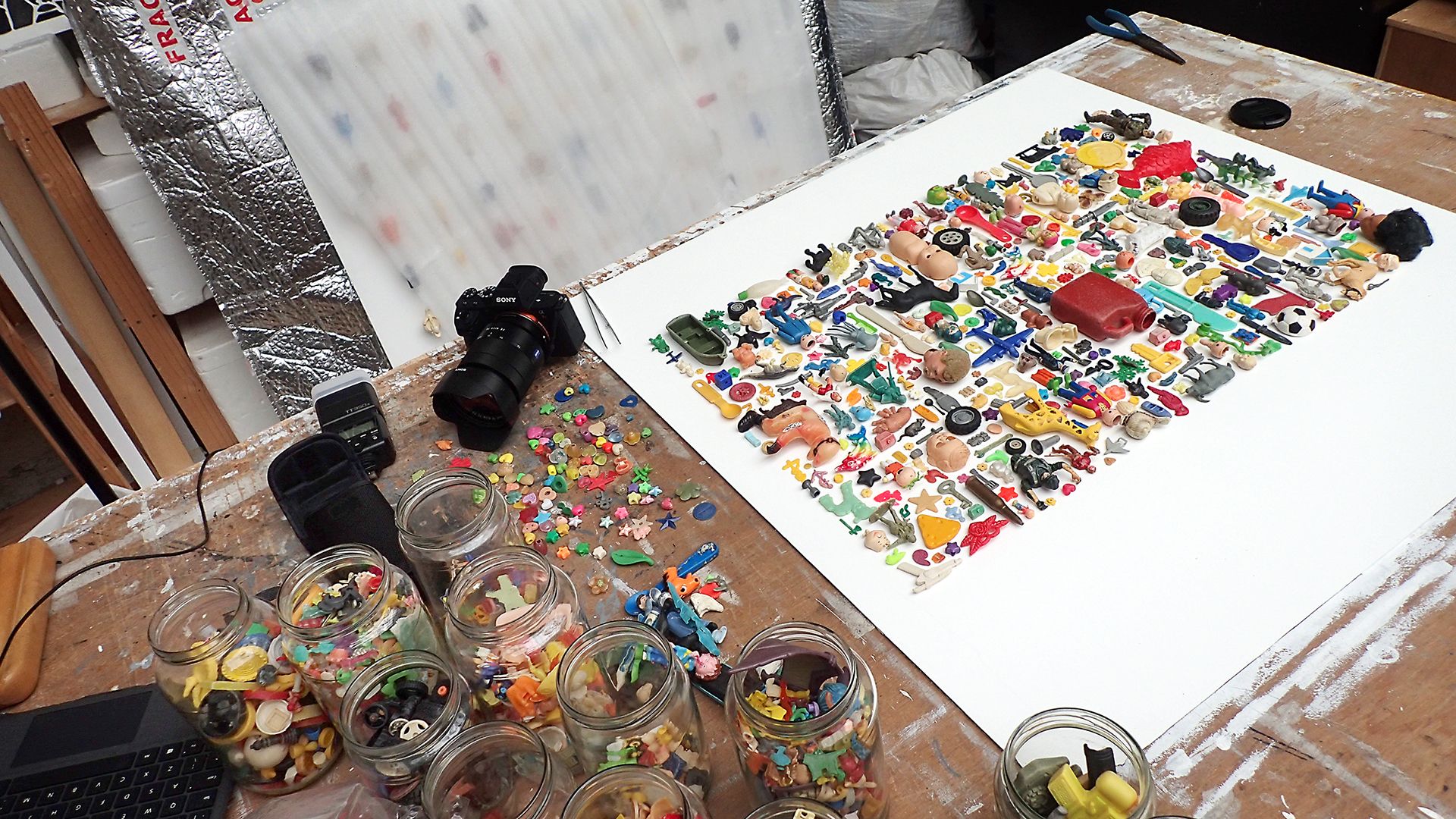
For our Deep Dive on plastics, Axios commissioned artist Steve McPherson to create a custom piece using plastics washed onto the coastline of England. McPherson transforms these discarded, forgotten plastic objects into vibrant, beautiful pieces — forcing the viewer to confront where these objects actually originated.
Why it matters: Plastic makes up more than 60% of ocean litter — millions of metric tons — and that amount is only increasing. Artists like McPherson are using their platform to address the complexity of the plastics problem and to urge people to examine their consumer habits.