Editor's note: This piece has been corrected due to a correction posted by the authors for Nature. Please see full explanation at bottom.
The world's oceans have absorbed about 60% more heat during the past 25 years than previously estimated, according to a new study published in the journal Nature. The study takes advantage of a new method that can serve as a whole ocean thermometer.
Why it matters: If the ocean is absorbing even more heat than observed, it would suggest future global warming will track on the upper end of projections — possibly as high as 5°C, or 9°F, by 2100 if emissions are not significantly curtailed.
The oceans are absorbing about 93% of the extra energy from increasing amounts of greenhouse gases in the atmosphere.
What they did: For the study, scientists, led by Princeton University geochemist Laure Resplandy and Ralph Keeling from the Scripps Institution of Oceanography, devised a new way of taking the global ocean temperature. It relies on precise atmospheric measurements of oxygen and carbon dioxide, which date back to 1991.
The scientists examined the combined amount of oxygen and carbon dioxide in the air, which they term "atmospheric potential oxygen," or APO.
Both of these gases are less soluble in warmer water, and as the ocean warms, these gases are released into the air, which increases the APO.
This contrasts with other methods that use millions of observations from ocean sensors, including buoys and ship-based instruments. These measurements have considerable uncertainty, particularly the further back you go in time.
What they found: The amount of carbon dioxide that can be emitted by human activities before putting the goals of limiting warming to under 2℃, or 3.6℉, out of reach is about 25% less than what was previously calculated.
“Imagine if the ocean was only 30 feet deep,” said Resplandy in a press release. “Our data shows that it would have warmed by 6.5℃, or 11.7℉, every decade since 1991. In comparison, the estimate of the last IPCC assessment report would correspond to a warming of only 4℃, or 7.2℉, every decade.”
What they're saying: Keeling told Axios the results, “Imply that there’s likely to be more warming in the future.”
This is because the warming oceans eventually transfer much of that extra heat into the atmosphere, resulting in accelerated global warming and stronger storms that can deliver heavier precipitation.
"This study shows that estimates of this ocean heat uptake are probably on the high side of what we previously thought," said NASA climate scientist Kate Marvel. "Why is this scary? Because of something called 'climate sensitivity:' a measure of how hot the planet will eventually get."
Pieter Tans, who closely tracks the amount of carbon dioxide in the Earth's atmosphere for NOAA and was not involved in the new study, told Axios the paper is valuable for providing a new, independent estimate of global average ocean warming.
"In case the larger estimate of ocean heat uptake turns out to be true, adaptation to, and mitigation of, our changing climate would become more urgent."
— Pieter Tans, NOAA
However, Tans cautioned that the new estimate is still uncertain, and needs to be replicated by subsequent studies. So too did Kevin Trenberth, a senior scientist at the National Center for Atmospheric Research who was not involved in the new study.
Ultimately, the calculations, Trenberth says, "have implications, because the planet is clearly warming and at faster rates that previously appreciated, and the oceans are the main memory of the climate system (along with ice loss)."
After this study and the Axios story based on it was published, the authors submitted a correction to Nature, showing that the margins of error on their calculations of ocean heat uptake were larger than previously stated. According to lead author Ralph Keeling, the errors "Do not invalidate the study’s methodology or the new insights into ocean biogeochemistry on which it is based."
Instead of showing a higher amount of ocean heat increase than other studies, the study amounts to an independent confirmation of what other studies have found. We have updated the headline to reflect this.
The environmental platform put forward by Jair Bolsonaro, Brazil's right-wing president-elect, could cause a rise in greenhouse gas emissions and a 268% spike in deforestation, according to a simulation from the National Institute of Space Studies in Brazil.
Why it matters: The simulation took into account policies like increased deforestation in Amazonian territory, non-protection of indigenous territory and an eventual exit from the Paris Climate Agreement, among others. Those scenarios worry environmental groups, with Greenpeace Brazil saying Bolsonaro could be "one of the last presidents of Brazil who can act in time to avoid irreversible damage to the planet."
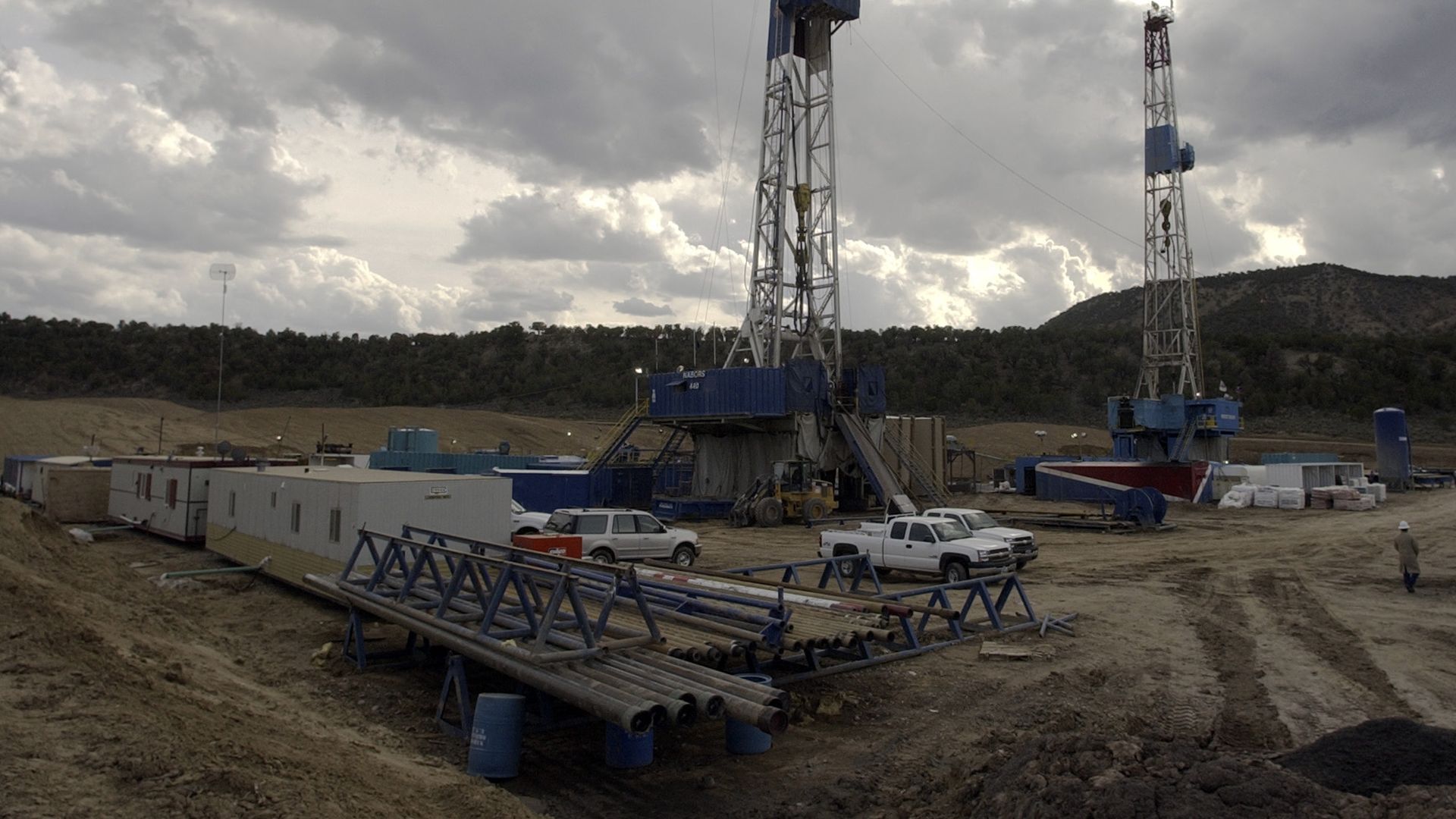
Encana Corp., a big Canadian firm with substantial U.S. operations, said Thursday that it's buying Newfield Exploration in a $5.5 billion stock transaction.
Why it matters: The deal will make Encana one of the biggest shale producers in North America, according to Reuters. Newfield has a big position in Oklahoma's prolific Anadarko Basin, as well as acreage in Utah and North Dakota.
Newly released federal data shows that U.S. crude oil production reached 11.35 million barrels per day in August.
Why it matters: U.S. crude production has been at record levels for a while. But this Bloomberg story captures how wild the August data is, noting the 2.1 mbd increase over August of 2017 is the largest year-over-year rise in U.S. history. And S&P Global Platts' Brian Scheid points out something interesting about the new figures: Colorado's production has now surpassed California's for the first time.
Shell's profit surged to $5.6 billion in the third quarter, up from $4.1 billion in the same period last year, the oil-and-gas giant announced today.
Why it matters: The haul is the latest sign of how the rise in crude oil prices is boosting the fortunes of the industry, although Shell didn't hit analysts' forecasts.
Things have turned upside down in the closely-watched House race on the tip of Florida: Republicans are running an advertisement alleging that Democratic candidate Debbie Mucarsel-Powell is beholden to “dirty coal money” and is blocking action on climate change.
Why it matters: The ad shows how climate change is becoming a political concern for the GOP in a district experiencing the real-world effects of it through more frequent flooding. It’s also one of the starkest examples of how climate and environmental issues are resonating a bit more this election than previous ones.
Energy Secretary Rick Perry is heading to Eastern Europe next week to make a series of announcements, including a new liquified natural-gas deal with Poland, according to an Energy Department official.
Why it matters: Perry’s trip, which includes Poland, Ukraine, Hungary and Czech Republic, comes as the Trump administration is seeking to balance its conflicting goals of protectionist trade policies and American energy exports.
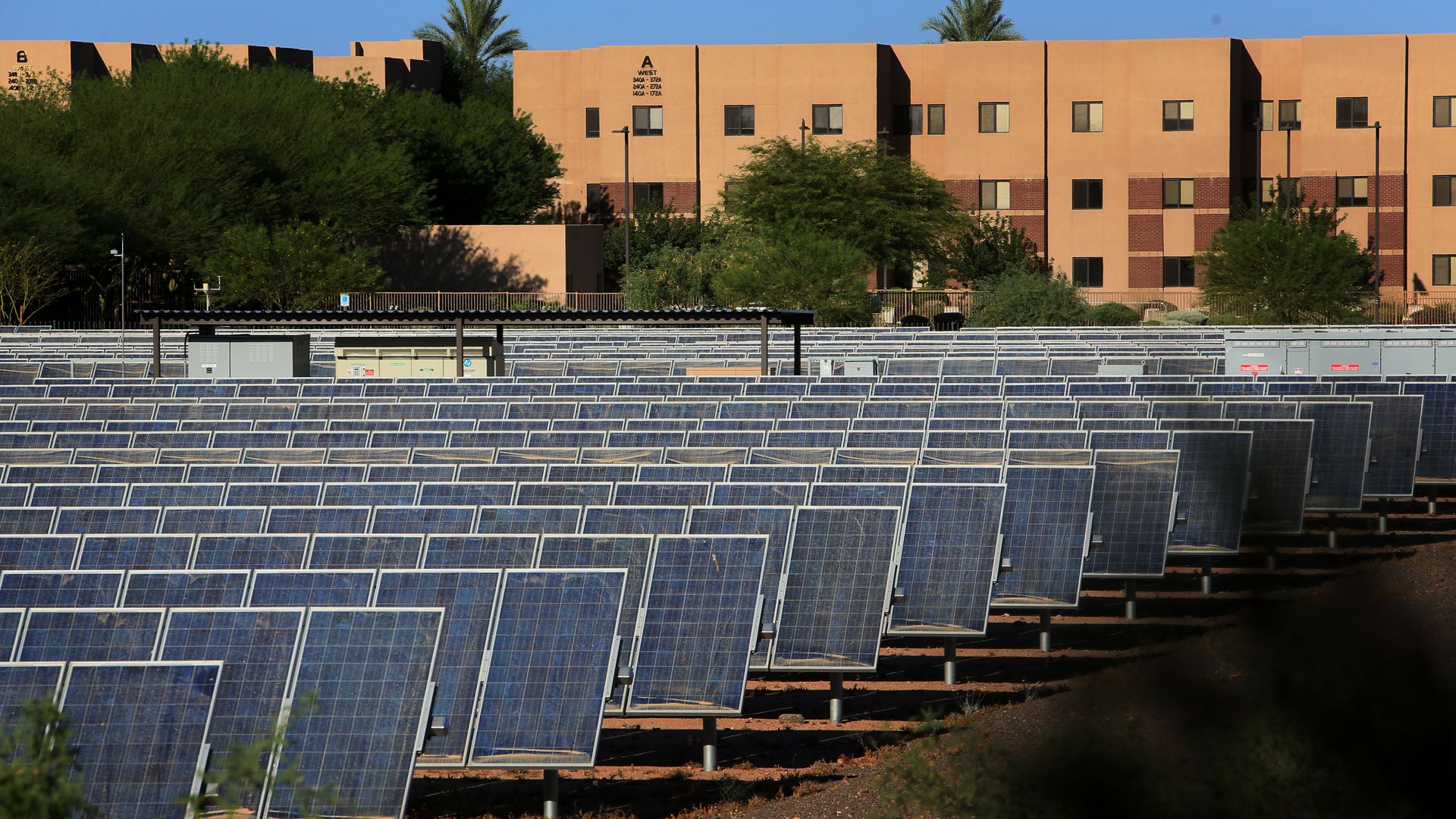
In next week's midterm elections, Arizona and Nevada voters will decide whether to pass state ballot measures that would require electric utilities to invest in renewable and clean energy sources. If passed, these initiatives would work toward statewide goals of 50% renewable energy use by 2030.
Why it matters: According to a special report released by the Intergovernmental Panel on Climate Change on Oct. 8, stringent cuts in greenhouse gas emissions are needed to prevent potentially catastrophic impacts if the climate warms above 1.5°C, or 2.7°F. State and federal legislation is essential to reaching this global climate target.
Worldwide government subsidies for consumers to buy fuel and electricity derived from fossil fuels rose in 2017 after falling for several years, new International Energy Agency data shows.
Why it matters: Subsidies are a thorny problem in the wider push to transition the world to cleaner and less carbon-intensive energy sources, as a new IEA commentary notes.