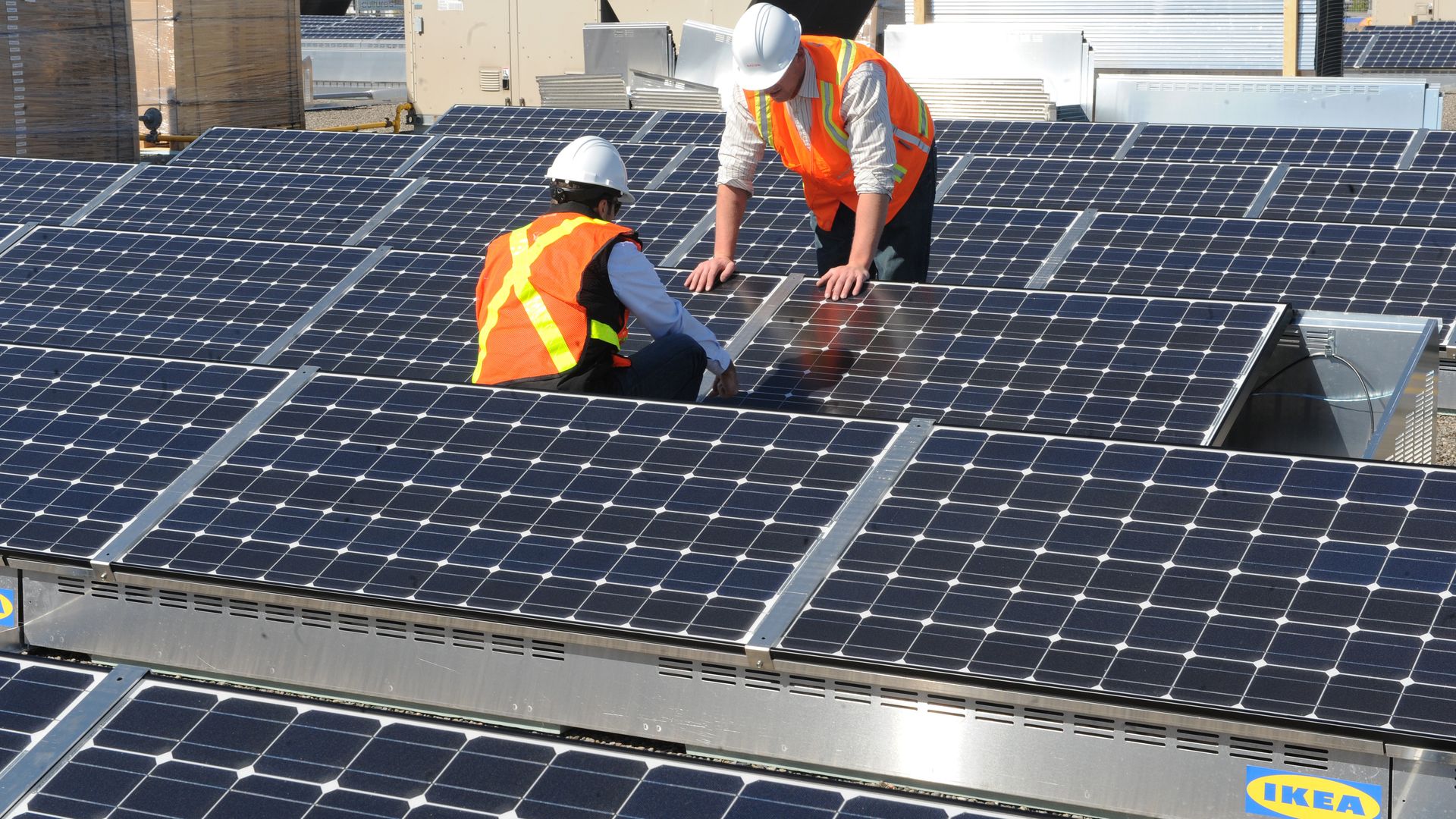
President Trump campaigned on promises to boost coal jobs and is following through — most recently with a leaked memo directing the Department of Energy to throw a “lifeline” to the struggling coal and nuclear industries.
Why it matters: While the global renewable energy market surges, the coal industry remains on life support. From 2016 to 2018, the number of new coal plants dropped by 73%. Although Trump claims that investing in coal over clean energy will boost the job market, the hard truth is that a significant number of U.S. coal jobs cannot feasibly return.
Antarctica is shedding ice at an increasing rate, raising global sea levels and threatening coastal cities, according to a new international assessment published in the journal Nature.
Why this matters: The safety of coastal populations, including growing megacities worldwide, is intricately tied to the fate of Antarctica's ice sheet. Until a few years ago, Antarctica was assumed to be far more stable than the Greenland Ice Sheet, but that is no longer the case.
Global carbon dioxide emissions and coal consumption both rose in 2017, and the fuel mix in the electric power sector has changed little in 20 years, according to a newly released BP report on worldwide energy data.
Why it matters: The findings underscore how, despite gains in low-carbon energy technologies, the world is nowhere near an emissions-cutting pathway that avoids highly dangerous levels of warming.
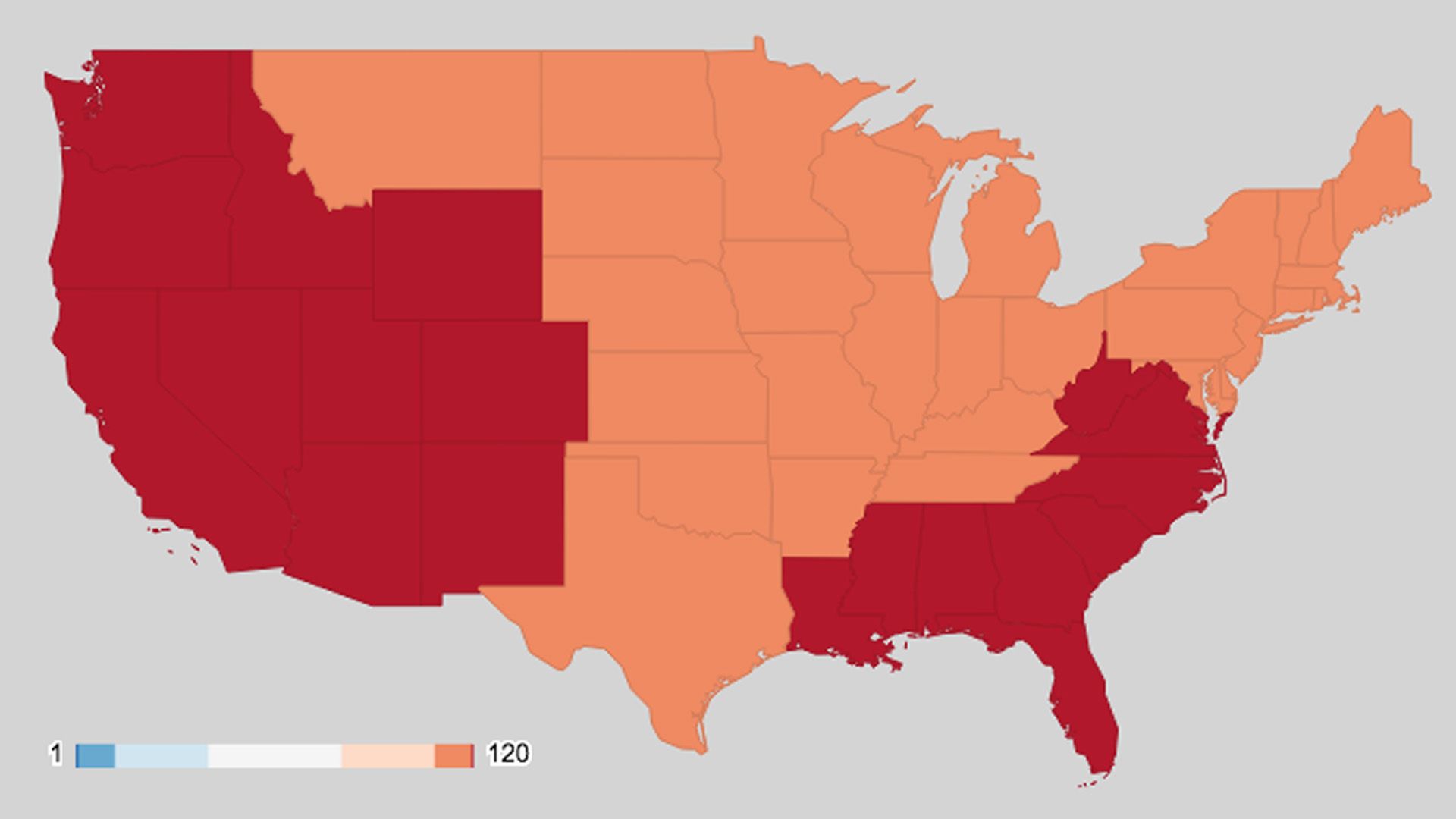
With May 2018 ranking as the warmest such month on record in the continental U.S., beating out the Dust Bowl May of 1934, the country has extended a much longer heat streak. According to the National Oceanic and Atmospheric Administration, the country has had its warmest 3-year, 4-year, and 5-year periods on record through May 2018.
Why it matters: The unusually mild temperatures are one way that global warming is affecting the U.S., as long-term temperatures trend higher. Even if individual months fail to break a heat record, such as April 2018, the long-term trend is clear.
Tesla is planning to cut around 9% of its employees, or around 3,300 people, according to a company wide email sent by CEO Elon Musk. Tesla shares went down following the report but are up overall for the day.
Musk added that the layoffs are not expected to affect the automaker's Model 3 production schedule, and that criticism of Tesla's inability to turn a profit is "valid and fair."
As part of this effort, and the need to reduce costs and become profitable, we have made the difficult decision to let go of approximately 9% of our colleagues across the company. These cuts were almost entirely made from our salaried population and no production associates were included, so this will not affect our ability to reach Model 3 production targets in the coming months.
E-scooter company Bird is seeking to raise around $200 million in new funding at a $2 billion valuation, according to multiple sources.
Big picture: This would be just weeks after it raised $150 million at a $1 billion valuation, and only three months after raising at a $300 million valuation. Venture capitalists have never before participated in such a rapid and rocketing price spike.
Why it matters: Kleiner Perkins’ investments in green tech were famously a bust, but according to partner Dave Mount, G2VP will focus on the areas that did deliver financial returns — applications of digital tech to sustainability and heavy industry. He cites agricultural data management company Farmers Edge and fleet management software provider Telogis as examples.