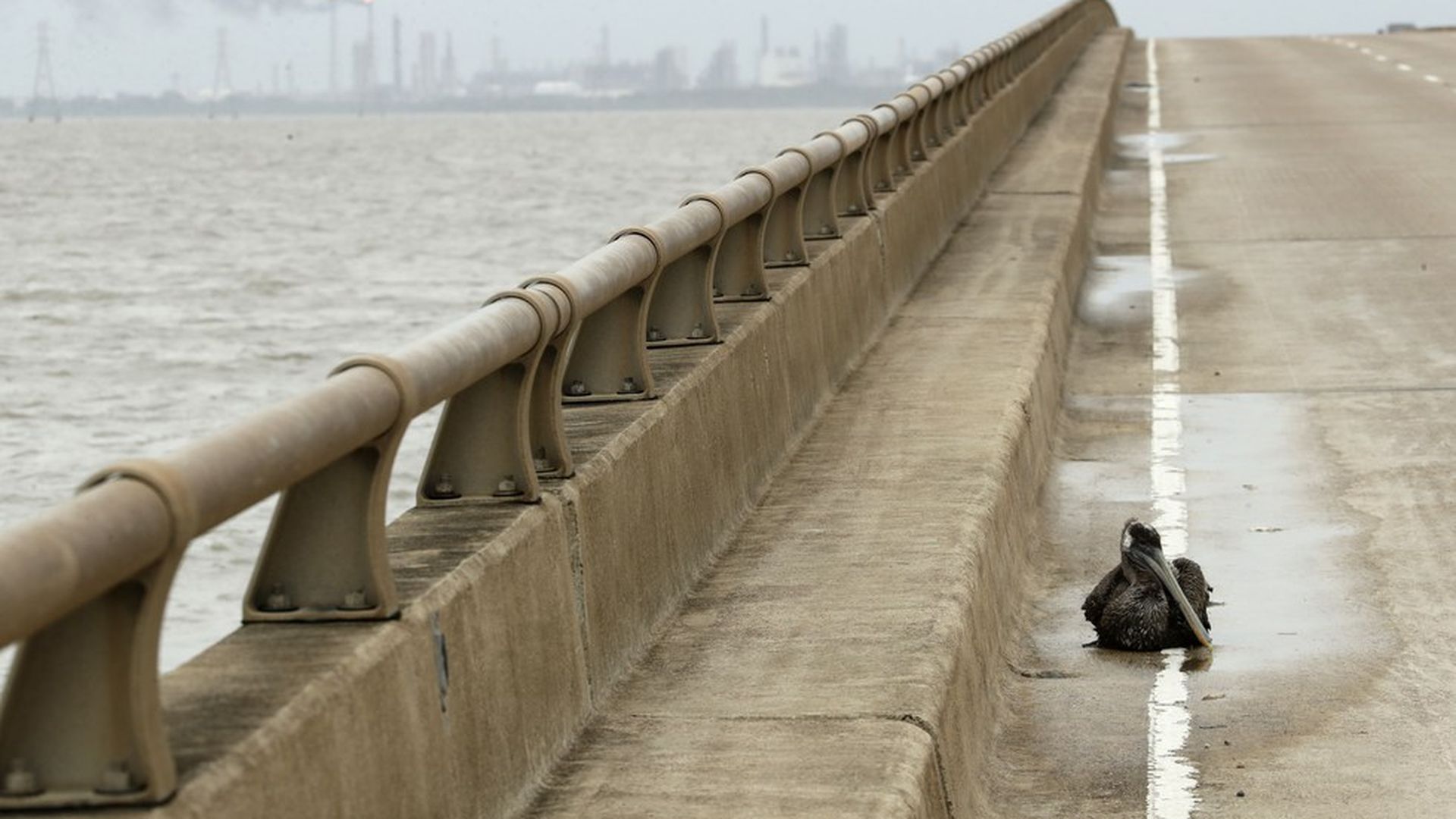
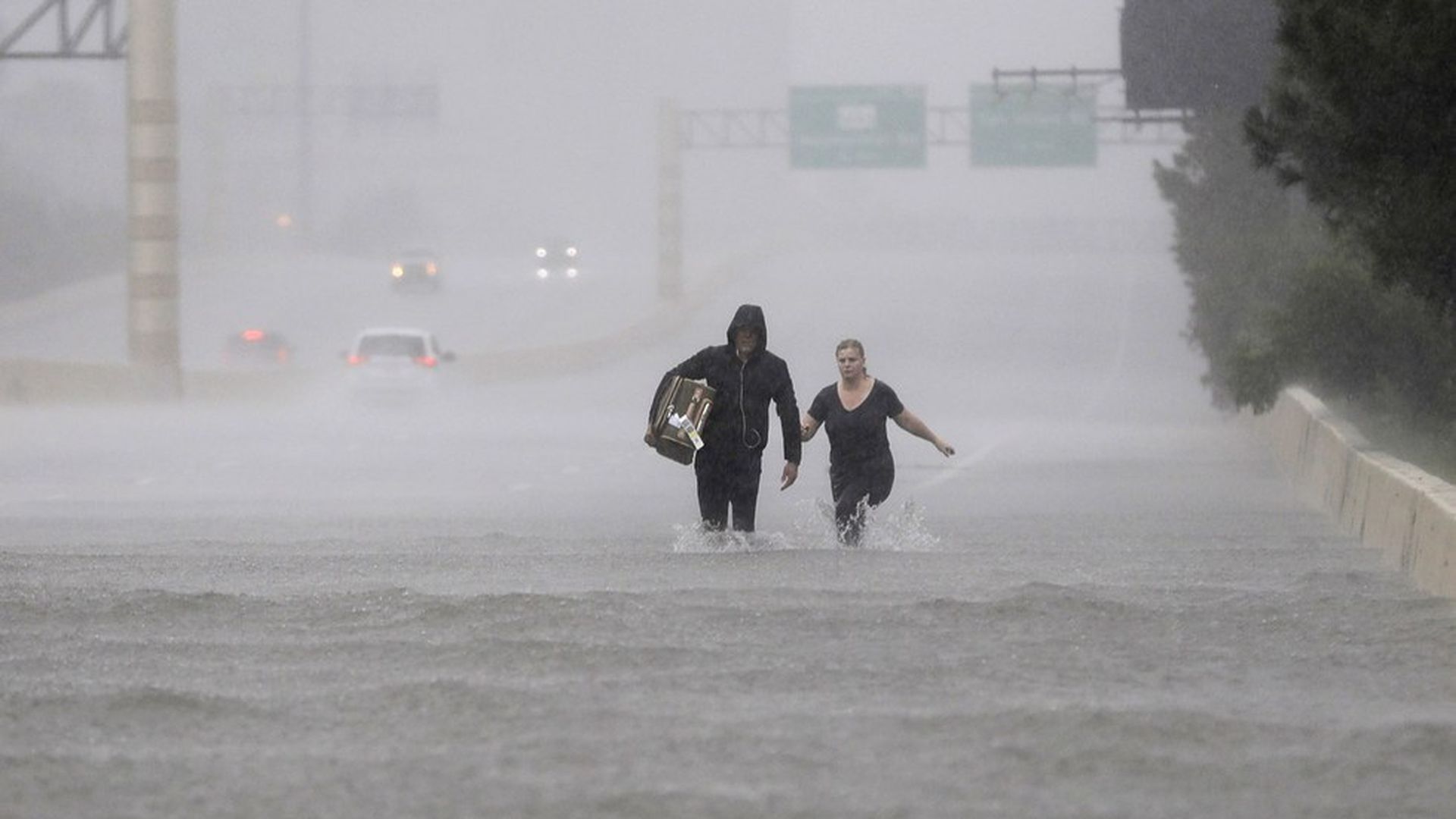
The winds and floodwaters of Hurricane Harvey may cause environmental and public health safety problems due to storm damage that could be long-lasting. What to watch out for:
Danger from chemical facilities: "Hurricane Harvey's winds and floodwaters have created emergencies at chemical facilities across the Houston area, from an Exxon Mobil roof collapse at its massive Baytown complex to the risk of an explosion at a chemical plant northeast of Houston," via a report from the Houston Chronicle last night. Shell reports it has released 100 pounds of benzene and toluene each due to a sinking roof.
Increased pollution from spike in air releases: Politico looks at chemical releases that are triggered from the shut down of petrochemical plants, as well as other impacts from the storm.
The rainfall brought on by Harvey has set a new record for the continental United States, dumping more than 50 inches of rain on parts of Houston. That has resulted in catastrophic flooding, evidenced by river gauges in the city reporting severe flood levels and a nearby levee failing under intense pressure.
Rep. Andy Biggs (R-AZ) submitted an amendment last week to the House Rules Committee for the federal government's 2018 spending bill that would prevent any appropriated funds from being used toward the government's National Climate Assessment.
What the NCA does: From the 2014 assessment: "This National Climate Assessment collects, integrates, and assesses [climate change] observations and research from around the country, helping us to see what is actually happening and understand what it means for our lives, our livelihoods, and our future." It is supposed to be published every four years.
President Trump and the First Lady Melania Trump will be on the ground in Texas today for five hours, with stops in Corpus Christi and Austin for briefings on Harvey relief and response. Your quick catch-up on one of the landmark human and economic tragedies of our lifetimes:
AP latest: "[O]fficials acknowledge the grim reality that fatalities linked to Harvey could soar once the devastating floodwaters recede from one of America's most sprawling metropolitan centers."
The scale — N.Y. Times: "Local, state and federal officials conceded that the scale of the crisis was so vast that they were nowhere near being able to measure it, much less fully address it ... just the start of a disaster that would take years to overcome."