Thursday's energy & climate stories

Scientists examine link between longer-lasting weather and climate change
Bloomberg reports that a slowing jet stream might be causing longer-lasting storms and heat waves, according to a study published in Nature this year. Study author Michael Mann, an atmospheric scientist at Pennsylvania State University, told Bloomberg that sometimes currents in the upper atmosphere go through a stationary phase that may be linked to longer-lasting weather disasters and "appears to be favored by human-caused climate change."
What they did: The scientists analyzed a number of extreme weather events, including Russia's 2010 heatwave, flooding in Pakistan in 2010, and the recent droughts in Texas and California. They found the jet stream stabilized during some of those cases, possibly holding the weather patterns in place.
A link to Harvey? On Monday, Mann published an essay detailing different ways climate change may have had an impact on Harvey. Although he mentioned jet stream stalling as a potential factor contributing to Harvey's persistence, he described the link as "tenuous."
The remaining question is whether the disruptions in the jet stream are caused by Arctic warming, which is occurring at twice the global average and could create opportunities for more persistent weather farther south. Even then, there is debate over whether there is a link between jet stream sluggishness and major storms at all. "It's still controversial," David Sobel, an earth scientist at Columbia University tells Bloomberg.

Harvey's energy toll: refineries, pipelines and more

Data: S&P Global Platts; Map: Lazaro Gamio / Axios
Colonial Pipeline is shutting down its major arteries that bring large amounts of gasoline and other refined products to markets thousands of miles into the Northeast and states in between.
- "Once Colonial is able to ensure that its facilities are safe to operate and refiners in Lake Charles and points east have the ability to move product to Colonial, our system will resume operations," the company said, via CNN.
- More context: "Colonial was already running at reduced rates due to Harvey-related disruptions at its origin point in Texas, but the closure of the entire system threatens to escalate concerns about fuel supplies in the world's largest oil consumer," the Financial Times reports.
Why it matters: It's the largest refined petroleum network in the country. The announcement from the supplier of 100 million gallons daily last night will further restrict fuel supplies and networks battered by the massive storm's flooding.
Harvey's pollution risks
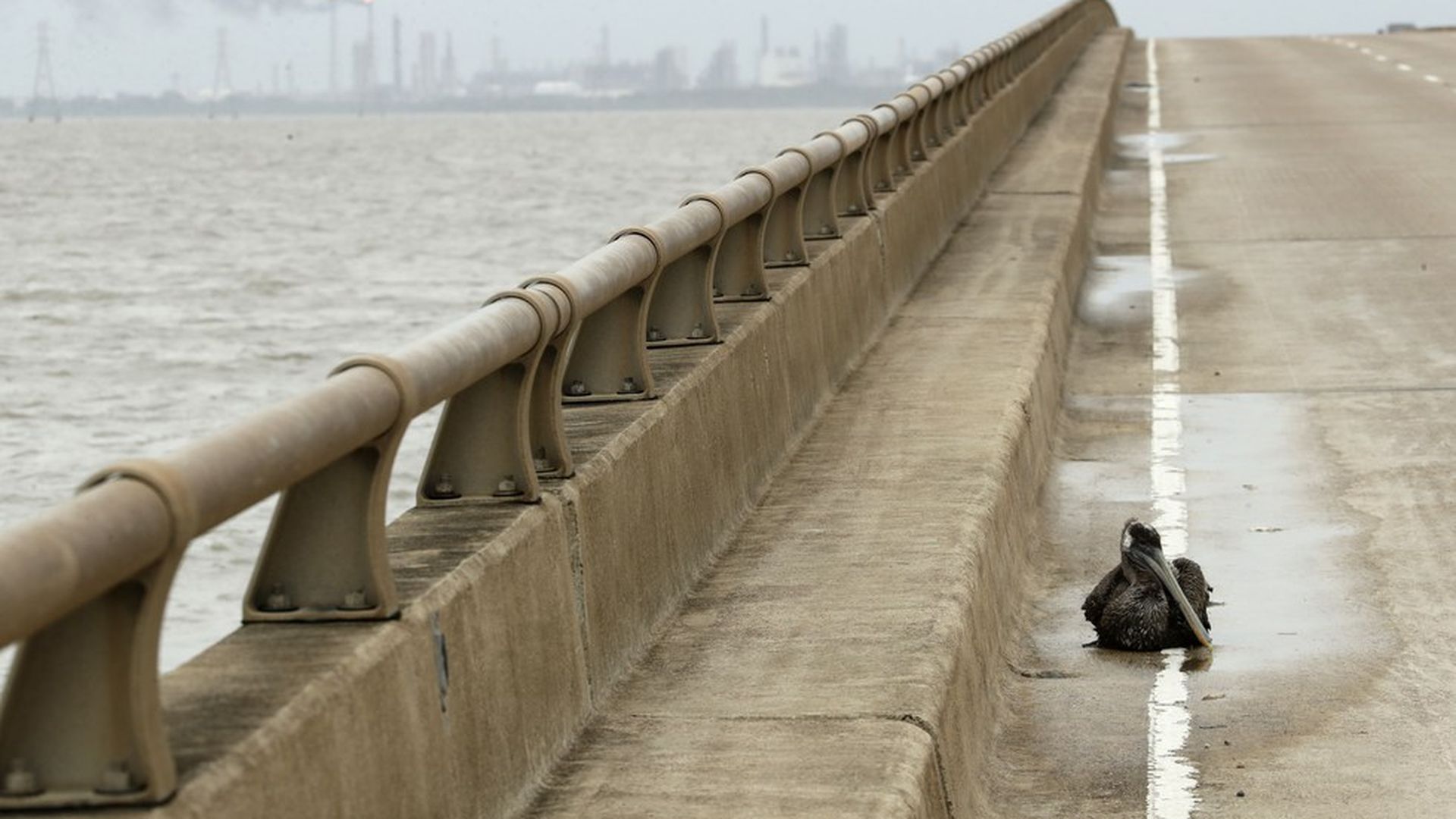
The winds and floodwaters of Hurricane Harvey may cause environmental and public health safety problems due to storm damage that could be long-lasting. What to watch out for:
Danger from chemical facilities: "Hurricane Harvey's winds and floodwaters have created emergencies at chemical facilities across the Houston area, from an Exxon Mobil roof collapse at its massive Baytown complex to the risk of an explosion at a chemical plant northeast of Houston," via a report from the Houston Chronicle last night. Shell reports it has released 100 pounds of benzene and toluene each due to a sinking roof.
Increased pollution from spike in air releases: Politico looks at chemical releases that are triggered from the shut down of petrochemical plants, as well as other impacts from the storm.