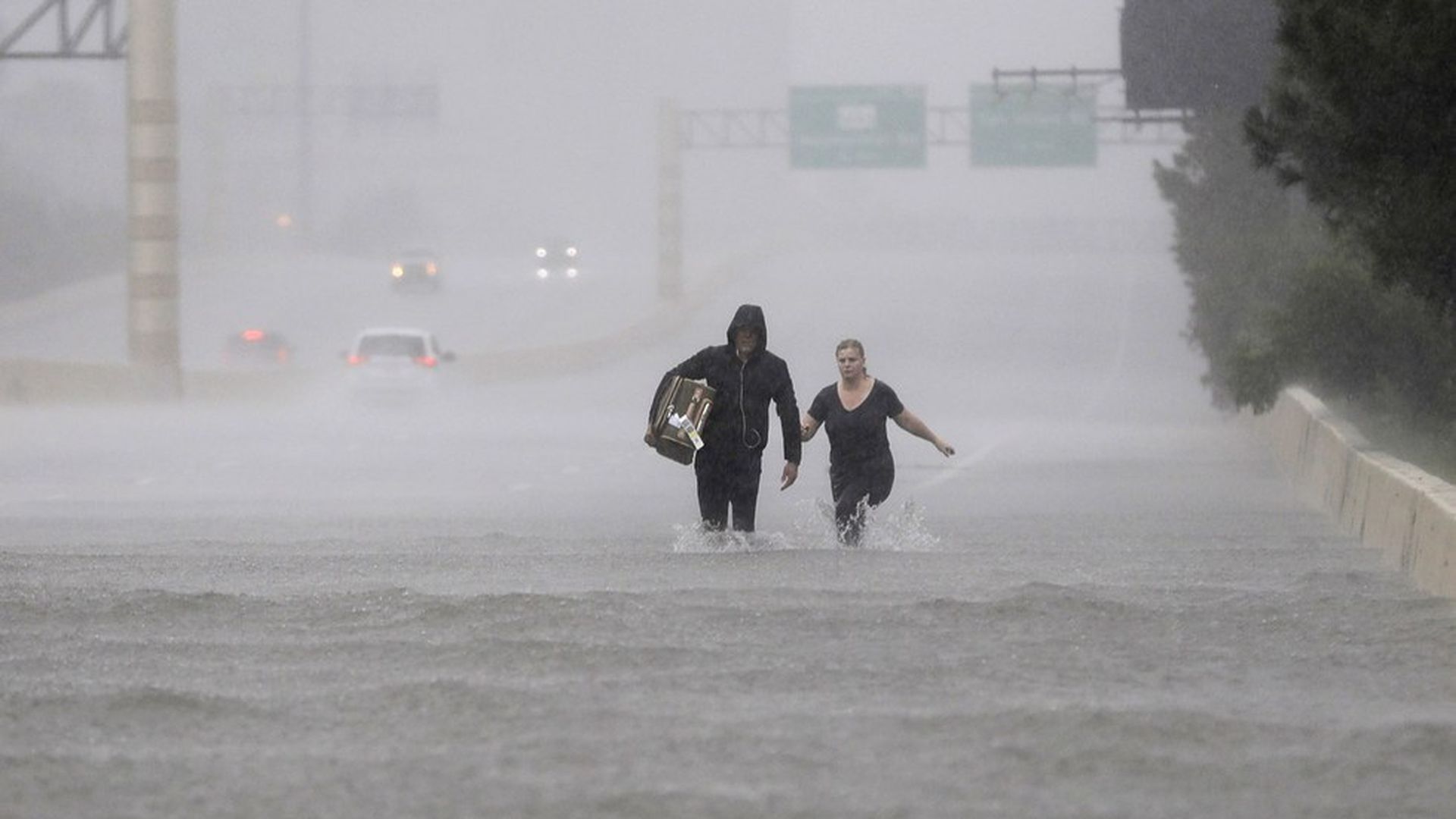
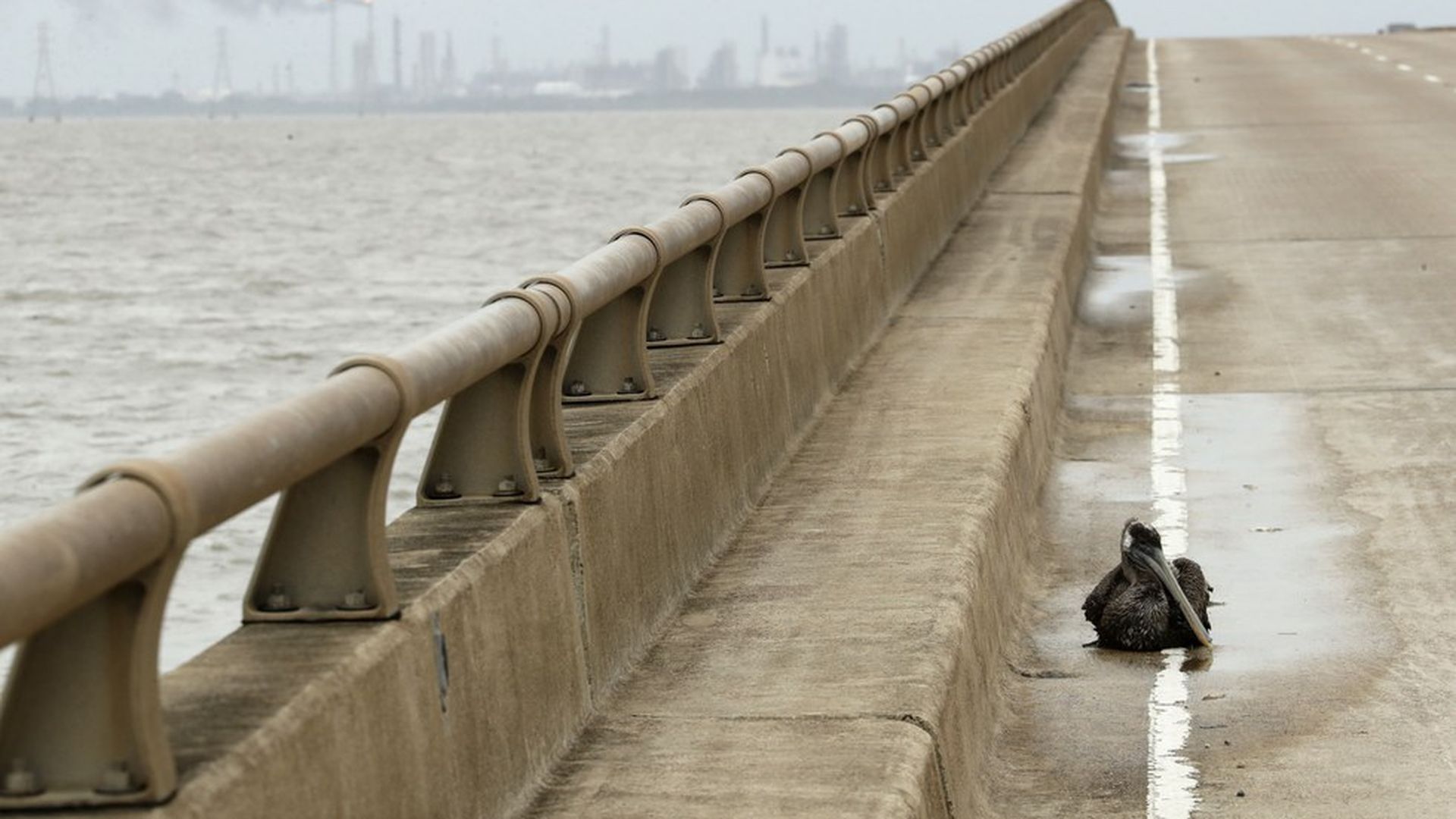
The rainfall brought on by Harvey has set a new record for the continental United States, dumping more than 50 inches of rain on parts of Houston. That has resulted in catastrophic flooding, evidenced by river gauges in the city reporting severe flood levels and a nearby levee failing under intense pressure.
Rep. Andy Biggs (R-AZ) submitted an amendment last week to the House Rules Committee for the federal government's 2018 spending bill that would prevent any appropriated funds from being used toward the government's National Climate Assessment.
What the NCA does: From the 2014 assessment: "This National Climate Assessment collects, integrates, and assesses [climate change] observations and research from around the country, helping us to see what is actually happening and understand what it means for our lives, our livelihoods, and our future." It is supposed to be published every four years.
President Trump and the First Lady Melania Trump will be on the ground in Texas today for five hours, with stops in Corpus Christi and Austin for briefings on Harvey relief and response. Your quick catch-up on one of the landmark human and economic tragedies of our lifetimes:
AP latest: "[O]fficials acknowledge the grim reality that fatalities linked to Harvey could soar once the devastating floodwaters recede from one of America's most sprawling metropolitan centers."
The scale — N.Y. Times: "Local, state and federal officials conceded that the scale of the crisis was so vast that they were nowhere near being able to measure it, much less fully address it ... just the start of a disaster that would take years to overcome."
Harvey's devastating flooding is hitting a state and region that's a central hub for the energy sector. For instance, BP and Shell alone have roughly 11,000 employees in the Houston region combined.
The storm is closing down refineries, some crude oil production offshore in the Gulf of Mexico and onshore in the Eagle Ford shale region, pipelines, shipping, and other infrastructure networks.
Via a sobering Reuters story: "Damage assessments could take days to weeks to complete, and the storm continues to drop unprecedented levels of rain as it lingers west of Houston, home to oil, gas, pipeline and chemical plants. And restarts are dangerous periods, as fires and explosions can occur."
The right says action on climate change will wreck the economy. The left says the clean-energy revolution will be an economic boon. Both sides are overplaying their hands. Most policies Washington considers to cut carbon emissions will have a relatively small impact on the broader economy, studies not pushed by one side or another have shown.
Why it matters: The economic arguments for and against action on climate change are what carry the most weight with Americans hyper-focused on their jobs. It's politically convenient to push misleading numbers that align with a desired policy outcome, but it's not accurate, and the narratives further polarize this divisive debate.