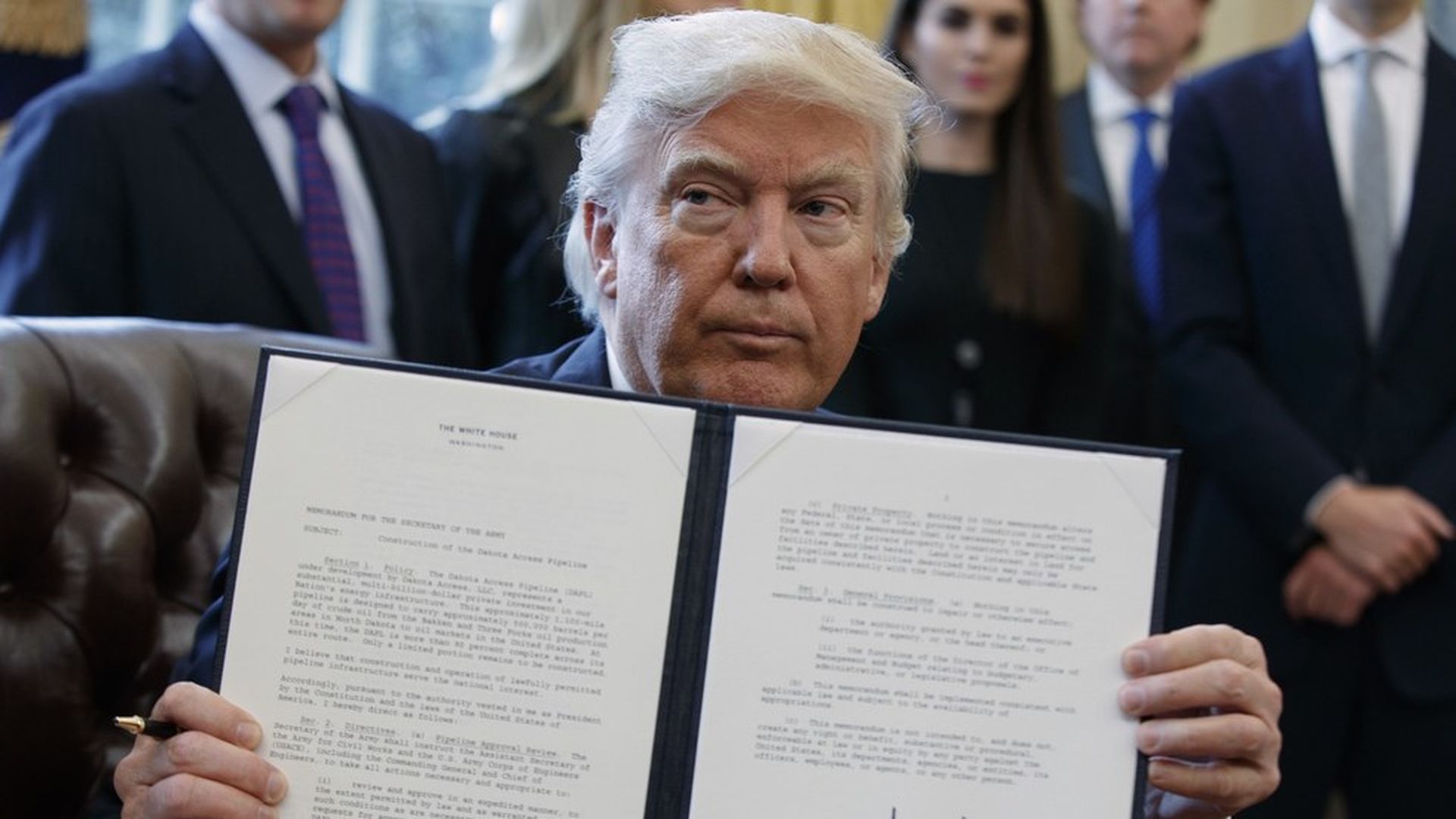
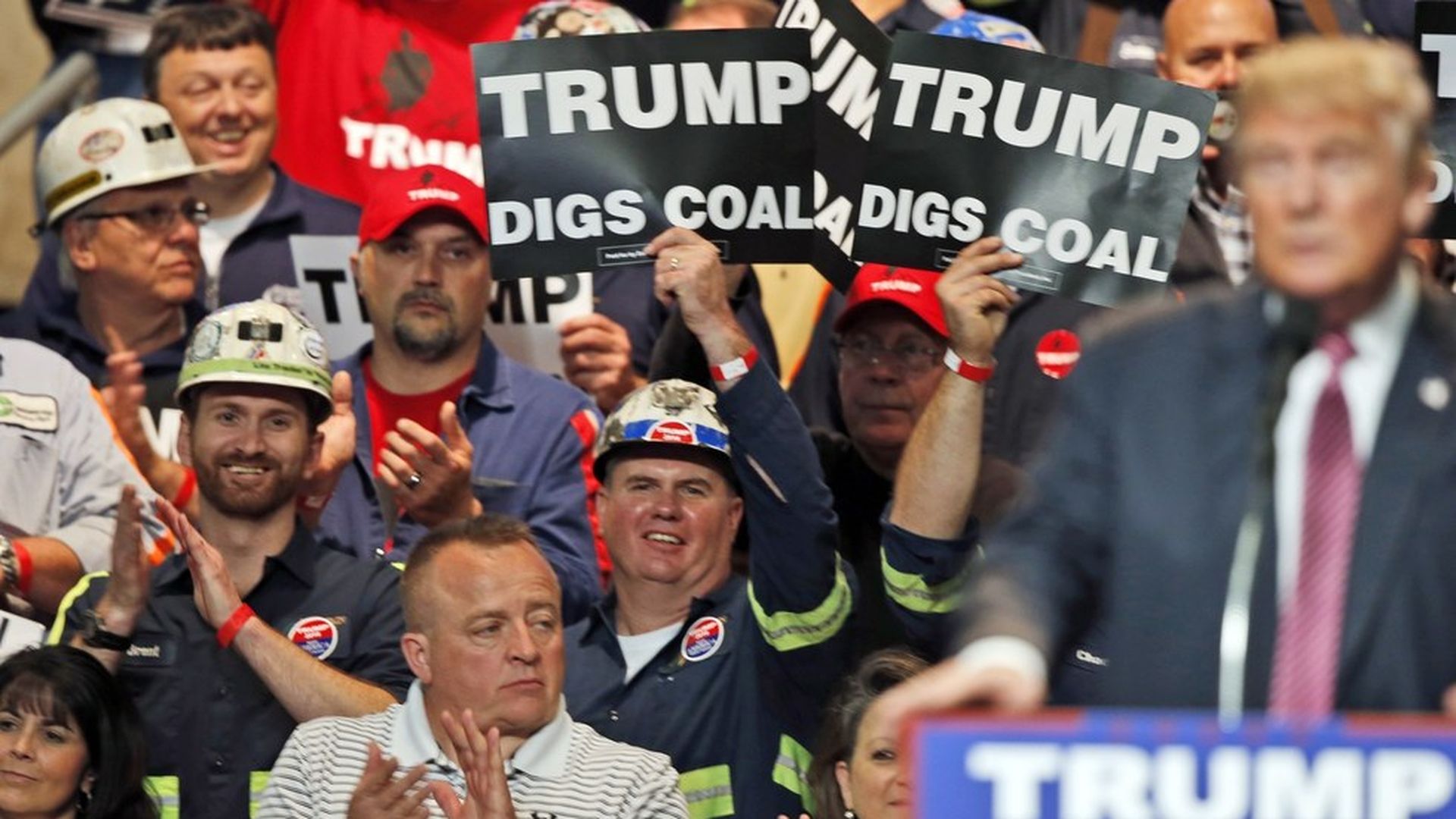
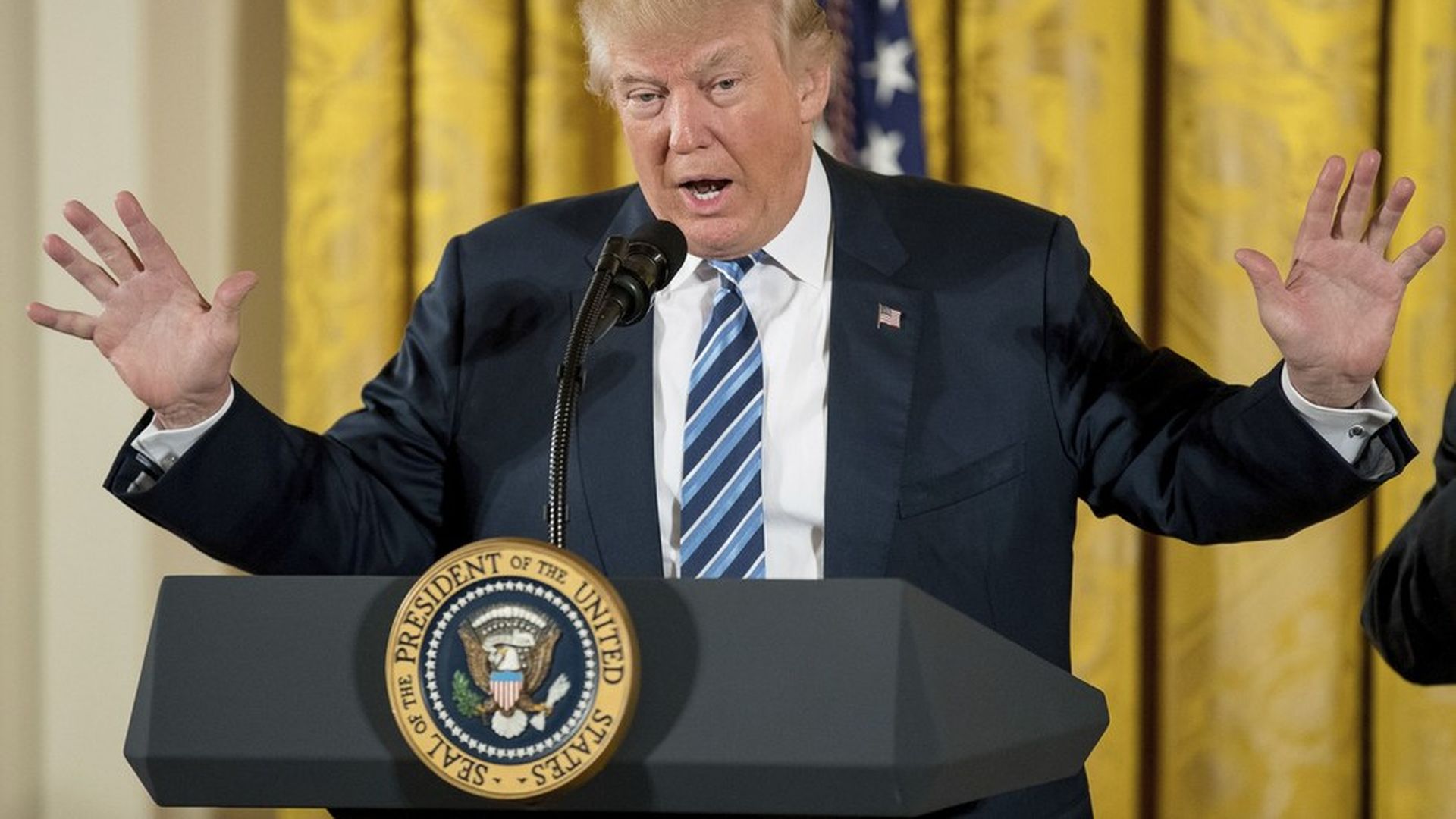
President Trump will sign an executive order today to resurrect construction of the controversial Keystone XL pipeline.
The facts
First proposed in 2010 by the private oil company TransCanada, Keystone XL is a pipeline from Alberta to Nebraska. Its proposed route has been changed multiple times to account for protests that it would run through Nebraska's environmentally sensitive Sandhills.
Construction of the pipeline would help further develop of Alberta's oil fields, which extract a form of oil called bitumen, which requires large-scale and often toxic methods for its extraction. TransCanada suspended its permitting process in 2015 after being unable to get it through the Obama administration, but said in November it still wants to do the project.
Why it matters
Short term: A win for Trump, as State Department estimates that the two year construction will create 42,000 jobs — playing right into Trump's "America first" policy — although only 35 of them will be permanent. A loss for environmental groups, who put so much into stopping the effort.
Long-term: A win for oil companies, as XL represents a major investment in Alberta's oil fields and creates a huge new supply of oil for U.S. refineries. But it's also a source for environmentalist organizers. As Nebraska environmentalist Jane Kleeb, who organized opposition to Keystone XL, put it: "We knew this would be coming. We stand and fight...."
Electrek reports that Tesla has brought online the largest energy storage project in the world at a power substation in Southern California. The company installed 400 of its Powerpack 2 batteries — enough to power 2,500 homes for a day — to help to manage power consumption during peak hours in order to reduce dependence on natural gas plants.
Why it matters: On its own, Tesla's project is more of a proof of concept than a game changer. But the company only announced it back in September, proving that it develop and install the necessary technology quickly and efficiently in a power-hungry state.
The president plans to sign executive actions today advancing the two oil pipelines, according to Bloomberg sources. Both had been stymied by the Obama administration — Keystone was rejected in 2015, while Dakota was blocked in December of last year.
What to watch: This revives pipelines as a massive political player for the environmental movement. With Dakota and Keystone both available to build, expect to see organizing on a new scale to block the efforts.
Instant reaction: Nebraska environmentalist Jane Kleeb, who organized opposition to Keystone XL: "We knew this would be coming. We stand and fight...."
E&E News reported today that following President Trump's victory, the CDC canceled a climate change summit it had planned for February.
The CDC and climate change?: During the Obama administration, the CDC had taken a role in planning for public health problems caused by climate change, including air pollution and rising sea levels.
Why it matters: A former CDC director said that, under Trump, climate change is probably "not an immediately winnable battle," so the agency is likely to let universities and other groups take the lead on research. It has done so previously on other politically controversial topics, like reproductive health.
We got a sneaky look at the Trump transition team's EPA "agency action" plan. It's the guiding (aspirational) document written by Myron Ebell of the Competitive Enterprise Institute.
President Trump's Friday night executive order may not do a lot in itself, but it sure looked like it was aimed at the individual mandate.
Sure enough: White House counselor Kellyanne Conway suggested on Sunday that it was one of the main targets. When George Stephanopoulos asked her on ABC's This Week whether Trump would stop enforcing the mandate, Conway said "he may" — and that Trump wants to get rid of it "almost immediately."
So yes, Trump would like to stop enforcing it quickly — but how quickly can that actually happen?