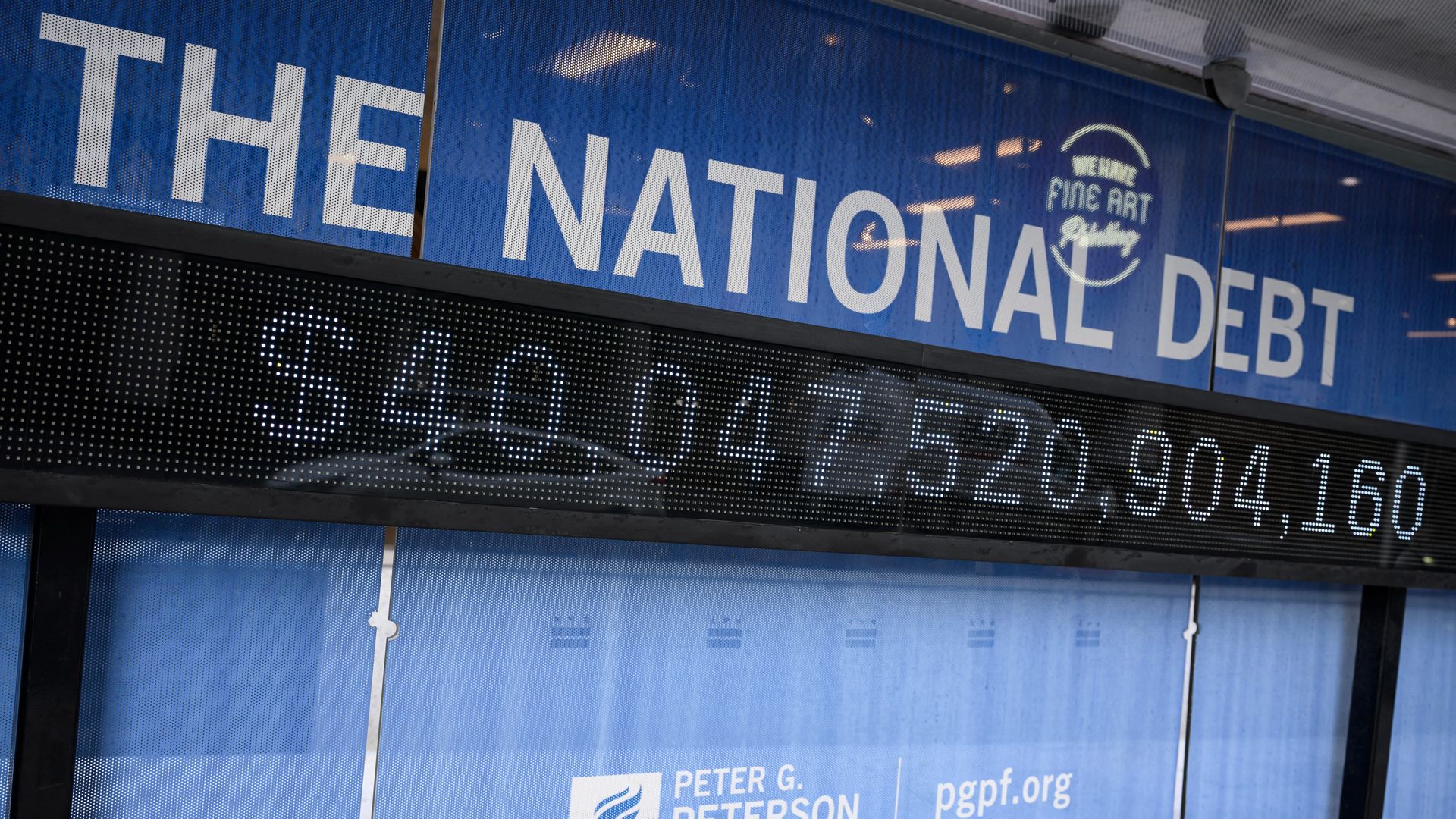
The U.S. national debt this week topped $40 trillion, raising fresh concerns about how rising federal borrowing could affect Americans' finances.
Why it matters: Americans don't personally owe the national debt, but rising debt could pressure lawmakers to raise taxes, cut spending or change federal benefits.
Employers who've been reeling from near double-digit health cost increases the past three years can expect more of the same in 2027, according to new projections from benefits consultant Aon.
Why it matters: Companies and their workers are locked in one of the most sustained periods of health care inflation in decades — and the trend lines are sure to intensify affordability concerns.
Walmart posted its worst U.S. same-store sales growth in more than six years, raising questions about the health of the American consumer, even as the company raised its outlook for the full fiscal year.
Why it matters: As the world's largest retailer, Walmart has long been viewed as a bellwether for the economy and the health of the consumer.
Kevin Warsh is trying to unwind years of explicit Federal Reserve guidance. Treasury Secretary Scott Bessent may have just complicated that experiment.
Why it matters: While the Federal Reserve chairman wants to give markets more room to respond to the economy, Treasury's intervention signals that there are limits to how much market-driven movement Washington is willing to tolerate.
Castelion, a Torrance, Calif.-based developer of hypersonic missiles, raised $800 million in Series C equity funding at a $13 billion post-money valuation.
Why it matters: Startups are racing to help fill stockpiles depleted by the wars in Iran and Ukraine.
CEOs used to talk up AI progress and efficiency by the number of workers it could replace, but with economic worries climbing, they're being more careful about linking AI to job cuts.
Why it matters: Communicators face competing pressures: Investors want proof AI spending is paying off, while employees don't want to hear that leaders are considering replacing them.
Big recent moves in U.S. government bond yields reflect in part a new financial reality: Foreign governments are far less willing to finance American budget deficits than they used to be.
Why it matters: The U.S. Treasury market's role as the place where foreign governments socked their cash for safekeeping conferred huge advantages on the U.S. government and economy and kept borrowing costs lower than they would otherwise be.
South Korean memory chipmaker SK Hynix plans to shower cash on shareholders in an effort to end a two-month-long share slump.
Why it matters: South Korea's stock market has become the epicenter for global AI-related volatility. SK Hynix and fellow chipmaker Samsung Electronics are the key drivers, accounting for roughly 50% of the country's benchmark KOSPI index.