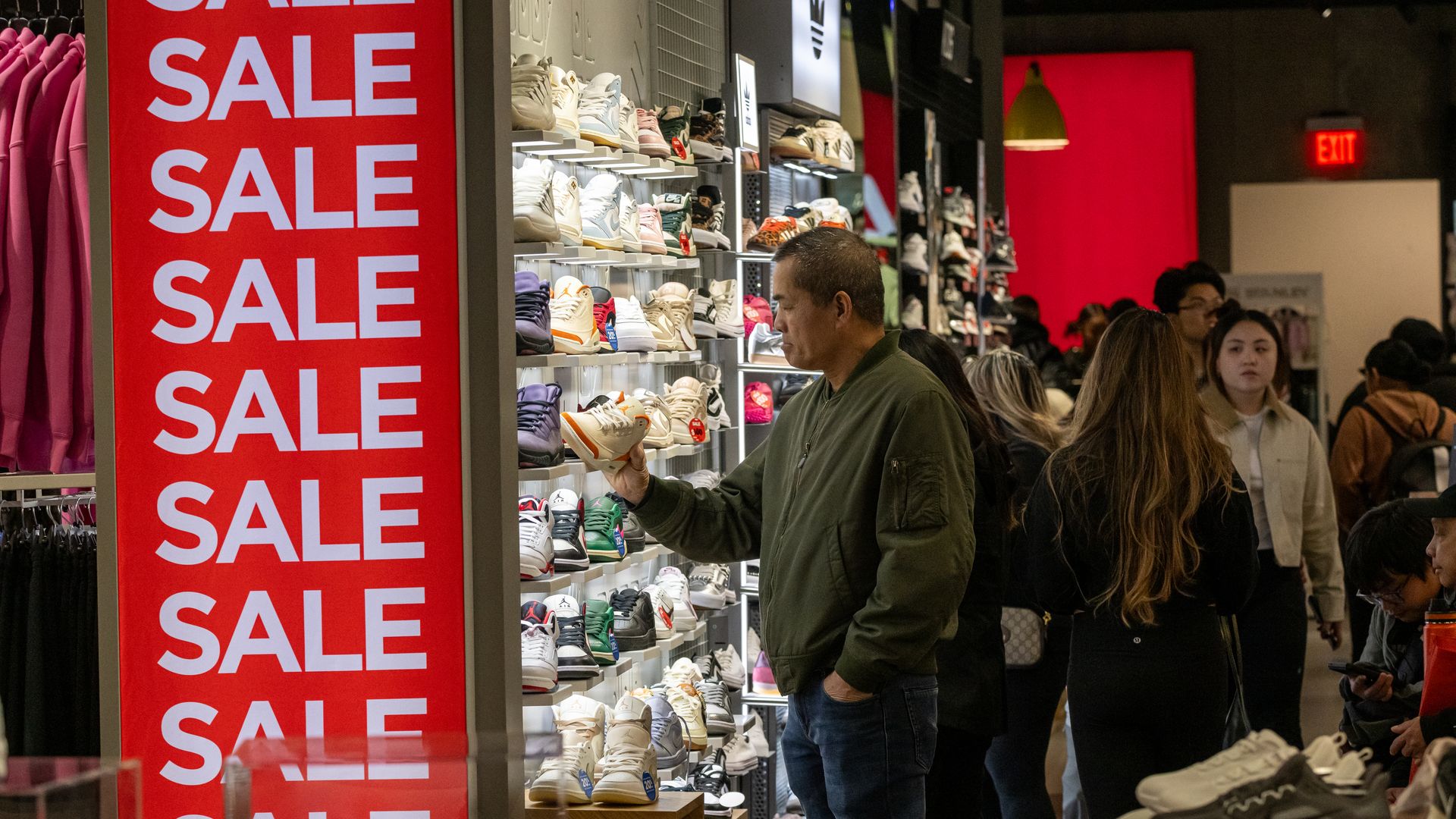
Black Friday retail sales growth picked up this year, Mastercard said Saturday, as shoppers shook off economic uncertainty and weak sentiment.
Why it matters: The consumer remains the engine of the U.S. economy, and a strong start to the holiday season will be reassuring to those who questioned whether tariffs and a soft labor market might crimp demand.
Retirement seems scariest before you take the leap, experts say. But there are things workers can do now to prepare and feel less anxious — no matter your age:
The big picture: Take a look at the numbers.
Make a budget, and figure out what you need. Take everything into account — not just your retirement account, but housing wealth too, if you have it.
"It's important to step back," says Kerry Hannon, co-author of the recently published book, "Retirement Bites: A Gen X Guide to Securing Your Financial Future."
Save money. It's obvious but worth repeating.Take advantage of those 401(k)s and any kind of employer match. If you're older and need to catch up, increase your contributions if you can.
"It's really when people get into their 30s that ramping up their retirement contributions makes sense," Andrew Biggs, an economist at the American Enterprise Institute, tells Axios. "Their incomes have risen, so they've got more to save, plus their taxes are higher, so the tax break may be worth more."
If you don't have a workplace plan, you can set up a plan for yourself. There are options like a SEP-IRA or solo 401(k), says Diane Harris, deputy editor of Kiplinger Personal Finance magazine.
A key thing to do is automate your contributions, with the money going directly from your paycheck to the account. "Harness the power of inertia," says Harris, who runs the magazine's retirement coverage.
Prioritize paying down high-interest debt. This is especially important for young workers, Biggs says.
"Lots of research shows debt is the biggest buzzkill for retirees, the big obstacle to happiness," Harris says. "The stress will really get you."
Take care of yourself. Medical expenses are one of the biggest expenses in retirement — get regular checkups, think about nutrition and exercise. "Health is wealth," says Hannon.
Delay. Most experts say to keep working, if you can.
"For someone who's later in life and hasn't saved enough, delaying retirement is a more powerful tool than saving more," says Biggs, who was principal deputy commissioner of the Social Security Administration in the early 2000s.
When you continue your job past full retirement age, your Social Security benefit increases by about 7%annually when you do retire. The annual increase stops at age 70. Plus you get a similar increase to your retirement savings courtesy of more contributions and interest, and you reduce the amount you'll need to save.
It's not all about money. Non-financial things matter more for your happiness as you age — health and relationships in particular, says Harris.
"People make do, and the vast majority of retirees report being pretty happy. People are more resilient than they give themselves credit for."
AI is upending everything, including retirement planning.
The big picture: Our comfortable golden years have always rested on assumptions of a steady full-time career, employer-sponsored savings and a predictable job exit. Now those assumptions are fraying.
Young Americans are increasingly planning for retirement by investing in the stock market while putting off homeownership.
Why it matters: For decades, owning a home has helped Americans build their nest eggs. A generation putting all its eggs into stocks without having weathered a prolonged market slump may be in for a surprise.
Pensions were left for dead, but their obituary might've been written too early.
Why it matters: Defined-benefit pensions have plummeted in recent decades as employers shifted more investment risk to their workers, in the form of 401(k)-style defined-contribution plans.
For decades, people have fretted about the financial sustainability of America's bedrock retirement income program. Now, Social Security's precarious fiscal state is an issue for the here and now.
How to fix it is set to be a defining political fight of the next several years, with millions of Americans' benefits and the fiscal future of the United States at stake.
Why it matters: There is a tug-of-war between the benefits future retirees receive and the taxes that working-age people pay. Something has to give, and surprisingly soon.
Microluxuries like $10 hand sanitizers and $20 lip balms are the latest flex for school kids.
The big picture: Thesepocket-size purchases are being "traded, shown off, and incorporated into personal brand-building," Casey Lewis wrote last month in After School, her newsletter about youth trends.
Why it matters: This year, the shopping holiday is less about "online-only deals" and more about AI-assisted gift-hunting — a shift experts say is transforming how shoppers discover products.
The U.S. may "almost completely" eliminate income tax in the next couple of years due to tariff revenue, President Trump said late Thursday.
Why it matters: Offsetting the revenue from individual income taxes would require over $2.5 trillion a year in tariff collections, more than 10 times what the government actually took in during the last fiscal year.
Celebrity Xcel is Royal Caribbean Group's latest bid to reinvent cruising as an experience — one that blurs the line between ship and shore.
Why it matters: Major cruise brands are in an arms race of new ships and destination experiences, pushing past traditional itineraries toward curated, immersive travel.
Black Friday kicks off this morning, and retailers are banking that millions will still show up in person — even as AI-powered tools fuel a surge in online shopping.
Why it matters: Big chains are leaning hard on early-bird doorbusters, limited-edition merch and giveaways to pull shoppers back into stores after weeks of online deals.