Starbucks today poached Chipotle's heralded boss as its new CEO, hoping to replicate the same sort of turnaround that he executed at the fast-casual Mexican chain.
Why it matters: Starbucks has been reeling from a slowdown in sales and facing pressure from activist investors to make changes.
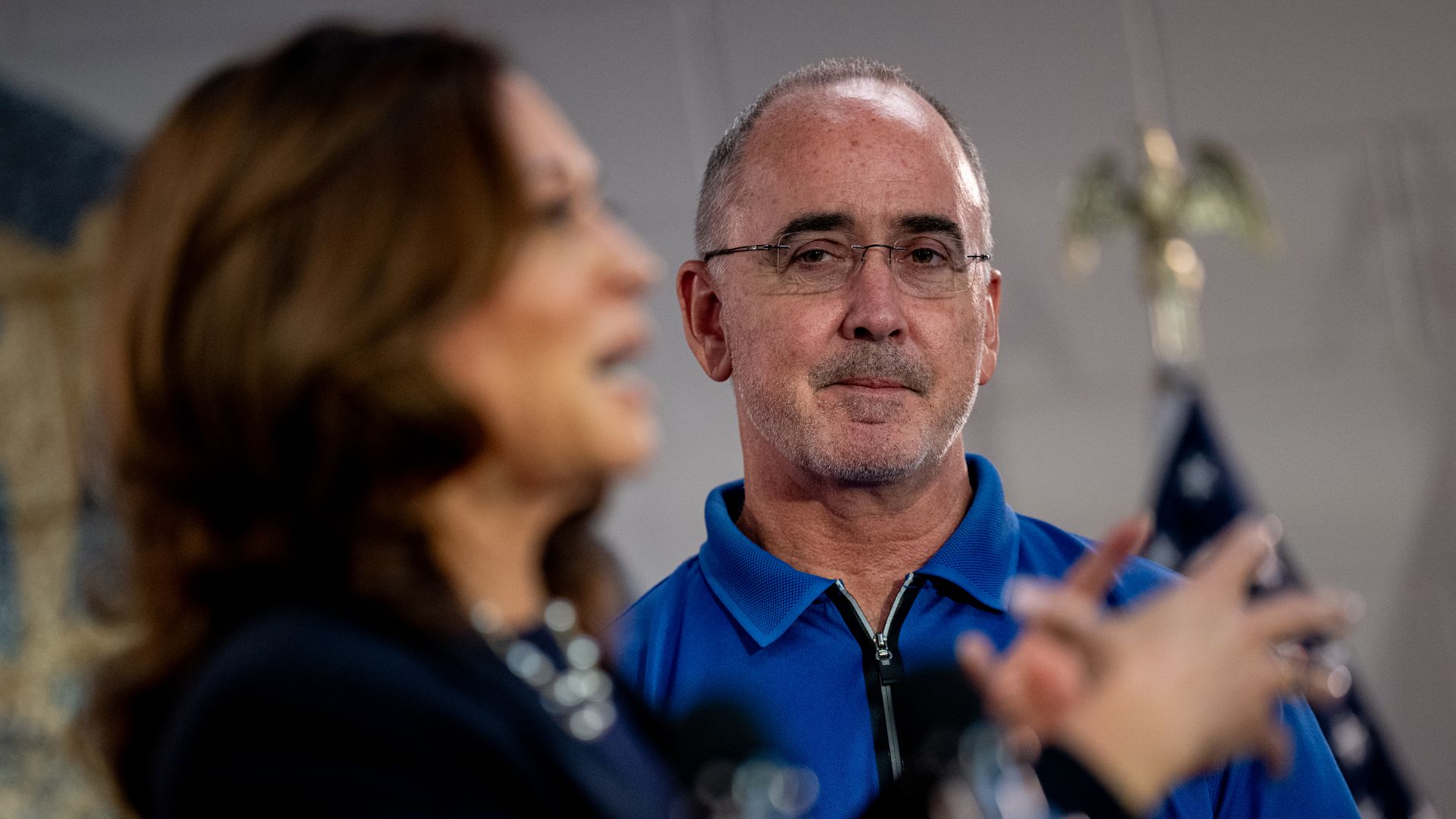
The United Auto Workers union said Tuesday that it filed federal labor charges against former President Trump and Tesla CEO Elon Musk after the duo's conversation on X veered into talk about workers striking.
Going forward, this newsletter will primarily focus on the politics and policy around cryptocurrency (or as our government friends prefer to describe it: digital ledger technology).
Why it matters: It's clear that regulatory clarity is a major source of friction for this industry, a leading impediment in the way of reaching whatever potential it might have.
Crypto entrepreneurs and DC (especially the Securities and Exchange Commission, or SEC) are at loggerheads.
The former are quite vocal about their frustrations, while the latter speaks the most precisely through lawsuits.
Catch up quick: All the way back in 2022, the Biden administration, via the Financial Stability Oversight Council (FSOC), did in fact call on Congress for regulatory clarity.
State of play: There are more Democratic Senate seats on the ballot this year than Republican. One consensus forecast puts the GOP as likely to gain a seat, hitting 50, with two seats — one being Brown's — too close to call.
If the two parties split those two, that puts Republicans in the majority, by one.
Consumers fell behind on debt payments as pandemic-era wealth disappeared, leaving some households in worse financial shape as the economy slows.
That's the takeaway from a new study by economists at the San Francisco Fed that shows how wealth built up during the pandemic helped support consumer spending in the face of high rates and inflation.
Why it matters: Now that "extra" wealth is gone, the opposite is the case: Spending is cooling, and many consumers have a smaller cushion to fall back on if the economy enters a recession.
Ford and Mazda are telling customers not to drive certain older vehicles equipped with faulty air bags that were recalled years ago but never replaced by their owners.
Why it matters: The warnings are an urgent reminder of the danger from the largest and most complex safety recall in U.S. history, affecting 67 million Takata air bags in tens of millions of vehicles.
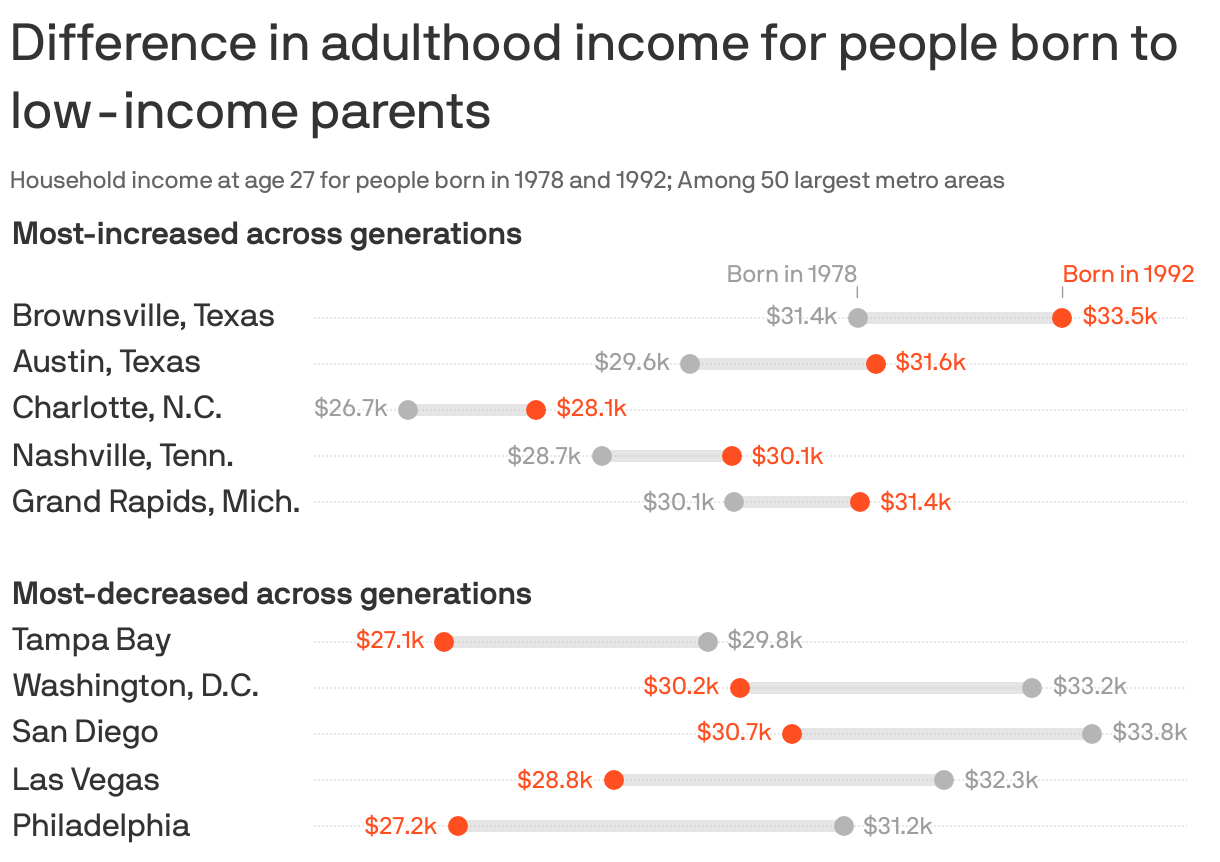
Data: The Opportunity Atlas; Note: Ranking measured by percentage change in income, adjusted to 2023 dollars; Chart: Axios Visuals
Americans born to low-income families are faring worse than the last generation in most major U.S. cities, a new analysis finds.
Why it matters: Intergenerational mobility — the idea that you'll do better than your parents, your children will do better than you, and so on — is core to the American dream, but is far from a guarantee.
Elon Musk gently tried steering Donald Trump toward acknowledging climate risks and backing some kind of energy transition — and didn't get far.
Why it matters: The Tesla boss has endorsed Trump and has his ear. The pair chatted Monday night for two hours on X in an interview delayed by glitches.




/2024/08/13/1723562434184.gif?w=3840)