Nike this week is rolling out five editions of Kobe Bryant sneakers, but few fans have been able to get them at retail price. Instead, they've been scooped up by resellers who use bots to acquire the shoes and then charge consumers hundreds of dollars extra.
Axios Re:Cap digs into the multi-billion dollar sneaker resale market with "For The Win's" Mike Sykes, who argues that Bryant's legacy is being tarnished.
In the not-too-distant future, motorists won't have to worry about finding a parking space. They'll leave their car at a drop-off location and the vehicle will park itself in a parking garage.
What's happening: Ford is working with a tech supplier, Bosch, and Bedrock, a Detroit real estate developer, to perfect the system as part of a pilot at a retrofitted garage in Detroit. The companies said it is the first infrastructure-based solution for automated valet parking in the U.S.
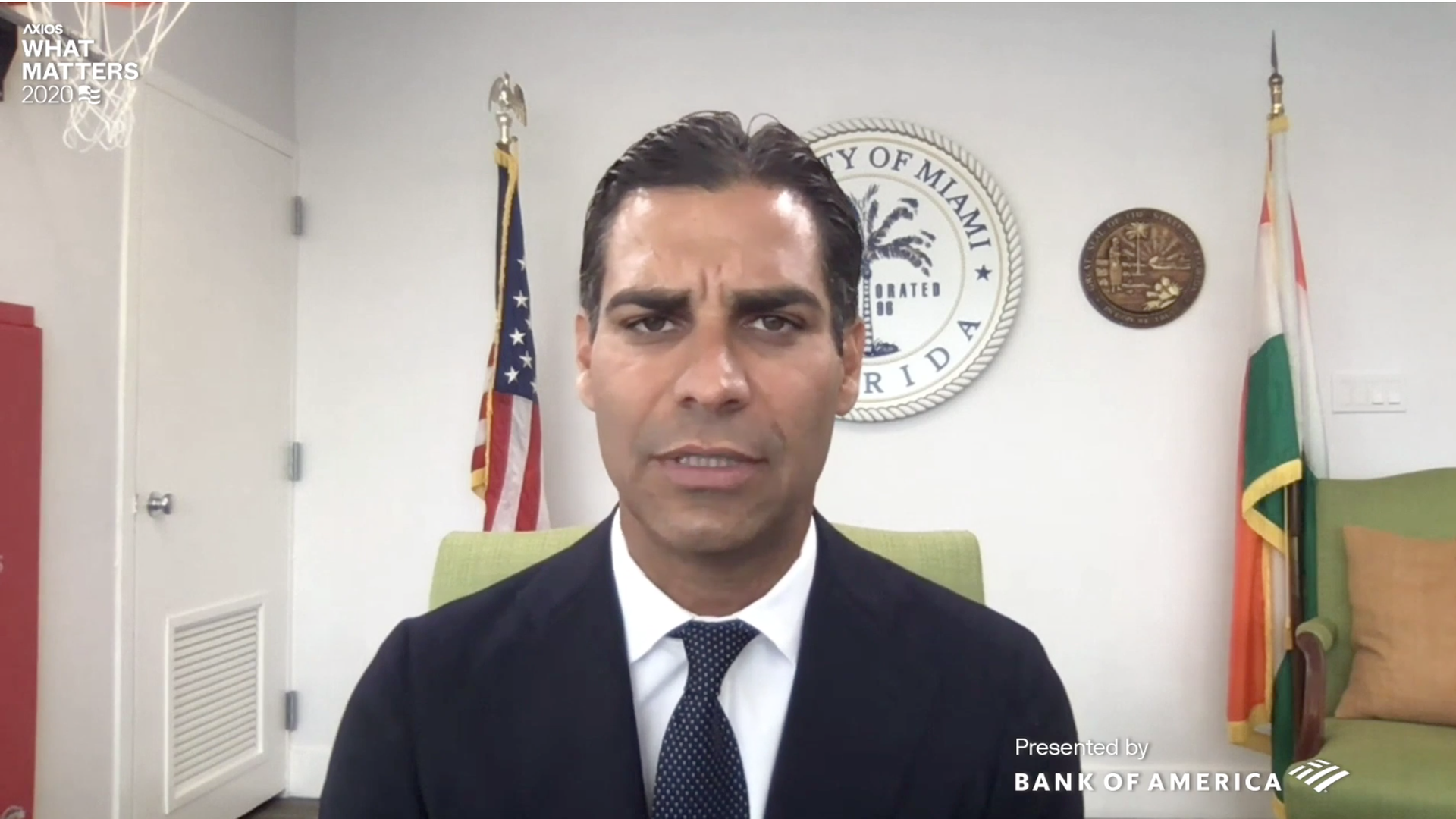
The Republican Party "needs to stop ceding ground on issues that are important issues to my generation" in order to evolve and attract more young people, Miami Mayor Francis Suarez (R) said Wednesday during an Axios virtual event, "News Shapers: America's Road Ahead."
What he's saying: "I think the environment is one of them...Sea level rise, which is something we are seeing in our city and the environmental impacts we are seeing in our city, have a huge economic impact. And so you know I think the Republican Party shouldn't abandon an issue like...."
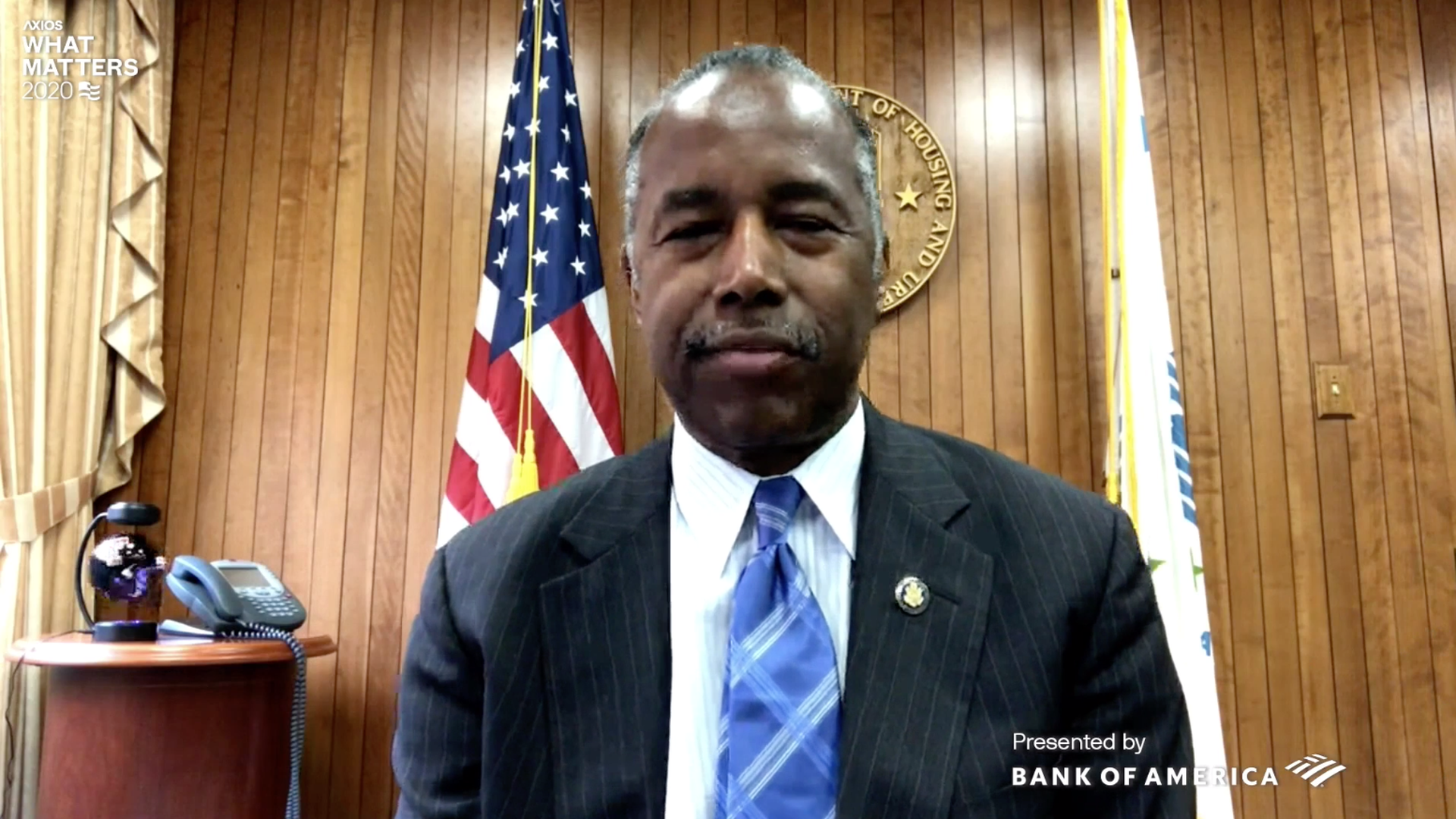
Housing and Urban Development Secretary Ben Carson says "this is not necessarily the time to take everything slowly" when it comes to the Trump administration's approach to getting vaccines and treatments to the public.
Why it matters: Carson's comments, made Wednesday during an Axios virtual event, came days after the Food and Drug Administration announced an emergency use authorization (EUA) for treating the coronavirus with convalescent plasma. President Trump accused the agency of slow-walking the development and approval of vaccines and therapeutics to hurt him politically.
Desktop Metal, a Burlington, Massachussetts-based maker of 3D metal printing systems, agreed to go public via a reverse merger with Trine Acquisition, a SPAC formed last year by veteran telecom investor Leo Hindery. It would give Desktop Metal an initial market value of around $2.5 billion.
Why it matters: This was the result of a formal, bank-led auction among SPACs, CEO Ric Fulop tells Axios, without Desktop Metal also running a parallel IPO or private equity process. That's unusual, but likely to become more common as SPACs proliferate.
Ten venture capital firms on Wednesday will announce that they're now including "diversity riders" in term sheets submitted to startups, requiring that best efforts are made to bring underrepresented investors into the deals.
Why it matters: This is a tangible effort to diversify cap tables and, in so doing, expand access to investors who have historically been excluded.
Finix, a San Francisco-based payments infrastructure startup, raised an additional $30 million in Series B funding from Lightspeed Venture Partners and American Express Ventures.
Why it matters: Finix, which sells its software to B2B companies like Kabbage, has benefited from the pandemic-induced online retail boom.
Total U.S. imports have risen in August after 10 straight months of declines, data from S&P Global shows, with U.S. imports by sea growing by 7% year over year in the first 15 days of the month.
Details: Imports from China surged 14.3% higher year over year in the first half of August after increasing by 4.3% in July, per Panjiva, the supply chain research unit of S&P Global Market Intelligence. Exports from the EU rose by 7.5% after falling 13.9% in July. Growth was not universal with shipments from Asia, excluding China, down by 4.6% due to a continued decline in imports from Japan.
To satisfy the conditions of the phase one U.S.-China trade deal, China is expected to purchase at least $200 billion more in U.S. exports combined in 2020 and 2021. Data shows that as of July they are more than 50% behind the pace of expected purchases.
By the numbers: So far, China's purchase of covered products was $39.3 billion, compared with a year-to-date target of $83.2 billion, Chad Bown, a fellow at the Peterson Institute for International Economics, notes.
Consumer confidence is moving backwards as more companies announce layoffs, jobs get harder to find and the coronavirus pandemic continues to wreak havoc on the economy.
Why it matters: It's the latest indicator showing the U.S. economy is weakening moving into the back half of the year.
When schools close down, the whole economy suffers.
Why it matters: Beyond the stress of overwhelmed parents or the cabin fever of restless kids, closing schools for COVID-19 could cost about $700 billion in lost revenue and productivity, according to a Barron's analysis — a whopping 3.5% of GDP.
Many of the 2020 Republican National Convention's speakers have gone after the media, blaming outlets for targeting Trump supporters and bias against conservatives in its reporting.
Why it matters: The many mentions of the media at the RNC illustrate that media bias remains an important theme that party leaders believe will resonate with their conservative base ahead of November's election.