Tuesday's economy stories

Lawsuit: Fox News, Trump supporter made up Seth Rich story
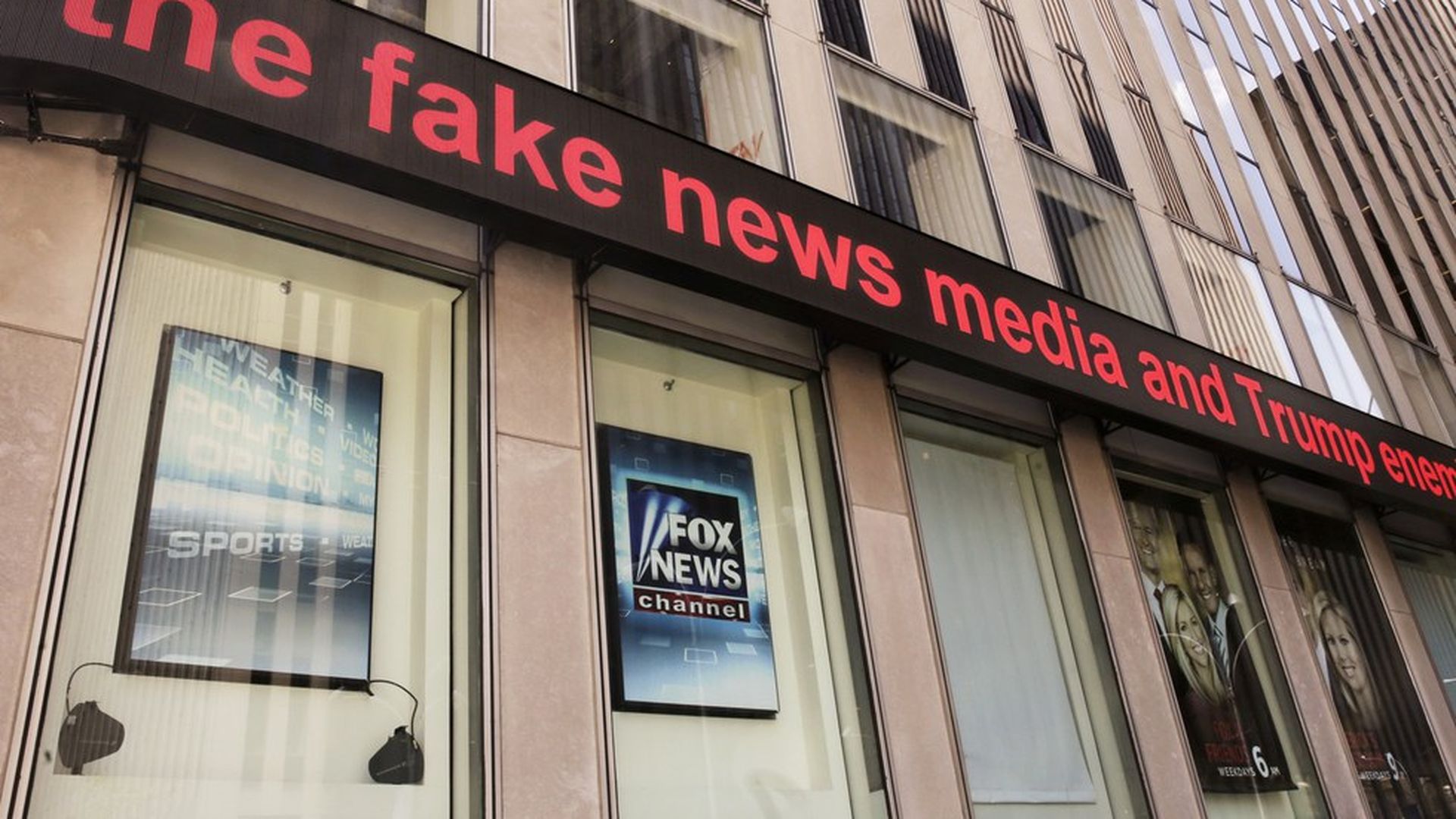
A lawsuit filed Tuesday in New York by Rod Wheeler alleges that Fox News and Ed Butowsky, a wealthy GOP donor, worked together to fabricate a story claiming the FBI had evidence that murdered Democratic National Committee staffer Seth Rich had passed documents to WikiLeaks.
- Why the suit was filed: Wheeler, a Fox News commentator and private investigator hired by Butowsky for the Rich story, alleges that the author of the Fox News story, Malia Zimmerman, fabricated quotes from him regarding the Rich investigation in the report. Fox News retracted the story a week after its publication.
- The big thing: The lawsuit, first obtained by NPR, claims that Butowsky boasted that President Trump himself had read drafts of the story before it was published by Fox News — and that Sean Spicer had taken a meeting in the White House a month before its publication to be briefed on its contents.

Athenahealth's Bush to lose some exec titles

Athenahealth said Tuesday it is removing the president and board chairman titles from Jonathan Bush, the outspoken CEO of the cloud-based electronic health record vendor. Bush will still be CEO. The company also will find ways to strip out $100 million of costs to boost its profitability.
The back story: These decisions come less than two months after activist hedge fund Elliott Associates bought a 9% stake in Athenahealth and demanded changes to improve the company's profits.
The bottom line: It's still not clear if Elliott is pushing for a sale of Athenahealth (some have speculated big tech companies could be buyers), but it's clear the cousin of George W. Bush and Jeb Bush is relinquishing some control of the company he co-founded in 1997. An Athenahealth spokeswoman said the decisions were "influenced by feedback and guidance from all our shareholders, as well as from an external consulting firm."

What truckers and taxi drivers will do after autonomous driving

The most convincing evidence promoted by automation doomsayers, who argue that we are about to enter an era of mass unemployment, are the roughly 4 million motor-vehicle operator jobs that are put at risk by self-driving car technology.
But Deloitte CEO Cathy Engelbert argues in Quartz that even though her firm predicts that "autonomous vehicle fleets will begin being introduced in 2020," and start doing the jobs of human drivers by the middle of next decade, we shouldn't be overly concerned about the impact of the technology on labor markets.

Scoop: Off the record media event focuses on Facebook
Jessica Lessin, founder of The Information, hosted a day-and-a-half long event called Off the Record for around 25 news leaders last week in Menlo Park, Axios has learned. A large part of the conversation centered around Facebook and the leverage that publishers have to negotiate with the platform.

S&P 500 drops Snap stock
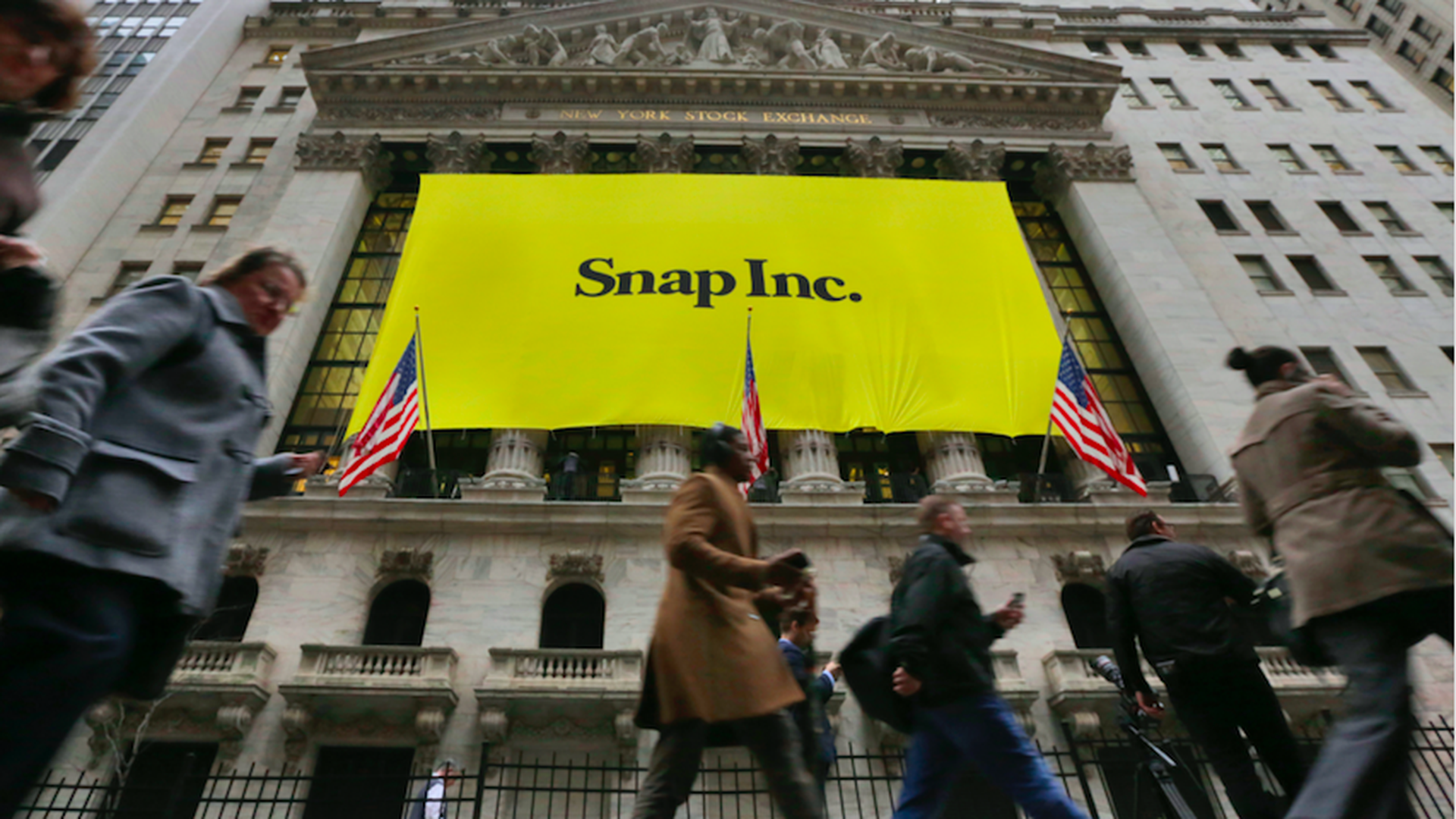
"S&P 500 to exclude Snap after voting rights debate," by Reuters' Trevor Hunnicutt: "The S&P 500 will start excluding companies that issue multiple classes of shares, ... a move that effectively bars Snap after its decision to offer stock with no voting rights."
- "Existing components of the S&P index with several share classes — such as Google parent Alphabet and Berkshire Hathaway — will not be affected."
Michigan tries to legislate "good jobs"
Michigan governor Rick Snyder signed into law last week corporate tax credits that would enable companies to forgo paying all state income taxes for up to ten years if a company hires a certain number of workers paying "good" wages.
- But Crain's Detroit Business points out many questions remain whether the law will actually create middle-class jobs and whether the tax incentives will be efficiently spent.
- The law requires companies to, on average, pay a wage that is at or above the average wage in the region where the company employs workers. But critics argue this risks giving companies tax credits for hiring they'd do anyway, and also that companies can get the tax breaks by hiring just a few high-paid executives and many low-paid frontline workers.
- Why it matters: States like Michigan are desperate for policies that result in good-paying jobs, but must remain vigilant that programs aren't easily abused.
America's uneven urban renaissance

Corporate America has fallen back in love with big cities, where a growing list of name firms like GE and McDonald's have announced they are moving their headquarters from the burbs.
- Large companies want to be downtown because that's where the most talented younger workers want to be, making corporate, urban migration another auspicious trend for America's big cities, along with falling crime rates and expanding tax bases.
- But according to the Manhattan Institute's Aaron Renn, the benefits of corporate America's rekindled urban interest is going by and large to just a few of America's most powerful economic centers, like New York, Boston, and Chicago, while the attempted comebacks of St. Louis and Cincinnati are much more precarious. Indianapolis (see after the jump) may be an exception for the second-tier cities.
- Why it matters: Renn points to data showing that just six cities grabbed three-fourths of all U.S. downtown job growth between 2010 and 2013, suggesting that the go-urban strategy to attract the best talent is appealing in only certain cities and for certain businesses.