Monday's economy stories

Tech sector nosedives as stocks struggle with Trump ban
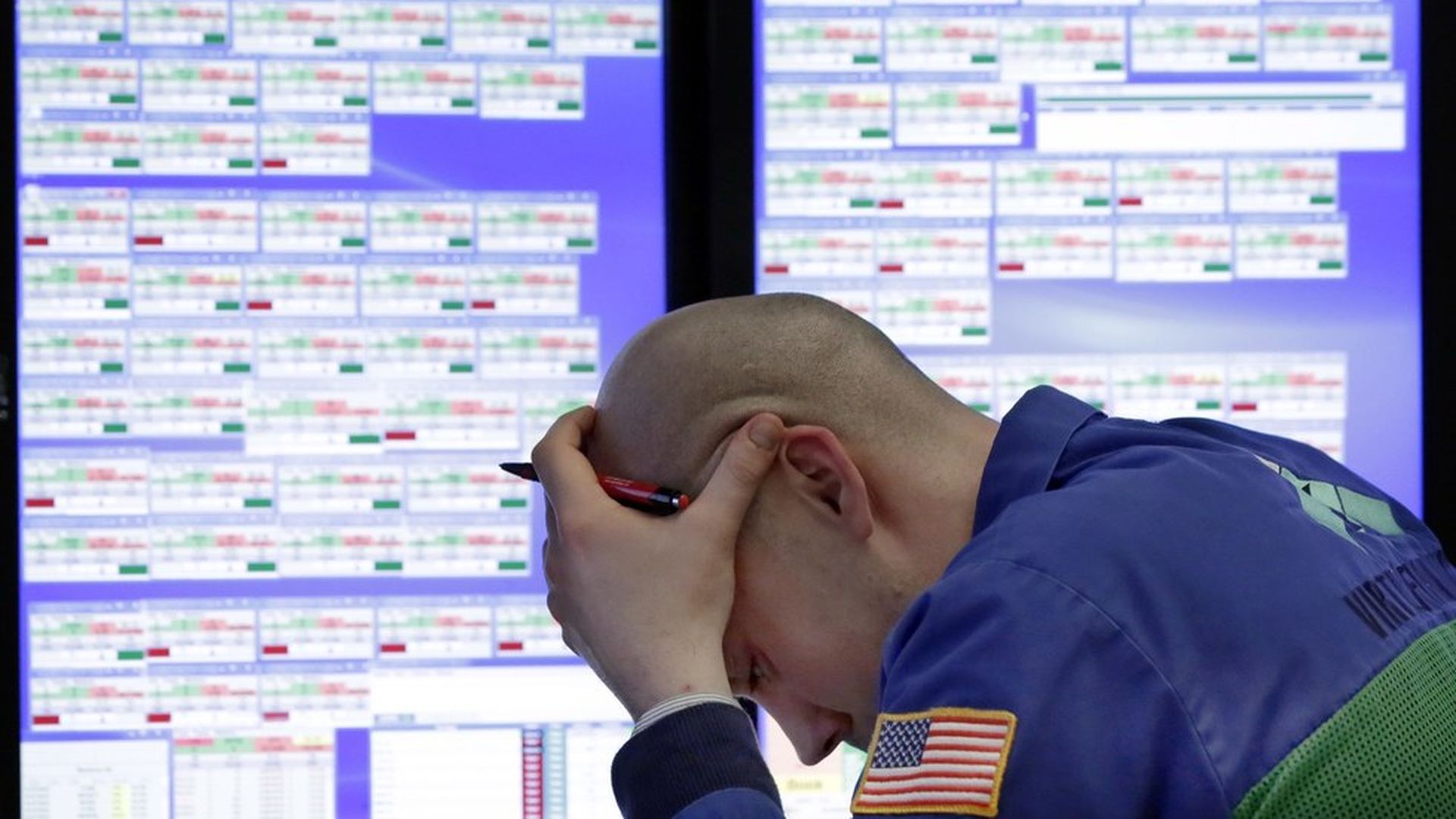
The stock market as a whole is falling rapidly in the wake of Trump's immigrant ban, and the tech sector is following the same trendline.
Bloomberg's global technology tracker — which according to their reporters follows the world's most major tech companies — reveals that 90% of the 20 most influential tech stocks are plummeting as they try to deal with the fallout from Friday's executive order.
Why this matters: The tech industry is in freakout mode as it struggles with the threat of Trump limiting their outsourcing jobs or shutting down the H-1B visa program they use to recruit talent from overseas — and the market reflects that.

Stock markets reel after Trump travel ban
The Dow Jones fell around 200 points during trading on Monday morning, as the market reacted to President Trump's surprise executive order temporarily banning travel from several muslim-majority nations.
(function () { var attempt = 0, init = function(){ if (window.pym) { var pymParent = new pym.Parent("dow-drop-01302017", "https://graphics.axios.com/dow-drop-01302017/dow-drop-01302017-chart.html?c=0", {}); } else if (attempt++ & 40) { setTimeout(init, 50); } }; init(); })();
Data: Money.net; Chart: Lazaro Gamio / Axios
As John Conlon, chief investment officer at People's United Wealth Management, tells CNBC:
"I think it also has to do with what the immigration policy represents [in terms of] the way the Trump administration is going to operate. The fact is that you've got a major policy that was implemented very quickly. That's causing uncertainty."

Programmatic advertising to increase 26% in 2017
A new eMarketer study predicts programmatic display advertising will grow by more than 26% in 2017, even though most publishers admit they don't make that much money on it.
What is programmatic advertising? Have you ever been followed by an ad as you move from site to site that shows a pair of boots you almost bought on eBay? That's a programmatic ad. They are ads that can be targeted very specifically at scale, and are priced very low through an automatic bidding system.
Why is it growing? Major technology platforms, like Google and Facebook, have created an environment in which scale is a commodity. To keep up with those platforms, publishers have increased the amount of content they are creating, and they need an automated system to sell ads against all of that new inventory.
Why aren't they making much money? Profit margins can be low for this type of advertising because its extremely complicated to manage and takes a lot of infrastructure to monetize.
Why it matters: An increase in programmatic advertising suggests that scale will continue to dictate market needs in 2017. However, low profit margins, stemming from uncertainty in how to manage the platform, has led buyers to feel less confident in the platform. eMarketer predicts that when industry-wide quality and implementation standards are put in place, we can expect to see prices and revenues increase.

The Valley's new lawmaker says workers need to keep up with tech
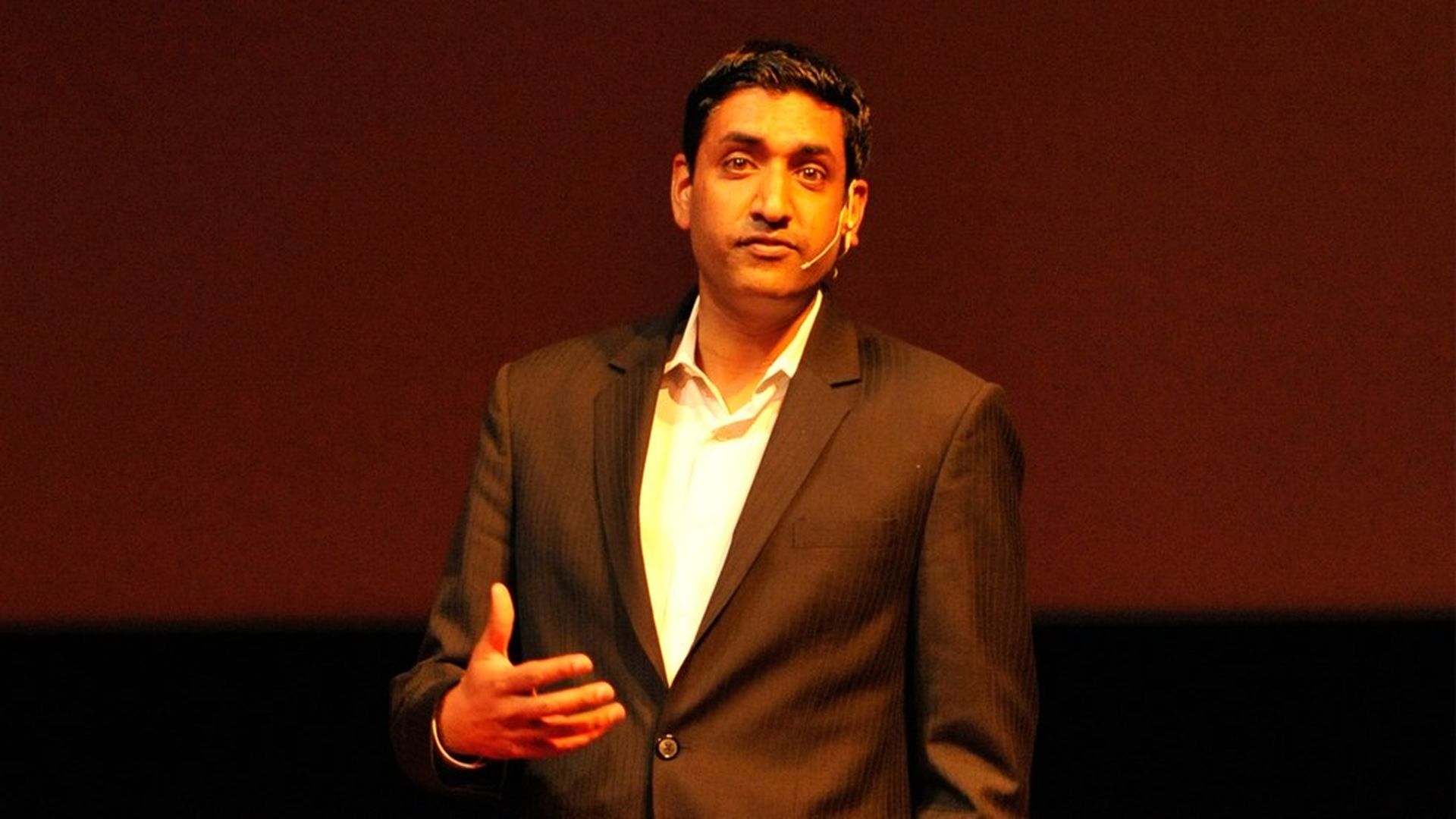
Democrat Ro Khanna, Silicon Valley's newest congressman, said that the government should be funding job-training programs to prepare people for the technical roles of the future.
When asked how efforts to train Americans for new roles could keep with the blistering pace of change, he said:
"So, the skills we need to teach are not 'you've got to learn Java programming or you've got to learn proficiency in Android technology.' The skill we have to give people is a technology proficiency — literacy that will allow them to continually adapt." — Rep. Ro Khanna, in an interview with Axios for C-Span's 'The Communicators' program
The rub: Tech companies often change the nature of work faster than the labor market can keep up. A prime example is Uber, which has created a new class of workers — ride-hail drivers — but is already beginning to test self-driving vehicles to replace drivers altogether.
Word on the street:. In a recent conversation with Axios about driverless trucks, new House Energy and Commerce Committee Chairman Greg Walden said that although automation is disruptive, "you're also not going to deny the innovation in technology either."
Khanna's workforce cred:
- He served as a Commerce Department Deputy Assistant Secretary under President Obama.
- He's taught economics at Stanford University and law at Santa Clara University Law School.
- He wrote a book: "Entrepreneurial Nation: Why Manufacturing is Still Key to America's Future"
- California Gov. Jerry Brown appointed him to the California Workforce Investment Board in 2012
Here are the most important earnings reports to watch this week
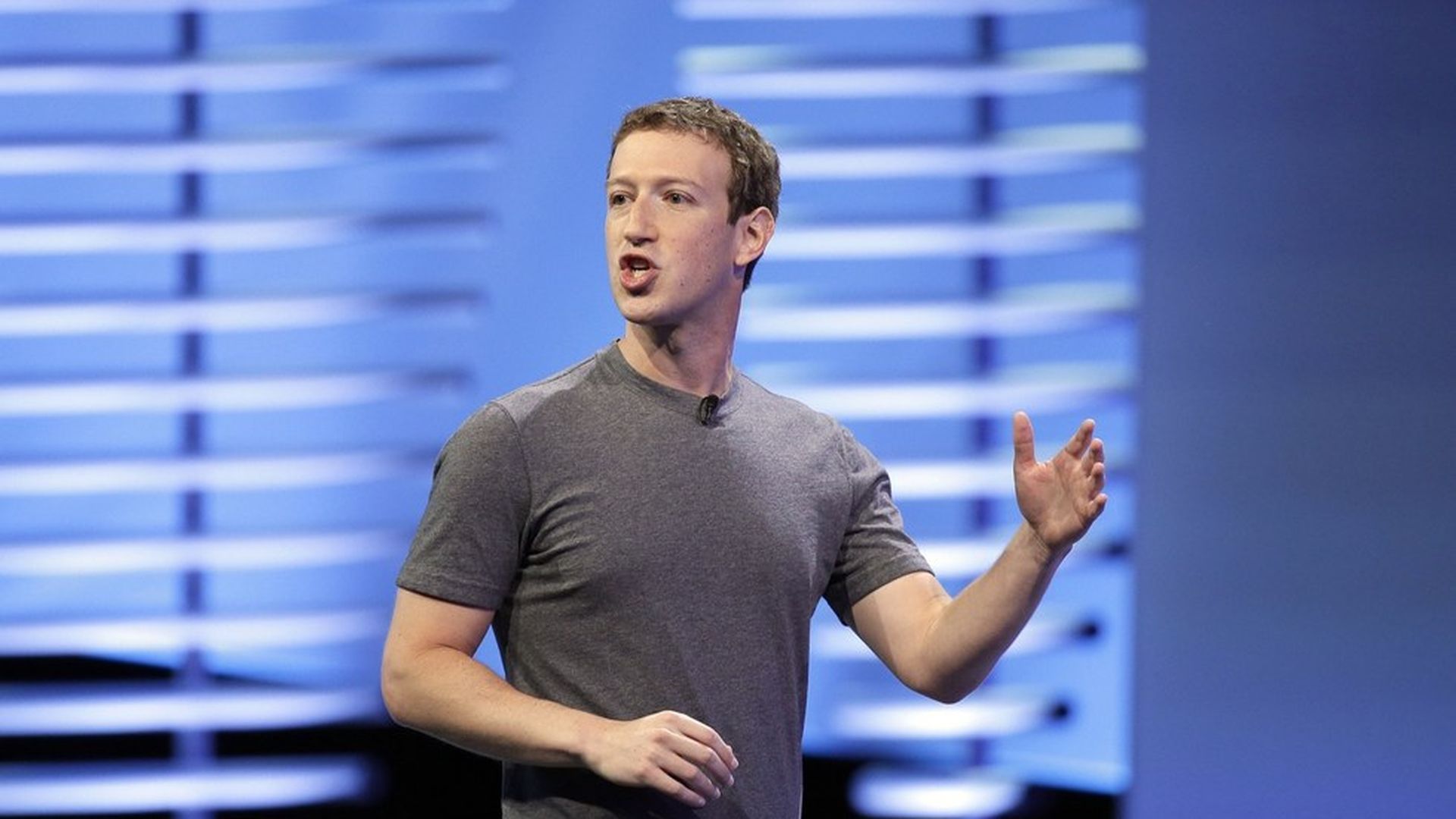
Earnings season heats up this week, with more than 100 of America's biggest companies set to announce financial results. Here are the most important companies to watch
- Aetna and Anthem: Two of the nation's largest health insurers release earnings Tuesday and Wednesday morning, respectively. Both companies have lost money due to participation in Obamacare exchanges, and both are attempting to consolidate with rivals as a result of the law. Look for clues as to how the industry will deal with antitrust oversight and Obamacare repeal.
- Facebook: is being cautious projecting future growth of ad sales on its flagship product, but we'll begin to learn Wednesday evening how profitably it can leverage subsidiaries like Instagram, WhatsApp, and Oculus.
- Amazon: the online retailer's "echo" products were the runaway hit of the holiday season. On Thursday, Amazon's reported revenues will tell us just how popular they were.
- Drug companies: Several of the nation's largest drug makers will announce earnings this week, including Pfizer early Tuesday and Merck on Thursday. Look for indications on how the industry plans to combat efforts to force drug companies to negotiate prices with Medicare or other federal entities.

The future of Snapchat

Snapchat, expected to file for its IPO late this week, "boldly compares itself with TV" in conversations with investors, per Mashable. One media executive who talks to the big platforms said: "Facebook, Amazon, even Apple are willing to write massive checks, tens of millions, hundreds of millions, to build specific content for that platform."
Why Snapchat plans more shows: "Few on the street recognized Peter Hamby, Snap's head of news and host of 'Good Luck America,' when he was a political reporter at CNN. Now, he's the 'Snapchat guy.' Exclusivity, Snapchat says, means quality."