With libraries, public parks, and other municipal facilities shutting their restrooms because of COVID-19 — and many retail stores doing the same — there's increasingly no place to "go" for people walking about town.
Why it matters: As inconvenient as the toilet shortage may be for the average person, it's much, much worse for homeless people, not to mention delivery workers, mail carriers and taxi and ride-hail drivers.
Cryptocurrency-focused company Coinbase announced Thursday it has filed confidentially with regulators to go public. It does not specify whether it plans an initial public offering or other listing route.
Why it matters: Coinbase is among the best-known companies in the industry and a long-rumored candidate for a public listing. Bitcoin's price hit a new record on Thursday, surging above $23,000.
Apartment rents fell this year in 10 of the nation's most expensive cities — like San Francisco, New York, Boston and Seattle — amidst a pronounced exodus by occupants, according to an analysis by RENTCafé, a search website.
The hastily-built outdoor seating that has kept so many restaurants limping along this fall is now starting to come down, but the fight for survival continues.
Driving the news: This week — amid Gov. Andrew Cuomo's second halt to indoor dining in New York City and a wicked blizzard that suspended outdoor service — workers at the 21 Club in Midtown rallied against the owners' decision to keep the place closed indefinitely.
Bitcoin yesterday topped $20,000 for the first time ever, and then just kept climbing.
Axios Re:Cap digs into the reasons for Bitcoin's price surge, and what it means for its future as an actual currency, with investor and podcast host Anthony Pompliano.
According to the Consumer Financial Protection Bureau, Upstart's algorithm — a company that helps banks to underwrite loans — approves 27% more applicants than a traditional model, and twice as many "near prime" consumers with FICO scores between 620 and 660. It also yields 16% lower interest rates.
Driving the news: Upstart raised $180 million in an IPO this week, ending trading on Wednesday with a market capitalization of $2.1 billion.
If I only had one word to describe 2020, I would pick "feverish."
Why it matters: The fever still rages — but never has it been more certain that by this time next year, and probably much earlier, the delirium will have broken. If 2021 is the year of reversion to normal — a year of slow but certain recovery from the ravages of 2020 — then by definition a lot of the weird excesses are sure to disappear.
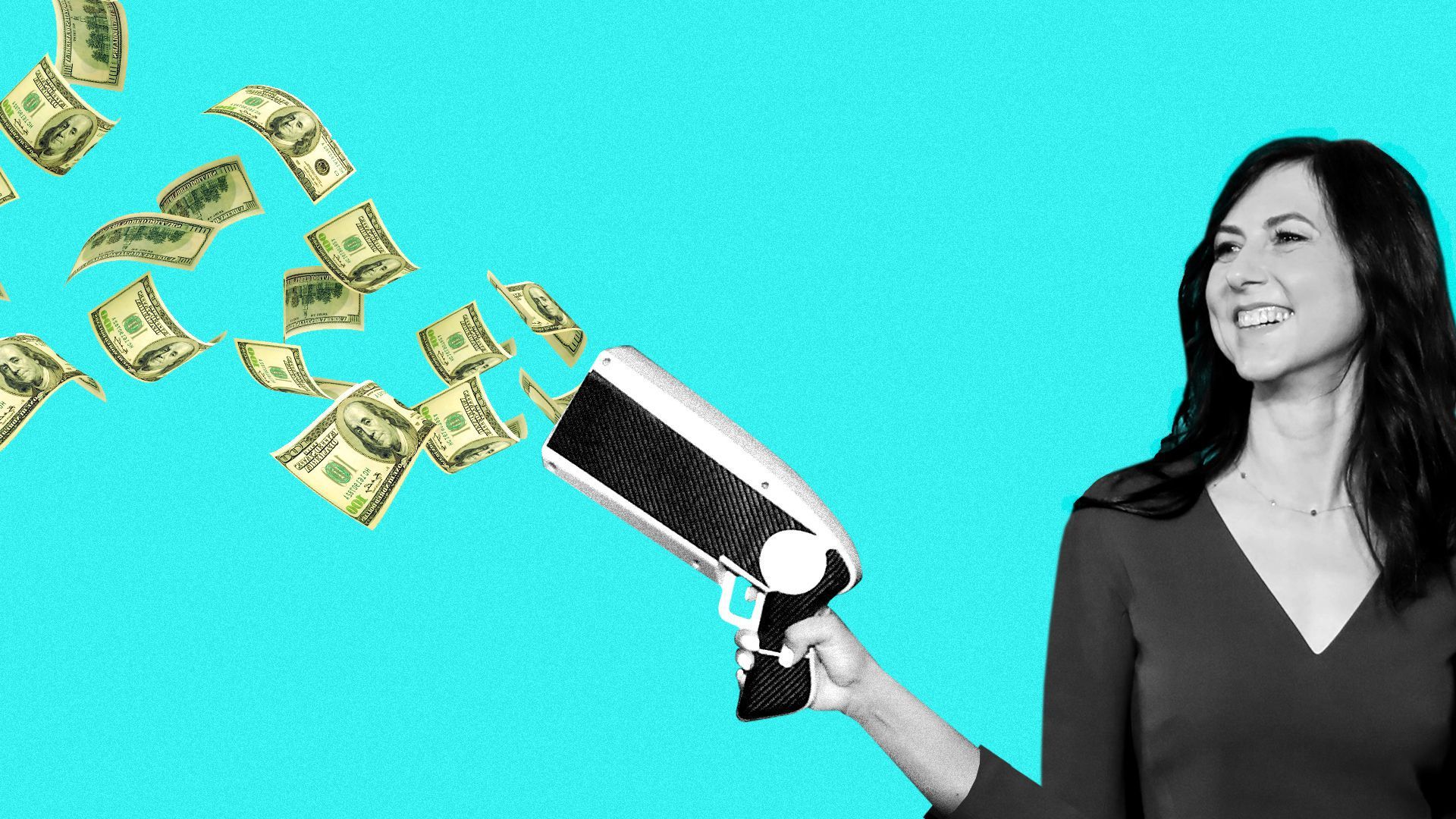
After giving away $1.7 billion to social-justice organizations this summer, Mackenzie Scott announced this week that she has given away another $4.2 billion in the past four months, in the form of "immediate support to people suffering the economic effects of the crisis".
Why it matters: Scott is rapidly upending philanthropic norms. These gifts were "unsolicited and unexpected," she writes — while she and her team certainly did their homework on potential recipients, they didn't hand out questionnaires or solicit grant proposals, and all sums were "given with full trust and no strings attached."
Make School, one of the earlier “coding bootcamps” to use income-sharing agreements, has quietly pivoted to traditional college loans that it covers until graduates find well-paid software development jobs. This is cheaper for students (and itself), the school tells Axios.
Why it matters: In recent years, income-sharing agreements (ISAs) have been hailed by some as the key to fix the college debt crisis because they seemingly hold schools responsible for their graduates’ professional—and financial—success.
Initial public offerings are getting the reality TV treatment, with a new show that will track five established companies on their path to the Nasdaq. And viewers will be able to buy-in.
Program guide: It's called "Going Public," and will stream via Entrepreneur.com. The host is Lauren Simmons, who was the youngest full-time equities trader on the NYSE, and the floor's second Black woman trader.
Robinhood is an unreliable trading platform that takes advantage of the poor, uses sophisticated gamification techniques to get them to spend money, and lies to them about their trades being free, according to a pair of lawsuits filed yesterday and today by the Securities and Exchange Commission and the state of Massachusetts.
Why it matters: Robinhood is the fastest-growing brokerage the world has ever seen, growing to an $11 billion valuation on the back of its ostensibly free trades and the gamification tools it uses to encourage its customers to do more of them.
Vice's food vertical, Munchies, is launching a verified channel on the breakout creator platform OnlyFans, a subscription site in which fans can pay creators directly for exclusive content, executives tell Axios.
Why it matters: It's the first verified media publisher to launch on OnlyFans, which is known for hosting racy content. It's also Vice's second foray into any sort of direct-to-consumer subscription revenue.
Initial weekly jobless claims rose to 885,000 last week, an increase of 23,000 and a higher total than the 800,000 claims economists had projected, according to data released by the Labor Department.
Why it matters: The jobless numbers are moving in the wrong direction heading into the holidays. Amid clear indicators that the economic recovery is slowing, Congress looks set to reach a deal on a targeted stimulus package as soon as today.
Guggenheim Partners CIO Scott Minerd told Bloomberg on Wednesday that bitcoin's current price is well below fair value and that given its scarcity and the “rampant money printing” by the Fed, the digital token should eventually climb to about $400,000 per coin.
By the numbers: Bitcoin rose above $23,000 overnight bringing its 2020 gain to more than 200%.
Fed chair Jerome Powell sought to reassure financial markets at the Fed's latest policy meeting that even though the economy is improving faster than expected, the housing sector has "fully recovered" and equity markets are hitting all-time highs, the Fed isn't even close to thinking about raising U.S. interest rates.
Why it matters: The bonanza in the stock and housing markets have been buoyed by expectations for the continuation of rock-bottom rates and an avalanche of Fed bond buying.
A leading progressive is sounding the alarm about an "austerity mindset" inside the Democratic Party, suggesting the biggest stimulus package President-elect Joe Biden gets may come during this lame-duck session of Congress.
Why it matters: Faiz Shakir, a senior adviser to Bernie Sanders and the senator's 2020 campaign manager, says Democrats may be embracing a misguided assumption that Biden will get another bite at the stimulus apple next year. Recent history, he argues, shows that won't be the case — which is partly why Sanders has been pushing for the biggest package possible during current negotiations.



/2020/12/17/1608232735835.gif?w=3840)