A cash rewards app that encourages people to use cleaner forms of transportation might also help coax virus-leery commuters back into shared rides, buses and trains.
The big picture: Since the coronavirus pandemic, most people surveyed say they'd feel safer driving their personal car to work, and the Centers for Disease Control and Prevention advises workers to avoid mass transit if possible. But cities can't return to normal without safe, affordable public transportation.
Frustration among many Senate Republicans, not to mention Democrats, toward the White House has hit a fever pitch, with many lawmakers — including Majority Leader Mitch McConnell — admitting they could break for the August recess without a stimulus bill.
The latest: The Senate left for the weekend Thursday evening without even circulating a draft bill that McConnell says will be used as a starting point for negotiations — and many blame the White House.
The consensus within the White Houseover the weekend is that they should turn their attention toward passing a smaller, bifurcated stimulus bill, focused on their main priorities.
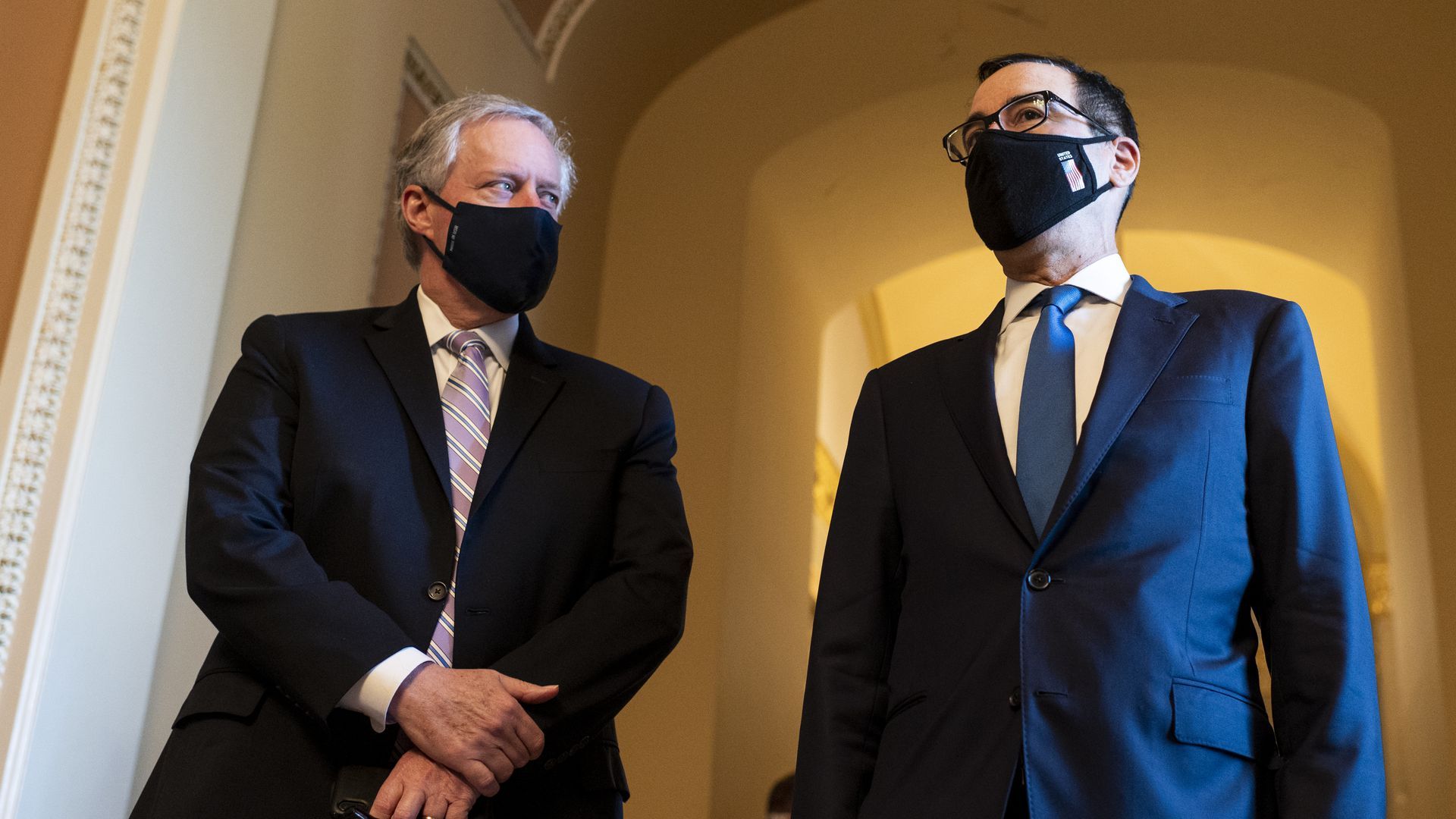
The state of play: Chief of staff Mark Meadows and Treasury Secretary Steven Mnuchin were discouraged after their meeting with House Speaker Nancy Pelosi and Senate Minority Leader Chuck Schumer on Tuesday, GOP congressional aides involved in the negotiations told Axios.
Tesla's decision to build a $1 billion factory in Texas is a good bit of economic news for a state that's suffering in the throes of the pandemic.
Why it matters: The creation of 5,000 new manufacturing jobs near Austin comes as the state's ongoing coronavirus outbreak threatens to overwhelm hospital systems and tears at the economy.
German enterprise software giant SAP announced on Sunday that it will spin out Qualtrics less than two years after buying the Utah-based "experience management" company for $8 billion.
Why it matters: The move reflects the red-hot IPO market, in which all sorts of companies are rushing to the public markets, as well as the increased importance of organizations understanding employee and customer sentiments.
Treasury Secretary Steve Mnuchin said on "Fox News Sunday" that the White House will propose capping supplemental unemployment insurance in the next stimulus package to replace 70% of individuals' lost wages.
Why it matters: Republicans are opposed to extending the $600-per-week supplemental benefits included in the CARES Act passed in March, arguing that it disincentives Americans to return to work because many people made more money on unemployment than they did in their prior job. Those benefits set to expire on July 31.
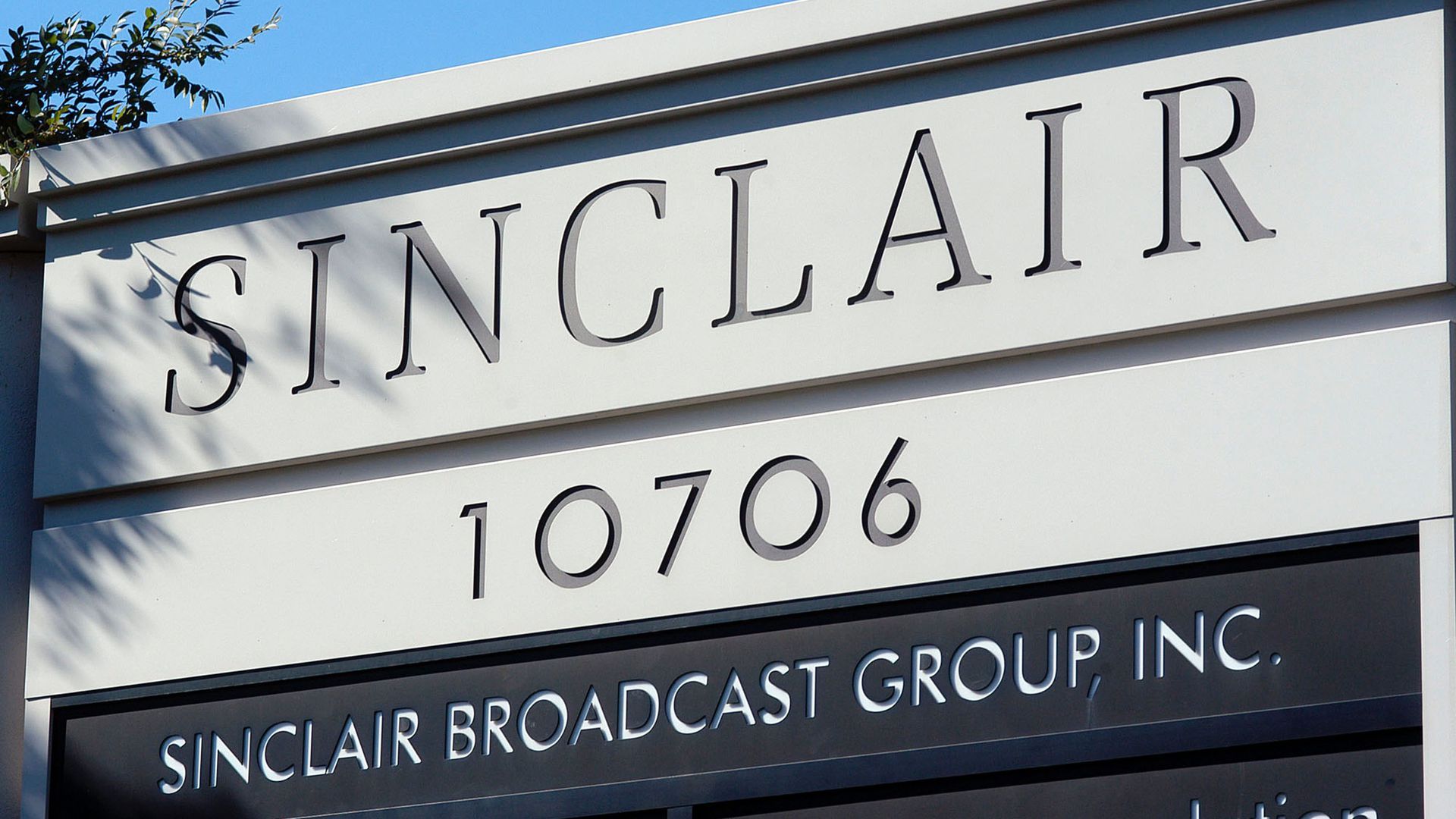
Sinclair Broadcast Group asked its dozens of local affiliates across the U.S. this weekend not to air a controversial interview conducted on its program "America This Week," which touted conspiracy theories that NIAID director Anthony Fauci started the coronavirus.
Why it matters: Sinclair has been caught up in controversies around journalism ethics before. Most notably, it asked journalists at affiliates to read pro-Trump scripts about "fake news" in 2018.
U.S. universities and colleges are facing pressure from students to lower tuition rates amid the coronavirus pandemic, the Financial Times reports.
Why it matters: Some students argue that they should pay less if schools are only offering online classes, while many institutions are bracing for the pandemic's impact on their budgets.
The price of gold surpassed its 2011 peak of $1,891.90 per ounce this week, with bullion hitting $1,902.02 at the close of trading in New York on Friday, Bloomberg reports.
Why it matters: The coronavirus pandemic and increased tensions between the U.S and China are fueling demand for safer assets, according to Bloomberg.
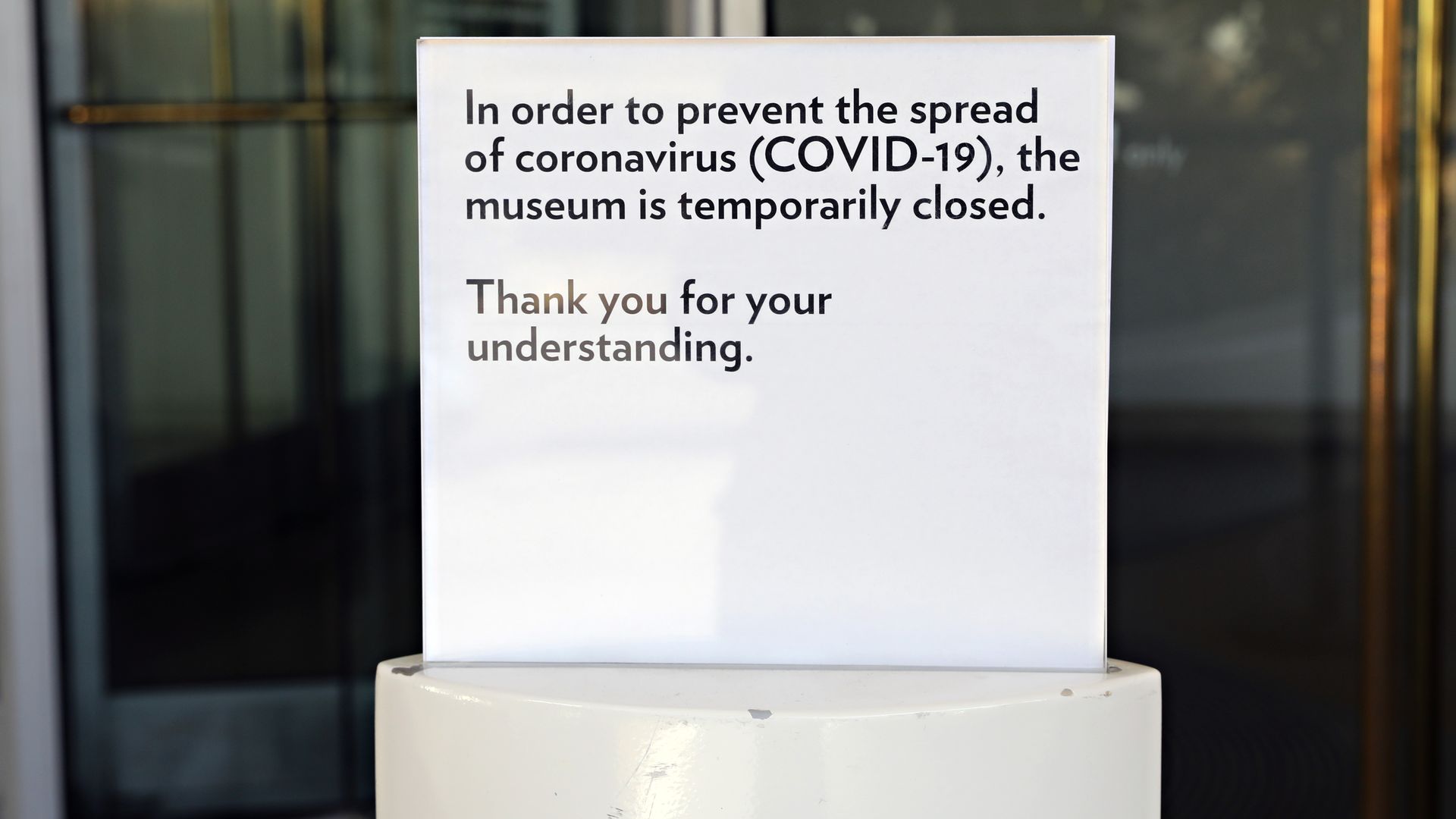
33% of America's museums are at a "significant risk" of closing permanently by next fall due to economic distress from coronavirus-related shutdowns, an American Alliance of Museums survey has found.
Why it matters: Ticket and gift shop sales, school trips and museum events are primary sources of funding, AAM President and CEO Laura Lott told NPR.
The coronavirus pandemic has highlighted the value of simply giving cash to those in need.
Why it matters: The worst economic effects of the pandemic have been partially ameliorated by no-strings-attached cash transfers. With the economy unlikely to recover for months or longer and the job-destroying threat of automation growing, the pandemic could be laying the groundwork for a universal basic income.

/2020/07/26/1595804782729.gif?w=3840)