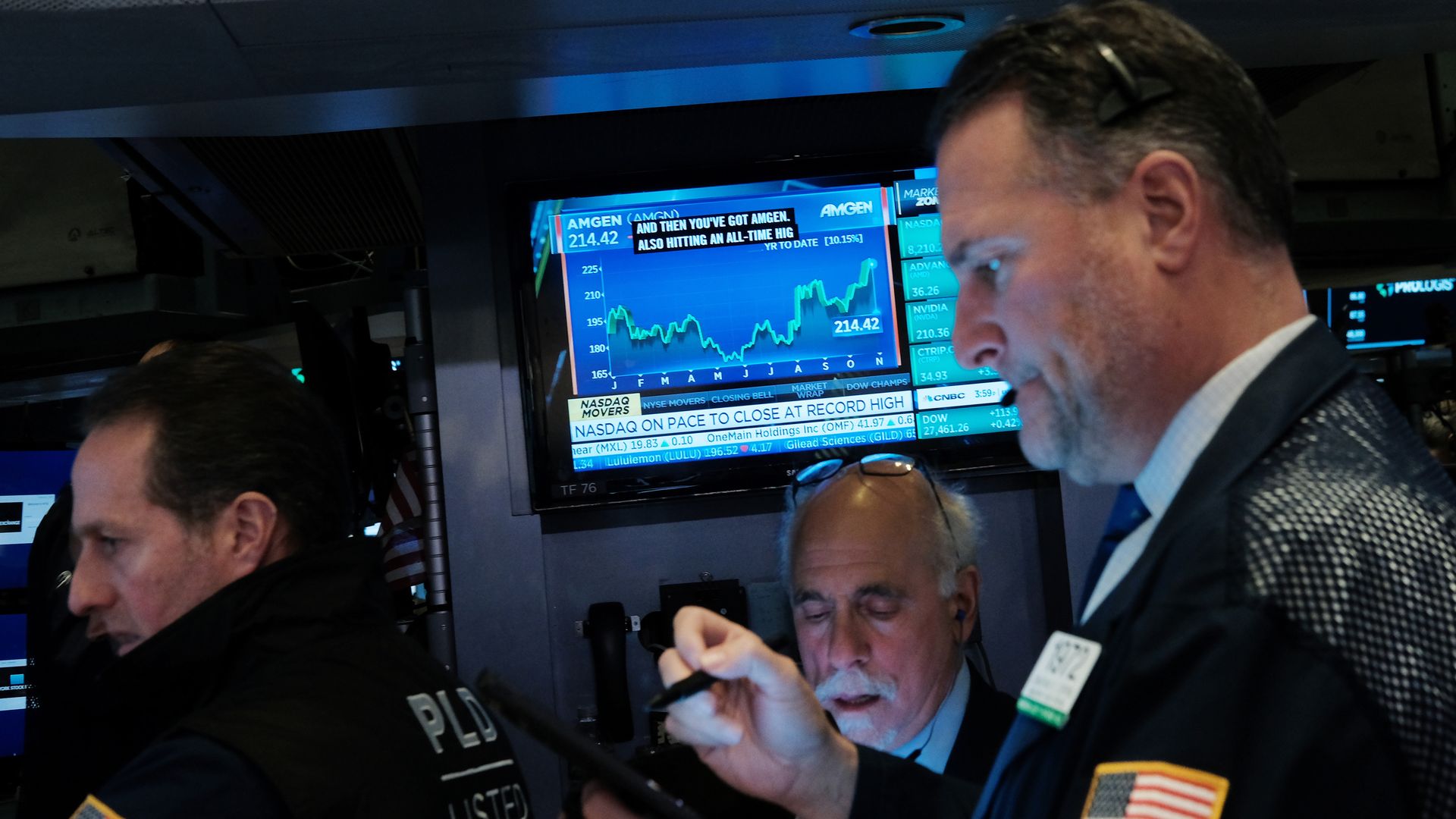
The dollar rose to its highest level in five weeks against the Japanese yen on Thursday, as currency markets also took their cue from seemingly reduced tensions between the U.S. and China.
The state of play: The yen's value against the dollar has declined along with gold, bond prices, and other safe havens this week as the world's two largest economies look poised to roll back tariffs and de-escalate the trade war.
The Senate may soon be taking on noncompete agreements, after a rare bipartisan bill to declare them illegal in most instances was introduced and has gained support.
What it means: The Workforce Mobility Act would ban the use of noncompete agreements except in connection with the dissolution of a partnership or the sale of a business.
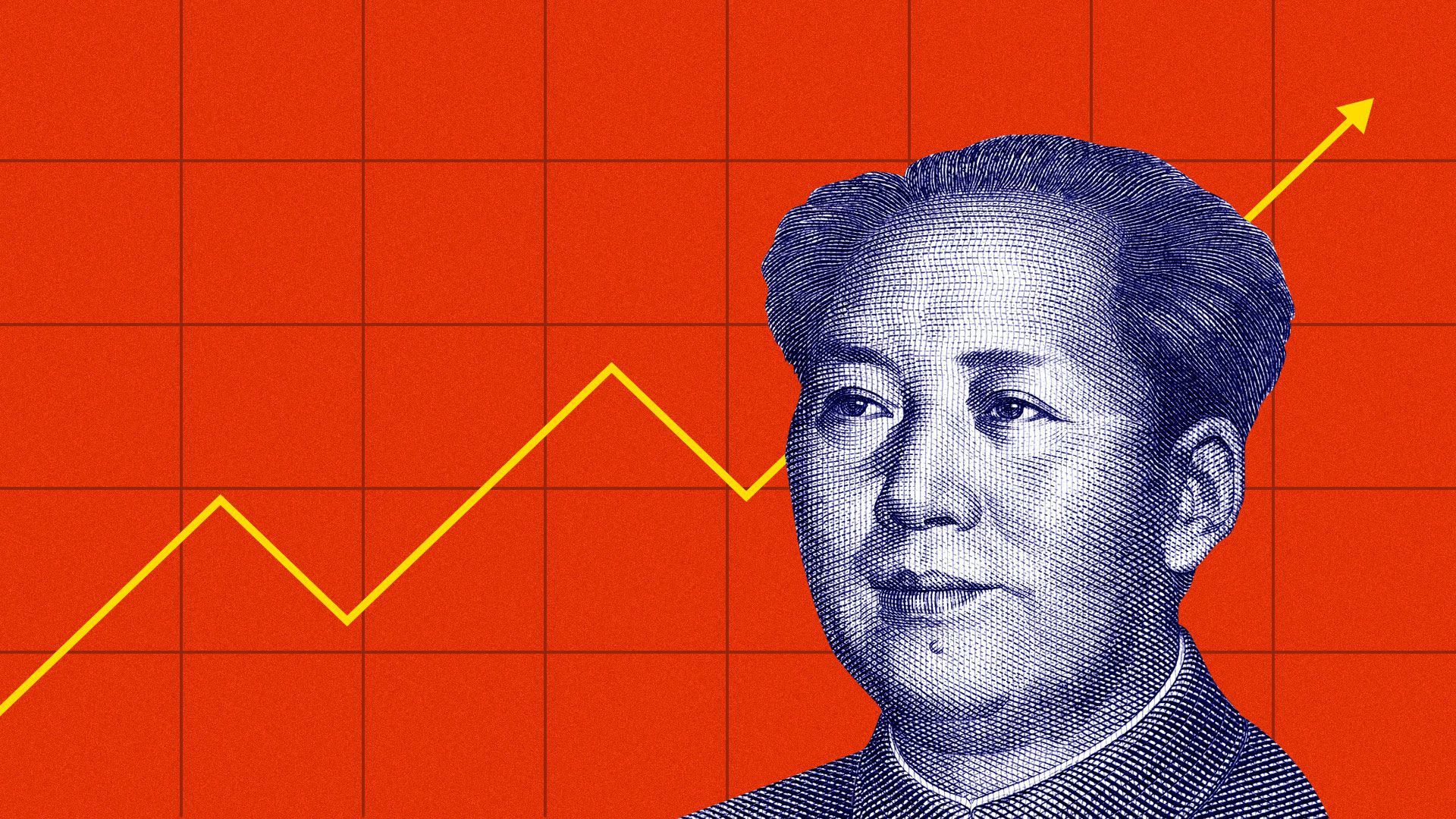
China's economic growth has weakened to the slowest pace in nearly three decades this year, the result of a gradual shift to a new economy and a damaging trade war with the U.S.
Its mainland stock market, made up of largely domestic-facing companies, is having a banner year — in fact, it's been the best performing major stock index in the world.
Gap Inc. chief executive Art Peck announced plans to resign after 15 years with the retailer, the company shared on Thursday.
What we know: Peck, who served as CEO since 2015, will turn over his role to board member Robert Fisher, who will serve as president and chief executive on an interim basis. The company did not explain the reasoning for Peck's departure. The shift comes after a multiple quarters of low sales, largely brought on by declining foot traffic and excess inventory, Business Insider notes.
Walt Disney Company CEO Bob Iger said on the company's third quarter earnings call Thursday that Disney has reached a deal with Amazon to put Disney+ on Amazon Fire TV devices, as well as on Samsung and LG televisions.
Why it matters: A streaming distribution partnership between Amazon and Disney seemed uncertain after it was reported last month that the two companies were at odds over advertising terms. Amazon's Fire TV stick is the second-largest TV app distributor next to Roku. Disney needs that distribution outlet to hit its lofty subscriber goals.
A live-streamed radio broadcast featuring right-leaning Brazilian columnist Augusto Nunes and American journalist Glenn Greenwald resulted in a physical dispute on Thursday, BuzzFeed News reports.
LISBON — The public stock market is doing pretty well,on the face of things. The S&P 500 is at record highs, European stocks are surging, and a slew of multibillion-dollar companies have IPO'ed this year, raising billions of dollars in fresh capital. But private markets still seem to be much more alluring.
What we’re seeing: I'm in Lisbon this week, attending the Web Summit for the first time. The clear message being sent: Private markets are more attractive than ever.
The Economist is by a large margin the most valuable magazine on the planet, still going strong in the digital age, with a 50% non-controlling stake changing hands in 2015 for £469 million ($731 million) in cash. (In comparison, Marc and Lynne Benioff spent $190 million for 100% of Time in 2018.)
The intrigue: The Economist's allure is based in liberalism, but it's not easy to understand how that is defined.
Nielsen Holdings, a $7.5 billion company known best for its decades-long position as the leader in television measurement, announced Thursday that it would spin off its retail measurement business, called Nielsen Global Connect, into an independent, public company. Nielsen's Media Connect business, which measures media and advertising consumption, would remain as its own independent, publicly-traded business.
Why it matters: Despite criticism about whether its TV measurement tactics are outdated, Nielsen's media arm has been outperforming its retail counterpart lately, which measures consumer sentiment about goods and retail sales. That division has been negatively impacted by the decline in traditional retail and increased competition. Meanwhile, competitors to Nielsen's media business, like Comscore, have struggled.
Equity investors are making a sustained move to value stocks and more defensive sectors of the market, data from Bank of America Merrill Lynch show
The big picture: Equity analysts say BAML clients are increasingly moving into health care and utilities (which saw nearly record inflows from both institutional managers and hedge funds) as well as large-cap stocks and domestically oriented sectors.
Americans plan to increase their holiday spending, with the average rising to about $675 on gifts this holiday season, according to a survey provided first to Axios by The Conference Board. That is an increase from last year's estimate of $627.
Yes, but: Consumers say they are expecting steep discounts, with more than a third reporting they expect — at a minimum — to buy half of their gifts on sale.
Wednesday's productivity report is the latest sign that historically low U.S. unemployment may be indicating a sick, rather than a healthy economy.
What's happening: As uncertainty has increased over the U.S-China trade war and other geopolitical events, companies that have the capacity to invest in new equipment, technology or factories are holding off and hiring workers to pick up extra slack instead.
U.S. and global dealmaking slowed significantly in the third quarter, with equity and merger and acquisition announcements "plummeting" year over year and quarter over quarter, according to the latest data from S&P Global Market Intelligence.
By the numbers: The global total value raised from equity deals fell 37.1% quarter over quarter and 29.4% year over year to $91.85 billion.
Google and Facebook are both mulling changes to their political ad policies, sources tell Axios.
Driving the news: There’s no indication at this point that either company will stop running political ads. Rather, both are weighing policy changes that have been floated as compromise ideas, like limiting micro-targeting or disclosing more info about the advertiser.
Smartphones are chock-full of apps that can hail anything from rides to meals to toiletries — and this digital revolution comes with a physical footprint that is changing the way cities look and function.
Why it matters: To support the new consumer lifestyle, companies are choking cities with cars, bikes and warehouses. The technology that makes it possible for urban dwellers to summon everything in an instant clearly comes with still-unknown costs.