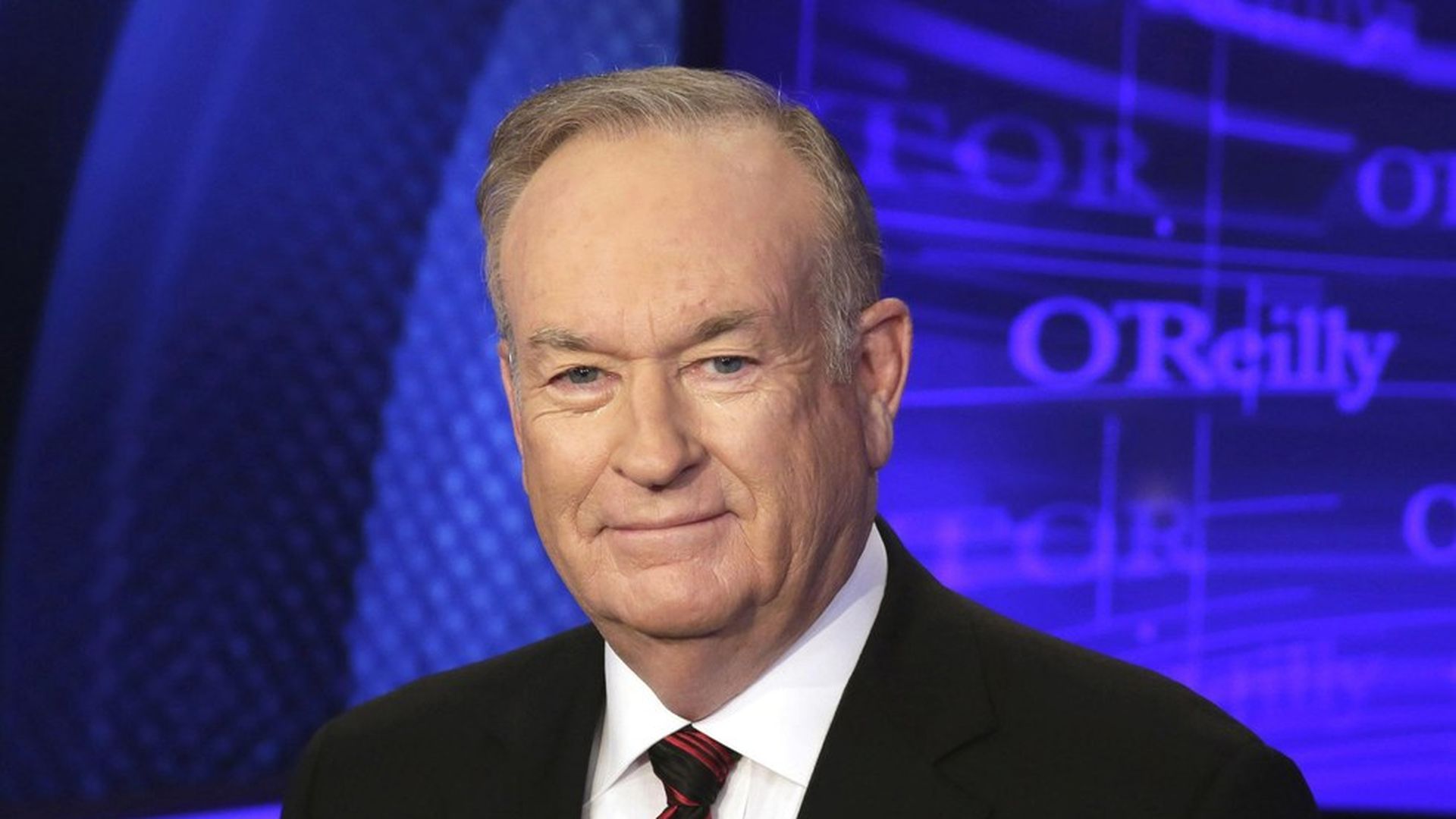
Bill O'Reilly and Fox News have paid roughly $13 million over the years to women who've accused him of sexual harassment and verbal abuse, according to a new investigation by the New York Times' Emily Steel and Michael Schmidt.
O'Reilly's show raked in $446 million in advertising between 2014-16, and the host makes $18 million a year. Those who've received payments from Fox News or O'Reilly, per the NYT:
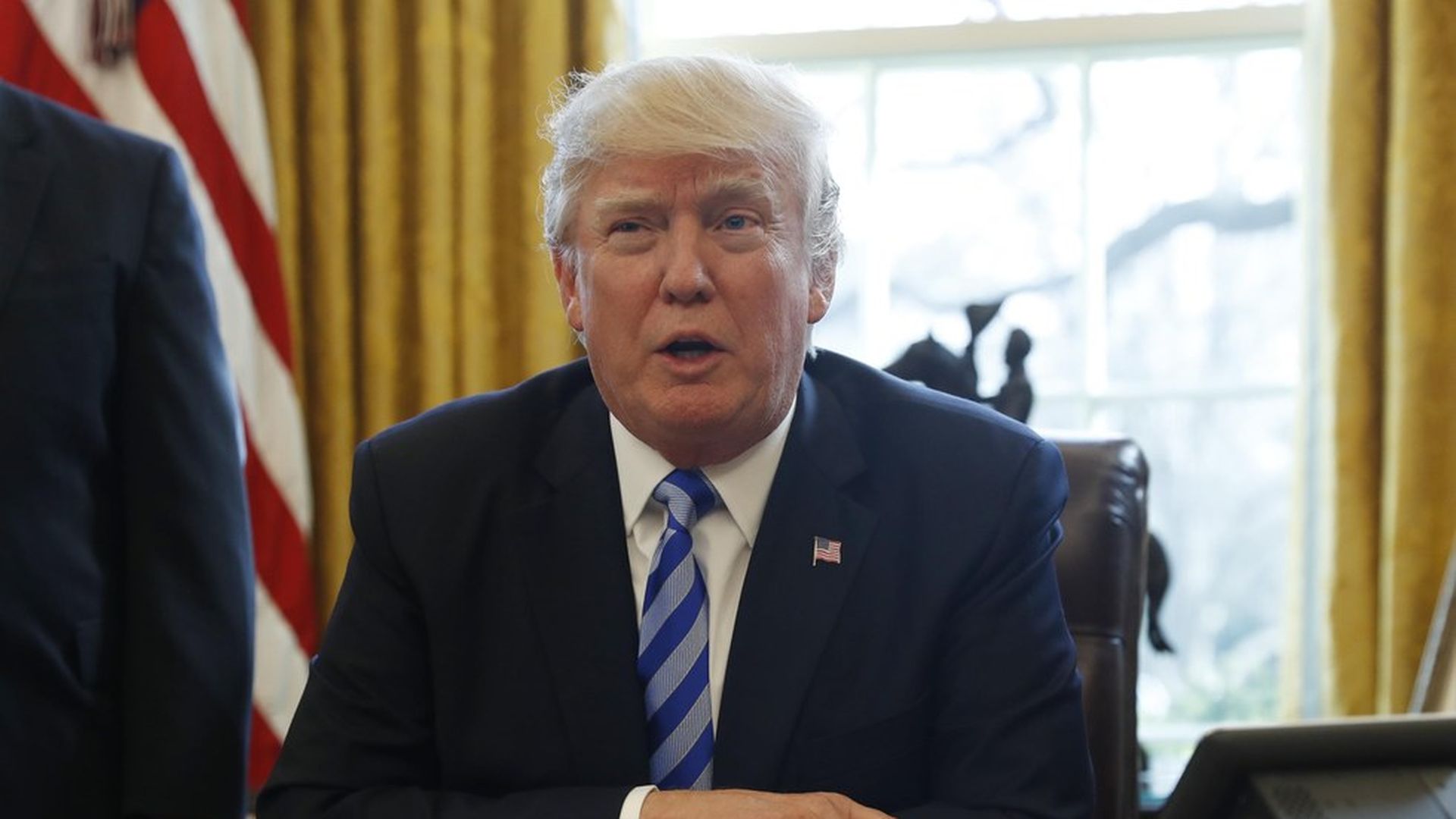
Trump has been telling his surrogates to try and get bookings on CNN, according to a BuzzFeed News report, even though the POTUS has been railing against the outlet as "fake news" since CNN reported on the infamous Trump dossier report.
Why it's happening: People close to the President said he recognizes the importance of CNN as a platform, perhaps because of the looming midterms and 2020 election seasons. One surrogate recalled Trump saying: "Looking to 2018 it would be better for us if you dive back into that fire at CNN."
This sounds familiar: Although he's called out The Washington Post and The New York Times for being fake or failing news, those are the first two outlets he called when he wanted to get out the message that Republicans would be pulling the repeal bill from the House floor.
Cloudera, a Silicon Valley-based provider of enterprise big data software, on Friday filed for a $200 million IPO (as Axios had reported it would).
Offering details: The Palo Alto, Calif.-based company plans to trade on the New York Stock Exchange under ticker symbol CLDR, with Morgan Stanley listed as left lead underwriter It reportedly will seek a valuation of around $4.1 billion.
Financials: Cloudera isn't anywhere close to profitable, although net losses fell from to $187 million in its latest fiscal year from $203 million for the prior year. Revenue climbed from $166 million to $261 million.
Backers: Cloudera has raised more than $1 billion in venture capital, according to PitchBook, and was most recently valued at about $4.1 billion. Its investors include Intel Corp. (22% pre-IPO stake), Accel (16.3%), Greylock (12.5%), GV and In-Q-Tel.
Fun fact: Cloudera's IPO process was code-named Project Thunders.
Palantir CEO Alex Karp told the FT's Gillian Tett that the tech industry is overplaying its hand with the Trump administration."The Valley is marching off a political cliff," Karp, who works closely with Trump ally Peter Thiel, told Tett. "The [tech companies] have all these monopolies and economic capital, and assume that it translates into political capital — but that isn't true." Here's why Tett thinks tech is vulnerable: Miles apart: Silicon Valley was largely "on the wrong side of" the election, and they were quick to challenge Trump's immigration policies. And few tech CEOs sit on Trump's advisory council, which Uber CEO Travis Kalanick quit. Jobs losses: "Until now Mr. Trump has blamed trade for American workers' woes. However, another big culprit is the type of digitisation being unleashed by Silicon Valley. Tech businesses could become convenient scapegoats, particularly since companies such as Amazon, Apple, Google and Facebook have enjoyed fat profits and near-monopoly power in certain sectors." Taxes: "As profits have boomed, tech groups have amassed $867 [billion] in offshore cash piles, partly to avoid paying high U.S. taxes. This irritates American politicians."
The House on Tuesday voted to block implementation of new online privacy rules rushed through the FCC in the final days of former chairman Tom Wheeler's tenure. In a vacuum of information, this sent pockets of the internet into a panic. But consumers wake up today to the same online world and digital protections they enjoyed one week ago.
Unlike other traditional advertising platforms like magazines and newspapers, out-of-home advertising such as billboards and subway posters grew almost 7% last year, mostly due to the rapid conversion of static ad spaces to digital. Per eMarketer, roughly 50% of all out-of-home ads will be digital this year, up 10% from 2014.