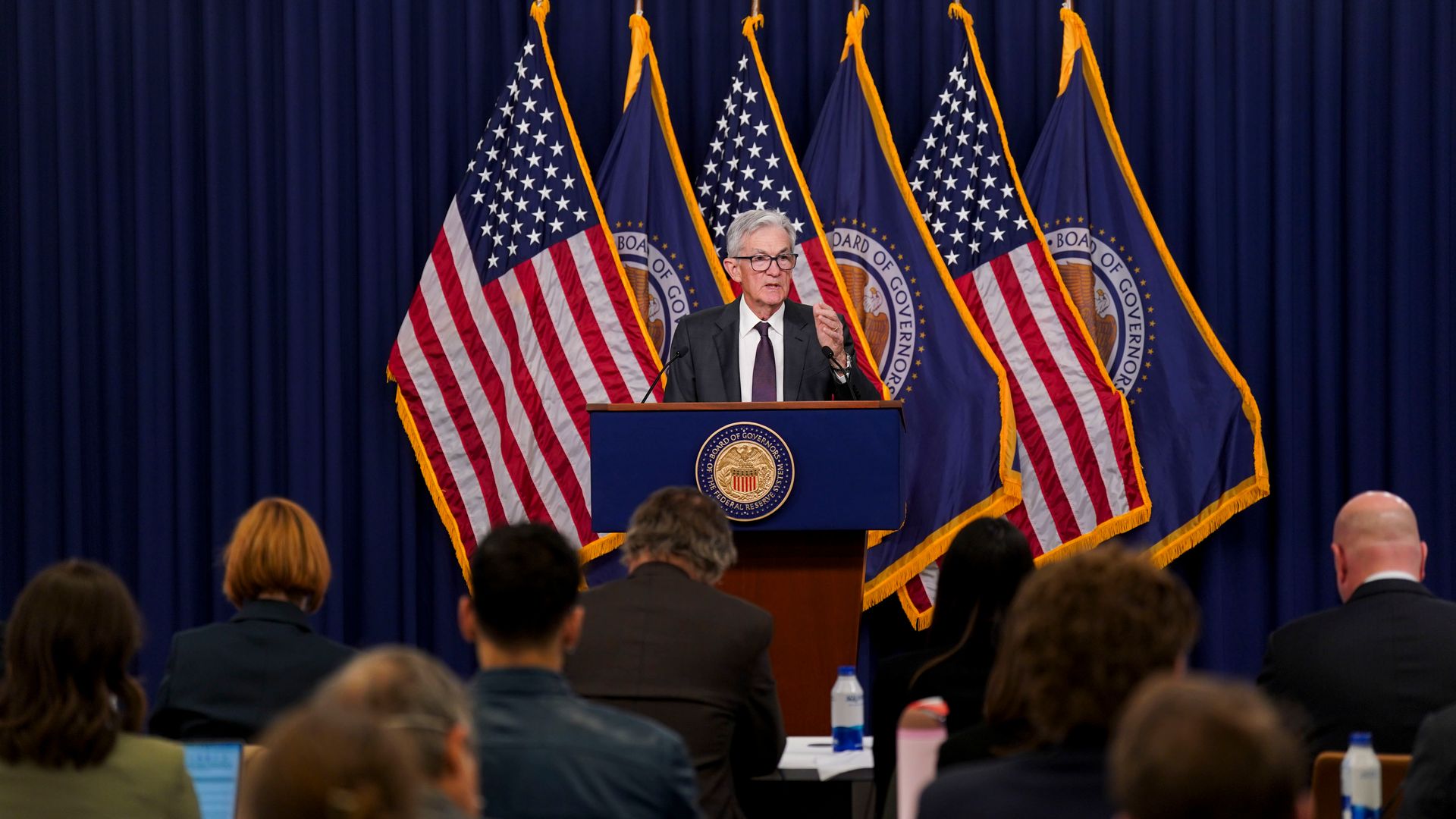
Federal Reserve officials said shifts in trade and immigration policy are among the factors that could derail inflation progress, according to minutes from the central bank's latest policy meeting released on Wednesday.
Why it matters: After two years fighting inflation, progress on cooling prices has stalled. The policies at the heart of President Trump's economic agenda — high tariffs and a crackdown on undocumented immigration — could risk a more bleak inflation outlook.
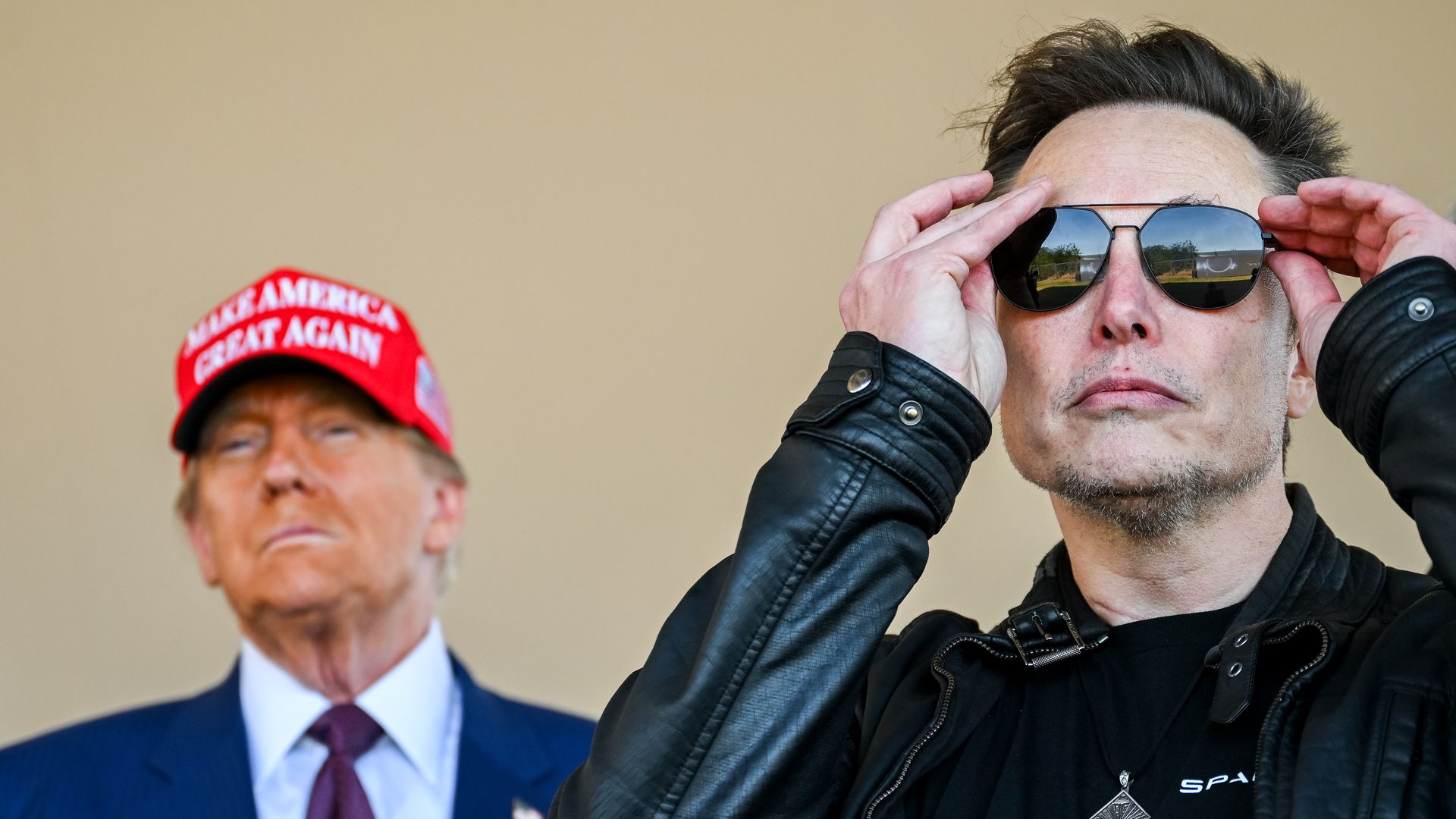
Elon Musk plans to "check with" President Trump about a proposal to send Americans rebate checks with money saved through slash-and-burn DOGE cuts.
Why it matters: The proposal is for $5,000 "dividend" checks, a number that comes from Musk's original goal of saving the government $2 trillion via budget cuts.
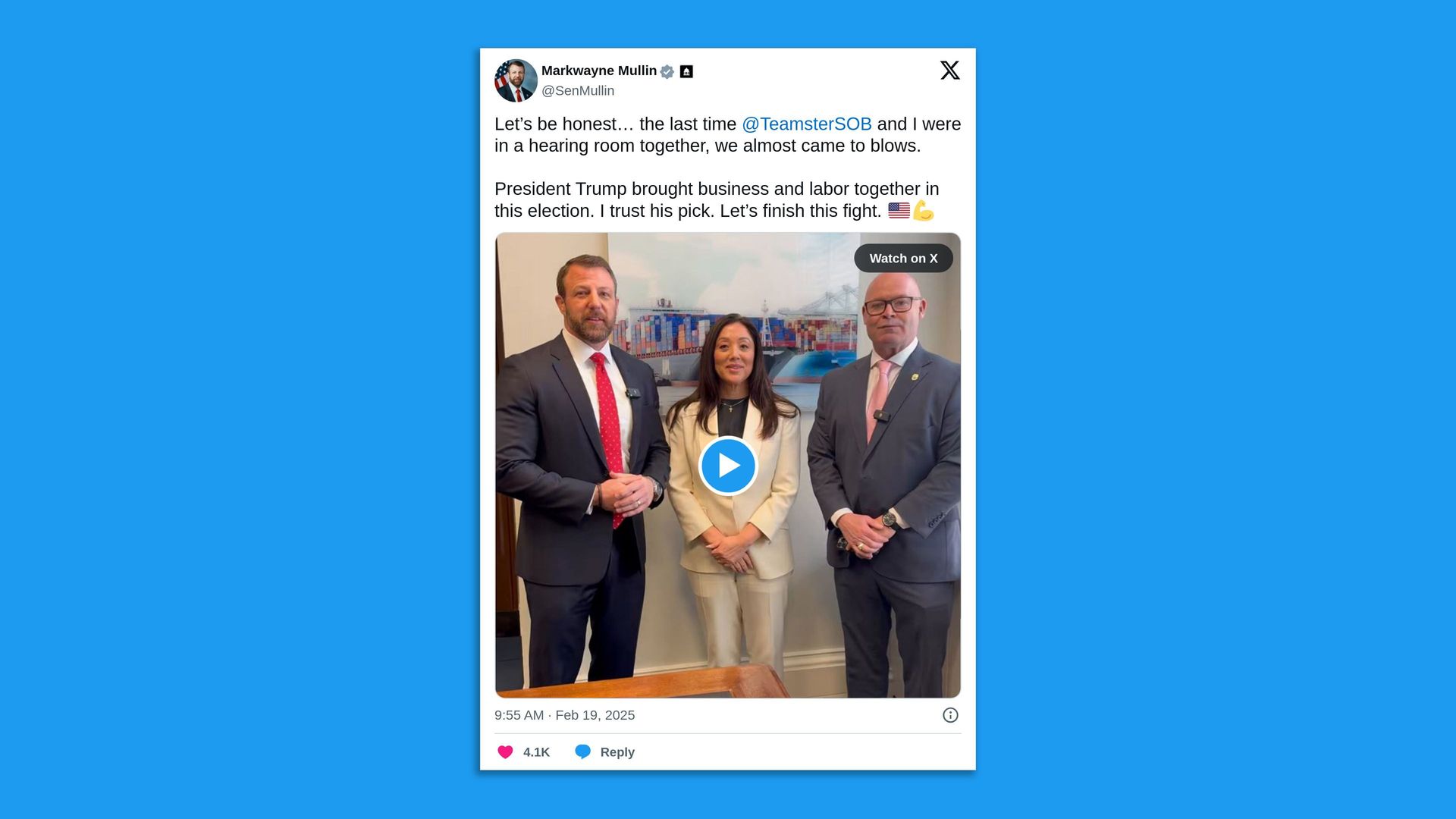
More than a year since they almost came to blows, Teamsters President Sean O'Brien and Sen. Markwayne Mullin (R-Okla.) are friends.
Why it matters: Mullin touted his newly forged bond with O'Brien at a Wednesday Senate hearing for former Oregon Congresswoman Lori Chavez DeRemer, President Trump's Labor Secretary nominee.
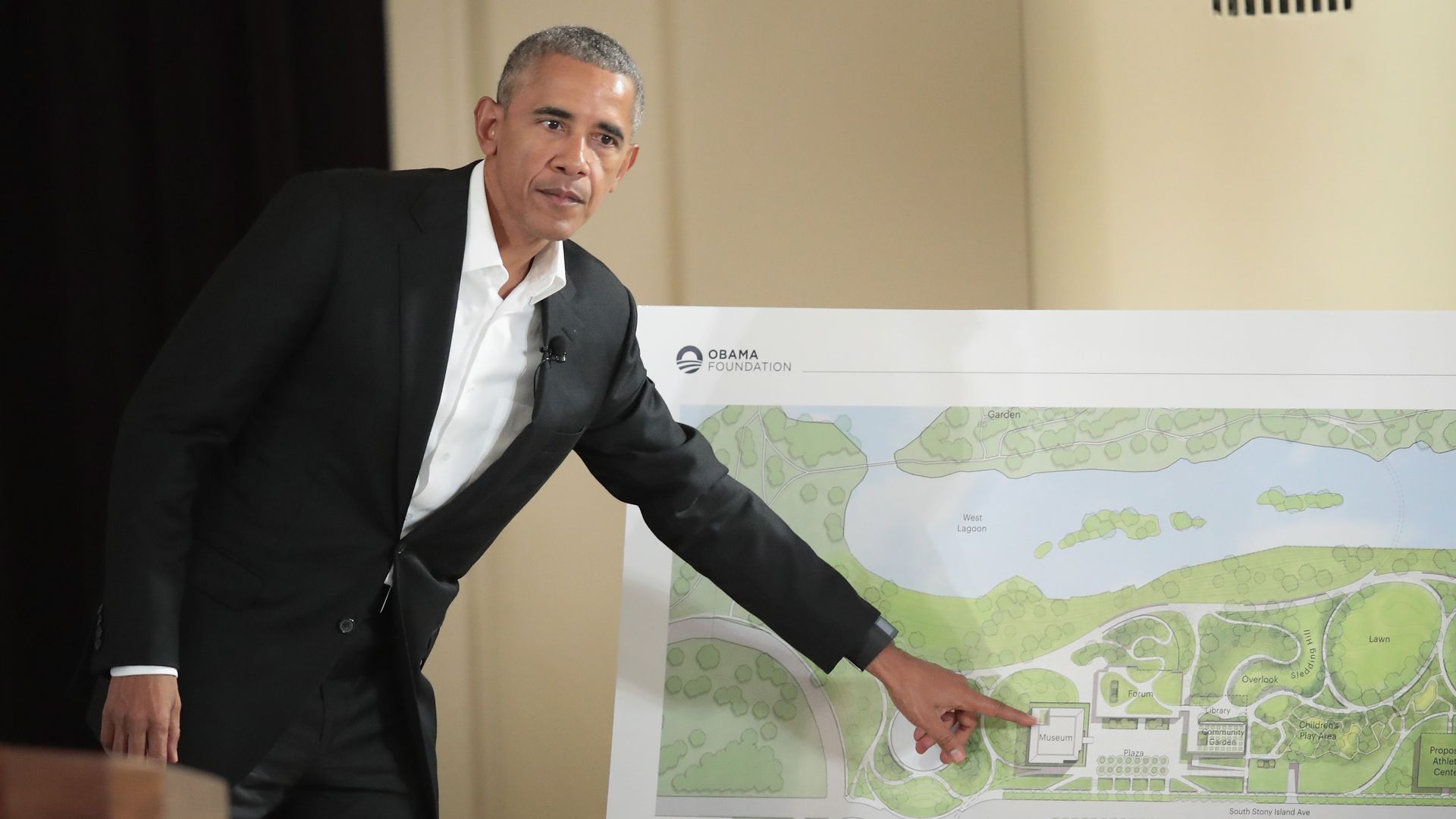
President Trump's widespread federal layoffs have come for presidential libraries.
The latest: The Boston-based John F. Kennedy Presidential Library abruptly closed Tuesday afternoon, citing staff layoffs at the National Archives, which runs presidential libraries across the country.
Major news outlets have conflicting reports on whether the Trump administration is supportive of a foreign firm buying a piece of Intel.
Why it's the BFD: An acquisition will not just depend on the U.S., but also regulators from around the world.
Context: A White House official told Reuters that President Trump is unlikely to support a foreign firm — such as TSMC — taking over Intel's factories.
Yes, but: The New York Times previously reported the administration was working with TSMC on an Intel deal.
Broadcom is reportedly interested in Intel's chip design business, while Silver Lake is said to be interested in a stake in Altera, per Reuters.
Flashback: Back in 2023, Intel sought to buy Israeli chipmaker Tower, but Chinese antitrust regulators didn't rule on the deal in time, and Intel paid a $353 million termination fee instead of the $5.3 billion price tag to buy the business.
Similarly, U.S. giant Qualcomm ended its $44 billion deal to buy Dutch player NXP after failing to win approval in China in 2018.
Regulators in Europe would also likely have a say on any major Intel deal. "That's the bigger problem — with all these deals you are talking about such large companies, can you get everyone to bless the deal?" says Wedbush's Matthew Bryson.
The bottom line: Intel's ability to break up will be a reflection of the state of U.S. foreign relations.
Intel Capital had a stream of exits from the top layers of its investor team in the year before announcing its spinout plans, Axios has learned.
Why it matters: Intel's venture firm wasn't immune from the chip giant's recent corporate-level turbulence.
Zoom in: In total, Intel Capital's site listed 42 employees as of of early 2024. That's now down to 33.
Senior managing director Trina Van Pelt exited in June 2024, according to her LinkedIn, after 20 years with the firm.
At the MD level, Mark Lydon exited at the end of last year, Arun Chetty resigned roughly a month ago, Sean Doyle retired in December after 24 years, and Tammi Smorynski also exited in September, after 24 years with the business, according to her LinkedIn.
Context: Intel Capital is one of the most well-regarded corporate venture capital funds out there, both in terms of success and length in operation.
Its annual deployment has been steady, at about $350 million to $500 million in recent years, a source tells Axios, and the source says it plans to stay in that range this year.
The big picture: Intel fell behind in the AI wars as players such as Nvidia, Broadcom, and TSMC bounded ahead on the global stage. Intel CEO Pat Gelsinger was ousted in December, with investors now believing a break up of the business may be the necessary medicine.







/2025/02/19/1739979026235.gif?w=3840)