Intel CEO abruptly out as company falls behind in AI transition

Add Axios as your preferred source to
see more of our stories on Google.
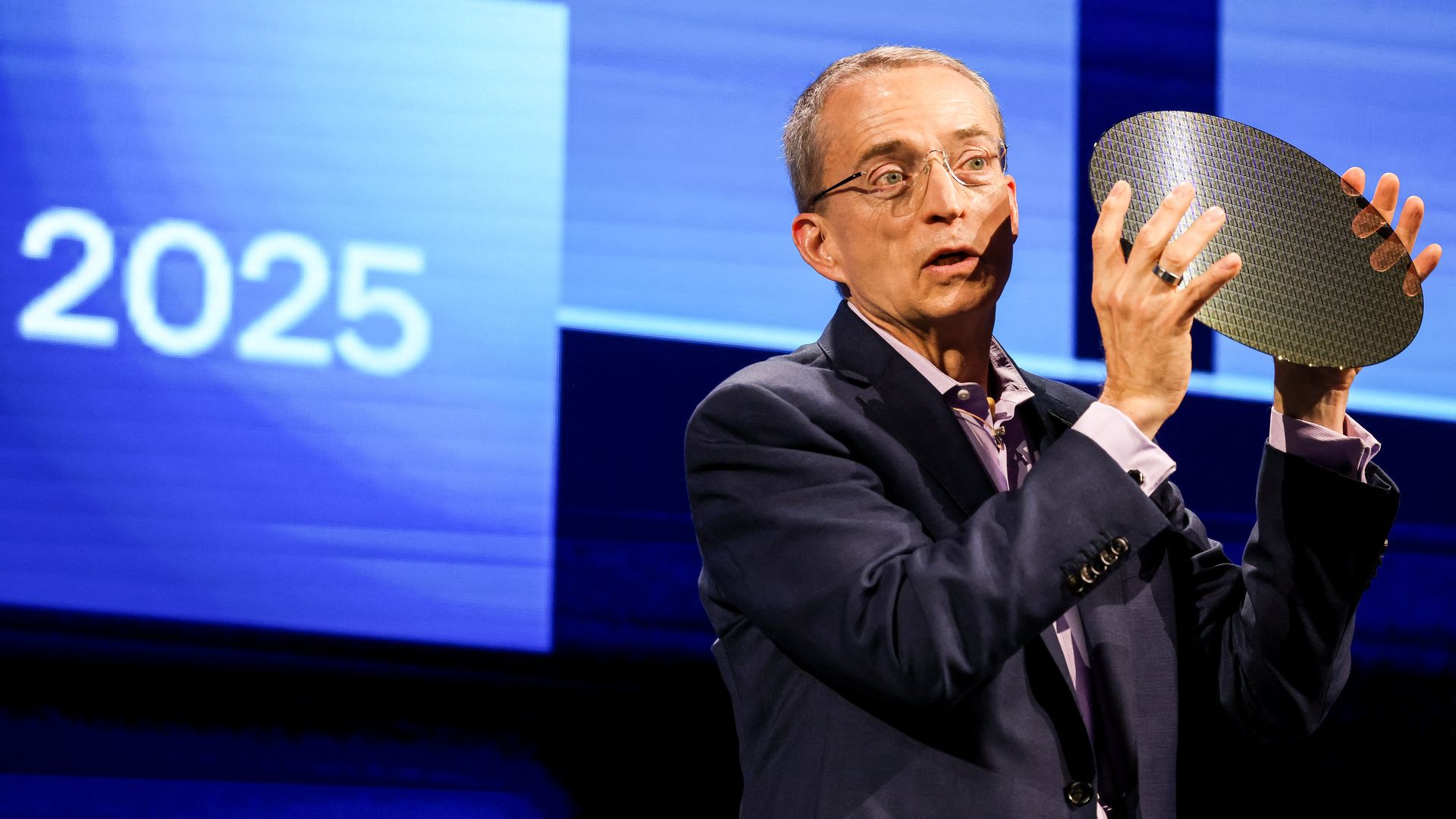
Former Intel CEO Pat Gelsinger. Photo: I-HWA CHENG/AFP via Getty Images
The CEO of Intel is leaving the company as it struggles to reinvent itself.
Why it matters: Investors fear Intel is falling behind in the AI chip wars against booming AI titans like Nvidia.
Driving the news: Pat Gelsinger abruptly retired as of Sunday after 40 years with the company and a nearly four-year stint as CEO, Intel said Monday.
- CFO David Zinsner and Michelle (MJ) Johnston Holthaus, who was appointed as CEO of Intel Products, were named as interim co-CEOs while the company searches for a permanent replacement.
- Intel's independent chair, Frank Yeary, will become interim executive chair during the transition.
Between the lines: Intel had ceded a dominant foothold in AI chip technology to Nvidia long before Gelsinger rejoined the company as CEO in 2021.
- But it was the board's lack of confidence in his plan to win back market share from its now much larger rival that drove it to seek a change last week, Bloomberg reported, citing people familiar with the matter.
The big picture: Intel's stock has dropped by half in 2024 as the company scrambles to boost its AI chip production capacity.
- In August it announced plans to cut 15% of its workforce, even as it seeks to bolster production after it landed billions in federal funding.
- And in a symbolic sign of its struggles, the company lost its spot last month in the 30-stock Dow Jones Industrial Average to the surging Nvidia.
What they're saying: "While we have made significant progress in regaining manufacturing competitiveness and building the capabilities to be a world-class foundry, we know that we have much more work to do at the company and are committed to restoring investor confidence," Yeary said in a statement.
Zoom out: Gelsinger's exit comes amid questions not just around Intel's AI strategy, but also its grand plans for its manufacturing business.
- The company formed a subsidiary earlier this year to house its foundry business, which it recently expanded to make chips for outside customers — hoping to challenge contract chipmakers like Taiwan Semiconductor Manufacturing (TSMC).
- But Intel's manufacturing business might be better off as an independent entity, Raymond James analyst Srini Pajjuri wrote Monday in a research note.
What we're watching: Its future could involve "a change in strategy to be a trailing edge foundry, a potential sale, or a potential asset sale," according to Pajjuri.
- The foundry business "has been a big drag on its bottom line, with the company spending roughly $25 billion on it in each of the last two years," CNBC reported in September.
The bottom line: What Intel's new CEO decides about the foundry business could determine whether the company gets back on track.
Editor's note: This story was updated with additional information throughout.
