4 pivotal questions that could define the Iran war's next phase

Add Axios as your preferred source to
see more of our stories on Google.
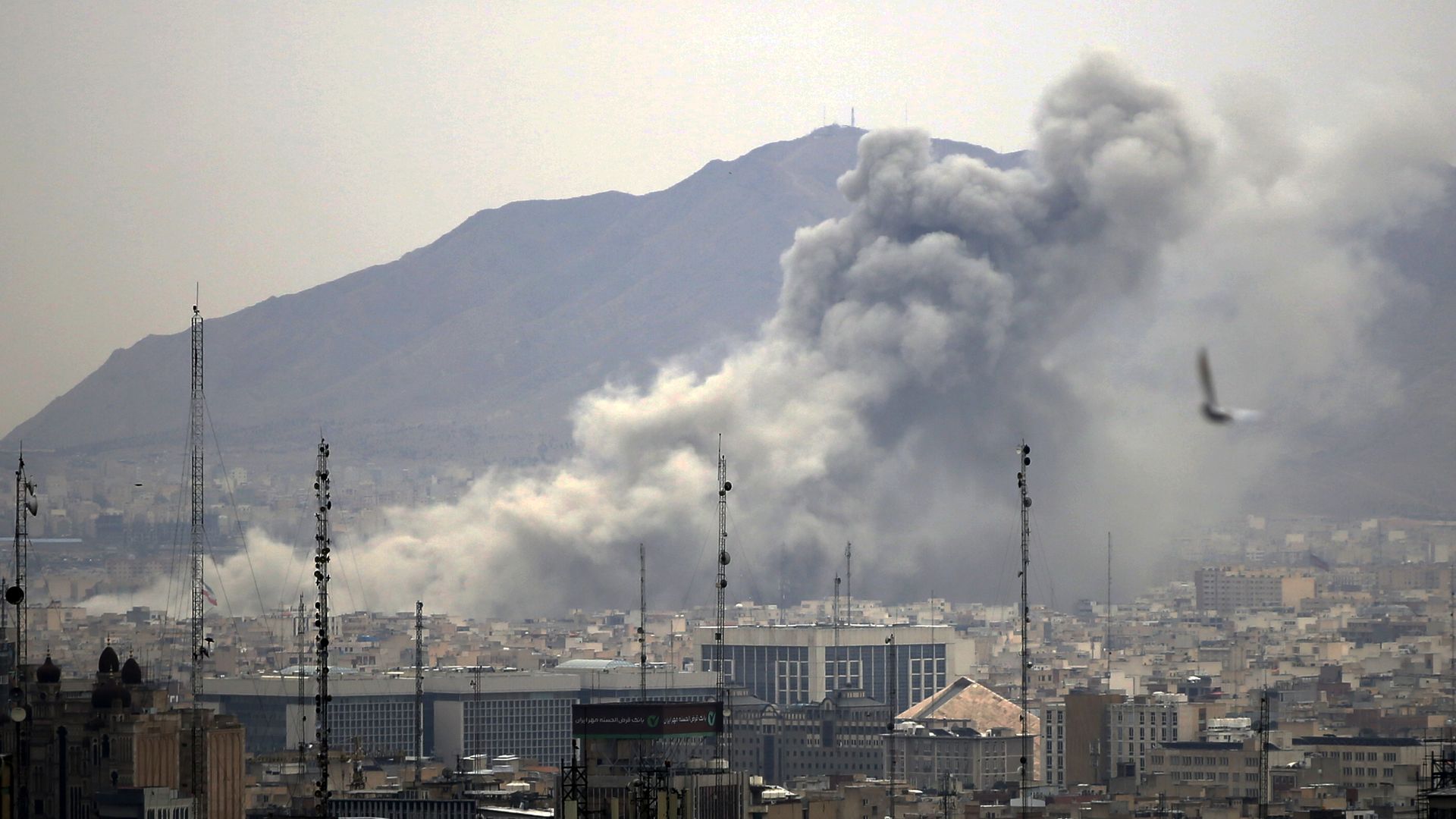
Smoke rises over Tehran after airstrikes and explosions were reported across the Iranian capital on March 13, 2026, during escalating conflict involving U.S. and Israeli strikes on Iran. Photo: Fatemeh Bahrami/Anadolu via Getty Images
Nearly a month into the Iran war, there are signs the conflict is poised to expand rather than conclude.
The big picture: Potential future events in the war — like escalation in the Strait of Hormuz or major changes Iran's leadership — could determine when the conflict ends.
- The U.S. and Israel also have contrasting visions of the endgame, with Israel willing to endure more chaos to destabilize the regime, officials told Axios.
- "Our objectives are our objectives," Secretary of Defense Pete Hegseth said last week. "We'll set the tempo of when those are met."
Here are four pivotal questions that could shape the war's next phase.
What happens to the Strait of Hormuz?
A major question surrounding the war right now is what happens to the Strait of Hormuz — specifically, whether anything close to pre-war shipping volumes are restored any time soon.
- Iran is currently threatening any enemy vessels passing through, with reports of mines being used against ships. This has throttled the Strait, disrupting the global economy and making gas prices soar in the U.S.
- Roughly 20% of the world's oil supply moves through the strait, much of it bound for Asia.
So long as the strait remains closed, Trump can't declare victory and end the war even if he wants to.
- He's veered between demanding help from allies to open the strait, to claiming the U.S. doesn't need them, to even suggesting the U.S. might leave without resolving the crisis.
- The most critical question in terms of how much longer this war will last is likely what happens in the strait.
Will U.S. put boots on the ground?
Any escalation involving U.S. ground forces would mark a massive shift in the war effort.
- The U.S. has started sending thousands of Marines to the Gulf region — but has stopped short of a ground invasion.
- "I'm not putting troops anywhere," Trump told reporters on Thursday, though he added that he wouldn't say so even if he did plan to send in troops.
How it works: One "boots on the ground" option would be special forces from the U.S. and Israel navigating fortified underground facilities to seize Iran's nuclear materials.
- It's also possible Trump could consider more drastic steps involving ground forces as part of an effort to force Iran to reopen the strait.
- Trump has threatened to take Kharg Island, through which 90% of Iran's oil exports flow, and the White House is reviewing options that include ground operations.
Will Iran's nuclear stockpile be destroyed?
Friction point: One of Trump's key stated objectives for Operation Epic Fury has been to permanently end Iran's nuclear weapons program.
- The U.S. and Israel bombed Iran's nuclear infrastructure during the 12-day war last June and again in the current conflict. Israeli Prime Minister Benjamin Netanyahu said Thursday that Iran no longer has the capacity to enrich uranium.
- But the status of Iran's existing stockpile of highly enriched uranium is unclear.
- The U.S. wants to destroy or remove it, either by force or potentially through peace negotiations.
Trump's other stated objectives are to decimate Iran's navy and missile programs and stop the stream of funding to proxy militias.
Who will lead Iran?
Mojtaba Khamenei succeeded his father Ali Khameni as Iran's supreme leader following his father's death from U.S. and Israeli strikes.
- Trump, who told Axios exclusively that he wants to be involved in picking Iran's new leader, found the choice unacceptable.
- Israel appeared to threaten Mojtaba — who has not appeared in public and was reportedly wounded early in the war — after killing Ali Larijani, Iran's national security chief, this week.
- Larijani is one of several civilian and military leaders who have been killed during the war. U.S. and Israeli officials say it's unclear to them who is calling the shots.
One key question is whether Mojtaba survives and is able to consolidate control.
- Israel has explicitly stated that one of its war aims is to lay the groundwork for regime change.
- Trump has called on the Iranian people to rise up against the regime, but has not included wholesale regime change among his core objectives.
Go deeper: 5 scenarios for how the Iran war could end
