What to know about Ali Khamenei, Iran's supreme leader

Add Axios as your preferred source to
see more of our stories on Google.
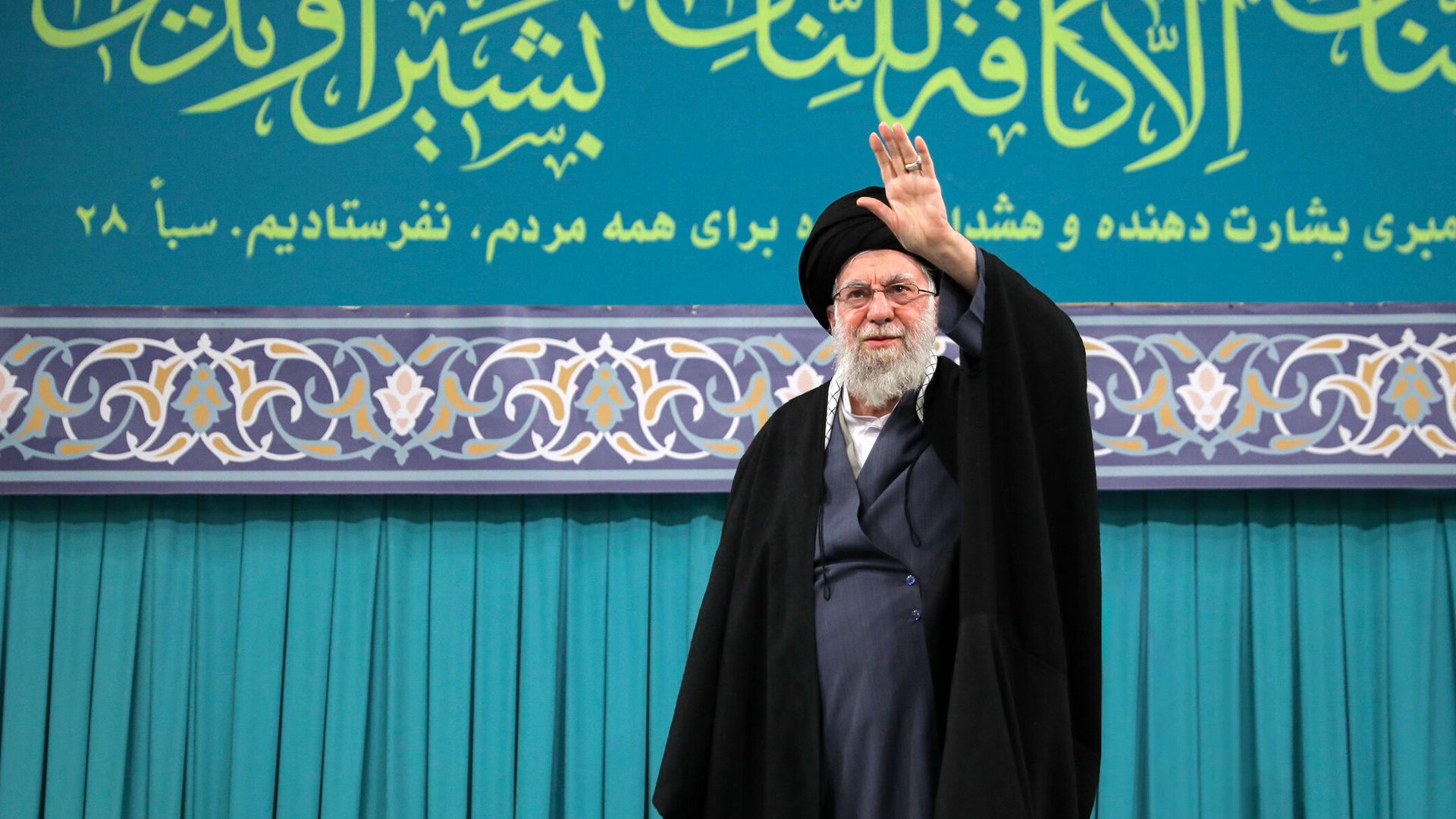
Iran's Supreme Leader Ali Khamenei greets the crowd as he attends a program held in Tehran, Iran, on Jan. 17. Photo: Iranian Leader Press Office/Anadolu via Getty Images
Editor's note: Iranian Supreme Leader was killed in an Israeli strike as part of a joint military operation between the U.S. and Israel on Feb. 28, according to Israeli and American officials.
Iranian Supreme Leader Ali Khamenei is the Middle East's longest-serving autocrat, consolidating near-absolute control in his roughly 37-year reign.
Why it matters: President Trump opted for military strikes in Iran after failing to reach a nuclear deal with Tehran, raising the risk that the administration will push for regime change. The first strike landed near Khamenei's office, per AP.
Here's what to know about Iran's supreme leader:
How long has Khamenei been in power?
Khamenei has wielded influence since the 1979 Iranian Revolution.
- He served as defense minister and then supervised the Islamic Revolutionary Guard Corps before being elected president in 1981.
Flashback: An assassination attempt immobilized his right arm months before that election.
Khamenei became supreme leader after his predecessor Ayatollah Khomeini died in 1989.
Zoom in: Khamenei oversees Iran's judiciary, effectively controls the council that vets electoral candidates and vetoes parliamentary decisions, according to the U.S. Institute of Peace.
- He commands the armed forces, the elite Revolutionary Guard and oversees state-run media.
- He also has discretion over how the country spends revenue from some of the world's largest oil reserves.
Khamenei, now 86, has named preferred potential successors.
How has he ruled Iran?
Khamenei has frequently used the military to quash dissent.
- He often sentences his critics to prison and suppresses protests using force.
- In 1999 he cracked down on student demonstrations, which resulted in at least one death and 1,500 arrests.
- He put down protests over the disputed 2009 presidential election and a 2022 push to end the persecution of women and girls in Iran following the death of Mahsa Amini, who was accused of wearing a headscarf incorrectly.
- Most recently, multiple outlets report regime forces may have killed between 7,000–30,000 Iranians protesting economic conditions. Exact estimates remain unclear.
He has also ordered internet blackouts, including during the recent protests, to disrupt communications and shield his regime from international scrutiny.
Yes, but: Khamenei has preached resilience and held the regime together through multiple crises and decades of enmity with the U.S. and Israel.
How has he responded to Trump's threats?
Khamenei made opposition to both the U.S. and Israel a focal point of his foreign policy.
- He supports the region's so-called "axis of resistance," which backs terrorists and other proxy groups, and he's thought of as a longtime U.S. adversary, per a congressional report.
- The supreme leader had warned Trump that if Americans "wage a war this time, it will be a regional war."
- He added that "if anyone shows greed and wants to attack or harass, the Iranian nation will deal a heavy blow to them."
When the Trump administration struck Iran's nuclear facilities last year, Khamenei responded by launching missiles at a U.S. military base in Qatar.
- There were no casualties, and Trump later thanked the supreme leader for giving "early notice" of a "very weak" attack.
- Nonetheless, Khamenei posted a photo of a burning U.S. flag on X with the caption: "We will not surrender to anyone's aggression. This is the logic of the Iranian nation."
Go deeper: Go deeper: U.S. and Israel begin "major combat operations" in Iran
