U.S. and Israel begin "major combat operations" in Iran


Add Axios as your preferred source to
see more of our stories on Google.
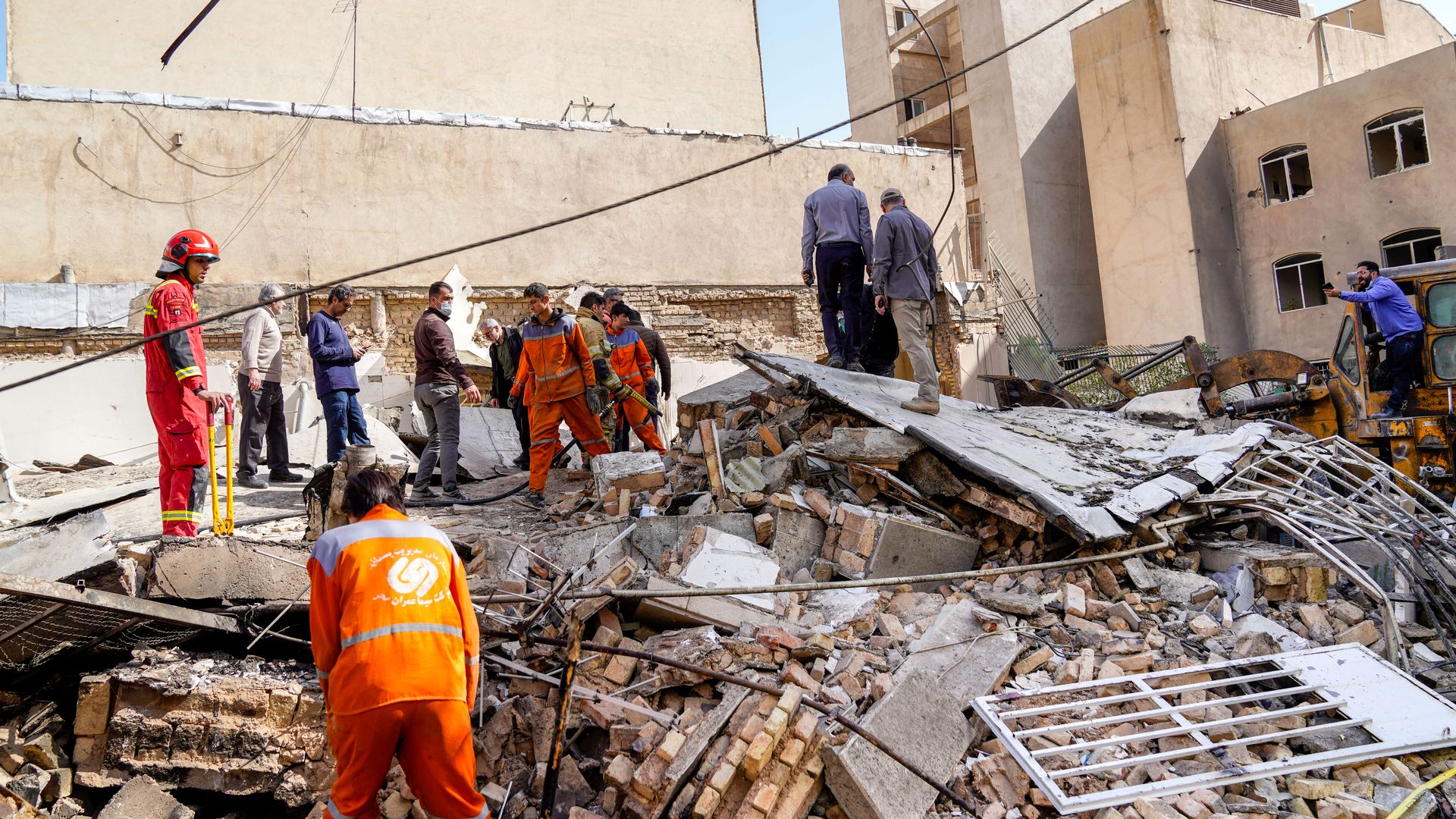
Photo by AMIR KHOLOUSI / ISNA / AFP via Getty Images
The U.S. and Israel began "major combat operations" in Iran overnight with the aim of destroying the country's military capabilities and fostering regime change, President Trump announced in an overnight video statement.
The latest: Israel's Air Force conducted strikes against Iranian senior commanders and political leaders, including Supreme Leader Ali Khamenei, in an effort to destabilize the regime, according to U.S. and Israeli officials.
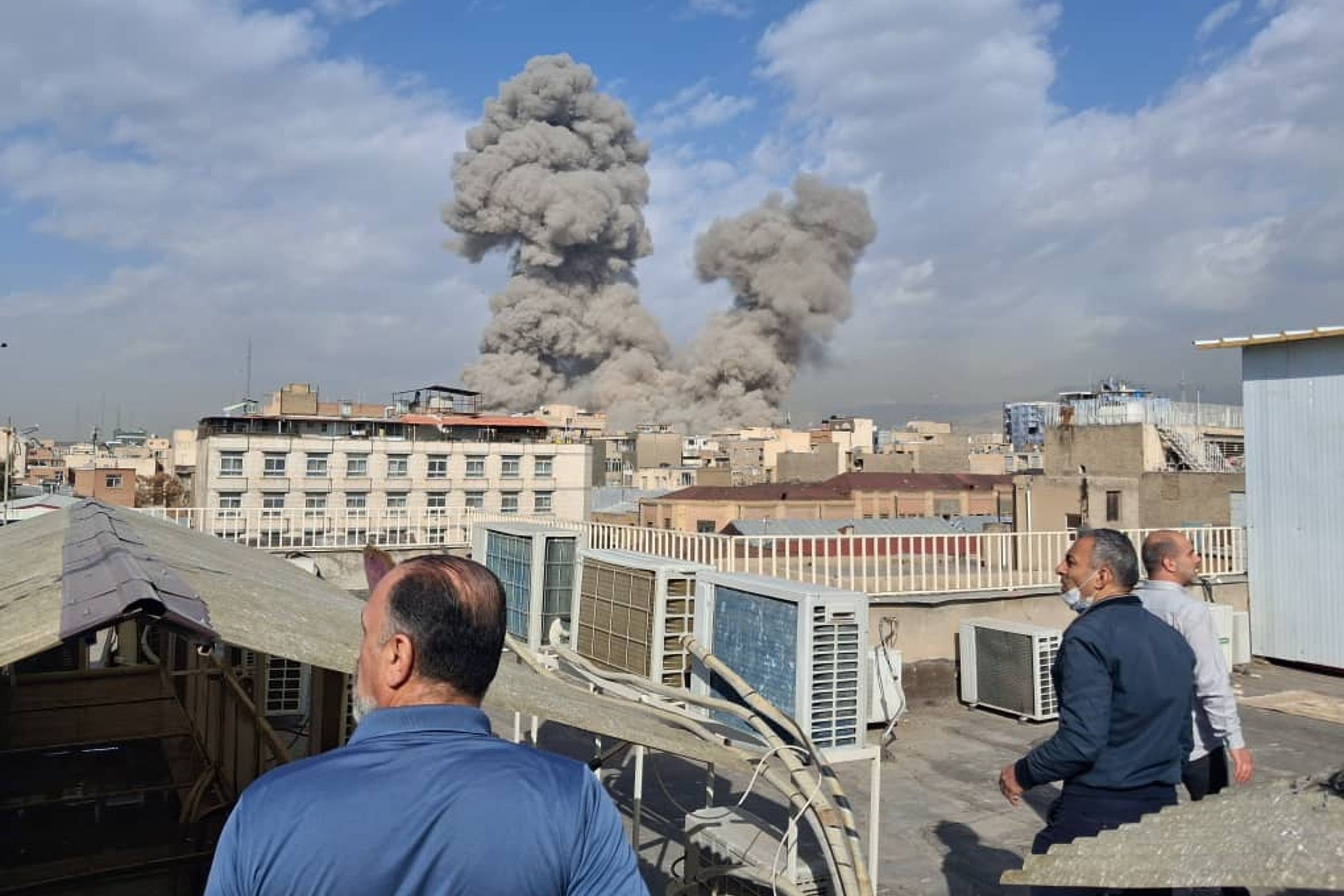
- Iranian media reported strikes nationwide; smoke could be seen rising from the nation's capital, Tehran. At least 200 are dead and 700 injured in the strikes, the Associated Press reported, citing state media reports from Red Crescent data.
- Operation Epic Fury, as the Pentagon dubbed the attack, started as Trump's 10-day deadline to Iran expired. Israel's name for the joint operation is Lion's Roar.
In a video statement posted at 2:30 a.m. ET, Trump accused Iran of conducting "mass terror" ever since the 1979 Islamic Revolution, and declared: "We're not going to put up with it any longer."
- "We're going to destroy their missiles and raze their missile industry to the ground. ... We're going to annihilate their navy, we're going to ensure that the region's terrorist proxies can no longer destabilize the region or the world and attack our forces," Trump said. "And we will ensure that Iran does not obtain a nuclear weapon."
Retaliation was swift. Some U.S. officials have been worried about entering into such a conflict without a clear sense of how it will end.
- U.S. bases in Qatar, Bahrain, Kuwait, Iraq, the United Arab Emirates and Jordan were attacked by Iranian missiles. A senior U.S. official said that as of 7:10 am ET, there were no casualties at U.S. bases.
- Iran's foreign minister claimed the U.S.-Israeli strikes hit a girls' school in southern Iran. Iran's state media reported 53 students killed and 63 wounded.
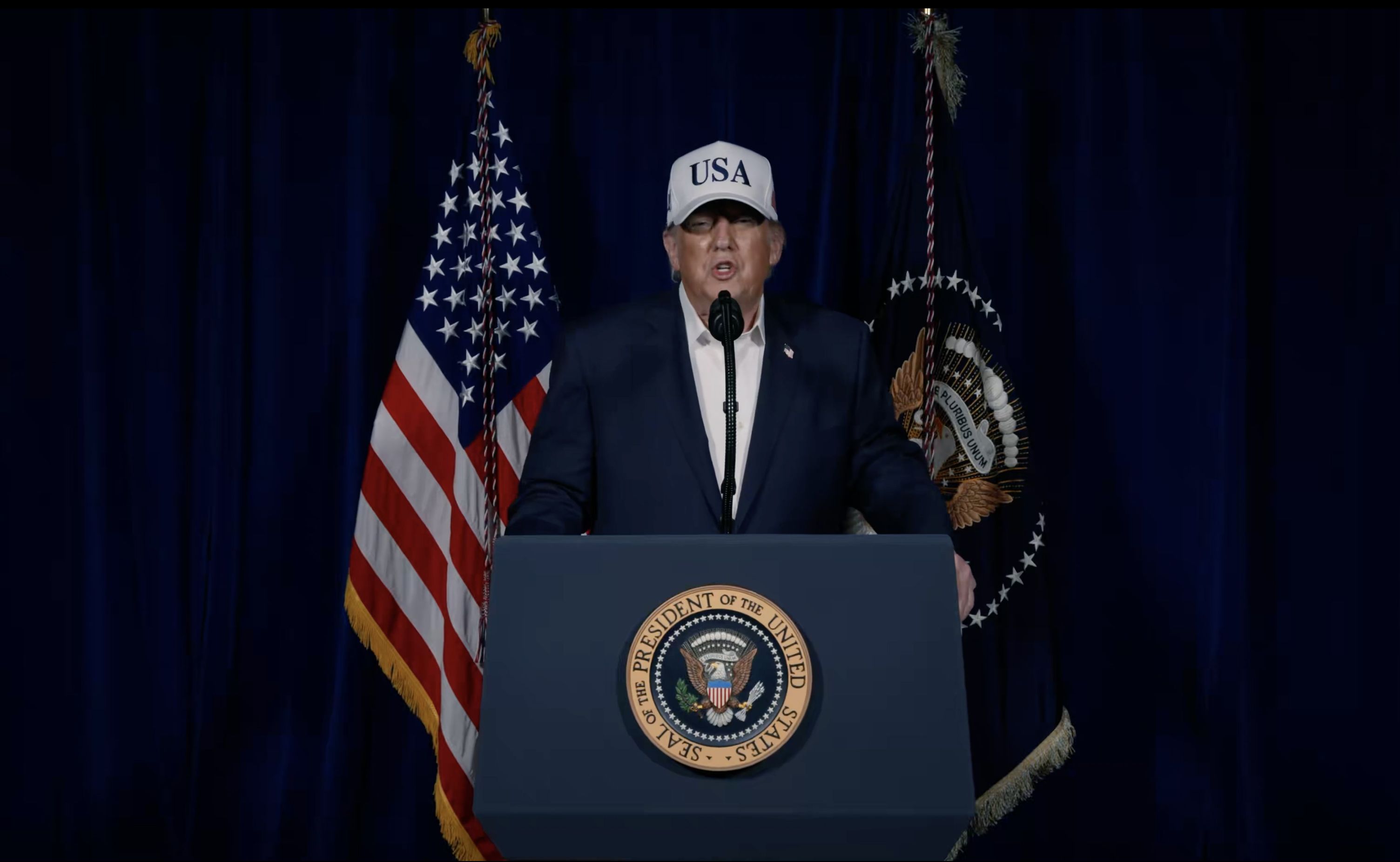
Trump, wearing a white "USA" cap and standing at a presidential podium, acknowledged the risk of significant American casualties if Iran retaliates. "My administration has taken every possible step to minimize the risk to U.S. personnel in the region," he said in the video.
- He encouraged the people of Iran to remain in their homes during the bombing and "when we are finished, take over your government, it will be yours to take. This will be, probably, your only chance for generations."
In Israel, Prime Minister Benjamin Netanyahu released a statement saying the objective of the operation was "to remove the existential threat posed by the terrorist regime in Iran."
- Netanyahu later tweeted a photo of himself on the phone with Trump. Strategically placed in front of him on his desk: a copy of the World War II history book "Allies at War" by Tim Bouverie, an account of the delicate geopolitics of taking on the Nazi regime.
Iran's foreign ministry said: "U.S. and Israel attacked a range of military and defense targets, as well as civilian infrastructure, across various cities in our country."
- Iranian Foreign Minister Abbas Araghchi called his counterparts in Saudi Arabia, the UAE, Qatar, Kuwait, Bahrain and Iraq, warning them not to allow the U.S. or Israel to use their facilities or territory to conduct strikes against Iran.
- Araghchi called the attacks a violation of the UN Charter and "a clear crime against international peace and security," and said Iran would use "all its defensive and military capabilities" in response.
Oman's foreign minister Badr al-Busaidi, who met Friday with Vice President Vance in Washington and has been mediating between the U.S. and Iran, expressed frustration on X.
- "I am dismayed. Active and serious negotiations have yet again been undermined. Neither the interests of the United States nor the cause of global peace are well served by this," he wrote.
Former Iranian crown prince Reza Pahlavi, the most prominent opposition leader, released his own statement from exile calling the U.S. and Israeli strikes a "humanitarian intervention."
- "It is we, the people of Iran, who will finish this task in this final battle. The time to return to the streets is approaching," he said, urging Iranian security forces to lay down their arms and help topple the regime.
How it happened: Trump threatened to punish the regime earlier this year if it cracked down during mass protests. After thousands of protesters were killed, Trump nearly ordered strikes in January before delaying his decision.
- He then sent his envoys, Steve Witkoff and Jared Kushner, to hold multiple rounds of nuclear negotiations with Iran, while simultaneously launching one of the biggest U.S. military buildups in recent history. It includes two aircraft carriers and hundreds of warplanes and missiles.
- Both sides described the most recent round of nuclear talks on Feb. 26 as successful, though no agreement was reached.
Worth noting: Trump has made misleading comments about the state of Iran's nuclear and missile programs in the lead-up to the strikes, describing a more urgent security threat to the U.S. than available evidence demonstrates.
Behind the scenes: Several of Trump's top advisers, including Joint Chiefs Chair Gen. Dan Caine, had privately warned him about the risk of becoming entangled in a prolonged conflict.
- U.S. and Israeli officials have told Axios that any operation would likely be much larger in scale than last June, when the U.S. struck three Iranian nuclear facilities before seeking a truce. Trump claims those facilities were destroyed.
- Some Persian Gulf leaders are deeply concerned that Iran will retaliate by attacking their countries, several of which host U.S. military bases.
- Trump had repeatedly said he would prefer a deal, but he'd turn to military force if he couldn't get one.
Go deeper: What to know about Ali Khamenei, Iran's supreme leader
Editor's note: This article has been updated with new details throughout.
